Why Auto Plants Near Silverado and Escalade Assembly Sites Face Strict Pretreatment Scrutiny
EV and auto plants near Chevrolet Silverado and Cadillac Escalade assembly sites must meet a two-layer rule stack before discharging to sewer: federal categorical pretreatment standards under 40 CFR 433 (Metal Finishing), overlaid with site-specific numeric local limits set by the receiving POTW under 40 CFR 403.5(c). A standard physical-chemical train — equalization, pH adjustment, dissolved air flotation (DAF) for oil/grease and TSS, and metals precipitation — typically achieves compliance.
The major Silverado/Escalade assembly and tier-1 component sites — Arlington TX, Spring Hill TN, Hamtramck/Detroit MI, Silao MX, and Ramos Arizpe MX — all discharge to municipal POTWs that operate EPA-approved pretreatment programs under 40 CFR 403. A single compliance failure can shut a line. A pass through (a pollutant exits the POTW in violation of its NPDES permit) or an interference (a discharge that disrupts POTW operations or sludge quality) is a federal violation per 40 CFR 403.3(p) and (k), and the state pretreatment program — or EPA where authority has not been delegated — can issue a compliance order, a consent decree, or a sewer shutoff under 40 CFR 403.8(f).
The National Pretreatment Program is structured as a federal-state-local cooperative effort (per EPA, NPDES National Pretreatment Program, 2024-12). In authorized states such as Texas, Tennessee, Michigan, and the Mexican federal entities (where CONAGUA and state programs mirror the U.S. framework for plants discharging to municipal systems), the state pretreatment program — not EPA directly — enforces against the industrial user. That distinction matters when sizing capital expenditures, because the binding number on your permit is whichever limit is tighter: the federal categorical standard, or the POTW's local limit.
The Federal Rule Stack: 40 CFR 433, 464, and 442 Explained
40 CFR 433 (Metal Finishing) is the most commonly cited categorical standard for tier-1 parts plants that feed Silverado/Escalade lines, because metal-finishing operations (electroplating, anodizing, chromating, etching) sit upstream of almost every body, chassis, and drivetrain component. It sets daily-maximum and monthly-average concentration limits for regulated metals (cadmium, total chromium, hexavalent chromium, copper, lead, nickel, silver, zinc), total cyanide, and total toxic organics (TTO).
40 CFR Part 464 (Metal Molding and Casting) applies to foundries producing iron, steel, and aluminum castings — engine blocks, transmission housings, suspension knuckles. Limits cover TSS, oil & grease, ammonia, and total metals, with subcategories tied to casting process (sand, die, investment, permanent mold).
40 CFR 442 (Transportation Equipment Cleaning) applies to tank and parts washers servicing fleets, with limits targeting TSS, oil & grease, pH, and solvents. EV battery and motor plants producing the Escalade IQ, LYRIQ, and Silverado EV lines may also trigger 40 CFR 461 (Battery Manufacturing) for electrolyte and lead-bearing streams, particularly where formation, aging, and EOL testing circuits generate acidic or alkaline rinse water.
For an authoritative reference, use the EPA December 2024 "Summary of Categorical Standards" (Attachment 3-1, 171.45 KB, EPA National Pretreatment Program page, 2024-12). It lists every category, the regulatory cite, and the subcategory structure — the document you hand to a pretreatment coordinator when arguing applicability.
| Categorical Standard | Typical Auto-Supply Operation | Key Regulated Parameters |
|---|---|---|
| 40 CFR 433 — Metal Finishing | Plating, anodizing, chromating, etching lines for trim, fasteners, drivetrain | Cd, Cr, Cu, Pb, Ni, Ag, Zn, cyanide, TTO |
| 40 CFR 464 — Metal Molding & Casting | Iron, steel, aluminum foundries (engine blocks, knuckles, housings) | TSS, oil & grease, ammonia, total metals |
| 40 CFR 442 — Transportation Equipment Cleaning | Parts washers, tank cleaning, fleet wash racks | TSS, oil & grease, pH, solvents |
| 40 CFR 461 — Battery Manufacturing | EV pack assembly, formation/aging circuits, EOL testing | Electrolyte constituents, Pb, pH, TSS |
POTW Local Limits: The Layer Most Plants Underestimate
Local limits are numeric or narrative end-of-pipe discharge limits imposed at the industrial user's point of connection to the POTW's collection system (per EPA, "Pretreatment Standards and Requirements — Local Limits," 40 CFR 403.5(c)). They are site-specific because each POTW has a different receiving water, headworks sensitivity, and sludge-management pathway. The POTW must perform annual reviews and periodic reevaluations, and EPA can enforce approved local limits as pretreatment standards — meaning non-compliance is a federal violation, not just a local contract dispute.
Local limits are derived from maximum allowable headworks loadings, calculated to prevent pass through, interference, and sludge contamination. For an auto-parts facility, the practical consequence is that even if you meet 40 CFR 433 on a daily-max basis, the POTW can still issue a violation notice for exceeding a tighter local number on oil & grease, zinc, or lead.
Typical automotive POTW local-limit ranges to plan around (caveat: confirm with the receiving POTW — every utility sets its own numbers):
| Parameter | Typical Daily Max Range (Auto/POTW) | Driver |
|---|---|---|
| Oil & grease | 50–100 mg/L | Headworks aeration basin, skimmer loading |
| Total suspended solids (TSS) | 30–60 mg/L | Sludge digester, NPDES permit TSS |
| pH | 5.0–10.0 SU | Microbial inhibition in activated sludge |
| Zinc | 1.0–2.0 mg/L | Die casting, galvanizing, E-coat drag-out |
| Lead | 0.4–0.6 mg/L | Solder, brass, legacy equipment |
| Total chromium | 1.0–2.0 mg/L | Plating, chromated conversion coatings |
| Cadmium | 0.1–0.3 mg/L | Specialty plating, pigments |
Plan around the lower end of these ranges when you do not yet know your POTW's number. The cost of designing tighter is modest; the cost of retrofitting under a consent decree is not.
The Pollutants That Actually Drive Auto-Plant Pretreatment Design
Stamping and machining cells generate free oils, tramp oils, suspended metal fines, and lubricating fluids. The primary treatment target is oil/grease and TSS removal, with DAF as the workhorse. Phosphate and e-coat operations contribute high-pH rinse water, surfactants, residual zinc phosphate, and coating-bath drag-out — the targets here are pH neutralization and metals precipitation.
Parts washing and paint-line cleanup generate solvents (VOCs), surfactants, paint pigments, and suspended paint solids, with TSS, oil & grease, and possibly total toxic organics (TTO) under 40 CFR 433 as the binding parameters. EV battery and motor assembly introduces electrolyte residues, trace solvents, and low-volume metal-bearing rinse water — the target is metals and pH control.
Cooling-tower and boiler blowdown typically runs hot on TDS, may contain legacy chromate inhibitors, and is dosed with biocides. Most plants blend blowdown with the main waste stream at a controlled ratio or haul it off as a separate waste code to avoid overwhelming the DAF and metals-precipitation stages with dissolved load that those unit operations do not address.
The 2026 Pretreatment Train: Equalization, pH Adjustment, DAF, and Polishing
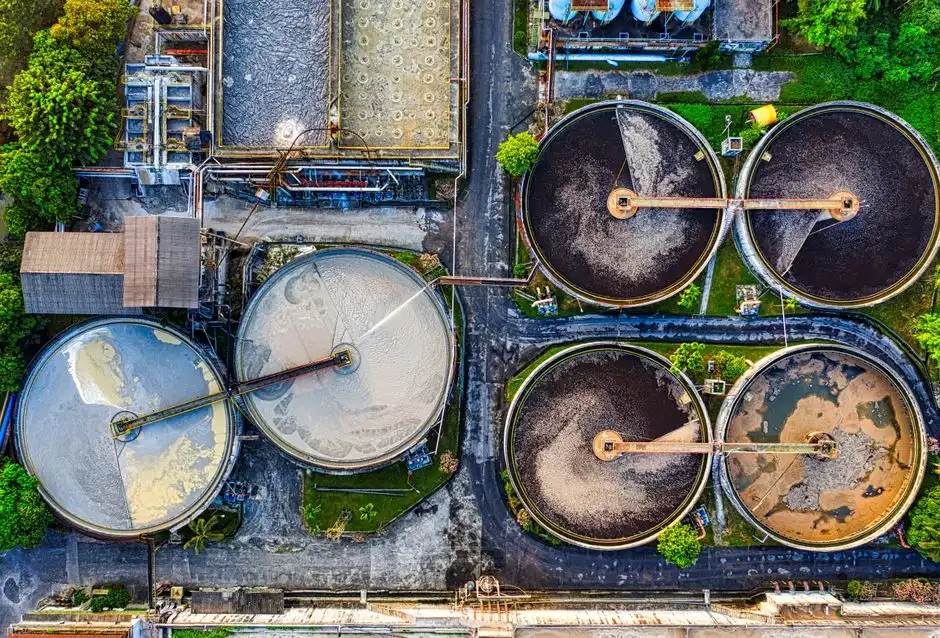
Step 1 — Flow and load equalization. A surge basin sized for 4–24 hours of hydraulic retention dampens pH spikes, slug loads, and diurnal flow variation from batch operations. Buried or semi-buried equalization tanks in the 1–80 m³/h range are a typical deployable footprint for tier-1 facilities.
Step 2 — pH adjustment and coagulant dosing. A HydropureWater automatic chemical dosing skid injects caustic (NaOH) or acid (H₂SO₄/HCl) for pH, plus coagulants — typically polyaluminum chloride (PAC) at 50–200 mg/L or alum — to destabilize emulsified oils and colloidal metals. Polymer flocculant (cationic, 1–5 mg/L) follows in a flash-mix tube flocculator.
Step 3 — Dissolved Air Flotation. DAF is the workhorse step. The HydropureWater dissolved air flotation system covers 4–300 m³/h across 13 standard models, using micro-bubble flotation (typically 20–50 µm bubble diameter at 4–6 bar saturation) to float free and emulsified oils, FOG, and floatable TSS. Skimmed sludge drops to a HydropureWater plate-and-frame filter press for dewatering. If you are comparing unit operations for an EV or paint-shop stream, the Columbus EV/auto DAF vs clarifier guide walks through the tradeoffs, and the DAF troubleshooting guide covers the seven field failures that show up in 80% of commissioned units (HydropureWater field data, 2026).
Step 4 — Metals precipitation and pH polishing. Raise pH to ~9.0–9.5 with caustic, dose hydroxide or sulfide for dissolved metals, then clarify with a HydropureWater lamella clarifier to drop residual TSS and metals. A two-stage precipitation (first at pH 9 for most metals, second at pH 10.5 for residual zinc) is common when the local limit on zinc is tight.
Step 5 — Final filtration and disinfection. A multi-media filter (sand, anthracite, garnet) protects downstream polishing and catches DAF carryover. UV or chlorine dioxide is added if the POTW requires fecal-coliform reduction for any blended domestic/industrial stream.
Step 6 — End-of-pipe compliance sampling. Automated pH, conductivity, and flow monitoring tied to a SCADA system with 24-hour composite samplers per 40 CFR 403.12 reporting requirements. For comparable categorical-applicability context, see the Shakopee chemical-plant pretreatment guide.
DAF Sizing Example for a Mid-Sized Tier-1 Auto Parts Plant
Assume an average wastewater flow of 60 m³/h with a peak factor of 1.5, giving a design flow of 90 m³/h. Select the DAF series at the 80–100 m³/h model band (within the 4–300 m³/h catalog range); hydraulic retention time in the flocculation tube and contact zone typically runs 5–10 minutes.
Target an air-to-solids ratio of 0.02–0.05 lb air/lb solids for oil/grease and floatable TSS removal; recycle rates of 20–35% of influent flow are typical to deliver that ratio without saturating the contact zone. Expected removal in a single DAF stage: 80–95% oil & grease, 70–90% TSS (HydropureWater field data, 2026). Residual metals carry over to the precipitation/lamella stage.
Sludge production from the DAF is typically 3–6% of influent flow, sent to a HydropureWater plate-and-frame filter press (1–500 m² filtration area) for dewatering to ~25–35% dry solids. For higher inlet TSS or heavier oil loading, add a second DAF stage or upstream coagulation — the math is in the same DAF sizing reference.
Submittal Checklist: What Your POTW Will Ask For in 2026
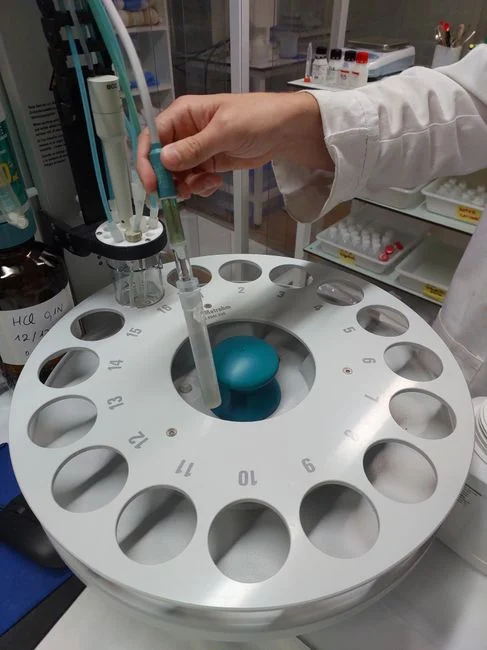
Hand the pretreatment coordinator the following package, and you have covered the items a 40 CFR 403-compliant POTW expects in 2026:
- Baseline monitoring report (BMR). All categorical and local pollutants per 40 CFR 403.12(b), with sampling dates, methods, QA/QC, and chain-of-custody.
- Process schematic. Every wastewater-generating station, flow stream, and connection point, including floor drains, trenches, and roof drains that tie into the industrial sewer.
- Mass-balance calculations. Daily-max and monthly-average loading projections for each regulated parameter, with design safety factors and worst-case production scenarios.
- Slug control plan. Per 40 CFR 403.8(f)(2), covering the worst-case spill scenario — typically a full parts-washer tank release or a coating-bath drain-down.
- Best Management Practices (BMP) plan. Chemical storage, secondary containment, solvent handling, floor wash-down segregation, and drip-pan protocols.
- Sampling and monitoring plan. 24-hour composites, grab-sample locations, calibration records for in-line pH/conductivity/flow instruments, and chain-of-custody procedures tied to your SCADA historian.
Frequently Asked Questions
What does 40 CFR 433 actually regulate for an auto-parts plant?
40 CFR 433 (Metal Finishing) sets daily-maximum and monthly-average concentration limits for cadmium, total and hexavalent chromium, copper, lead, nickel, silver, zinc, total cyanide, and total toxic organics (TTO). Any tier-1 supplier running plating, anodizing, chromating, or etching on Silverado or Escalade components is in scope, with applicability determined by process flow, not by NAICS code alone.
How do I size a DAF for a 60 m³/h auto-parts wastewater stream?
Apply a 1.5 peak factor to get a 90 m³/h design flow, then select a DAF unit rated at 80–100 m³/h with a 5–10 minute flocculation/contact retention time. Target an air-to-solids ratio of 0.02–0.05 lb air/lb solids at a 20–35% recycle rate, and expect 80–95% oil/grease and 70–90% TSS removal in a single stage.
Are POTW local limits enforceable as federal pretreatment standards?
Yes. Per EPA guidance on 40 CFR 403.5(c), local limits developed and approved by EPA or the authorized state pretreatment program can be enforced as pretreatment standards. Non-compliance is therefore a federal violation, not just a local contract issue, and can trigger the same enforcement remedies as a categorical-standard exceedance.
What is the difference between a categorical pretreatment standard and a POTW local limit?
A categorical standard is a federal, industry-specific limit set by EPA (for example, 40 CFR 433 for metal finishing) and applies nationwide to any industrial user in that category. A local limit is a site-specific numeric or narrative limit developed by the receiving POTW to protect its headworks, sludge, and NPDES permit, layered on top of the categorical standard. The binding limit on your permit is whichever is tighter.