
Why Orlando Transportation Plants Need Source-Side Pretreatment
The City of Orlando Industrial Waste Pretreatment Program exists to keep industrial discharges from overwhelming the Iron Bridge and the rest of the municipal collection system. Any Significant Industrial User discharging to the Orlando sanitary sewer is required to hold an Industrial Waste Pretreatment permit and meet both federal categorical standards and any local limits stricter than the federal floor. For a transportation equipment plant—whether tier-1 automotive parts, rail car components, or aerospace fittings—that means designing the pretreatment train first, then sending the effluent to the sewer.
The federal floor for many of these operations is 40 CFR Part 433 (Metal Finishing), which sets oil & grease at 52 mg/L daily maximum and imposes categorical caps on lead, cadmium, total chromium, and nickel—typical published values around 0.69 mg/L, 0.69 mg/L, 2.77 mg/L, and 3.98 mg/L respectively. Plants that only stamp, machine, and wash without plating or conversion coating may instead trigger 40 CFR 432 (Metal Products) or 40 CFR 469 (Copper Forming); confirm the unit operations before sizing equipment.
During Hurricane Ian (2022-09), a 36-inch force main break at Lift Stations 1, 2, and 3 sent untreated sewage overflowing into the surrounding lakes and pushed the Iron Bridge plant past hydraulic capacity, triggering a citywide water-usage advisory. When a municipal plant goes into overflow, industrial discharger pass-through liability does not pause—the EPA's General Pretreatment Regulations (40 CFR 403) still hold the generator responsible for pollutants that pass through, damage the POTW, or contaminate its sludge. Source-side pretreatment is the only defense a plant controls when the municipality is down.
Oily emulsions, spent alkaline cleaners, and metal-bearing rinse waters can shift between non-hazardous and RCRA-hazardous (ignitability, corrosivity, reactivity, or toxicity characteristic) depending on chemistry, which determines whether manifests, licensed haulers, and spill notification apply.
The Waste Stream a Transportation Equipment Plant Actually Generates
A typical transportation parts plant near Orlando generates four overlapping streams that converge on the pretreatment system: alkaline cleaning rinses, drawing and stamping lubricants, phosphating or conversion-coating rinse water, and parts-washer solvent carry-over. These waste streams converge into a complex influent that requires tailored treatment.
Any of these streams discharging to a sanitary sewer falls under the Clean Water Act / NPDES framework, with local limits layered on top through the POTW's pretreatment program. The City of Orlando typically sets pH, temperature, and constituent limits stricter than the federal floor; local surcharge thresholds for oil & grease, TSS, and metals commonly kick in well below the 40 CFR 433 daily maximums, so designing to the federal ceiling alone leaves the plant exposed to monthly surcharges.
FOG is the headline problem. Emulsified oil—droplets stabilized by surfactants at 1–20 µm—does not separate in a passive API-style gravity trap, where effective removal typically requires free oil above 100 µm droplet size. The emulsion must be chemically broken before flotation or settling will work, which is why coagulant and polymer dosing sits upstream of every serious primary separator in this service. Skip that step and the DAF or clarifier carries oil straight through to the sewer.
Core Treatment Train: From Equalization to Discharge
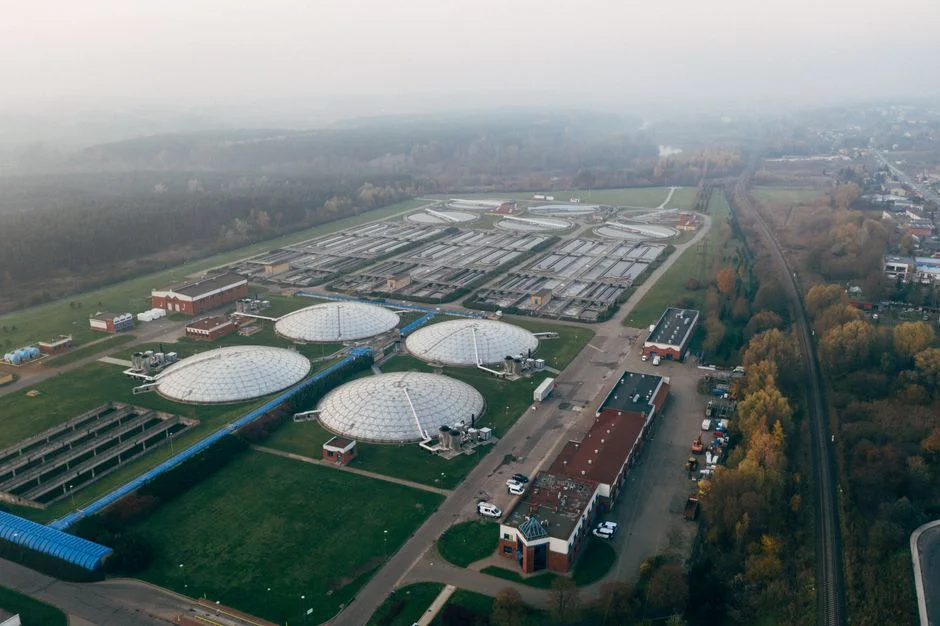
The unit operations below are listed in the order an engineer would specify them on a P&ID. Most retrofit audits fail because one or two of these steps were omitted, not because the major equipment was undersized.
- Equalization. A 4–24 hour holding tank dampens the slug flows from stamping presses and batch parts washers. Without EQ, the chemical dosing system chases a moving target and discharge limits get violated on peak shifts. A rotary mechanical bar screen upstream of the EQ tank protects pumps from rags and parts.
- pH adjustment. Bring the mixed stream into the 6–9 band the Orlando POTW expects. Sulfuric acid or caustic soda is dosed through a skid-mounted automatic chemical dosing system with a feedback loop on the pH probe; manual dosing drifts and is the most common audit finding.
- Coagulation, flocculation, and emulsion breaking. Inject a coagulant (alum, PAC, or a cationic emulsion breaker such as a polyaluminum chloride blend) followed by a flocculant polymer to agglomerate emulsified oil droplets and colloidal metals into separable flocs. Typical coagulant doses for oily automotive wastewater fall in the 50–250 mg/L range with polymer at 1–5 mg/L; engineer to jar tests on the actual waste.
- Solids/liquid separation. DAF for high oil & grease (>200 mg/L influent) or a lamella clarifier for space-constrained or lower-FOG sites. This is the workhorse decision covered in the next section.
- Polishing. A multi-media polishing filter or bag filtration captures carryover solids and broken floc before the effluent reaches the sewer, typically knocking residual TSS down by another 30–60%.
- Monitoring and reporting. Flow meter, pH probe, and a refrigerated composite sampler feed the pretreatment compliance report, tied to the City of Orlando's self-monitoring requirements in the permit.
DAF vs Lamella Clarifier vs Gravity Separator: Picking the Right Workhorse
The primary oil/water/solids separator is the procurement decision that drives both footprint and chemical budget. The table below compares the three realistic options on five dimensions an engineer cares about; values are typical operating ranges drawn from manufacturer data and standard texts.
| Parameter | Dissolved Air Flotation (DAF) | Lamella Clarifier | API / Gravity Oil-Water Separator |
|---|---|---|---|
| Best-fit influent oil & grease | 100–5,000+ mg/L (emulsified and free) | <500 mg/L, mostly free oil | >100 µm droplets only; free oil |
| Typical oil & grease removal | 80–95% | 60–80% | 40–60% on free oil only |
| Surface loading / hydraulic loading | 5–25 m/h depending on model | 20–40 m/h (inclined plate area) | ≤15 m/h (large footprint) |
| Footprint per m³/h | Compact; vertical or packaged units | Compact (inclined plates multiply area) | Very large; needs quiescent volume |
| Chemical demand | Moderate (coagulant + polymer required) | Moderate; can cut polymer use up to 30% vs DAF | None on free oil; cannot break emulsions |
| Energy | Saturator pump + recycle blower, ~0.5–1.5 kWh/m³ | No aeration; low energy | None (passive) |
| CAPEX posture | Higher than gravity; packaged skid available | Mid; saves building footprint vs gravity | Lowest CAPEX, highest footprint |
| Best application | High emulsified oil, FOG >200 mg/L, tight footprint | Lower FOG, chemical-cost sensitive sites | Pre-roughing ahead of DAF or equalization |
Proper separator selection ensures the plant meets the 40 CFR 433 oil & grease limit of 52 mg/L. The dissolved air flotation system covers 4–300 m³/h across 13 standard sizes with micro-bubble saturation, making it the default workhorse for emulsified oil. A lamella clarifier wins when FOG is modest and the operator wants to stretch the polymer budget. An API-style gravity separator only earns its place as a pre-roughing stage in front of equalization—it cannot break emulsions and will not, on its own, get a transportation plant to the 52 mg/L ceiling.
Sludge, Spent Chemicals, and the Cradle-to-Grave Side of Pretreatment
Compliance does not end at the sewer. DAF float and clarifier underflow are typically non-hazardous oily waste, but the Toxicity Characteristic Leaching Procedure (TCLP) can reclassify them as hazardous if metals such as lead or cadmium leach above limits—the TCLP trigger for lead is 5.0 mg/L, cadmium 1.0 mg/L. For most stamping and parts-washer sludges the answer is non-hazardous, but run a TCLP on first production and after any chemistry change to confirm.
Spent caustic and acid, plus parts-washer solvent carry-over, are usually managed under RCRA via licensed haulers, with uniform hazardous waste manifests (EPA Form 8700-22) where the waste is hazardous and state liquid industrial waste tracking where it is not. Generator retention of manifests and waste profiles for at least 3 years is the audit baseline; many site permits require longer.
Spill reporting is a critical operational requirement. Any release that could impact surface water or groundwater typically requires immediate notification to the state and, where the spill reaches the POTW, to the City of Orlando's pretreatment inspector. On-site sludge dewatering with a plate-and-frame filter press cuts hauling volume—typically 70–85% moisture reduction—and pays for itself inside the first permit cycle on a mid-sized plant.
2026 Compliance Checklist Before You Discharge to the Orlando POTW
Run this list against your plant before you sign the next Discharge Monitoring Report.
- Confirm whether the plant triggers 40 CFR Part 433 (Metal Finishing). Any plating, phosphating, anodizing, or alkaline cleaning step with associated rinse water generally pulls the operation into the categorical standard; otherwise evaluate 40 CFR 432 or 40 CFR 469 against your actual unit operations.
- Pull the current City of Orlando Industrial Waste Pretreatment permit and compare each local limit against the 40 CFR 433 floor. Identify any limit stricter than the federal ceiling—local oil & grease caps, additional metals, lower pH band, or temperature ceilings are common.
- Verify continuous pH and temperature monitoring and a representative refrigerated composite sampler on the discharge line. Strip charts and alarm logs must be retained for the permit-stated period.
- Confirm the equalization and chemical dosing systems are PLC-controlled with alarm logs, not manual. Manual dosing drifts and is the most frequent audit finding on small-to-mid plants.
- Audit sludge handling and manifest retention (typical recommendation is at least 3 years) and confirm emergency spill response readiness with a written contact tree for City of Orlando, FDEP, and the local emergency response line.
- Schedule a 24-hour composite sample once per quarter to validate that the system is still hitting 40 CFR 433 oil & grease and the categorical metals. Trend the data and investigate any single excursion greater than 1.5× the daily maximum.
Frequently Asked Questions
What 40 CFR category applies to transportation equipment plants?
For most plants that include plating, phosphating, anodizing, or alkaline cleaning with associated rinse water, the answer is 40 CFR Part 433 (Metal Finishing) with oil & grease at 52 mg/L daily maximum and categorical caps on lead, cadmium, total chromium, and nickel. Operations limited to machining, stamping, and assembly washing may instead trigger 40 CFR 432 (Metal Products) or 40 CFR 469 (Copper Forming); confirm against the actual unit operations before specifying equipment.
What are the oil and grease limits for sewer discharge in Orlando?
The federal categorical daily maximum under 40 CFR 433 is 52 mg/L. The City of Orlando Water Reclamation Division can impose stricter local limits through the Industrial Waste Pretreatment permit—local oil & grease caps, surcharge thresholds, and additional metals are common—so the binding number is whatever appears on the plant's current permit.
Is DAF or a clarifier better for oily wastewater?
For emulsified oil and FOG above roughly 200 mg/L, a DAF system (micro-bubble flotation) is the better work