The Pattonsburg food & beverage decision: DAF, clarifier, or both?
For Pattonsburg, Missouri food and beverage factories in 2026, choose a Dissolved Air Flotation (DAF) system when fats, oils, and grease (FOG) or emulsified solids dominate the stream; DAF uses 30–50 µm micro-bubbles to float light, emulsified FOG that a conventional gravity clarifier cannot settle. Specify a clarifier only for low-FOG, settleable-solids streams or as a polishing step downstream of a DAF.
Northwest Missouri's industrial base runs heavily toward meat, dairy, grain-handling, and small beverage processors, and their streams carry high FOG, TSS, and BOD from processing and cleaning (per Ecologix characterization of F&B wastewater, 2026). When a plant manager walks out to the headworks and sees FOG skim failing and clarifier weirs loading with floatables, the question is what rule justifies the purchase order. If floatable or emulsified FOG exceeds ~100 mg/L or TSS is dominated by light particles, buy a DAF; if the stream is mostly heavy, settleable grit below ~500 mg/L TSS with negligible FOG, a gravity clarifier is still defensible.
Discharge from Pattonsburg typically goes to a local POTW under U.S. EPA 40 CFR 403 categorical standards, and F&B processors fall under 40 CFR 409 (dairy, meat, grain, fermented, beverages). A practical explainer of pH and industrial discharge limits in pretreatment programs is useful background, but the binding rule here is your local POTW FOG limit, which most northwest Missouri utilities cap at 100 mg/L — the same threshold that flips the DAF-vs-clarifier decision.
Why a gravity clarifier struggles on F&B wastewater
A conventional gravity clarifier removes particles that are denser than water and that have time to settle; emulsified FOG and light food solids violate both conditions because their effective density sits within ±2% of water and they remain in suspension indefinitely under quiescent flow. Because these units struggle with low-density solids, clarifier weirs on a meat or dairy plant often load up with floatables within hours of a process upset, causing FOG to escape over the launder instead of being captured as underflow.
Field performance on F&B streams lands at roughly 40–70% FOG and 50–80% TSS removal for a well-operated clarifier, which is well below the 85–95% FOG removal a properly chemically conditioned DAF can deliver (HydropureWater field data, 2025–2026). Floating scum that escapes the clarifier re-enters downstream biological treatment, where it coats media, kills nitrification, and drives surcharges from the POTW. Clarifiers also require hydraulic residence times of 2–4 hours, which translates to a large footprint — often 200–400 ft² per 100 GPM — a real constraint for brownfield Pattonsburg plants with limited headworks space.
Clarifiers are forgiving, inexpensive to install, and tolerate flow swings; they are the right call when the stream is genuinely low-FOG and settleable. But once FOG or emulsified TSS is the binding constraint, the clarifier is a single point of failure that produces wet, hard-to-thicken, often re-floating sludge. Pair it with a DAF as a polish step, or replace it outright — but do not expect it to do DAF's job.
How a DAF system actually separates FOG, TSS, and colloidal solids
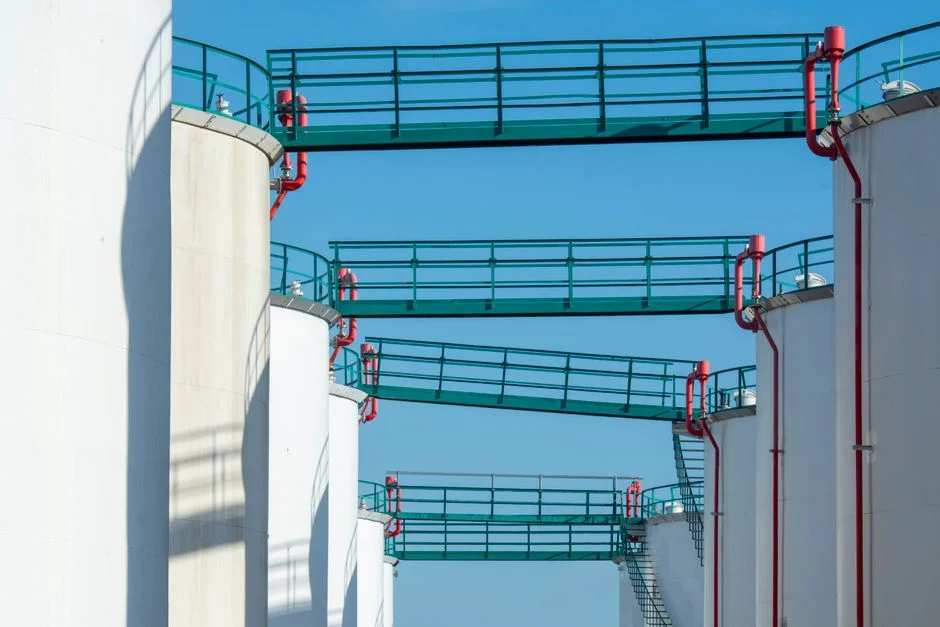
A DAF saturates a side stream of clarified effluent with air at 60–80 psig in a pressure vessel; when this air-saturated water is released into the main flotation tank at atmospheric pressure, 30–50 µm micro-bubbles precipitate out of solution and attach to chemically conditioned floc particles. The bubble-floc aggregates have an effective density far below water and rise to the surface in 3–7 minutes, where a paddle skimmer scrapes the float into a sludge trough (per SigmaDAF / Clearwater Industries engineering data, 2026). The clarified effluent exits below the float layer through a bottom draw-off.
Chemical conditioning upstream is mandatory: a coagulant (typically ferric chloride, alum, or a cationic polymer at 50–200 mg/L) destabilizes colloids, followed by a flocculant (anionic or nonionic polymer at 1–10 mg/L) that builds a strong floc large enough for micro-bubbles to nucleate on. Without this chemistry, DAF underperforms and can actually discharge more TSS than it captures (per SigmaDAF, who package serpentine flocculator mix tubes and chemical mix tanks with every unit). An automatic coagulant and flocculant dosing skid is therefore part of the DAF.
Heavier inorganic solids that do not attach to bubbles settle into a bottom collection zone and are augered out, which means a DAF functions as a combined clarifier-plus-thickener on a single footprint. Standard construction is 304SS, with 316SS or polypropylene wetted parts for Pattonsburg's acidic CIP chemicals, high-chloride sanitizers, and warm alkaline cleaners — specify this in the RFQ or the vessel will pit within 18–24 months.
DAF vs clarifier: head-to-head engineering and cost comparison
This is the table to bring to the meeting. Indicative 2026 bands only — exact numbers depend on flow, influent load, chemistry, and local fabrication.
| Parameter | Gravity Clarifier | DAF system |
|---|---|---|
| FOG removal | 40–70% (unconditioned) | 85–95% (with polymer conditioning) |
| TSS removal | 50–80% | 80–95% |
| Footprint at 100 GPM | 200–400 ft² (HRT 2–4 h) | 50–90 ft² (HRT 15–30 min) |
| Hydraulic residence time | 2–4 hours | 15–30 minutes |
| Sludge dry solids | 1–3% (wet, often floats) | 2–5% float + augered heavy grit |
| Indicative CAPEX (skid, 50–100 GPM) | Lower ($) — concrete or coated CS vessel, no air system | Higher ($$–$$$) — 304SS skid, pump, saturator, PLC |
| Dominant OPEX driver | Sludge hauling from wet underflow | Polymer/coagulant consumption, saturation pump energy |
| Configuration (per SigmaDAF) | Single basin, weir-driven | Single skid up to 66 GPM, two-skid above 66 GPM, integrated PLC, 304SS std., 316SS/PP optional |
The decision hinge is straightforward: when FOG or TSS removal is the binding constraint — which it almost always is on a Pattonsburg F&B stream — DAF wins on performance and footprint despite higher CAPEX. When the constraint is CAPEX for a low-strength, low-FOG stream (cold produce wash water, some grain-handling streams), a clarifier still wins. For a deeper look at the bubble physics and zero-risk spec rules, the DAF micro-bubble physics and selection guide is the companion read. For an equivalent head-to-head framed for a different regional F&B market, the DAF vs clarifier analysis for Portland F&B factories runs the same logic with a Pacific Northwest case base.
Where DAF wins outright for Pattonsburg F&B sub-sectors
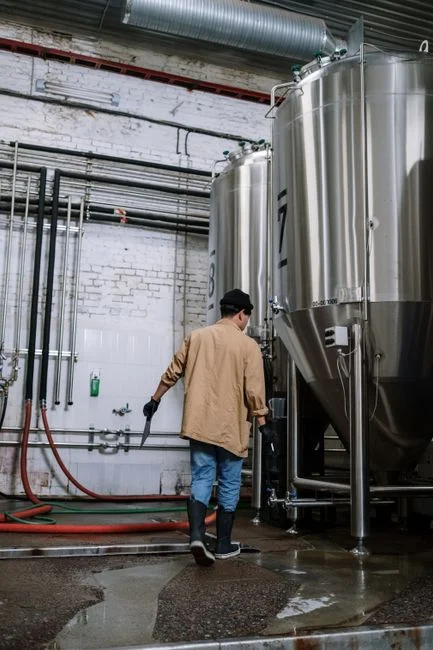
Meat and poultry processors around Pattonsburg generate blood, rendering fats, and high-temperature wash water that produces the exact high-FOG, emulsified-TSS profile DAF is designed for (per Ecologix F&B coverage, 2026). Without micro-bubble flotation, the FOG load hits the sewer at 3–10× the local limit and the POTW pretreatment program opens a compliance action within a quarter. A compact DAF system for F&B primary treatment is the default spec for any new line or replacement of an overloaded clarifier in this sub-sector.
Dairy plants — fluid milk, cheese, ice cream — discharge whey proteins, milk solids, and CIP chemistry that float rather than settle. DAF is the standard primary step before biological treatment across this sub-sector, and the 80–95% TSS removal it delivers protects an MBR or activated-sludge system from CIP shock loads on a Monday-morning startup. Beverage and brewing operations carry sugars, yeast, and cleaning caustics that create colloidal BOD; DAF strips that load before it starves or shocks the aeration basin.
Grain-handling and starch plants in northwest Missouri are the borderline case. The TSS is largely settleable — grit, hulls, starch granules — but warm process water emulsifies a meaningful starch fraction that a clarifier lets escape. DAF handles both the settleable grit (in the augered bottom) and the floatable emulsified starch (in the skimmed float) in one pass, which is why DAF has become the default in modern wet-mill and ethanol-adjacent facilities.
2026 decision rule and 30-day pilot protocol
Use the table below as the RFQ checklist and the pilot protocol as the contractual gating step before signing the PO.
| Influent profile | Recommended primary | Why |
|---|---|---|
| FOG > 100 mg/L or emulsified/light TSS dominant | DAF as primary | Clarifier cannot capture floatables; DAF hits 85–95% FOG, 80–95% TSS |
| FOG < 100 mg/L, TSS < 500 mg/L, mostly heavy/settleable | Gravity clarifier | Lower CAPEX, adequate performance, simple operation |
| Both — FOG present AND need low residual TSS for reuse or tight POTW limit | DAF primary + clarifier as polish | DAF does the bulk removal, clarifier polishes residual settleables |
Run a 30-day on-site trailer pilot before committing. The protocol: (1) screen 2–3 polymer chemistries with a jar test on a real composite sample; (2) run the trailer DAF at design flow for 30 days, sampling influent and effluent at least three times per week for FOG, TSS, and BOD5; (3) require the vendor to commit to guaranteed removal bands in the contract — typical 2026 ask is ≥85% FOG and ≥80% TSS at design flow with the specified chemistry. Specify the package as 304SS vessel, 316SS or polypropylene wetted parts where chlorides or acids are present, integrated PLC with trending, automatic chemical dosing, and sludge auger.
Pair the DAF float with a sludge filter press for DAF float dewatering to take the 2–5% float to 20–30% cake dry solids; this is the step that controls hauling cost and landfill load, and it is where most Pattonsburg F&B plants underestimate the OPEX. For sites where the stream is already low-TSS and the binding constraint is settling velocity rather than floatables, a high-efficiency sedimentation tank with lamella plates can substitute for the clarifier in the polish role.
Frequently asked questions about DAF vs clarifier for Pattonsburg F&B wastewater
When should a Pattonsburg food plant pick a clarifier over DAF?
Pick a clarifier when FOG is consistently below 100 mg/L and TSS is dominated by heavy, settleable solids below ~500 mg/L —
Frequently Asked Questions
Should a Pattonsburg food plant pick a DAF or a clarifier in 2026?
The choice depends on the specific gravity and buoyancy of your waste stream. In 2026, DAF systems are preferred for food and beverage plants in Pattonsburg dealing with high concentrations of fats, oils, and grease (FOG) or light solids that do not settle readily. If your process generates heavy inorganic solids or grit, a primary clarifier is more efficient; however, for the majority of F&B applications, DAF systems offer a smaller physical footprint and significantly higher removal efficiencies for suspended solids.
How much FOG can a DAF remove compared to a clarifier on the same F&B stream?
A Dissolved Air Flotation (DAF) unit typically removes 85% to 95% of FOG and total suspended solids (TSS) from food processing wastewater, whereas a conventional gravity clarifier typically achieves only 40% to 60% removal for the same parameters. Because FOG and many food organics have a specific gravity near or below 1.0, they naturally resist settling and require the micro-bubble attachment provided by a DAF to achieve effective separation.
What size DAF do I need for a 50 GPM food processing line?
For a 50 GPM flow, you generally require a DAF system rated for a hydraulic loading rate of 1.5 to 2.5 gallons per minute per square foot (gpm/ft²). This necessitates a surface area of approximately 20 to 35 square feet. It is critical to account for peak flow surges common in meat and dairy processing, which often requires adding a 20% to 30% safety factor to your hydraulic design to prevent solids carryover.
Does a DAF replace primary treatment for a meat or dairy plant?
Yes, a DAF system serves as the primary treatment stage for high-strength meat and dairy wastewater. It is designed to remove the bulk of the organic load before the water enters secondary biological treatment, such as an activated sludge system or anaerobic digester. By reducing the chemical oxygen demand (COD) by 60% to 80% upfront, the DAF prevents the overloading of downstream biological processes and reduces overall surcharges from local municipal sewer authorities.
How do I dewater the float from a DAF system?
The float or "sludge" collected from a DAF typically has a solids content of 3% to 6% and requires mechanical dewatering before disposal. The most common technologies for this application are screw presses or belt filter presses, which can increase the solids concentration to 15% to 25%. For smaller operations, specialized sludge bags or drying beds may be utilized, though mechanical screw presses are currently the industry standard for minimizing volume and transportation costs in 2026.