A DAF system in Poland typically achieves 90–98% removal of suspended solids and fats, with proven 95% efficiency in meat processing wastewater (IN-EKO, Kabanos Jablonka). These systems are widely used in food, chemical, and mining industries to meet EU discharge standards and reduce biological treatment load. HydropureWater’s DAF line handles 4–300 m³/h with automated operation.
What Is a DAF System and How Does It Work?
A DAF system removes suspended solids, fats, oils, and greases (FOG), and colloids by injecting micro-bubbles that attach to particles and float them to the surface for mechanical skimming. This process is essentially the opposite of sedimentation; while sedimentation relies on particles being heavier than water to sink, flotation is used when the solid phase or impurities have a density lower than or similar to the liquid, as defined by SEEN Technologie. In industrial settings, this is particularly effective for emulsified oils and light organic fibers that would otherwise take hours to settle.
The core mechanism involves pressure flotation technology. A portion of the clarified effluent is recycled and pressurized to approximately 4–6 bar, then saturated with air. When this pressurized water is released into the flotation chamber at atmospheric pressure, the dissolved air precipitates out of the solution. This creates a dense cloud of micro-bubbles, typically ranging from 20–100 µm in size. These bubbles are small enough to provide a massive surface area for attachment without creating turbulence that could break up fragile flocs. In the DAF line, these bubble sizes are strictly controlled to ensure a high collision efficiency with suspended particles.
Effective flotation often requires chemical pretreatment. Before entering the flotation tank, wastewater passes through a reaction zone where coagulants and flocculants are added. Coagulation neutralizes particle charges, while flocculation bridges these particles into larger "flocs." The micro-bubbles then entrain themselves within these floc structures, increasing their buoyancy. The resulting sludge blanket (the "float") is then removed by a continuous scraper system, while the heavy solids that do sink are collected in a bottom hopper for periodic discharge.
Industrial Applications of DAF Systems in Poland
Industrial DAF applications in Poland are primarily concentrated in food processing, where they achieve up to 95% fat removal efficiency in slaughterhouse effluents. At the Kabanos Jablonka facility, for example, DAF technology is utilized to remove fats from production wastewater. Because fats account for a significant portion of the organic load in meat processing, their removal directly correlates to a 60–80% reduction in Chemical Oxygen Demand (COD) and Biological Oxygen Demand (BOD). This pre-treatment is essential for plants that discharge into municipal sewers or move toward on-site biological treatment.
In the petrochemical and refinery sectors, modern DAF units are replacing legacy API separators. Data from Xylem Polska indicates that a single high-efficiency DAF system with a modern design can process the same flow volume as two older units, significantly reducing the physical footprint of the treatment plant. This efficiency is critical for Polish refineries looking to upgrade capacity within existing site boundaries while meeting tighter EU environmental regulations regarding phenol and hydrocarbon discharge.
The mining sector also utilizes a high-efficiency DAF system for industrial wastewater to manage machine wash water and coal washing processes. Case data from Severočeské Doly Tušimice (applicable to the Polish Upper Silesian Industrial Region) shows that DAF is effective in separating undissolved solids from heavy machinery maintenance areas. By removing coal fines and lubricants, the system allows for the recycling of process water, reducing raw water intake and minimizing the environmental impact of mining operations.
Finally, in the textile and pulp and paper industries, DAF serves as a critical pre-treatment step. It reduces the TSS removal efficiency load and organic fibers before the water enters secondary biological stages. This prevents the "bulking" of sludge in activated sludge plants and protects sensitive membrane bioreactors from fouling, ensuring consistent compliance with Polish discharge permits.
Key Technical Specifications and Performance Metrics
DAF systems are characterized by a hydraulic loading rate of 5–20 m²/m²·h and an air-to-solids ratio between 0.01 and 0.03 by weight. These metrics determine the size of the flotation tank and the capacity of the air saturation system required to achieve target discharge limits. Engineers evaluating a daf system in poland must balance these parameters against the specific characteristics of their influent, such as temperature, pH, and the concentration of emulsified oils.
For a standard DAF unit, the residence time in the reaction and flotation zones typically ranges from 20 to 30 minutes. This allows sufficient time for bubble-particle attachment and the rise of the float to the surface. The hydraulic loading rate is a critical design factor; higher rates allow for smaller tanks but require more precise chemical conditioning to maintain removal rates. In Polish industrial applications, where influent quality can fluctuate, a conservative loading rate is often preferred to ensure stability. Consistent performance also relies on the tss removal efficiency, which typically stays above 90% when paired with an PLC-controlled chemical dosing for DAF pretreatment.
| Parameter | Industrial Standard Range | HydropureWater DAF Performance |
|---|---|---|
| Flow Capacity | 5 – 500 m³/h | 4 – 300 m³/h (Modular) |
| TSS Removal Efficiency | 85% – 95% | 90% – 98% |
| FOG/Oil Removal | 80% – 95% | Up to 95% |
| Hydraulic Loading Rate | 5 – 20 m³/m²·h | 8 – 15 m³/m²·h |
| Bubble Size Diameter | 30 – 120 µm | 20 – 100 µm |
| Air-to-Solids Ratio (A/S) | 0.01 – 0.05 | 0.01 – 0.03 |
To maintain these metrics, the air saturation system must operate reliably. The use of a specialized recycle pump and an air dissolving tank ensures that the water is fully saturated without excessive energy consumption. For more details on maintaining these specifications over long-term operation, engineers should consult an industrial DAF maintenance checklist and O&M protocol.
DAF System Suppliers and Cost Comparison in Poland
The average installed cost for a DAF system in Poland ranges from €50,000 to €300,000, with an expected ROI period of 1.5 to 3 years through reduced discharge fees and operational efficiencies. Procurement managers often face a choice between local Polish engineering firms and international manufacturers. Local suppliers like SEEN Technologie or IN-EKO provide highly customized, engineered solutions with the advantage of local technical support and site presence. However, these systems often carry a premium price tag due to European labor and fabrication costs.
In contrast, imported systems from manufacturers like HydropureWater offer a daf system cost poland advantage of 20–30% while maintaining comparable performance metrics. These units are often standardized, which speeds up the procurement and installation timeline. For many Polish food processing plants, the decision is driven by the Return on Investment (ROI). For instance, the ADFORS Hodonice case demonstrates that a DAF system pays for itself by reducing sewer surcharges for high-COD water and by allowing for the recovery of valuable fats or oils that can be sold for rendering or used as biofuel. Compared to global DAF performance benchmarks and efficiency data, the Polish market is increasingly sensitive to both CAPEX and long-term OPEX.
| Supplier Type | Estimated CAPEX (50 m³/h) | Typical Lead Time | Service & Support |
|---|---|---|---|
| Local Polish Engineering | €120,000 – €180,000 | 16 – 24 Weeks | On-site support within 24-48h |
| Imported (HydropureWater) | €85,000 – €130,000 | 10 – 14 Weeks | Remote tech support / Local partners |
| Legacy System Refurbishment | €40,000 – €70,000 | 8 – 12 Weeks | Variable / Third-party |
Operational expenditure (OPEX) is another critical factor. In Poland, OPEX typically ranges from €3,000 to €15,000 annually for a mid-sized system. This includes electricity for the recycle pumps, chemical costs (polyacrylamide and coagulants), and routine maintenance. Automated dosing systems significantly reduce chemical waste, which is often the largest component of annual operating costs.
How to Integrate DAF into Your Wastewater Treatment Process
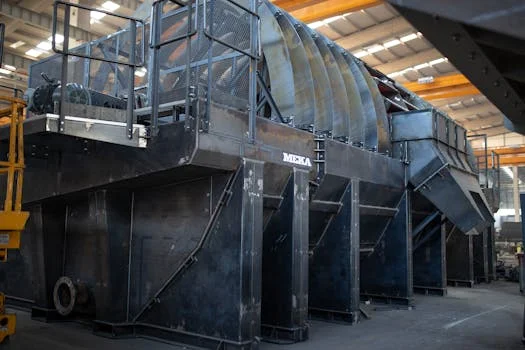
Successful DAF integration requires a multi-stage approach, typically positioning the unit after mechanical screening and before biological treatment to reduce aeration demand by 30–50%. Without proper upstream protection, large debris can clog the air injection nozzles or damage the recycle pumps. A rotary mechanical bar screen is the industry standard for this preliminary stage, removing solids larger than 1–3 mm before they reach the DAF unit.
Once the wastewater is screened, it enters the chemical conditioning stage. This is where the wastewater pre-treatment system relies on precise dosing. Using an automated chemical dosing skid ensures that the coagulant and flocculant concentrations are adjusted in real-time based on flow rates or turbidity. This not only optimizes the flotation process but also prevents the over-consumption of expensive chemicals. The resulting float sludge, which often has a solids concentration of 2–5%, must be handled downstream. For efficient disposal, this sludge is typically sent to a plate and frame filter press for dewatering, which increases the solids content to 25–40%, significantly lowering hauling costs.
The clarified water from the DAF system is then suitable for secondary treatment. In modern Polish plants, this often involves an integrated MBR system. Because the DAF has already removed the bulk of the FOG and TSS, the MBR can operate at a higher flux rate with a much lower risk of membrane fouling. This integrated approach ensures that the final effluent meets the strictest Polish "Rozporządzenie Ministra Gospodarki Morskiej i Żeglugi Śródlądowej" standards for discharge into the environment.
Frequently Asked Questions
What is the function of a DAF system?
It removes suspended solids, fats, oils, and greases from industrial wastewater by using micro-bubbles to float particles to the surface for removal.What is the loading rate for a DAF system?
The typical hydraulic surface loading rate is 5–20 m²/m²·h, with a hydraulic retention time of 20–30 minutes in the flotation zone.How much does a DAF system in Poland cost?
Installed costs generally range from €50,000 to €300,000, depending on the required flow capacity, material of construction, and level of automation.Can DAF systems handle high-fat wastewater?
Yes, DAF is the preferred technology for high-fat streams, achieving up to 95% fat removal in industries like meat processing (e.g., Kabanos Jablonka).Is DAF better than sedimentation?
DAF