
Why Wetumpka Mining and Metals Plants Are Choosing Equipment in 2026
Wetumpka-area aggregate, kaolin, and metals-finishing operations are re-specifying primary clarification under the 2026 ADEM NPDES permit renewal cycle, and the binding standard behind every permit limit is 40 CFR 437 — Ore Mining and Dressing (EPA effluent guidelines, last updated 2025-08). The subcategory tables in 40 CFR 437 cap total suspended solids (TSS), pH, and listed metals (iron, manganese, aluminum, copper, lead, zinc) for mine drainage, and they require whole-effluent-toxicity (WET) testing for the acute-toxicity variance — a line item most Alabama discharges now have to defend in writing. Plant managers in the Tallapoosa-Coosa watershed, near Martin Lake and Kowaliga, are also dealing with potential acid-rock-drainage (ARD) influence that spikes dissolved iron and manganese during storm events when runoff contacts stockpiles.
Primary clarification is the gatekeeper unit operation: failure here drives chemical cost overruns downstream, pushes the clarifier effluent above 40 CFR 437 daily-max TSS values, and turns a routine monthly DMR into a special report. With EPA's 2025–2026 effluent-guidelines review window open and ADEM reissuing permits on a five-year cycle, the equipment choice made in 2026 is the basis for the next permit cycle's compliance narrative. The DAF-vs-clarifier question is being addressed now, with jar-test data in hand, rather than being deferred.
The two competing unit processes for a Wetumpka plant in 2026 are dissolved air flotation (DAF) and the inclined-plate lamella clarifier. Both can meet 40 CFR 437 limits—but only on the right feed stream, with the right chemical conditioning, and inside the right footprint. The following sections compare these processes to provide a technical justification for regulators and CFOs.
DAF and Lamella Clarifier: How Each One Actually Treats Mining Wastewater
A dissolved air flotation (DAF) system clarifies by floating, not by settling. A side-stream of clarified water is pressurized to roughly 4–6 bar in a saturation vessel with dissolved air; when that stream is depressurized back into the main flotation tank, it releases a cloud of micro-bubbles in the 30–50 µm range that attach to flocculated particles and lift them to the surface (per Clearwater Industries, 2025-08). A rotating skimmer sweeps the floating sludge blanket into a trough, and clarified water is drawn from below the blanket. Most DAF tanks also include a bottom sediment compartment to handle the small fraction of heavy solids that do not attach to bubbles (per Clearwater Industries, 2025-08).
A high-efficiency lamella clarifier clarifies by settling, accelerated through a stack of inclined plates at 55–60°. Feed first passes through a flocculation zone, then rises through the plate pack; sludge slides down the underside of each plate into a hopper, and clarified effluent overflows a peripheral launder. Surface-loading rates for a lamella clarifier are typically 20–40 m³/m²·h, and the geometry means a relatively small footprint delivers a large effective settling area. Lamella cannot remove FOG, oil sheen, or low-specific-gravity floc — those particles simply do not settle against the upward flow.
Upstream of either unit, chemical conditioning is mandatory: a coagulant (ferric sulfate, alum, or PAC), pH adjustment (lime, caustic soda, or sulfuric acid depending on ARD influence), and a polymer flocculant. Flash-mix contact time in floc tubes is short — 15 to 45 seconds (per Clearwater Industries, 2025-08) — so a PLC-controlled coagulant and polymer dosing skid with in-line pH monitoring is the practical way to hold the conditioning step stable across a 24-hour shift.
Side-by-Side Performance: DAF vs Lamella Clarifier on Mining Effluent
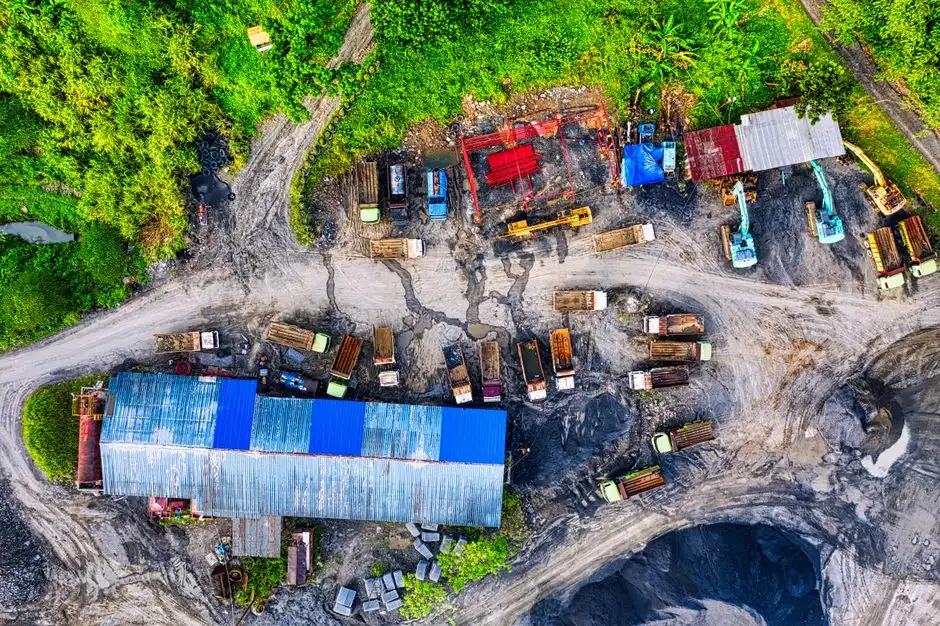
Engineers evaluating both units for a Wetumpka site need the comparison in one place. The table below consolidates the operating parameters that matter for 40 CFR 437 compliance, ADEM permit defense, and CAPEX/footprint review. Numeric ranges reflect typical industrial wastewater behavior and are consistent with the dissolved air flotation (DAF) system and high-efficiency lamella clarifier design envelopes.
| Parameter | DAF | Lamella Clarifier |
|---|---|---|
| Typical TSS removal | 50–90% on industrial wastewater (per Clearwater Industries, 2025-08) | 60–80% on settleable mining solids |
| FOG / oil removal | 80–95% (per Clearwater Industries, 2025-08) | Poor — oil layer disrupts plate sludge |
| Heavy-metal floc removal (Fe, Mn, Al, Cu) | Strong on light Al(OH)₃ and freshly precipitated Fe floc | Strong on dense Fe(OH)₃ and Mn(OH)₂ at pH > 9 |
| Surface / hydraulic loading | 5–25 m³/m²·h depending on model | 20–40 m³/m²·h on plate area |
| Footprint per m³/h | ~0.33–0.50 m² per m³/h (compact skid) | ~0.67–1.0 m² per m³/h due to plate area and hopper |
| Sludge consistency | 3–5% dry solids (float compaction) | 1–2% dry solids (needs downstream dewatering) |
| CAPEX planning range (per 10 m³/h capacity) | USD 25,000–70,000 (planning estimate, 2026) | USD 10,000–35,000 (planning estimate, 2026) |
| OPEX driver | Polymer dose + saturator air compressor energy | Lime/caustic pH adjustment + sludge hauling |
| Startup complexity | Higher — needs clean-water fill, saturator tuning | Lower — gravity feed and overflow |
| Benchmark downstream performance | 89% COD reduction achievable on properly pre-DAF'd feed (per Abboah-Afari & Kiepper, 2012, ASABE) | Insufficient as DAF pre-treatment for tight COD limits |
The 89% COD reduction cited in the table comes from a membrane study of poultry-processing wastewater after pre-DAF treatment (per ASABE, 2012) and is a benchmark for what a well-conditioned DAF can deliver as feed to downstream polishing—relevant because Wetumpka plants under 40 CFR 437 acute-toxicity variance conditions must demonstrate comparable removal consistency across shifts.
When DAF Wins in Wetumpka: Floatables, Oils, and Tight Footprints
DAF is the right call when the influent has visible oil sheen, free or emulsified FOG, drawing compounds, or hydrocarbon cleaning fluids — common in metal-finishing washwater serving automotive and aerospace Tier suppliers in the region. A second strong case is low-density floc: aluminum hydroxide at near-neutral pH, freshly precipitated metal-hydroxide floc that has not had time to densify, and any stream with a high fraction of colloids smaller than ~50 µm that will not settle in a reasonable residence time. A third case is site footprint: older Wetumpka plants near the Coosa River and along the Tallapoosa tributaries have sumps and pads sized for previous-generation equipment, and a DAF typically occupies roughly half the footprint per m³/h of a comparably rated lamella.
For flows up to 66 GPM, a pre-assembled skid DAF with integrated chemical conditioning (the dissolved air flotation (DAF) system family covers 4–300 m³/h across 13 models) drops onto a concrete pad with minimal civil work. Modular two-skid configurations handle larger flows and storm surges from stockpile contact. Sludge off the DAF float blanket typically lands at 3–5% dry solids, so a downstream plate and frame filter press can push cake to 25–35% DS for off-site disposal without an intermediate thickener.
When a Lamella Clarifier Wins in Wetumpka: High-Density Slurries and Grit
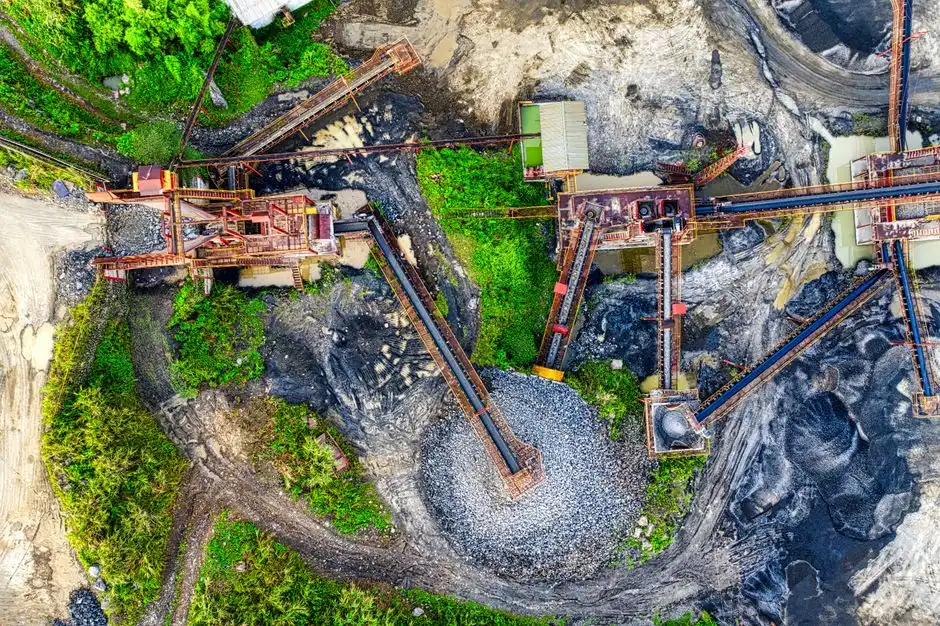
Lamella is the right call when the stream carries settleable grit above ~200 µm, as in sand-and-gravel washwater and aggregate processing operations between Wetumpka and the Kowaliga aggregate belt. A second case is high-density floc: iron and manganese from ARD contact, precipitated at pH 9–10 with lime or caustic, where the hydroxide floc is dense and fast-settling. DAF in this regime wastes air — the bubbles attach and the floc still sinks — and a lamella clarifier extracts the solids with less chemical and no saturator air load. The third case is CAPEX-constrained projects where FOG and floatable load is low: a high-efficiency lamella clarifier rated at 20–40 m³/m²·h, and per its design spec, capable of supporting up to 30% reduction in coagulant consumption versus a conventional clarifier, fits a tighter 2026 capital envelope.
Lamella has a hard limitation: even a small oil or FOG layer will bridge across the inclined plates, disrupt the sliding sludge blanket, and force a plant shutdown for plate cleaning. If a Wetumpka plant has any upstream source of lubricants, cutting fluids, or hydrocarbon wash, lamella alone is the wrong primary — and a DAF should be in front of it, not the other way around.
Wetumpka Decision Framework: A Four-Question Checklist for 2026
The fastest way to a defensible 2026 specification is to walk four questions in order, with a jar-test result and an ADEM permit in front of you.
- Is the stream floatables-dominated or settleables-dominated? Oil sheen, FOG, drawing compounds, or light Al(OH)₃ floc → DAF. Grit, dense Fe(OH)₃ at high pH, or settleable sand → lamella.
- What does 40 CFR 437 and the ADEM permit actually require? Map the subcategory TSS daily-max, the pH range, and each listed metal limit against the expected single-pass removal of each unit. If a single lamella pass leaves Fe or TSS above the permit, either dose more chemistry or add polishing.
- What is the available footprint next to existing sumps? DAF delivers roughly twice the flow per m² of pad of a lamella. On tight river-adjacent sites, this can flip the choice even when chemistry favors settling.
- What is the chemical-conditioning budget for 2026? DAF responds to polymer optimization and benefits from a PLC-controlled coagulant and polymer dosing skid; lamella tolerates aggressive lime-caustic pH adjustment without bubble-nucleation issues, which suits ARD-influenced streams that need to hold pH 9–10 for metal precipitation.
For most Wetumpka mining and metals plants in 2026, the practical answer is a hybrid: a DAF as primary for FOG, oils, and light floc, followed by a lamella as polishing to tighten TSS, iron, and manganese ahead of the outfall. The hybrid also gives an operator a parallel polishing path that helps defend the 40 CFR 437 acute-toxicity variance position — if one unit drifts, the second unit absorbs the load while the first is corrected.
Frequently Asked Questions
What is 40 CFR 437 and why does it govern a Wetumpka plant's clarifier choice?
40 CFR 437 is the EPA Effluent Limitations Guidelines for the Ore Mining and Dressing point source category, and it sets the numeric effluent limits — TSS, pH, and listed metals — that ADEM carries
Frequently Asked Questions
Should a Wetumpka mining plant choose DAF or clarifier for 40 CFR 437 compliance in 2026?
The selection depends on the specific gravity and particle size distribution of the waste stream. For 40 CFR 437 compliance, which regulates the Centralized Waste Treatment (CWT) point source category, DAF systems are generally preferred if the wastewater contains high concentrations of emulsified oils or low-density metallic hydroxides that resist gravity settling. Clarifiers are more suitable for high-density, granular solids that exhibit rapid settling velocities, often requiring smaller footprints than DAF units.
What TSS removal does a DAF achieve on mining and metals wastewater?
A properly operated Dissolved Air Flotation system typically achieves Total Suspended Solids (TSS) removal efficiencies ranging from 85% to 98%. In mining applications involving metal-laden process water, these systems are highly effective at capturing particles in the 10 to 100-micron range, provided that chemical coagulation and flocculation dosing are optimized to achieve a particle size conducive to micro-bubble attachment.
How much does a dissolved air flotation system cost per m³/h in 2026?
As of 2026, capital expenditure for a turnkey DAF system typically ranges between $8,000 and $15,000 per cubic meter per hour (m³/h) of design capacity. This range accounts for standard 316L stainless steel construction, integrated air saturation pumps, and automated sludge skimming mechanisms, though costs may escalate based on the complexity of the required chemical conditioning skid and local installation labor rates in the Alabama market.
Can a lamella clarifier handle oil and FOG from a metal-finishing shop?
Lamella clarifiers are generally ineffective at removing free or emulsified Fats, Oils, and Grease (FOG) as a standalone solution because these substances have a specific gravity lower than water and will rise rather than settle. While a lamella clarifier can handle the heavy metal sludge produced during pre-treatment, the presence of FOG will cause surface blinding and potential fouling of the inclined plates, necessitating an upstream oil-water separator or DAF unit to prevent process failure.
Is a DAF + lamella polishing train worth the extra capex for a Wetumpka plant?
A dual-stage train is recommended if the facility must meet stringent Alabama Department of Environmental Management (ADEM) discharge limits for ultra-low metal concentrations or strict turbidity standards. By utilizing the DAF as a primary separator for light-density solids and oils, followed by a lamella clarifier for final polishing of heavier precipitates, the facility can achieve consistent compliance and reduce the frequency of downstream membrane fouling, providing a return on investment through reduced chemical consumption and lower sludge disposal costs.