Why the DAF-vs-Clarifier Question Hits Harder in Linden, NJ Fabricated Metals Plants
Fabricated metals shops along the Linden, NJ industrial corridor operate within the Passaic Valley Sewerage Commissioners (PVSC) service area, meaning their discharge is governed by EPA categorical pretreatment standards at 40 CFR 433 and PVSC's NJPDES pretreatment limits. For the Fabricated Metal Products category, 40 CFR 433 sets daily maximums of 0.69 mg/L lead, 2.38 mg/L total chromium, 1.41 mg/L nickel, 1.52 mg/L zinc, and a 285 mg/L TSS monthly average (per 40 CFR 433.10, 2026). Those numbers apply to the treated effluent, defining the requirements for the primary separator before it hands off to the downstream precipitation/polish train. A typical Linden stamping, machining, or plating line generates a feed envelope of 200–2,000 mg/L TSS, 50–500 mg/L oil & grease, pH swings from 2 to 12, and a steady load of emulsified cutting fluids plus metal hydroxide floc from upstream neutralization (HydropureWater field data, 2026). An undersized or wrongly specified primary clarifier in front of that envelope pushes the entire treatment train out of compliance and exposes the plant to NJPDES surcharge penalties from PVSC. The DAF vs gravity clarifier decision is a regulatory and economic call.
What Each Technology Actually Does to Fabricated Metals Wastewater
Dissolved air flotation units pressurize a side-stream of clarified effluent to 4–6 bar, saturate it with air, and release the stream through a pressure-relief valve at the contact zone. The pressure drop nucleates a cloud of 30–50 µm micro-bubbles (per ClearStream and SigmaDAF engineering data, 2026) that attach to particles with specific gravity close to water—specifically the oil droplets, emulsified FOG, and freshly precipitated metal hydroxide floc that dominate Linden metalworking streams. The bubble-particle agglomerates rise in 15–25 minutes of hydraulic residence time and are scraped off the surface by a paddle or flight skimmer; a small fraction of heavier grit settles to the bottom hoppers.
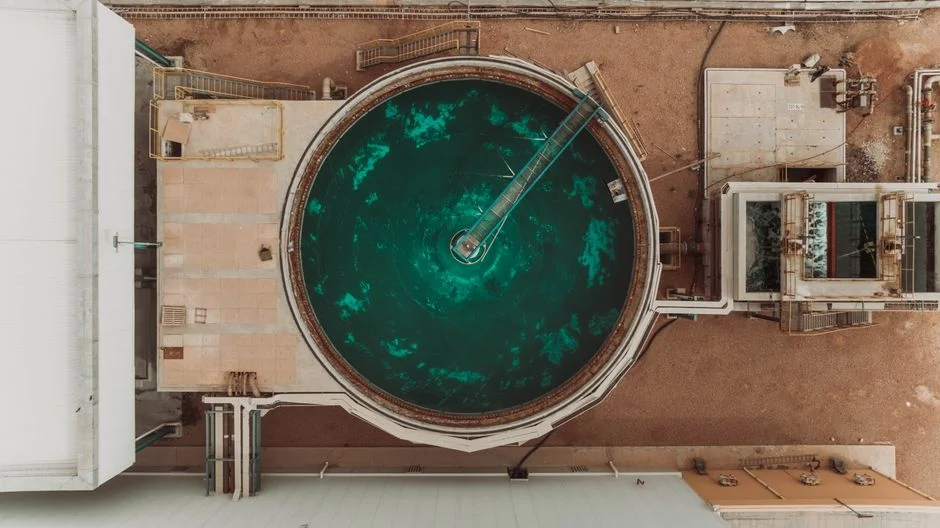
Conventional gravity clarifiers rely on Stokes-law settling and only remove particles with a specific gravity above roughly 1.05 for the full 2–4 hour residence time at 50 m³/h (HydropureWater sedimentation tank design data, 2026). Emulsified oil droplets at specific gravity 0.92–0.98 will not settle at any practical HRT, and very fine metal hydroxide floc will pass through with the overflow. The clarifier scrapes settled sludge from the bottom and discharges clarified effluent over weirs. These two mechanisms—float vs sink, micro-bubble attachment vs gravity—target opposite particle populations, explaining the performance gaps seen in Linden plants.
Side-by-Side: DAF vs Clarifier for the Linden Fabricated Metals Use Case
| Parameter | DAF (HydropureWater / FPAC / FPBC / FPHF / COMPACT) | Conventional Gravity Clarifier |
|---|---|---|
| TSS removal on oil-bearing metalworking feed | 80–95% | 40–70% |
| Oil & grease / FOG removal | 70–90% | <30% (essentially ineffective on emulsified oil) |
| Footprint at 50 m³/h | 15–25 m² plus a small chemical conditioning skid | 80–120 m² plus equalization |
| Hydraulic residence time at 50 m³/h | 15–25 min | 2–4 h |
| CAPEX band (qualitative, 2026 USD) | Low-to-mid six figures installed, packaged | Lower tank cost, higher civil works and real estate |
| OPEX band | Lower lifetime chemical use; reduced downstream surcharges | Higher polymer demand; surcharge exposure on residual oil |
| Operator skill | Low–moderate; PLC-controlled, fully automated skimmer and sludge discharge | Moderate; rake torque, scum, and sludge pumping watch |
| Sensitivity to flow surges | Moderate; equalization plus recycle stabilize performance | High; a 2× surge resuspends settled solids |
The HydropureWater dissolved air flotation system family maps to this envelope: the COMPACT DAF handles ≤66 GPM on a single skid, the FPAC is a low-profile cross-flow unit for very high solids loads, the FPBC pairs a DAF with lamella pack technology for low-buoyancy particles, and the FPHF combines cross-flow and countercurrent flow for high-flowrate lines (SigmaDAF engineering data, 2026). The HydropureWater high-efficiency lamella sedimentation tank provides a hybrid option: surface loading 20–40 m/h with roughly 30% lower chemical use than a conventional clarifier, though it remains gravity-based and less effective on emulsified oil. If the jar test shows more than 50 mg/L emulsified oil or floatable FOG, DAF is preferred; if the solids are heavy inorganic and the stream is essentially oil-free, a lamella clarifier is sufficient.
Compliance, Footprint, and 2026 Cost Reality for a 50 m³/h Linden Line
A properly sized DAF in front of chemical precipitation at a 50 m³/h flow typically drops TSS from a 1,000 mg/L feed to under 50 mg/L and oil/grease to under 20 mg/L in a single stage, allowing the downstream precipitation and lamella polish to bring dissolved metals under 40 CFR 433 daily maximums (HydropureWater field data, 2026). This 1,000 mg/L feed represents the midpoint of the 200–2,000 mg/L envelope typical of a Linden stamping and plating line discharging to PVSC.
Footprint constraints often dictate retrofit feasibility in this corridor. A 50 m³/h DAF unit typically needs 15–25 m² plus a small chemical conditioning skid, whereas a comparably rated clarifier needs 80–120 m² plus equalization, which rarely fits inside an existing Linden brownfield without production floor disruption. On CAPEX, a packaged 50 m³/h DAF system typically lands in the low-to-mid six figures USD installed in 2026; a clarifier of the same rating is often cheaper on bare tank cost but more expensive once civil works, real estate opportunity cost, and lifetime chemical use are tallied (per DAF oil-water separator CAPEX vs OPEX data for 2026). DAF also cuts downstream biological or tertiary loading, lowering PVSC surcharges on TSS and FOG. Treat these CAPEX figures as order-of-magnitude estimates.
How to Choose: A 2026 Decision Framework for Linden Fabricated Metals
Follow this four-step path before finalizing a purchase.
- Run a jar test with and without coagulant. Standard dose is a metal salt (alum, ferric chloride, or PAC) plus an anionic polymer at 0.5–2 mg/L. If floatables rise to the surface within 5 minutes, DAF is the indicated primary technology.
- Quantify the oil & grease fraction. Above 50 mg/L emulsified oil, specify a DAF as the primary. Below 20 mg/L on a stream that is mostly heavy inorganic settleables, a clarifier is acceptable, and a lamella plate design is usually the better clarifier pick.
- Check the available footprint. Under 30 m² of floor at 50 m³/h of feed, DAF is the only realistic option. On an open site with no land pressure, a clarifier or lamella remains viable.
- For the tightest 40 CFR 433 margins, specify DAF as primary with a lamella as polish—the train that pairs the HydropureWater dissolved air flotation system with the HydropureWater high-efficiency lamella sedimentation tank, fed by a matched HydropureWater automatic chemical dosing skid for pH and coagulant control. This configuration maximizes the probability of meeting 0.69 mg/L lead and 2.38 mg/L total chromium requirements consistently.
For a comparison of the same decision tree applied to a different metals segment, see the DAF vs clarifier for mining/metals wastewater write-up, or the Midwest equivalent Milwaukee metals-plant DAF vs clarifier guide for cold-climate siting detail.
Frequently Asked Questions
What removal rates can a DAF realistically hit on metalworking wastewater in 2026?
A properly sized DAF with chemical conditioning typically achieves 80–95% TSS removal and 70–90% oil & grease removal on oil-bearing metalworking feed (SigmaDAF field data, 2026). On a 1,000 mg/L TSS feed at 50 m³/h, that translates to a DAF effluent under 50 mg/L TSS, allowing precipitation to focus on dissolved metals.
When does a gravity clarifier still make sense for a Linden fabricated metals plant?
Gravity clarifiers are appropriate when the feed contains mostly heavy inorganic settleables with a specific gravity above 1.05 and emulsified oil below roughly 20 mg/L. In that envelope, a lamella clarifier at 20–40 m/h surface loading can match DAF on TSS while using about 30% less chemical, per HydropureWater sedimentation tank design data, 2026.
How does 40 CFR 433 actually drive the DAF vs clarifier decision in Linden?
The 40 CFR 433 daily maximums—0.69 mg/L lead, 2.38 mg/L total chromium, 1.41 mg/L nickel, 1.52 mg/L zinc, and a 285 mg/L TSS monthly average—apply to treated effluent (40 CFR 433.10, 2026). A clarifier that leaves 100+ mg/L TSS and 30+ mg/L oil in the overflow forces the downstream precipitation stage to carry the entire metals load plus the suspended solids. A DAF that drops TSS below 50 mg/L and oil below 20 mg/L in primary allows precipitation to polish dissolved metals to the categorical limits.
What is the typical 2026 footprint for a 50 m³/h DAF vs clarifier on a Linden line?
A packaged 50 m³/h DAF typically needs 15–25 m² plus a small chemical conditioning skid; a comparably rated gravity clarifier typically needs 80–120 m² plus equalization (HydropureWater field data, 2026). On a constrained Linden brownfield site, that 3–5× footprint ratio often dictates the project path.