
Why Warren Plastics and Rubber Plants Hit a Wall With Gravity Clarifiers
Warren, MI plastics and rubber processors—compounding, extrusion, latex dipping, molding—generate washwater that gravity clarifiers were not designed to handle. A typical Warren influent carries 800–2,500 mg/L TSS, colloidal latex emulsions, polymer processing aids, plasticizer and solvent residues, with washwater temperatures swinging 25–45°C across cycles and shift-change batch surges that can double influent flow for 15–30 minutes (HydropureWater field data, 2026). The EPA Process Design Manual for Suspended Solids Removal (EPA 625/1-75-003a, 1975-01) partitions total solids into four size fractions: dissolved <0.001 µm, colloidal 0.001–1 µm, supracolloidal 1–100 µm, and settleable >100 µm. Rubber-compounding and plastic-extrusion washwater loads the colloidal and supracolloidal bands heavily, exactly the size classes that settle slowly under Stokes' law and wash out over the weir during a hydraulic surge. Under a quiescent clarifier running at 800–1,200 GPD/ft², only the >100 µm settleable fraction and a portion of the supracolloidal fraction have a realistic chance of dropping out—meaning a clarifier on this feed returns 50–70% TSS removal at best, while a dissolved air flotation unit with coagulated floc and 20–80 µm micro-bubbles routinely returns 92–98%.
The 2026 Warren Compliance Stack: 40 CFR Part 433 Meets the GLWA Surcharge Grid
40 CFR Part 433 (Rubber Processing) sets categorical pretreatment limits at TSS daily max 60 mg/L and monthly average 31 mg/L, O&G daily max 52 mg/L and monthly average 26 mg/L, plus regulated zinc, lead, BOD, COD, and pH (per 40 CFR Part 433). Plastic-extrusion and injection-molding facilities discharging to the Great Lakes Water Authority (GLWA) sewer system typically fall under 40 CFR Subchapter N effluent guidelines and the receiving POTW's local pretreatment program, which mirror the same TSS and O&G ceiling structure. GLWA's industrial pretreatment program adds local surcharges on TSS and O&G above threshold loadings, so every avoided pound is a direct line item on the surcharge tab. The DAF-vs-clarifier decision is a compliance and surcharge-avoidance decision: a 92–98% TSS-removal DAF gives a Warren plant comfortable headroom under the 60 mg/L daily max, while a 50–70% clarifier on an 800–2,500 mg/L feed leaves the operator paying surcharges on a chronically out-of-spec discharge. The 2026 capex line has to be defended with 40 CFR Part 433 numbers already baked in.
How a DAF Actually Beats a Clarifier on Latex and Polymer Washwater
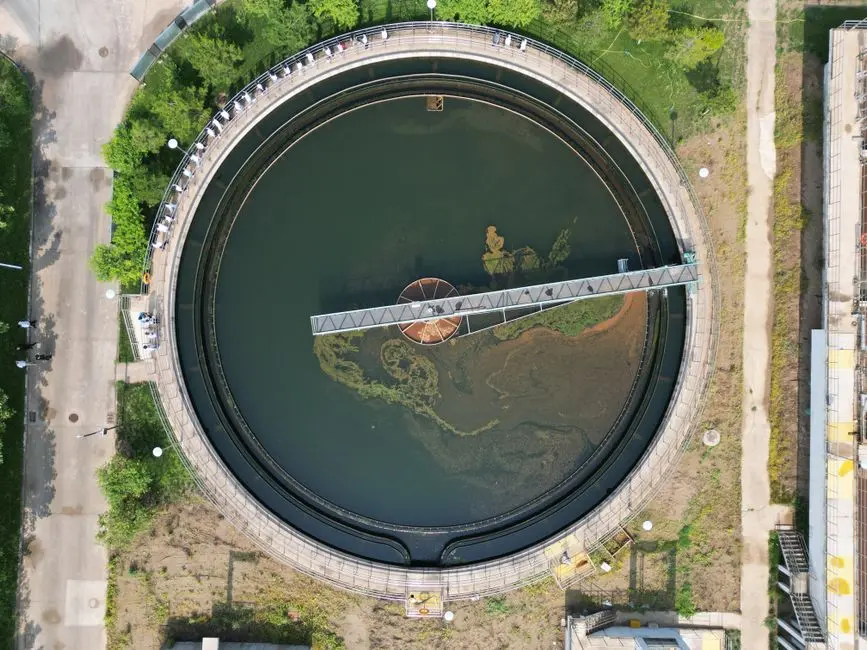
A dissolved air flotation unit saturates a pressurized side stream—typically 3–5 atm (45–75 psig)—with air, then releases that stream through needle valves or a micro-bubble generator into the main flotation tank. The pressure drop nucleates a dense cloud of 20–80 µm bubbles (20–40 µm is the modern DAF Corp micro-bubble generator benchmark) that attach to coagulated and flocculated particles, lowering their effective density and floating them to the surface, where a rotating scoop or skimmer blade removes the thickened float (per EPA 625/1-75-003a, Section 7.8). A gravity clarifier runs the opposite mechanism: a quiescent tank at 800–1,200 GPD/ft² overflow rate with 3–4 m side-water depth and a sludge hopper, relying on Stokes' law settling that captures only the >100 µm fraction and a portion of the supracolloidal band. The EPA Process Design Manual documents both flotation (Section 7.8, Table 7-4) and primary/secondary clarifier design (Tables 7-2 and 7-3) as parallel options, and explicitly ties the choice to which size fraction dominates the feed (per EPA 625/1-75-003a, 1975-01). For Warren plastics and rubber plants, the feed is dominated by colloidal and supracolloidal latex and polymer, which is exactly the band a clarifier cannot reach. A secondary engineering benefit: the same micro-bubbles dissolve oxygen into the stream, which any downstream biological step (MBBR, activated sludge) can use without an auxiliary aeration basin. For a parameter benchmark on the lamella side of any hybrid train, the lamella vs conventional clarifier benchmark walks through the same framework.
Side-by-Side: DAF vs Clarifier Parameter and 2026 Cost Matrix for Warren Plants
The procurement decision for a 2026 capex AFE comes down to a handful of engineering numbers. The matrix below consolidates the parameters a Warren EHS manager or plant engineer needs to defend the line item, with sources attributed so the values can be cited directly into a board memo or RFP.
| Parameter | DAF | Gravity / Lamella Clarifier |
|---|---|---|
| TSS removal on latex/polymer feed | 92–98% (DAF Corp FC Maximizer, 2025-10) | 50–70% without chemical enhancement |
| Hydraulic capacity | 10–11,000 GPM in 6–70 ft diameter units (DAF Corp) | 800–1,200 GPD/ft² overflow rate |
| Footprint | Shallow tank, typically <2 m side-water depth; compact | 3–5× larger footprint; 3–4 m side-water depth plus sludge hopper |
| Sludge concentration (out of primary) | 2–4% thickened float | 1–2% underflow, typically needs thickening |
| Chemical demand (coagulant + flocculant) | Lower polymer dose; micro-bubbles attach to lighter floc | Higher polymer dose; relies on dense floc for settling |
| 2026 U.S. turnkey CAPEX (50–500 GPM, excl. building) | $185,000–$275,000 at 200 GPM (sensitive to 304 vs 316 SS and SCADA integration) | $150,000–$900,000 once civil works and a thickener are included |
| OPEX band (annual, normalized) | Higher compressed-air energy and polymer; lower sludge handling | Higher sludge handling and pumping; lower compressed-air |
| OPEX parity | Within 10–20% on most plastics/rubber sites (HydropureWater field data, 2026) | |
| Best-fit feed | Low-density, colloidal, oily, floatable matter | Heavy mineral fillers, dense sludges, steady flow |
A dissolved air flotation system typically lands at the lower end of the DAF CAPEX band for 50–500 GPM flows, and the 2–4% float cuts downstream dewatering load by roughly half compared to a 1–2% clarifier underflow. For a polymer-loaded feed typical of Warren lines, the DAF cost guide for polymer-loaded industrial wastewater provides a parallel reference envelope.
When a Warren Plant Should Still Choose a Clarifier — or a Hybrid Train
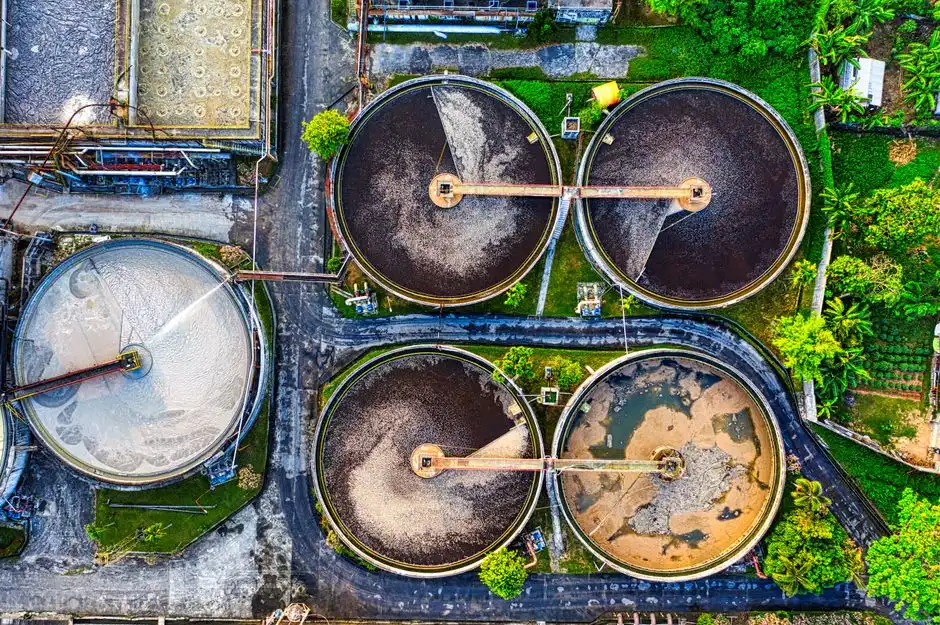
Heavy inorganic filler slurries—calcium carbonate, talc, titanium dioxide—in PVC compounding lines represent a legitimate clarifier-first use case, as particle density favors gravity settling and a well-designed primary or lamella clarifier outperforms DAF on a dollar-per-pound-removed basis. Existing clarifier infrastructure under retrofit is a second use case, where the civil works are sunk and a DAF retrofit would force redundant hydraulic capacity without recovering the disposal-cost savings. Above 500 GPM with a mixed heavy-filler and light-polymer stream, a hybrid train is the right call: a primary DAF removes floatable latex, plasticizer residues, and oily solids, followed by a lamella or conventional clarifier to recover heavy fillers, with both sludge streams reporting to a common dewatering step. The EPA Process Design Manual documents tube/lamella settlers in Sections 7.9–7.10 as legitimate parallel options to integrate with coagulation/flocculation (per EPA 625/1-75-003a, 1975-01), and the resulting float and underflow can be co-thickened on a single downstream filter press, simplifying the sludge-handling train.
Sizing and Pairing the 2026 DAF Skid for a Warren Plant
Plants with flow bands of 20–1,000 GPM, variable batch loads, and streams carrying more than 200 mg/L O&G or significant colloidal polymer should default to DAF—this covers roughly 80% of the local plant population (HydropureWater field data, 2026). Pair the unit with an automatic chemical dosing skid for coagulant + flocculant and pH trim, and a downstream plate-and-frame filter press that converts the 2–4% DAF float to a 20–30% cake for offsite disposal. The DAF float and a clarifier underflow can be co-thickened on the same filter press in a hybrid layout, which simplifies civil works and reduces the number of sludge pumps. Inside the $185,000–$275,000 2026 turnkey band for a 200 GPM skid, 304 vs 316 stainless steel and the level of SCADA/PLC integration are the two largest cost drivers—316 SS adds roughly 10–15% for plants handling chloride-bearing washwater or zinc-rich streams where pitting is a concern. For a downstream-side ROI cross-check, the filter press ROI analysis sizes the cake-solids target against disposal cost per ton.
The Warren Decision Flow in 5 Questions
- Is the stream above 200 mg/L O&G or carrying colloidal latex? Default to a DAF—the 92–98% removal band and 2–4% float reliably clear 40 CFR Part 433 daily max limits.
- Is the stream heavy inorganic filler (CaCO₃, talc, TiO₂) on steady continuous flow? Specify a primary or lamella clarifier; the dense particles favor gravity settling and lower OPEX.
- Is the site a retrofit with existing clarifier civil works? Retain the clarifier and add DAF only if the surcharge math on avoided TSS/O&G pounds justifies the new equipment and footprint.
- Is the design flow above 500 GPM with a mixed heavy-filler and light-polymer stream? Specify the hybrid DAF + lamella configuration with co-thickened sludge on a single filter press.
- In every configuration, pair the primary separator with sludge dewatering to a 20–30% cake. That is where disposal-cost savings are recovered.
Frequently Asked Questions
Is a DAF or a clarifier better for plastics and rubber wastewater in Warren, MI?
For most Warren plastics and rubber plants in 2026, a dissolved air flotation unit is the stronger default over a gravity clarifier, because colloidal latex and polymer processing aids load the sub-100 µm bands that defeat quiescent settling; DAF delivers 92–98% TSS removal versus 50–70% for a clarifier on the same feed (per DAF Corp FC Maximizer benchmarks, 2025-10).
What is
Frequently Asked Questions
Should a Warren, MI plastics or rubber factory choose DAF or a clarifier in 2026?
In 2026, the choice depends on your specific wastewater density and settling velocity. Dissolved Air Flotation (DAF) is generally superior for plastics and rubber plants because these industries often deal with low-density contaminants like plastic fines, oils, and latex particles that do not settle readily by gravity. DAF systems achieve 90-95% removal efficiency for suspended solids and fats, oils, and grease (FOG) by using micro-bubbles to float particles, which is significantly more effective than gravity clarifiers for the lightweight polymers common in Warren's industrial sector.
What is the 2026 turnkey cost of a DAF system for a 200 GPM plastics or rubber plant?
A fully commissioned, turnkey 200 GPM DAF system in 2026 typically ranges from $280,000 to $450,000. This estimate accounts for the DAF unit, chemical feed skids, sludge dewatering equipment, and local Warren-specific installation requirements, including integration with existing facility plumbing and electrical infrastructure. Costs vary based on the level of automation, materials of construction (304 vs. 316 stainless steel), and the complexity of the pre-treatment chemical dosing requirements needed to meet local pretreatment standards.
What are the 40 CFR Part 433 TSS and O&G limits for rubber processing effluent?
Under 40 CFR Part 433 (Metal Finishing and related industrial processes often applicable to rubber and plastics pre-treatment), the daily maximum limit for Total Suspended Solids (TSS) is 60 mg/L, with a monthly average limit of 31 mg/L. For Oil and Grease (O&G) measured as total petroleum hydrocarbons, the daily maximum limit is 52 mg/L, with a monthly average limit of 26 mg/L. Facilities discharging to the Warren municipal sewer system must maintain these levels to avoid non-compliance penalties.
Can a DAF and a lamella clarifier be used together on a plastics wash stream?
Yes, a DAF and a lamella clarifier are frequently used in series as a robust two-stage treatment train. The lamella clarifier acts as the primary stage to remove heavy, high-density solids and grit that would otherwise prematurely foul the DAF system, while the DAF serves as the secondary polishing stage to float lighter plastic particulates, oils, and emulsified contaminants. This configuration optimizes chemical usage and protects downstream equipment from abrasive wear.
Why does a gravity clarifier fail on colloidal latex wastewater?
Gravity clarifiers fail on colloidal latex wastewater because latex particles are typically sub-micron in size and possess a surface charge that prevents them from agglomerating, resulting in a settling velocity that is effectively near zero. Because these particles are often neutrally buoyant in water, they remain suspended indefinitely rather than settling to the bottom. Without the micro-bubble attachment provided by a DAF system to overcome these buoyancy forces, a standard gravity clarifier will demonstrate poor effluent clarity and excessive solids carryover.