Aberdeen Transportation-Equipment Wastewater: What Makes It Different
Transportation-equipment washwater is not food FOG and not mining tailings — it is a hybrid of petroleum oils, paint, phosphate, and trace metals, and the federal rule that governs it is 40 CFR 438. For Aberdeen, US transportation-equipment factories in 2026, choose DAF when oil & grease exceeds ~100 mg/L or the stream carries paint, phosphate, and floating hydrocarbons; choose a clarifier only as a DAF polish step for settleable solids. Under 40 CFR 438, hybrid DAF→lamella trains reliably hit TSS <30 mg/L and O&G <15 mg/L, which a standalone gravity clarifier cannot achieve on washwater with emulsified petroleum oils.
Aberdeen's discharge envelope sits between roughly 5 and 80 m³/h per site, spread across three sub-clusters. The BNSF-served rail and transit-car shops in the northern industrial belt generate the largest single-shops flows, often 25–80 m³/h, dominated by lube oils, hydraulic fluid, and anti-freeze washdown. The agricultural-machinery assemblers around Raven Industries and Tier-2 fabricators run smaller wash bays at 5–20 m³/h, but their streams carry more paint overspray solids from spray-booth bleed and zinc-phosphate rinse from pre-paint conversion coating. The NSN logistics-dependent defense fabricators add a third signature: hexavalent chromium from conversion coating and aluminum-passivation rinse, plus coolants from CNC and EDM operations. Across all three, the influent envelopes cluster around O&G 200–1,500 mg/L, TSS 300–1,200 mg/L, and zinc 2–20 mg/L (HydropureWater field data, 2026).
40 CFR 438 — the Metal Products & Machinery category — sets a daily-maximum O&G ceiling of 15 mg/L and a monthly-average TSS ceiling, with a trace-metals group covering zinc, lead, chromium (including hexavalent), and nickel (per EPA 40 CFR 438). NPDES permits in South Dakota add a 30 mg/L TSS single-pass ceiling for many of the smaller flows, which is the number that quietly drives equipment selection. The dominant contaminants — petroleum oils, hydraulic fluid, anti-freeze, zinc-phosphate coating rinse, hexavalent chrome from conversion coating, and paint overspray solids — share one trait: most of the target fraction is either emulsified, buoyant, or colloidal, which is precisely the fraction a settling tank handles worst. Effective chemical conditioning through a PLC-controlled coagulant and flocculant dosing skid is therefore the first operational decision, not an afterthought.
DAF vs Clarifier: The Core Mechanisms Side by Side
A dissolved air flotation (DAF) unit is a compact flotation separator: saturated water is depressurized inside the contact zone, releasing 30–50 µm microbubbles that attach to oil droplets and fine floc and lift them to the surface, where a paddle skimmer removes the float. The compact footprint and 5–20 minute hydraulic retention make DAF the right primary for any stream carrying emulsified oil, paint solids, or floated hydrocarbons. Industrial DAF systems are rated across a wide envelope — 4–300 m³/h, with a single skid covering flows to ~66 GPM and a modular two-skid configuration above that (per SigmaDAF USA, 2026).
A gravity clarifier — and its lamella plate upgrade — is a sedimentation device that depends on particle density differential. In a conventional rectangular or circular basin, Stokes settling governs, and hydraulic retention runs 1.5–3 hours; in a lamella clarifier, inclined plates at 55–60° shorten the effective settling path, lifting surface loading to roughly 20–40 m/h and cutting the footprint by a factor of 5–10 versus an equivalent conventional clarifier. A lamella is the right choice when the target contaminant is heavy, settleable solids — and almost the wrong choice for an oily washwater.
The removal numbers bear this out: DAF achieved 95% oil and grease removal in a comparable oily stream versus 70% for a clarifier; conversely, 90% heavy-solids reduction was achieved with a clarifier in a sediment-dominated stream (per Ecologix 2026). The two technologies are not interchangeable — they target different fractions of the solids spectrum, and Aberdeen washwater sits closer to the oily-fine end than the heavy-settleable end.
Decision Matrix: Which Technology Matches Which Aberdeen Stream
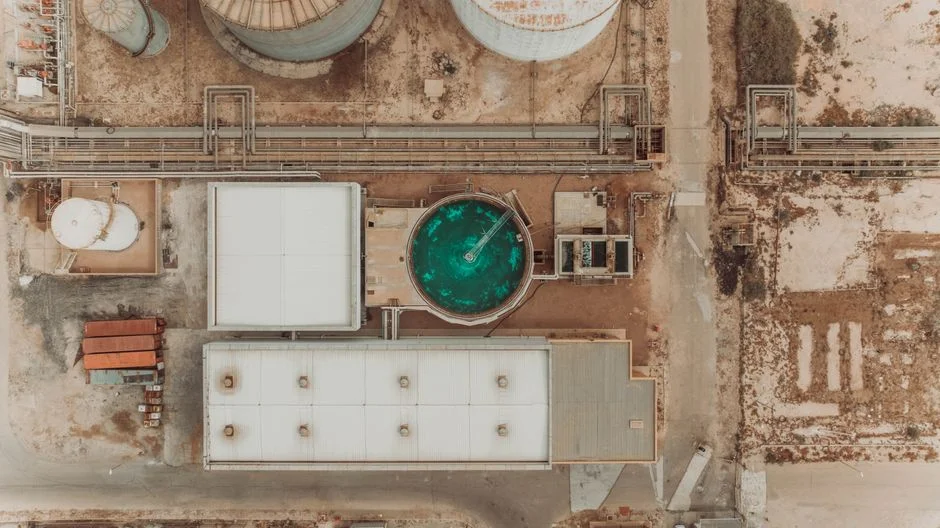
The defensible 2026 rule for Aberdeen plants: DAF-first whenever the stream contains emulsified oil, paint overspray, or hydraulic fluid — which describes essentially every wash bay, paint-booth wet wall, and phosphate-rinse line in town. Clarifier-first is the right call only for sediment-dominated pretreatment, such as a foundry green-sand wash or shot-blast dust pit, which is the rare exception in transportation shops. A short list of the parameters that decide it:
- Influent O&G: DAF handles 100–5,000 mg/L; a clarifier struggles above ~200 mg/L of emulsified oil.
- Influent TSS: Both handle 300–1,500 mg/L, but a clarifier pulls heavy settleables while DAF lifts the buoyant and flocculated fraction.
- Emulsified oil: DAF with chemical conditioning is the only technology that hits the 40 CFR 438 15 mg/L O&G ceiling in a single pass on emulsified streams.
- Zinc / hex chrome: Both technologies remove the metal-bearing floc only after pH adjustment and precipitation; DAF is the better carrier because it floats the precipitate.
- Footprint: DAF at 4–25 m³/h fits in a 2×4 m skid; a comparable clarifier needs 5–10× the area.
- Hydraulic retention: DAF 5–20 min vs clarifier 1.5–3 h — the difference between micro-bubble rise velocity and Stokes settling.
- OPEX: DAF carries air-compressor power plus coagulant/polymer; clarifier power is mainly the sludge scraper, but chemical cost is lower.
- CAPEX: DAF higher per m³/h at small flows, parity at 25–50 m³/h, clarifier cheaper above 100 m³/h of settleable solids.
- Sludge dewatering: DAF float is sticky, typically 3–6% DS, and dewatered in a plate-and-frame press; clarifier underflow is denser, 1–3% DS, and tolerates either belt press or plate press.
- 40 CFR 438 single-pass: DAF hits O&G ≤15 mg/L routinely; a clarifier alone misses it on emulsified streams.
| Parameter | DAF | Gravity / Lamella Clarifier |
|---|---|---|
| Best influent | Emulsified oil, paint, phosphate floc | Heavy settleable solids, sand/grit |
| Hydraulic retention | 5–20 min | 1.5–3 h (lamella 20–40 m/h) |
| Footprint (25 m³/h) | ~2×4 m skid | ~30–60 m² basin |
| O&G removal | ~95% (Ecologix 2026) | ~70% on emulsified streams |
| TSS removal | 70–90% on flocculated streams | ~90% on sediment streams |
| 40 CFR 438 O&G single pass | Yes (≤15 mg/L) | No on emulsified streams |
| Standard material | 304SS (316SS for chloride >200 mg/L) | 304SS / concrete / FRP |
| Sludge DS to dewatering | 3–6% float | 1–3% underflow |
| CAPEX envelope (2026) | $40K–$120K (4–25 m³/h) | $25K–$90K lamella |
| OPEX driver | Air compressor + polymer | Sludge scraper + lime |
Material selection matters in Aberdeen. SD winters deliver chloride-bearing deicing rinse water, and chloride concentrations above ~200 mg/L will pit 304SS at the waterline. The default specification for any Aberdeen DAF should be 316SS wetted parts, or at minimum 316SS for the contact zone and skimmer, with 304SS acceptable for the shell (per SigmaDAF USA material guidance, 2026). The dissolved air flotation system is offered in both alloys, and a lamella clarifier polish stage downstream is typically built in 304SS unless the influent carries the same chlorides.
2026 Cost Bands and ROI for Aberdeen Plants
Indicative 2026 turnkey equipment cost bands — confirm with a supplier quote before locking a budget line. A packaged DAF with chemical conditioning skid runs $40K–$120K for 4–25 m³/h flows and $120K–$400K for 25–300 m³/h flows. A lamella clarifier skid runs $25K–$90K across the same envelope. A complete 10 m³/h rail-car-shop train — DAF, lamella polish, pH adjustment, and a small plate-and-frame filter press for skimmings — typically lands in the $150K–$280K turnkey range installed (HydropureWater field data, 2026). The same train at 50 m³/h for a heavy-equip assembler runs $350K–$650K. These are ranges, not quotes.
OPEX splits along predictable lines. DAF power is dominated by the air compressor (1–4 kW per m³/h depending on recycle ratio) plus transfer pumps and the skimmer drive; chemical OPEX is coagulant (typically ferric chloride or PAC at 50–200 mg/L) plus anionic polymer (1–5 mg/L). A lamella polish adds sludge-rake power and a lime feed for pH adjustment when metals precipitation is in scope. A small PLC-controlled coagulant and flocculant dosing skid cuts polymer consumption 15–30% versus manual dosing by holding the charge demand steady across influent swings (per SigmaDAF USA operating notes, 2026).
| Cost line | 4–25 m³/h train | 25–80 m³/h train |
|---|---|---|
| DAF skid (turnkey) | $40K–$120K | $120K–$300K |
| Lamella clarifier | $25K–$60K | $60K–$90K |
| Chemical dosing skid | $15K–$30K | $25K–$45K |
| Filter press (skimmings) | $30K–$70K | $70K–$150K |
| Install + I&C (30–50% of equip) | $35K–$140K | $85K–$290K |
| Annual OPEX (power + chem) | $18K–$45K | $55K–$140K |
Payback framing: 2–4 years is the band Aberdeen plants are seeing in 2026, driven by three lines. First, avoided NPDES surcharges — South Dakota DENR assesses daily-max excursions at several thousand dollars per event. Second, oil-recovery resale — DAF float at 60–80% petroleum content has a positive scrap value to local oil recyclers in the $0.05–$0.15 per gallon band. Third, lower haul-off volume — a plate-and-frame filter press for skimmings and clarifier underflow produces cake >25% DS, which is typically 80–90% less volume to haul than lagoon sludge, and the filter-press TCO comparison favors plates over belts for streams with >30% oil float (per HydropureWater 2026 TCO analysis).
Hybrid Trains That Aberdeen Plants Are Specifying in 2026
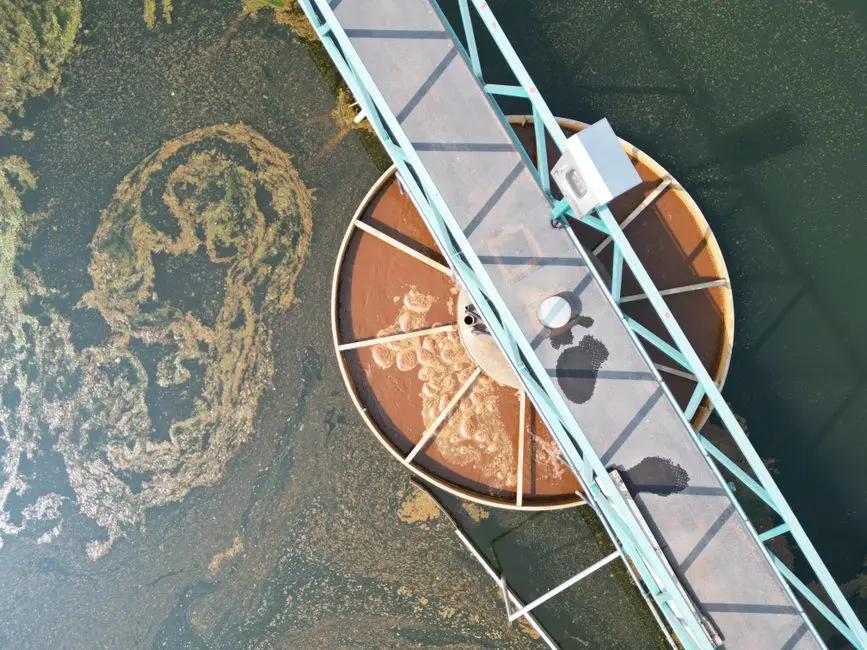
The dominant 2026 configuration across the rail, aerospace, and heavy-equipment shops in the Aberdeen area is a four-stage train: DAF primary → lamella clarifier polish → cartridge or multimedia filter → optional pH adjustment for metals precipitation. The design driver is the NPDES sub-30 mg/L TSS ceiling, which a single technology cannot reliably meet on a stream that swings between paint-bleed events (TSS spikes to 2,000+ mg/L) and quiet rinse periods (TSS at 200 mg/L). The DAF carries the oily and buoyant fraction, the lamella catches the heavy floc that slips through, and the multimedia polishes the residual to discharge quality.
On the sludge side, both the DAF float and the clarifier underflow report to the same plate-and-frame filter press for dewatering to cake >25% DS before disposal, which keeps hauled volume and landfill surcharges low. For facilities that loop rinse water back into the wash bay — common at the larger rail shops running 50+ m³/h — an MBR downstream of the multimedia filter is the reuse-water polish, typically sized at 8–12 h HRT to bring BOD & COD below the reuse target. Plants considering a belt press instead of plates for the dewatering step should review the plate vs belt filter press TCO comparison before specifying — oily float is the failure mode for most belt presses.
Frequently Asked Questions
Can a clarifier alone pass 40 CFR 438 for an Aberdeen transportation shop?
Rarely. A standalone gravity or lamella clarifier can pass 40 CFR 438 only when the stream is settleable-solids dominated and the O&G fraction is already below ~50 mg/L going in. On emulsified washwater with petroleum oils and paint, the clarifier misses the 15 mg/L O&G daily-max ceiling.
When is DAF the wrong choice?
DAF is the wrong choice when the stream is heavy inert sediment with no oil phase, and the plant has the land area for a settling basin or lagoon. A sand-and-grit wash, a shot-blast dust pit, or a foundry green-sand reclaim loop are the typical cases where a clarifier wins on both CAPEX and OPEX.
How long does a DAF clarifier system last in chloride-rich Aberdeen rinse water?
15+ years on 304SS in benign service, but the Aberdeen chloride picture (deicing rinse, winter washdown) warrants a 316SS contact zone at minimum. Specify the 316SS upgrade whenever influent chloride exceeds 200 mg/L.
Is chemical dosing required?
Yes. Coagulation and flocculation are mandatory for DAF performance — without them, the microbubbles cannot attach to sub-100 µm oil droplets or colloidal paint solids (per SigmaDAF USA, 2026). A PLC-controlled dosing skid pays back in polymer savings within 12–18 months at most Aberdeen flow rates.
What is the smallest DAF that makes sense for a 5 m³/h rail-car shop?
A 4 m³/h DAF unit paired with a chemical conditioning skid covers a 5 m³/h wash-bay flow with margin. For 5–8 m³/h, the same unit runs at 60–80% loading, which is the design sweet spot for stable float and skimmings.