Why Hillsboro Fabricated-Metal Plants Need a Different Decision
Fabricated-metals wastewater consists of at least four different streams stacked into one plant, and the primary separator must match the most difficult waste profile. A Hillsboro job shop pulling 5–30 GPM off a mixed stamping and machining line sees free tramp oil, emulsified coolant, and metal-bearing swarf in the same trough. A high-volume stamper at 50–250 GPM is dominated by drawing compound and press lube. A precision machining cell at 30–150 GPM is dominated by water-soluble coolant that has chemically emulsified and will not gravity-separate. An anodizing or plating line at 10–80 GPM carries very little oil but contains nickel, copper, hexavalent chromium, and cyanide under 40 CFR 433 (Metal Products & Machinery Point Source Category), with Oregon DEQ's delegated NPDES limits layered on top. The federal categorical standard is the baseline; Clean Water Services enforces local discharge limits for any plant routing through the Hillsboro industrial pretreatment program (per EPA 40 CFR 433).
Individual technologies rarely cover all four of these stream types effectively. Emulsified oils behave differently than settleable swarf: a coolant droplet at 1–10 µm with surfactant at the interface will not settle in a clarifier in any practical retention time, and it will not float without a chemical "cracking" step that breaks the emulsion first. The dominant real-world configuration in Hillsboro is DAF for oil removal, lamella for metals precipitation, and DAF-then-lamella as the hybrid that experienced applications engineers quote on plant audits. A similar logic applies to a DAF vs clarifier for metals-mining streams in Fairhope, where the emulsion chemistry is the deciding factor rather than the metal loading.
How a DAF System Actually Treats a Metalworking Stream
A DAF unit generates a pressurized recycle stream saturated with air and releases it through a relief valve at the inlet of the flotation cell, producing 20–50 µm microbubbles (per Clearwater Industries, 2026). Those bubbles attach to flocculated oil droplets and suspended solids and lift them to the surface, where a paddle skimmer scrapes the float into a hopper. Heavier settled solids drop to a bottom cone and are augered out. On a well-conditioned metalworking stream, this configuration consistently hits 85–98% TSS removal, with float solids at 2–4% dry solids — roughly 4–8× drier than clarifier underflow (per DAF Corporation, 2026). That dryness cuts downstream dewatering CAPEX and ties directly to the cost bands in any Sludge Dewatering Machine Cost Price: Real 2026 B2B Pricing Data & ROI conversation.
Upstream conditioning is required to ensure the bubbles attach to contaminants. First, a coagulant (typically ferric chloride, alum, or a cationic polymer) neutralizes the colloidal fraction. Second, a flocculant — usually a high-molecular-weight cationic or anionic polyacrylamide at 0.5–3 mg/L — bridges particles into a pin floc large enough for bubble attachment. Third, a "cracking" step for emulsified oils: an acid or demulsifier break collapses the surfactant interface, frees the oil, and lets the flocculant rebuild a floatable aggregate. Skipping the cracking chemistry is the single most common reason a DAF underperforms on coolant-laden metalworking lines (HydropureWater field data, 2026). Equipment selection at this scale typically splits between round FC-style units up to 70 ft in diameter, rectangular lamella-pack units like the FPBC or RC UniMax for narrow footprints, and skid-mounted units such as the Clearwater COMPACT and DAF Corp skid FC units, which start at 48 GPM and handle flows up to 66 GPM on a single skid. For most Hillsboro fabricated-metals duty points, the DAF system covers the same envelope with a modular footprint that fits inside an existing treatment room.
How a Conventional or Lamella Clarifier Performs on the Same Stream
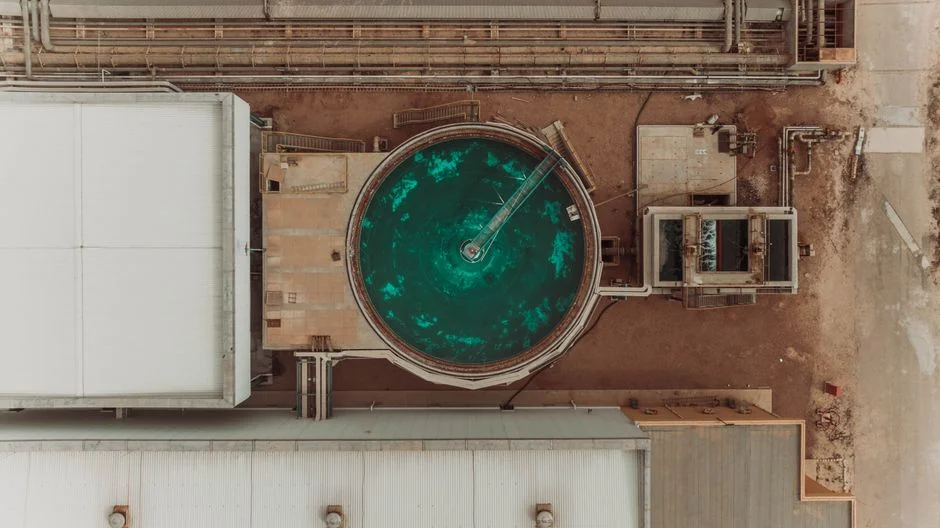
A conventional or lamella clarifier is a gravity-based settling device. Inclined plates at 55–60° steepen the effective settling area, raising surface loading rates roughly 5–10× over a plain basin, and the closer the plate spacing (typically 25–50 mm), the higher the capture rate for particles above about 20 µm. On a settled-solids stream — flocculated metal hydroxide from a plating rinse, for example, or dewatered swarf slurry — a lamella clarifier is cost-effective per gallon.
These units struggle with emulsified oil or light coolant streams because they lack the bubble-attachment mechanism required for neutral-buoyancy particles. Field experience on fabricated-metals streams with significant coolant carryover shows stand-alone lamella units typically settle 40–70% of TSS and leave the effluent in the 200–500 mg/L TSS range — well above the <50 mg/L a properly conditioned DAF routinely clears (HydropureWater field data, 2026). Clarifier underflow runs 0.5–1.5% dry solids, which means 5–10× more volumetric sludge than a DAF float at the same mass load; this wet sludge increases dewatering CAPEX downstream. The HydropureWater lamella clarifier is the right pick when the stream has already been oil-stripped upstream and the job is metal hydroxide capture or a TSS polish step.
Side-by-Side: DAF vs Clarifier for Fabricated Metals in 2026
This table compares performance metrics to assist in vendor selection. Removal figures for DAF are drawn from manufacturer-published equipment performance (Clearwater, DAF Corp, 2026); clarifier ranges are stated as typical field-experience values for fabricated-metals streams and should be confirmed by jar testing on your specific wastewater.
| Parameter | Dissolved Air Flotation (DAF) | Conventional / Lamella Clarifier |
|---|---|---|
| TSS removal (on conditioned metalworking stream) | 85–98% (rectangular 85–90%; round FC up to 98%) | 40–70% (field experience on fabricated-metals streams) |
| Oil & grease removal | 85–95% with cracking chemistry | Not effective on emulsified oil; free oil only with CPI separator upstream |
| Footprint per 100 GPM | ~5–10 m² | ~12–20 m² at comparable removal; ~6–8 m² as polish step after DAF |
| CAPEX band (skid unit, 50 GPM) | $$ (mid-band) | $ (low-band) as primary; $$ when used as polish after DAF |
| OPEX band (per kgal treated) | Moderate (recycle pump, air, chemistry, ~0.5–1.5 kWh/kgal) | Low electrical, but higher downstream dewatering cost from wetter sludge |
| Sludge dryness | 2–4% dry solids (float) | 0.5–1.5% dry solids (underflow) |
| Retrofit ease in existing building | Skid units install in 1–2 days; rectangular fits narrow bays | Heavier; usually needs new concrete pad or basin |
| Sensitivity to flow / shock load | Recovers in minutes via skimmer speed and recycle valve | Bleeds solids for hours after a slug load |
| Best-fit duty | Emulsified coolant, free oil, fine TSS, polishing metals precipitate | Flocculated metal hydroxide, settleable swarf, sand/grit |
These technologies serve different purposes rather than acting as symmetric competitors. The comparison only becomes a real choice when the stream is genuinely low-oil, settleable-solids-only rinsewater. In every other common Hillsboro fabricated-metals case, DAF wins on oil and TSS, and the clarifier either disappears or shifts downstream as a polish step.
Matching the Technology to Four Common Hillsboro Plant Profiles
The following profiles categorize the bulk of the fabricated-metals duty points observed during Hillsboro plant audits.
| Profile | Flow & Stream Character | Recommended Primary Separator | Why |
|---|---|---|---|
| Job shop / contract fab | 5–30 GPM, mixed stamping + machining, intermittent flow | Skid-mounted compact DAF (single skid ≤66 GPM) | Cheaper than retrofitting a clarifier room; PLC automation handles swing shifts without an operator |
| High-volume stamping & drawing | 50–250 GPM, heavy drawing compound, free oil often >500 mg/L | Rectangular DAF (RC UniMax / FPBC lamella-pack style) with pre-coat oil capture | Narrow footprint fits a press-room pit; handles free + emulsified oil in one pass |
| Precision machining & grinding | 30–150 GPM, fine swarf, water-soluble coolant, strict TSS targets | DAF with chemical cracking stage; lamella as polish | Cracking chemistry unlocks coolant removal; lamella polish protects the discharge limit |
| Anodizing / plating line | 10–80 GPM, metals-dominated, low oil, 40 CFR 433 + Clean Water Services limits | Small DAF upstream for rinsewater oils, then lamella for metal hydroxide | Hybrid is the most common Hillsboro configuration; protects categorical and local limits simultaneously |
Even "clean" plating lines pick up rack lubricants and brightener carryover; any oil surviving into the precipitation tank will blind the lamella and float metal-loaded sludge. Stripping oil first with a small DAF, then precipitating and settling, is the configuration experienced Hillsboro engineers specify in 2026 to meet categorical and local discharge limits (HydropureWater field data, 2026).
What Changes in 2026: Compliance, Chemistry, and Footprint Economics
Three factors define current Hillsboro capital expenditure cases. First, compliance: Oregon DEQ and Clean Water Services enforcement on oil & grease and total metals has tightened, and PFAS scrutiny on metal-finishing rinsewater is pushing plants toward better primary separation rather than relying on a polish-only carbon or ion-exchange stage (per Oregon DEQ, 2026). Second, chemistry: polymeric coagulants and modern demulsifier "crackers" are now standard upstream of DAF for the hardest semi-synthetic and synthetic coolants. Third, footprint and install economics: skid-mounted and pre-assembled DAF units in the 48–450 GPM range (Clearwater COMPACT, DAF Corp skid FC) shorten installation windows to a long weekend, which is critical for plants that cannot shut down a press line. A PLC-controlled chemical dosing skid tied into the DAF control panel eliminates the final operator-attended step, improving efficiency in tighter labor markets.
Frequently Asked Questions
Does a DAF always need coagulant and flocculant chemistry to work on a metalworking stream?
Yes. On a raw metalworking stream with no conditioning, a DAF will still float free oil and large TSS, but it will miss most of the emulsified coolant and colloidal metals. Charge-neutralizing coagulant plus a bridging flocculant — and a "cracking" step for emulsified oil — is what unlocks 85–98% TSS removal (per Clearwater Industries, 2026).
What microbubble size should I specify in a 2026 DAF?
Specify 20–50 µm. The 20–40 µm range from a dedicated micro-bubble generator (per DAF Corporation, 2026) is the ideal size — small enough to attach to sub-50 µm floc, but large enough to lift it reliably without excess air loading on the recycle pump.
Is 40 CFR 433 the only regulation I need to worry about for a Hillsboro plating line?
No. 40 CFR 433 is the federal categorical baseline for the Metal Products & Machinery point source category, but Oregon DEQ's delegated NPDES program and Clean Water Services' Hillsboro industrial pretreatment limits apply additionally. Clean Water Services is the primary enforcement contact for any plant routing to the Tual