
Why Transportation Equipment Factories in Lakeland Are Re-Evaluating Primary Clarification in 2026
Lakeland, Florida transportation equipment factories in 2026 are shifting their primary clarification decision from a generic oils-vs-solids debate to a CAPEX requirement tied to four specific waste streams. Plants operating under NAICS 336 around the I-4 corridor — auto parts stamping, truck body fabrication, trailer assembly, and light-rail supplier shops — run a recurring mix of water-soluble and straight cutting oils, E-coat drag-out (typically 50-300 mg/L phosphate plus pigment and non-ionic surfactant), drawing and stamping lubricants, and metal-finishing rinse water carrying zinc (often 2-10 mg/L), nickel (0.5-4 mg/L), and trace lead. Each of these streams behaves differently in a flotation cell versus a settling tank, and the wrong 2026 choice shows up immediately as a sewer-use ordinance violation or a sludge dewatering bottleneck.
The compliance backdrop is FDEP Chapter 62 industrial pretreatment (62-620, 62-625, 62-730) and the City of Lakeland Water Utilities' sewer use ordinance, which together set discharge ceilings for FOG, total suspended solids (TSS), and the heavy metals listed above. Because the regulatory ceiling is fixed and the wastewater signature is not, selecting the primary unit — DAF, clarifier, or hybrid — is a 2026 capital project decision on the same level as a new E-coat tank or a robotic weld cell.
How a DAF System Works Inside a Transportation Equipment Plant
A dissolved air flotation system removes contaminants by attaching 20-80 micron micro-bubbles to oil droplets, floc particles, and emulsified lubricant, then floating that matrix to the surface for skimming. A saturated recycle stream — typically 20-40% of the clarified effluent pressurized at 4-6 bar — feeds the contact zone, where bubble-particle agglomerates rise in a quiescent separation chamber. Hydraulic residence time is 10-30 minutes, and surface loading rates of 10-20 m/h are typical for industrial DAF, which is roughly 5-10x faster than a conventional clarifier on the same flow (per S2 Ecologix 2026 update).
The benchmark for a Lakeland plant engineer is the 95% FOG removal figure S2 documents for food-processing DAF installations on high-oil streams; in transportation equipment applications with emulsified drawing compound and E-coat surfactant, jar-tested DAF performance lands in the 85-95% FOG and 80-95% TSS range. Coagulant (typically polyaluminum chloride or ferric chloride at 50-200 mg/L) and a flocculant (0.5-5 mg/L cationic polyacrylamide) are standard, and per S5 WesTech, jar testing is the correct 2026 method to lock in dose before specifying the HydropureWater dissolved air flotation system at a capacity between 4 and 300 m^3/h for the typical Lakeland plant envelope.
How a Clarifier Works and Why It Still Has a Place in 2026
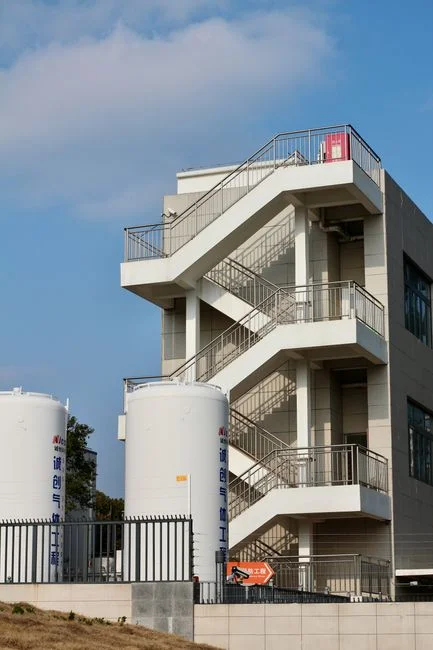
A gravity clarifier relies on Stokes' law settling where heavier particles fall to a sloped or raked bottom while clarified overflow exits over peripheral weirs. Hydraulic retention runs 2-4 hours, and conventional circular units deliver 1-2 m/h surface loading. S2 documents clarifier FOG removal at roughly 70% for the same oily stream a DAF handles at 95% — a clear signal that oil and floating debris must be pre-skimmed or DAF-treated upstream, otherwise FOG carryover ruins the underflow and overloads the downstream sludge dewatering press.
Clarifiers remain effective in 2026 for heavy, inorganic, high-density sludge: metal hydroxide precipitation from a rinse line, machining grit, and E-coat pigment solids after the oil phase has been removed. Lamella (inclined-plate) clarifiers accelerate this further, reaching 20-40 m/h surface loading in a footprint roughly one-quarter of an equivalent circular tank and cutting polymer consumption by up to 30%. A 2026 Lakeland E-coat line that has already pulled the oil phase upstream will commonly route the pigment-and-metal-bearing underflow to a HydropureWater high-efficiency lamella clarifier for thickening before a filter press.
DAF vs Clarifier: Head-to-Head Parameter Table
The table below condenses the operating envelope a 2026 Lakeland procurement team needs in a single screen. The 95% and 70% FOG figures are S2's documented benchmarks; the retention-time and surface-loading ranges are standard industrial process parameters.
| Parameter | Dissolved Air Flotation (DAF) | Gravity Clarifier (incl. Lamella) |
|---|---|---|
| Primary mechanism | Micro-bubble floatation of oils, floc, fine solids | Gravity sedimentation of heavier suspended solids |
| FOG removal efficiency | ~95% on high-oil streams (S2 Ecologix 2026) | ~70% on the same stream (S2 Ecologix 2026) |
| TSS removal | 80-95% with polymer dosing | 60-90% on inorganic sludge; lower on light floc |
| Heavy-metal hydroxide sludge | Moderate; float loading can be high | Strong; preferred for high-density inorganic grit |
| Hydraulic residence time | 10-30 minutes | 2-4 hours (lamella effective HRT much shorter) |
| Surface loading rate | 10-20 m/h | 1-2 m/h (circular); 20-40 m/h (lamella) |
| Footprint at 50 m^3/h | ~6-10 m^2 contact + floc tank | ~30-50 m^2 for circular; ~8-12 m^2 for lamella |
| CAPEX class | Lower for packaged skid; moderate for concrete | Higher civil cost for circular concrete; lower for lamella |
| OPEX driver | Air saturation energy + coagulant/flocculant | Sludge raking, polymer (lamella), periodic cleaning |
| Best-fit wastewater | Free oils, emulsified lubricants, E-coat drag-out, FOG >~200 mg/L | Metal hydroxide sludge, machining grit, low-oil inorganic streams |
| Key limitation | Higher recurring chemical/energy cost | Poor FOG capture; large footprint for circular units |
DAF dominates whenever free oils exceed approximately 200 mg/L or emulsified lubricants are present; clarifiers win for high-density inorganic sludge, very high flow with minimum chemical OPEX, or when a downstream sludge dewatering press needs a pre-thickened feed. The 2026 default for most transportation equipment plants is therefore DAF as the primary, with a clarifier relegated to sludge thickening or as the second stage of a hybrid train.
Matching the Wastewater Signature to the Right Unit in Lakeland
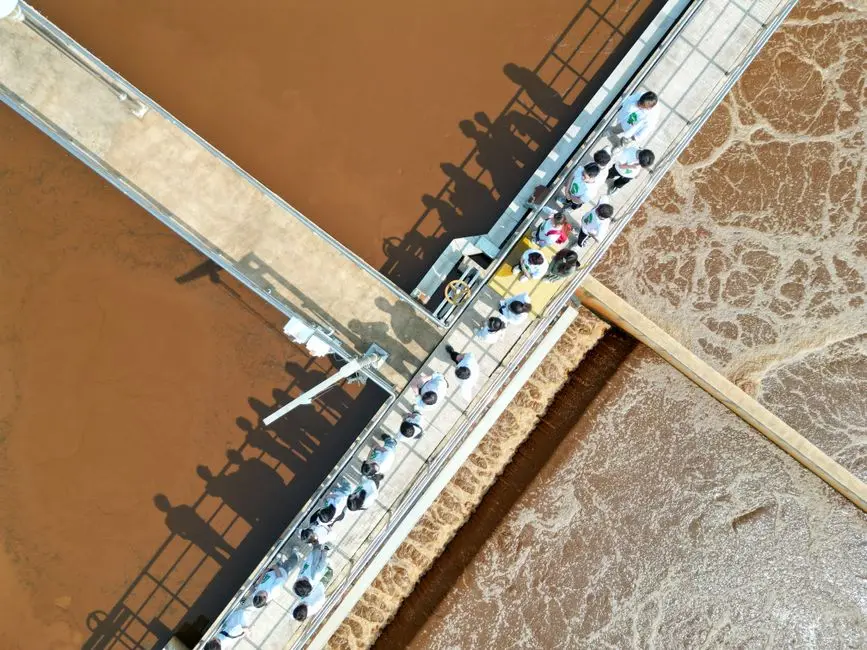
Engineers select the primary unit by matching the dominant contaminant to the equipment's removal mechanism. The decision matrix below maps four realistic Lakeland scenarios to a recommended configuration.
| Plant scenario | Dominant waste stream | Key contaminant | Recommended 2026 configuration |
|---|---|---|---|
| Truck-body stamping shop | Drawing lubricant + stamping oil emulsion | Emulsified oil, TSS 500-2,000 mg/L | DAF as primary; lamella as sludge thickener |
| Auto parts machining line | Water-soluble cutting fluid + metal fines | Free oil <100 mg/L, heavy metal fines | DAF for oil; clarifier (lamella) for fines |
| E-coat paint line | Ultrafiltrate permeate + drag-out rinse | Phosphate, pigment, surfactant, trace metals | Coagulant-conditioned DAF; lamella for pigment underflow |
| Aluminum trailer assembly | Drawing compound + weld smoke wash + rinse | Mixed oil, aluminum hydroxide, TSS | Hybrid DAF → lamella clarifier train |
If free oil or emulsified lubricant is visible at the wet well, start with DAF. If the dominant load is metal hydroxide sludge from a rinse line, start with a lamella clarifier. For plants with both signatures — which is most NAICS 336 operations in the Lakeland area — S2 confirms a DAF-then-clarifier hybrid is a 2026 best practice, with a HydropureWater automatic chemical dosing skid upstream of the DAF to unlock the 90-95% FOG and TSS numbers cited above.
2026 Compliance and Cost Reality for Lakeland Factories
FDEP Chapter 62-620 industrial pretreatment and the City of Lakeland Water Utilities' sewer use ordinance set the discharge ceiling, and the 2026 enforcement pattern focuses on oil-and-grease excursions, zinc, and nickel. A packaged DAF unit sized for a 20-50 m^3/h plant typically lands in a lower upfront CAPEX band than an equivalent concrete circular clarifier with sludge dragout, civil foundation, and weirs; OPEX skews the other way, because DAF consumes air-saturation energy plus coagulant and flocculant. For a 2026 cost-defensible spec, the primary unit and the downstream sludge dewatering press should be engineered together — a HydropureWater plate and frame filter press downstream of a DAF or lamella typically runs 25-35% dry solids, which determines hauling cost against the City of Lakeland's sludge acceptance policy.
Mobile DAF is the 2026 option for plants that need pilot data before committing to a permanent foundation or for short shutdowns and emergency bypass. Per S5 WesTech, a trailer-mounted mobile DAF occupies roughly 47'-6" x 8'-6" (smaller unit) to 51'-7" x 8'-6" (larger unit), requires no permanent foundation, and can typically be brought online within a single day — a useful benchmark for a Lakeland plant running a jar test to qualify a permanent HydropureWater dissolved air flotation system install.
Frequently Asked Questions
What is a DAF system in one sentence?
A dissolved air flotation (DAF) system removes free oils, emulsified lubricants, and fine suspended solids by attaching 20-80 micron pressurized-air micro-bubbles to the contaminant phase, floating it to the surface, and skimming it off in a 10-30 minute residence-time contact zone.
What is a clarifier in one sentence?
A gravity clarifier removes heavier suspended solids by allowing them to settle under Stokes' law in a 2-4 hour retention tank, with sludge collected by a raked bottom or inclined plates and clarified water discharged over peripheral weirs.
When should a Lakeland transportation equipment plant choose DAF over a clarifier in 2026?
Choose DAF when the wastewater contains free oils, emulsified drawing compound, E-coat drag-out, or any stream where FOG exceeds roughly 200 mg/L — S2's 2026 update documents DAF at ~95% FOG removal versus ~70% for a clarifier on the same oily stream.
Is a hybrid DAF-plus-clarifier train a 2026 best practice?
Yes, for plants handling both oil-bearing streams and heavy metal hydroxide sludge, S2 confirms that a DAF primary followed by a clarifier (preferably lamella) addresses both signatures in series and is the configuration most 2026 Lakeland RFPs for NAICS 336 operations specify.
How do FDEP Chapter 62 and the City of Lakeland sewer use ordinance affect the equipment choice?
The FDEP Chapter 62 industrial pretreatment framework and the City of Lakeland Water Utilities' sewer use ordinance drive the design toward whichever primary unit reliably meets