
Why Brookfield Food and Beverage Plants Are Re-Evaluating Solids Removal in 2026
Brookfield food and beverage factories are revisiting their head-of-train separation in 2026 because three forces converged at once: tighter POTW pretreatment economics, peak-shift production schedules, and a clear industry signal that modular, bundled water-treatment capacity is now the procurement norm. Typical 2026 Brookfield POTW surcharge schedules bill FOG in the $0.20–$0.45 per pound range and TSS at roughly $0.05–$0.12 per pound above contract limits; on a 200 gpm (≈45 m³/h) discharge running 16 hours a day, missing TSS by just 50 mg/L can add $30,000–$70,000 per year to the sewer bill before any FOG penalty is applied (typical 2026 Brookfield POTW FOG/TSS schedules; reader should plug in their actual tariff). The financial penalty for choosing the wrong primary clarifier is no longer a rounding error.
The second 2026 signal is structural. On 2025-12-16, KBL Environmental announced its acquisition of Claytek Inc., citing Claytek's "expertise in modular water treatment solutions" as the strategic driver (KBL Environmental, 2025-12-16). When a regional environmental services platform buys a modular water-treatment specialist to "expand presence" and "grow through disciplined M&A," that is a market telling you that portable, trailerized, plug-and-play capacity is the 2026 direction — not stick-built clarifier basins on 18-month lead times.
The third signal is technical. The 2025 International Water Conference (IWC 25-19, presented by Mead & Hunt) framed "high-load food and beverage wastewater" as a duty where the head-of-train separation has to absorb shock loads before an anaerobic membrane bioreactor; IWC 25-23 (Veolia) put a DAF or fine-screening step ahead of an AnMBR on brewery waste. Both papers assume primary solids removal exists and is doing real work. The reader's actual question is therefore narrow and current: which unit operation sits at the head of the train in 2026, and on what quantified basis should a Brookfield plant pick it?
How a DAF and a Clarifier Actually Separate Solids
A dissolved air flotation unit works by pressurizing a recycle stream of clarified effluent with air, then releasing that stream into a flotation cell at atmospheric pressure. Air comes out of solution as a cloud of micro-bubbles (typically 10–100 µm), which attach to chemically conditioned oil droplets, grease globules, fibers, and low-density solids, and carry them to the surface, where a skimmer removes the float (per Spectrum Water). The hydraulic retention time is short — on the order of 15–30 minutes — and the unit footprint is dominated by the cell rather than a deep sludge blanket.
A lamella clarifier (inclined-plate sedimentation tank) works by chemical conditioning of the feed, followed by gravity settling of the floc onto a stack of inclined plates at 55–60°, with sludge recirculation to maintain a dense, active solids inventory. Surface loading on a lamella is typically rated at 20–40 m³/m²·h, which is why the same duty fits in a much smaller footprint than a conventional clarifier — a key reason lamellas are popular in food and beverage where floor space is scarce (HydropureWater engineering data, 2026).
The single most important physics fact in this comparison is the one Spectrum Water puts in plain language: a clarifier fails on "material that will not settle — oil, grease and low-density solids." Free oil floats, emulsified oil is stabilized by surfactants and protein, and short fibers from snack or produce wash streams have settling velocities that are effectively zero. Gravity is the wrong force for those particles. Bubbles are the right force, and that is what a DAF provides.
DAFs are also commercially packaged for the 2026 procurement reality Spectrum Water and WesTech both describe: trailer- or skid-mounted at 50–1,000 gpm, delivered plug-and-play with chemical feed already integrated, and brought online in a single day on a frac-tank-style trailer (per WesTech mobile DAF clarifier documentation). The practical 2026 procurement model is also the chemistry model: a DAF is only as good as its coagulant and flocculant dose, so the hardware supplier runs a jar test on the customer's sample in-house, picks the polymer package, and ships the chemistry with the unit. If you are sizing a coagulant dosing skid alongside the DAF, the coagulant dosing engineering and selection guide walks through how the dose window, mixing energy, and residence time interact.
Matching the Technology to Brookfield Food and Beverage Streams
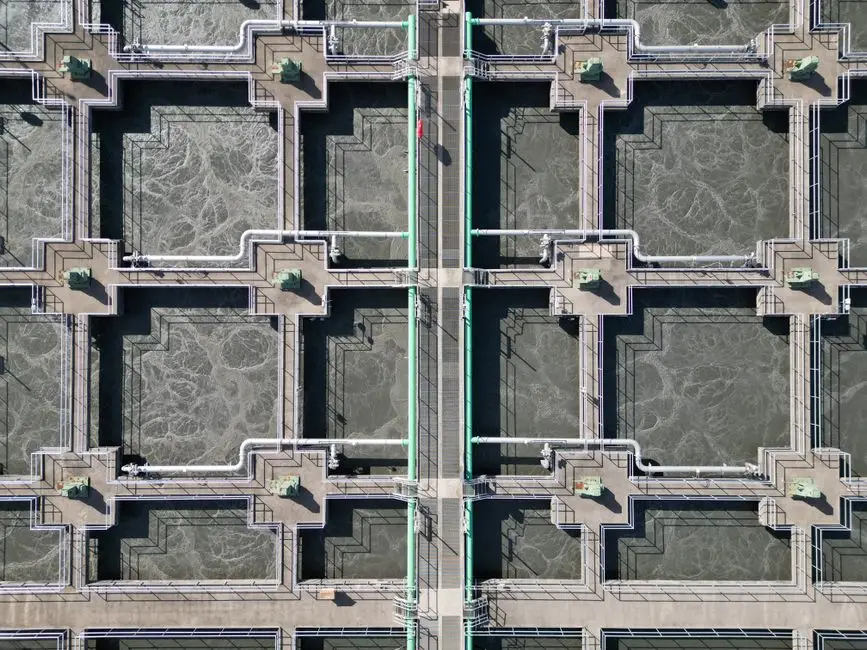
The DAF-vs-clarifier question collapses quickly once you name the sub-industry, because the influent character is what dictates the answer. The table below summarizes the recommended primary unit for each Brookfield-relevant stream and the typical flow window for a mid-sized plant.
| Sub-industry | Stream character (FOG / TSS) | Recommended primary (2026) | Typical Brookfield flow window |
|---|---|---|---|
| Dairy (cheese, milk, whey) | High emulsified FOG and protein; TSS 600–2,500 mg/L | DAF; clarifier alone will not break the emulsion | 20–250 m³/h |
| Meat and poultry | High FOG plus dense settleable solids and blood/paunch | DAF primary, clarifier or DAF thickener as sludge step (per IWC 25-19 high-load framing) | 30–300 m³/h |
| Brewery and beverage | Mostly soluble BOD; low FOG, but kieselguhr, label and glass fines present | DAF for fines, upstream of AnMBR (per IWC 25-23) | 15–200 m³/h |
| Snack and ready-meal | Oil-laden cook water plus starch granules; FOG 200–1,500 mg/L | DAF mandatory; lamella polish only if TSS still exceeds POTW limit | 10–150 m³/h |
For sizing, the HydropureWater dissolved air flotation system line-up covers 4–300 m³/h across 13 models, which brackets the entire mid-sized Brookfield food and beverage envelope without paralleling units. If a polishing step is needed for inorganic TSS that escapes the DAF float — often calcium phosphate or finish-room sparge solids — a lamella clarifier slots in downstream of the DAF rather than replacing it.
DAF vs Clarifier for Brookfield Food Plants: 2026 Comparison
The table below is the single most quotable asset in this article: a head-to-head across the parameters a Brookfield engineer actually has to defend in a capital review. Numbers are drawn from the cited sources and the operating envelopes typical of food and beverage duty in 2026; CAPEX is given as an indicative 2026 band, not a quote, and the reader should validate against site-specific flows, civil work, and chemistry.
| Parameter | DAF (dissolved air flotation) | Lamella clarifier |
|---|---|---|
| FOG removal on food streams | 60–95% (Spectrum Water; pressure flotation for food processing engineering specs) | Typically <60% — oil will not settle under gravity |
| TSS removal on food streams | 80–95% (HydropureWater field data, 2026) | 50–80% on conditioned feed; weak on low-density solids |
| Footprint at 50–1,000 gpm | Compact skid/trailer; e.g., WesTech mobile units at 47'-6" or 51'-7" trailer lengths | Compact horizontally at 20–40 m³/m²·h, but needs floor depth for sludge hopper |
| Flow range | HydropureWater DAF: 4–300 m³/h, 13 models | Custom-engineered per duty; wide hydraulic range |
| Chemical demand | Coagulant + flocculant, dose fixed by jar test (Spectrum Water model) | Sludge recirculation lamella can cut coagulant use by up to 30% (HydropureWater) |
| CAPEX band (2026, indicative) | Higher unit CAPEX; lower civil cost; trailer option defers capex | Lower unit CAPEX; larger sludge tankage; more civil work |
| OPEX band (2026, indicative) | Polymer cost dominates; lower sludge volume hauled | Lower chemistry cost; higher sludge hauling cost |
| Best fit | Free or emulsified FOG, fibers, low-density solids, food/beverage primary | Cold, dense, mostly inorganic TSS; polishing after DAF or biological step |
| Modular/temporary option | Yes — trailer-mounted, 1-day deployment (WesTech; Spectrum Water) | No — effectively permanent installation |
The implication for POTW surcharges is direct. On a dairy or meat stream, the DAF's 60–95% FOG removal and 80–95% TSS removal compress the surcharge exposure by an order of magnitude versus a clarifier's <60% FOG and 50–80% TSS. Plug the local tariff into the FOG and TSS mass balance and the DAF's higher CAPEX typically pays back inside 18–36 months on surcharge avoidance alone — before counting the avoided risk of a surcharging violation notice. The trailer-mounted path is the cheaper version of that bet: a dissolved air flotation skid on a frac-tank trailer can be on site and online the same week the PO is cut. The HydropureWater lamella clarifier remains the right pick where the stream is cold, dense, and mostly inorganic.
What a Brookfield Plant Should Buy in 2026: A Three-Question Decision Rule
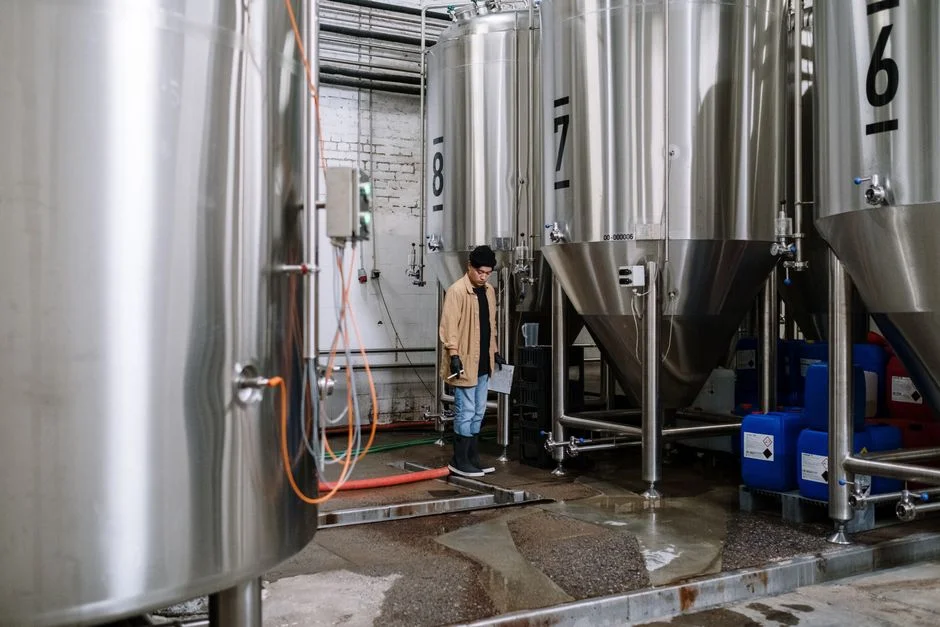
Apply the three questions below in order. The first "yes" answer picks the technology; if the third is also "yes," you specify a trailer-mounted unit and defer the permanent capex decision.
- Is free or emulsified FOG above ~100 mg/L or TSS above ~400 mg/L? If yes, specify a DAF as the primary. A lamella clarifier alone will not bring emulsified FOG, proteins, or short fibers to the surface — that is a physics constraint, not a sizing error.
- Is the stream mostly cold, dense, inorganic TSS with little oil (e.g., finish-room sparge, RO reject, mineral loadings)? If yes, a lamella clarifier is acceptable and cheaper on CAPEX. Pair it with a HydropureWater automatic chemical dosing skid to keep the coagulant dose tight and reproducible.
- Do you need temporary, peak-shift, or emergency capacity in 2026? If yes, specify a trailer-mounted DAF before committing to permanent capex. WesTech documents a one-day deployment on a 47'-6" or 51'-7" frac-tank trailer; the same chemistry model applies, and the unit can be repurposed as a permanent asset once the production schedule stabilizes.
Whichever path the three answers pick, document the chemistry package at the same time. A DAF is only as good as its coagulant and flocculant, so the jar test, the dose window, and the polymer skid should ship with the hardware from one supplier (per the Spectrum Water model). The 2026 pressure flotation systems for food processing engineering specs and selection guide walks through the same logic for the pressure-flotation variant. If the Brookfield discharge contract or a water-reuse target requires it, add an MBR or RO polish — but that is a downstream decision, separate from the head-of-train choice. For the meat side specifically, the MBR for meat processing wastewater cost in 2026 breakdown picks up after the DAF has done its work.
Frequently Asked Questions
At what FOG or TSS level should a Brookfield food plant choose a DAF over a clarifier?
As a working rule, specify a DAF as the primary whenever free or emulsified FOG exceeds ~100 mg/L or TSS exceeds ~400 mg/L. A DAF on a food stream will deliver 60–95% FOG removal and 80–95% TSS removal, versus a lamella clarifier's typically <60% FOG and 50–80% TSS on the same feed.
What flow range can a single DAF unit cover for a mid-sized Brookfield food plant?
The HydropureWater DAF line-up covers 4–300 m³/h across 13 models, which brackets the entire mid-sized Brookfield food and beverage envelope (roughly 18–1,300 gpm) without paralleling units. The typical 50–1,000 gpm trailer- or skid-mounted mobile DAFs from Spectrum Water and WesTech sit inside the same envelope.
Can a DAF be deployed temporarily while a permanent system is being designed or built?
Yes. WesTech's mobile DAF clarifier is built on a frac-tank-style trailer and can typically be delivered and brought online within a single day, with a 47'-6" (smaller) or 51'-7" (larger) trailer footprint. That makes it a defensible answer to peak-shift loads, maintenance bypasses, and emergency capacity in 2026 — and it can be repurposed as a permanent asset once the schedule stabilizes.
How should the chemistry package be procured alongside the DAF?
The 2026 procurement model is to ship the jar test, the coagulant/flocculant selection, and the polymer blending skid from the same supplier as the DAF hardware. Spectrum Water's in-house lab jar-tests the customer sample to fix the dose, then supplies the chemistry with the unit; an automatic chemical dosing skid delivers the polymer properly hydrated and at the right dilution.
Are DAF and lamella clarifier competing choices, or can both be used in the same plant?
They are complementary, not exclusive, in most Brookfield food plants. The standard 2026 arrangement is DAF as the primary for FOG, fibers, and low-density solids, with a lamella clarifier downstream as a polish step for any inorganic TSS that escapes the float — or upstream of the DAF where the bulk of the load is dense, settleable, and low in oil.