
Why Claremore Fabricated Metals Plants Are Re-asking the DAF vs Clarifier Question in 2026
Claremore's fabricated-metals cluster — stamping presses, CNC machining cells, robotic weld cells, aqueous parts washers, and die-lube sumps — generates a wastewater profile that conventional settling tanks were never designed to handle. Free oil from hydraulic way lubricants floats predictably, but emulsified synthetic cutting fluid, tramp oil from shop air, and phosphate-bearing alkaline cleaners stay in suspension for days and carry straight through a quiescent basin. A 2024–2026 uptick in Oklahoma DEQ enforcement actions against metal-finishing indirect dischargers has pushed local plant managers to re-examine pretreatment equipment before the next semiannual monitoring event (Oklahoma DEQ enforcement summaries, 2024–2025).
The decision is rarely "DAF vs clarifier" in the abstract — it is free oil vs emulsified oil. Conventional clarifiers were specified in the 1980s and 1990s for free oil, settleable metal-bearing grit, and modest TSS. Emulsified cutting fluid in the 5–50 µm droplet range bypasses gravity separation and shows up in the effluent as a milky, high-COD sheen that breaks local oil & grease limits. A dissolved air flotation unit, paired with chemical conditioning, is built to capture that same droplet band. This article gives a defensible 2026 selection rule for Claremore-area plants facing the Q1 2027 capex review, not a sales pitch for either technology.
How a DAF System Actually Treats Oily Metals Wastewater
A dissolved air flotation unit pressurizes a recycle stream of clarified effluent (typically 20–50% of forward flow) and saturates it with air at 60–80 psig. On release into the flotation tank through needle-valve headers, the pressure drop generates 30–50 µm microbubbles (per SigmaDAF published spec) that attach to oil droplets and flocculated TSS, lifting them to the surface where a paddle skimmer removes the float layer. The clarified underflow exits the bottom for discharge or reuse (per FRC Systems DAF product description, 2026).
Removal performance separates into two product tiers. The DAF Corp FC Maximizer, a round zero-velocity design, achieves 92–98% TSS removal across 10–11,000 GPM, with effluent typically below 20 ppm of filterable solids and a floated sludge at 2–4% dry solids (per DAF Corp published specifications, 2025). The rectangular RC UniMax covers 10–1,000 GPM at 85–90% TSS removal, well suited to a mid-sized fabricated-metals cell. FRC Systems' high-rate PCL-Series adds inclined plate packs inside the flotation cell, cutting the footprint roughly 30–40% versus open-tank designs and lifting FOG capture at flows up to 2,000+ GPM (per FRC Systems product specs, 2026). WesTech mobile trailer DAFs deploy within roughly one day and are useful for short-term trials before a capex commitment, particularly when ownership wants proof-of-performance on the actual shop effluent (per WesTech mobile DAF spec sheet, 2025).
Chemical conditioning — typically a cationic or anionic coagulant for charge neutralization followed by a flocculant polymer for bridging — is the single biggest lever on effluent quality. A well-tuned DAF on stamping and machining effluent can deliver <50 ppm TSS and >95% oil & grease removal; a DAF without chemistry typically only matches a well-run clarifier (HydropureWater field data, 2026). The HydropureWater DAF system and a paired automatic chemical dosing skid are the configuration most often specified for Claremore metal-fab bays because dose trim tracks influent swings without operator attention.
How a Conventional (Lamella) Clarifier Treats the Same Stream
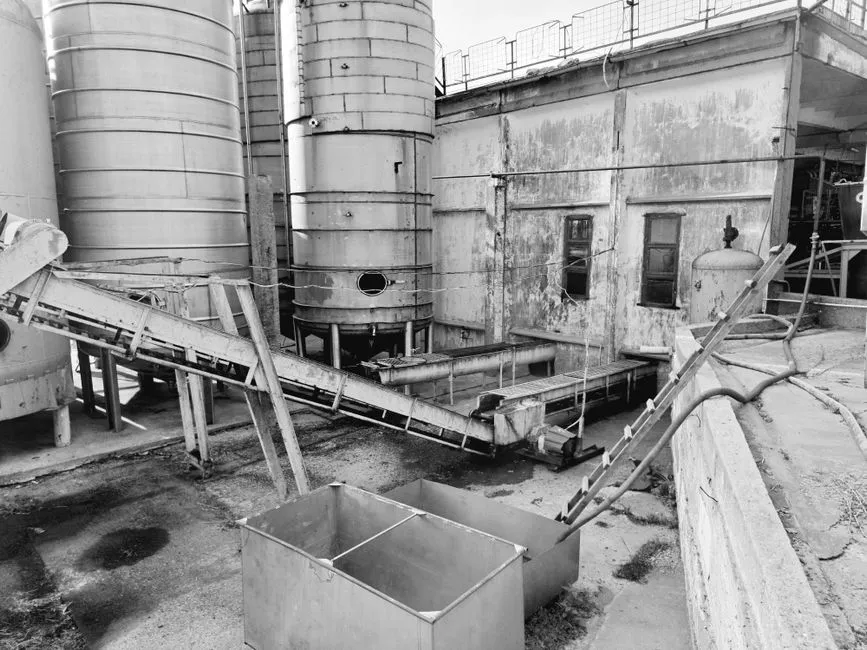
A lamella clarifier — also called a parallel-plate or inclined-plate settler — relies on gravity settling and oil coalescence. Inclined plates spaced at 50–80 mm shorten the settling path, raising effective surface loading to roughly 20–40 m³/m²·h on free oil and settleable grit (per HydropureWater lamella tank spec, 2026). Coalescing media at the inlet helps free oil droplets merge and rise; sludge compacts in a hopper below; skimmed oil is recovered for recycling when feed is free-oil dominant.
The performance ceiling on a fabricated-metals feed is the limiting factor. Without chemistry, a lamella typically achieves 40–70% TSS removal on raw stamping/machining effluent, with poor capture of sub-50 µm emulsified oil. With coagulant dosing only, removal climbs to roughly 70–85% TSS — still short of the 92–98% that a DAF delivers on the same stream, and insufficient for the oil & grease limits many POTWs enforce (HydropureWater field data, 2026). The HydropureWater lamella clarifier remains a defensible choice when the feed is genuinely free-oil dominant (for example, a stand-alone hydraulic system reservoir dump) and the plant has outdoor space to absorb the larger footprint and basin depth. In a retrofit situation inside a crowded fab bay, the basin depth and rectangular footprint of a lamella package are the most common reason it gets rejected in favor of a skid DAF.
DAF vs Clarifier for Fabricated Metals: Side-by-Side Comparison
The table below assumes matched coagulant + flocculant dosing on both sides — without it, both technologies underperform. "Win" is marked from the perspective of a typical Claremore metal-fab plant discharging to a POTW with strict oil & grease limits.
| Parameter | DAF (e.g., HydropureWater / FC Maximizer) | Lamella Clarifier | Win for fabricated metals |
|---|---|---|---|
| TSS removal | 85–98% (model-dependent) | 40–85% (chemistry-dependent) | DAF |
| Oil & FOG removal | 90–98% on emulsified + free oil | Effective on free oil only; poor on emulsified | DAF |
| Footprint per 100 GPM | ~15–25 ft² (skid/high-rate) | ~40–70 ft² (incl. basin depth) | DAF |
| Chemical demand | Coagulant + flocculant (moderate) | Coagulant often sufficient | Lamella (lower) |
| Sludge dryness | 2–4% dry solids | 0.5–1.5% dry solids | DAF |
| Retrofit difficulty in existing fab bay | Skid package, small footprint, fits through standard door | Larger basin, often outdoor or pit | DAF |
On five of six rows, the DAF wins for a mixed stamping/machining/wash stream; the lamella wins only on chemical simplicity. Where the lamella remains competitive is on stand-alone free-oil separation at high flow where chemistry is impractical — a niche case in fabricated metals.
2026 Oklahoma and POTW Compliance Lens for Claremore Plants
Most Claremore fabricated-metals shops discharge to the City of Claremore POTW and are bound by the city's industrial pretreatment limits on oil & grease, TSS, pH, and metals. These limits are local, limits-based, and enforced through the pretreatment program — specific numeric caps vary, and the city should be consulted for current values (per City of Claremore pretreatment program guidance, 2025). Plants with a direct discharge to a receiving stream fall under Oklahoma OAC 252:606 (NPDES), and metal-finishing lines with plating or conversion coating in scope are typically subject to the categorical standards at 40 CFR 433 (Metal Finishing), which sets technology-based limits on metals, oil & grease, and TSS.
The most common compliance failure on this kind of feed is a slug of emulsified concentrate — a sump pump-out, a parts-washer tank dump, or a coolant spill — that overwhelms the clarifier and sends a milky plume to the POTW. A DAF with consistent chemical dosing acts as a "belt and suspenders" guard for those events because the microbubble column continues to capture emulsified droplets that a quiescent basin cannot. For a sister-region comparison, our sister comparison for Springfield fabricated metals plants applies the same chemistry-as-decider logic to a different state pretreatment frame; the engineering conclusion is consistent.
Operating Cost, Footprint, and Retrofit Reality in 2026
The 2026 installed-cost band for a skid DAF sized to 25–150 GPM is roughly $45k–$120k; a lamella clarifier with an oil skimmer in the same flow range runs $25k–$80k. These are order-of-magnitude figures for budgetary screening, not vendor quotes (HydropureWater market scan, 2026). The cost gap closes quickly when the DAF's smaller footprint avoids a building expansion, and when its 2–4% sludge reduces hauling frequency against a clarifier's 0.5–1.5% wet sludge.
| Cost / operating line | Skid DAF (25–150 GPM) | Lamella Clarifier (25–150 GPM) |
|---|---|---|
| Installed cost (2026, band) | $45,000–$120,000 | $25,000–$80,000 |
| Polymer + coagulant OPEX | $0.08–$0.25 per 1,000 gal | $0.03–$0.10 per 1,000 gal |
| Sludge hauling | 2–4% dry solids; fewer pickups | 0.5–1.5% dry solids; more pickups |
| Energy use | 3–7 kW per 100 GPM (recycle pump, saturator) | Near-passive; skimmer only |
| Footprint per 100 GPM | 15–25 ft² (skid) | 40–70 ft² (basin + skimmer) |
A practical payback case for the DAF premium builds itself when the avoided haul costs, the avoided floor space, and the avoided compliance excursion costs are totaled against the polymer OPEX delta. A paired HydropureWater plate and frame filter press downstream of either clarifier can lift sludge dryness into the 18–25% range and further compress hauling cost. The DAF skid plus the automatic chemical dosing skid is the most common packaged configuration in this flow range.
How to Choose in 2026: A 5-Question Screening Framework for Claremore Plants
Run these five questions before you call vendors. A "yes" to three or more points you toward a DAF; a stack of "no" answers suggests a lamella is defensible — or that you need chemistry before equipment.
- Is the dominant contaminant free oil or emulsified cutting fluid? If the answer is emulsified cutting fluid, tramp oil, or a mix — DAF. Free oil only at high flow may still favor a lamella.
- What is the peak flow and the available bay footprint? Above 60 GPM and a tight indoor bay = DAF. Low flow with outdoor space = lamella is viable.
- Do you have reliable polymer dosing on site, or only basic pH adjustment? No chemistry at all makes both technologies risky. Plan an automatic chemical dosing skid with whichever primary you choose.
- Are you tied to a POTW with strict O&G limits or subject to 40 CFR 433? Yes = DAF. The compliance buffer matters more than the capex delta.
- Will you recycle rinse water in a closed loop? Yes = DAF effluent quality supports reuse; lamella usually does not. See also the broader DAF oil-water separator comparison guide for reuse-driven selection.
If you land on DAF, plan a jar test and a 30-day mobile trailer pilot (WesTech-style) on the actual shop effluent before signing the capex paper. If you land on lamella, verify the influent is genuinely free-oil dominant and budget a coagant skid in the base scope — for more on flotation-side engineering, see the pressure flotation engineering guide.
Frequently Asked Questions
Is a DAF or a clarifier better for emulsified cutting fluid in a Claremore stamping shop?
A DAF is the correct choice for emulsified cutting fluid. Emulsified droplets in the 5–50 µm band do not gravity-separate; a DAF with microbubbles in the 30–50 µm range and matched coagulant + flocculant chemistry routinely achieves 90–98% oil & grease removal and sub-50 ppm TSS on this stream, while a lamella typically stalls at 40–70% without chemistry (HydropureWater field data, 2026).
What does a 2026 DAF system cost for a 50–100 GPM fabricated-metals plant?
A skid DAF in the 50–100 GPM range installs in the $60k–$110k band in 2026, including chemical dosing and controls. A lamella clarifier + oil skimmer in the same range runs $40k–$70k. The DAF premium pays back through 60–70% smaller footprint, 2–4% sludge dryness versus 0.5–1.5%, and avoided haul pickups (HydropureWater market scan, 2026).
Do Claremore fabricated-metals plants need a DAF to meet Oklahoma POTW oil and grease limits?
Most Claremore metal-fab indirect discharges do. Conventional clarifiers can hold O&G limits on free-oil-dominant feeds, but a single slug of emulsified concentrate (a parts-washer dump, a coolant spill) overwhelms a settling tank and triggers a pretreatment violation. A DAF with steady chemistry is the engineered buffer against those events; the city pretreatment program should be consulted for the current numeric limits (per City of Claremore pretreatment guidance, 2025).
Can a lamella clarifier be retrofitted to perform like a DAF on emulsified oil?
Not in practice. Adding inclined plates or tube settlers does not create the microbubble attachment mechanism that captures sub-50 µm droplets. Coagulant alone lifts a lamella to roughly 70–85% TSS removal, still short of DAF performance and usually insufficient on emulsified oil. If the feed is genuinely emulsified, budget for a DAF rather than upgrading the lamella (HydropureWater field data, 2026).