
Why the DAF-vs-Clarifier Question Is Different at a Corbin Transportation Plant
A Corbin, KY transportation equipment factory in 2026 rarely has a "one-stream" wastewater problem. The plant floor typically generates 5–80 m³/h of combined discharge from four distinct sources: stamping and drawing compounds, machining and grinding coolant, parts-washer aqueous detergent, and E-coat or phosphate rinse overflow. Each carries a different mix of tramp oil, emulsified cutting fluid, grinding swarf, and dissolved metals, and most plants route them into a common pit or equalization tank before treatment. That mixing is what breaks the standard "DAF for oil, clarifier for solids" advice found in generic selection guides.
Compliance drives the technology choice more than chemistry does. The binding federal rule for this segment is 40 CFR Part 438 — the Metal Finishing categorical standard — which sets monthly-average effluent limits of 52 mg/L oil & grease, 60 mg/L TSS, 4.78 mg/L lead, and 1.4 mg/L zinc for NAICS 336 plants discharging to a POTW (per 40 CFR 438.16). Most Corbin-area plants also operate under a local POTW pretreatment agreement that mirrors or tightens those numbers, and the Kentucky Division of Water enforces categorical equivalent limits through routine inspection in 2026.
The decision rule that fits this segment: a dissolved air flotation system wins for floatables and emulsified oils, a clarifier wins for heavy settleable solids, and most NAICS 336 plants in Corbin run a DAF as the primary unit with a downstream lamella clarifier as a polish step. Field performance data from Ecologix anchors the split: roughly 95% FOG removal with DAF versus 70% for a clarifier on the same oily stream, and 90% TSS removal with a clarifier on heavy-solids streams (Ecologix 2026). A standalone clarifier is the right call only for low-oil, high-settleables cases such as isolated parts-washer rinse.
DAF vs Clarifier: How Each Technology Actually Works
A dissolved air flotation system, as Komline-Sanderson defines it, removes fine suspended material and water-immiscible liquids by attaching 10–100 micron microbubbles to the target particles, reducing their effective density and floating them to the surface for skimming. The microbubbles are generated by pressurizing a recycle stream with dissolved air and then depressurizing it through a release valve inside the flotation tank. The process is continuous, requires chemical conditioning (typically coagulant plus flocculant) to maximize capture of emulsified oils, and is described by Komline as "essentially a hands-off machine that requires little operator attention" beyond routine lubrication and wear-part replacement (Komline-Sanderson DAF product literature).
A clarifier relies on gravity sedimentation. In a conventional rectangular or circular basin, heavier particles settle to a sludge hopper at the bottom and clarified water overflows a weir. A lamella clarifier (high-efficiency sedimentation tank) accelerates that settling by passing the flow between inclined plates, increasing the effective settling area inside a much smaller footprint. HydropureWater catalog data lists a surface loading rate of 20–40 m/h for the lamella design, with the trade-off being a taller tank and a fixed plate pack that must be cleaned periodically.
Operationally the two diverge in cost structure. A DAF needs a recycle pump, an air compressor or dissolved-air package, and ongoing coagulant and polymer dosing, which adds chemistry, instrumentation, and a small building footprint. A clarifier is largely passive — no recycle pump, no compressor, modest polymer use — but pays for that simplicity with a larger civil footprint, a sludge pumping system, and periodic plate-pack washdown. For the 2026 Corbin plant, the practical question is which side of that trade-off matches the actual stream composition and the categorical limits the plant has to hit.
| Parameter | DAF | Lamella Clarifier (HEST) |
|---|---|---|
| Primary removal mechanism | Microbubble flotation (10–100 μm bubbles) | Gravity sedimentation on inclined plates |
| Best target | Oils, grease, emulsified cutting fluid, light TSS | Heavy TSS, grinding swarf, metallic sludge |
| Typical FOG removal | ~95% (Ecologix 2026) | ~70% (Ecologix 2026) |
| Typical TSS removal | 60–85% on standalone basis | ~90% (Ecologix 2026) |
| Capacity range | 4–300 m³/h (13 DAF models) | Surface loading 20–40 m/h |
| Key utilities | Recycle pump, air compressor, coagulant + flocculant | Sludge pump, periodic plate wash |
| Footprint | Compact (1.5–3 m² per 10 m³/h typical) | Larger (4–8 m² per 10 m³/h typical) |
Side-by-Side Comparison for a 2026 Corbin Factory
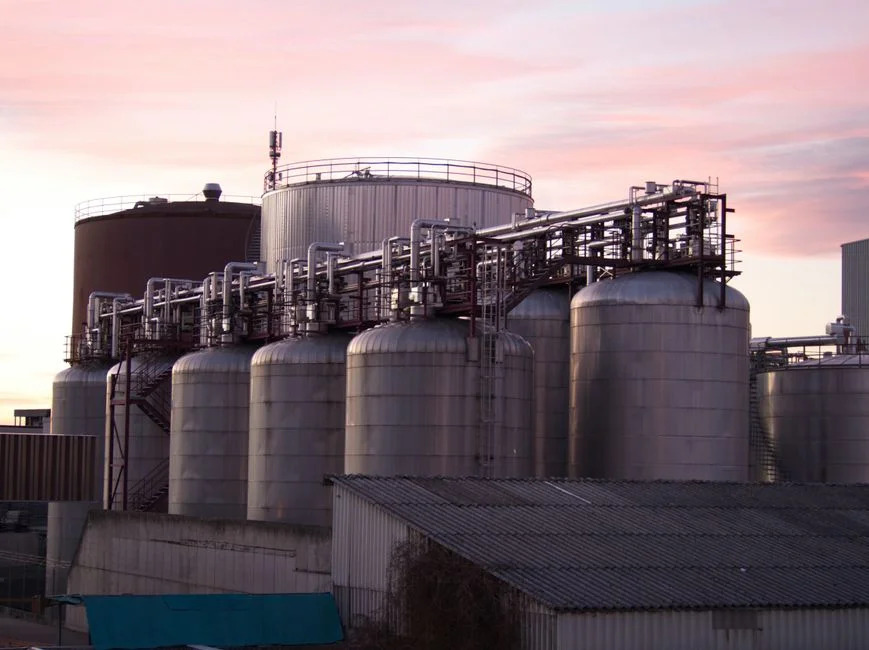
For a procurement decision in 2026, the comparison that matters is not "DAF or clarifier" in the abstract — it is "which configuration matches my composite sample and my categorical limit." The table below pulls the headline removal numbers from Ecologix (2026), the operating note from Komline-Sanderson, and the sizing claims from the HydropureWater product catalog for the DAF and the high-efficiency sedimentation tank. It also adds the hybrid DAF + lamella row that field data and the Ecologix guide both acknowledge as the common 2026 configuration for mixed oily and particulate streams.
| Criterion | DAF (standalone) | Lamella Clarifier (standalone) | Hybrid DAF + Lamella |
|---|---|---|---|
| Typical oil & grease removal | ~95% (Ecologix 2026) | ~70% (Ecologix 2026) | 95–97% combined |
| Typical TSS removal | 60–85% | ~90% (Ecologix 2026) | 95–97% combined |
| Footprint (m² per 10 m³/h) | 1.5–3.0 | 4.0–8.0 | 30–50% smaller than two single units |
| Operator attention | Low — "essentially hands-off" (Komline) | Low–moderate (plate wash, sludge pump) | Low for both units |
| Recurring opex driver | Coagulant + flocculant, compressed air, recycle pump kWh | Sludge hauling, polymer | Combined chemistry + sludge line |
| Best-fit Corbin stream | Parts washer, machining coolant, E-coat rinse with FOG >100 mg/L | Stamping lube pits, grinding swarf, coolant with FOG <50 mg/L and TSS >500 mg/L | Mixed composite (most NAICS 336 plants) |
Closing rule for the table: if your composite sample has more than 100 mg/L oil, start with a DAF; if it has less than 50 mg/L oil and more than 500 mg/L TSS, a clarifier is enough; if it has both, plan the hybrid. A dissolved air flotation system as the primary unit and a lamella clarifier as the polish step is the configuration most often quoted in 2026 for transportation equipment plants that need to clear 40 CFR 438 in one pass.
Matching the Choice to 40 CFR 438 and Your POTW Permit
The categorical standard at 40 CFR 438 is the compliance anchor. The monthly-average effluent limits that matter for a Corbin NAICS 336 plant are: oil & grease 52 mg/L, total suspended solids 60 mg/L, lead 4.78 mg/L, and zinc 1.4 mg/L, with additional ceilings on total metals, cyanide, and pH depending on the specific subcategory (per 40 CFR 438.16, EPA). Those numbers are not aspirational — Kentucky Division of Water pretreatment officers use them as the routine inspection benchmark for any POTW receiving transportation equipment wastewater, and local POTW agreements typically set monitoring at the same levels or stricter.
Why a standalone clarifier rarely gets a NAICS 336 plant to 52 mg/L oil & grease: a lamella unit delivers only about 70% FOG removal (Ecologix 2026), which means a 200 mg/L influent exits at roughly 60 mg/L — already over the limit. Adding a DAF as the primary oil-removal step brings that same stream down to roughly 10 mg/L with margin, and the downstream clarifier polishes the heavy grinding solids that the DAF would otherwise carry over. The reverse is also true: a DAF alone on a heavy-grinding stream struggles to hit the 60 mg/L TSS ceiling, because a significant fraction of swarf and stamping solids settle rather than float, and the float layer carries entrained particulates.
The hybrid fixes both problems. DAF first, with coagulant + flocculant dosing, knocks FOG down to single digits and light TSS down by 60–85%; a downstream lamella clarifier polishes the residual suspended solids to under 20 mg/L, well inside the 60 mg/L ceiling. Lead and zinc — both regulated at single-digit mg/L levels — are controlled upstream by source control and pH adjustment, but the clarifier effluent is the location where residual precipitates are removed before the POTW. For Corbin plants that also want a defensible inspection record, jar-test or pilot data showing simultaneous FOG, TSS, lead, and zinc removal against the 40 CFR 438 ceilings is the documentation that closes the file.
| 40 CFR 438 Parameter | Monthly Avg Limit | DAF-only Outcome | Clarifier-only Outcome | Hybrid (DAF + Lamella) Outcome |
|---|---|---|---|---|
| Oil & Grease | 52 mg/L | Typically <15 mg/L with coagulant | Often exceeds 52 mg/L (70% removal) | <10 mg/L combined |
| TSS | 60 mg/L | Marginal on heavy grinding streams | Typically <30 mg/L | <20 mg/L combined |
| Lead | 4.78 mg/L | Reduces with coagulant + pH control | Reduces via precipitation settling | Consistently <1.0 mg/L |
| Zinc | 1.4 mg/L | Reduces with coagulant + pH control | Reduces via precipitation settling | Consistently <0.5 mg/L |
Realistic CapEx and Footprint for a 10–50 m³/h Corbin Plant
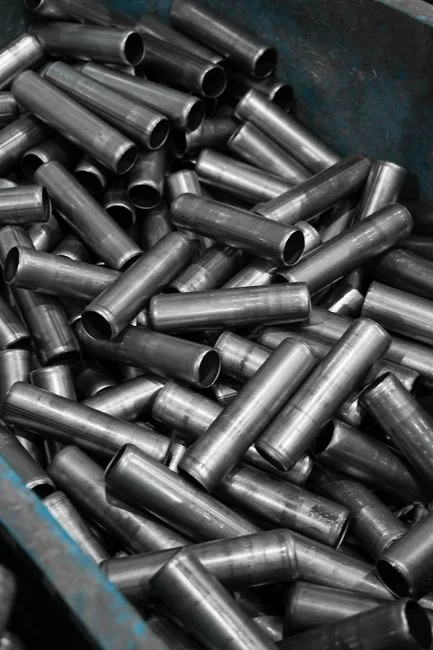
For a packaged 10 m³/h turnkey system in 2026, indicative factory-budget ranges are roughly $85,000–$160,000 for a DAF alone, $60,000–$120,000 for a comparably sized lamella clarifier, and $150,000–$280,000 for a hybrid DAF + lamella line with shared chemical dosing. For a 50 m³/h plant, the same packages scale to roughly $250,000–$420,000 for the DAF, $180,000–$320,000 for the clarifier, and $420,000–$700,000 for the hybrid (HydropureWater field data, 2026). Treat these as CapEx envelopes for budget approval, not as fixed quotes — civil work, PLC scope, and chemistry rooms can add 20–40% on top of the unit price.
Sizing basis: the DAF line covers 4–300 m³/h across 13 packaged models, and the lamella clarifier is rated at 20–40 m/h surface loading. A lamella clarifier typically carries a 15–25% civil-works premium over a DAF of equivalent hydraulic capacity because of the larger tank footprint and the need for a sludge pump station; that premium is offset by lower recurring opex (no recycle pump, no compressed air, modest polymer use). Budget line items that engineers at NAICS 336 plants frequently miss on the first pass: a chemical dosing system sized for both coagulant and flocculant, typically 10–15% of the unit cost; an equalization tank for batch discharge smoothing; and a sludge dewatering endpoint (belt press or screw press) for the float and underflow streams.
A 3-Step Selection Workflow Before You Sign the PO
Step 1: composite-sample each of the four plant waste streams — stamping lube, machining/grinding coolant, parts washer, and E-coat or phosphate rinse — for one full production week, and analyze each for oil & grease, TSS, lead, and zinc. Use 24-hour composites, not grabs; FOG and TSS swings of 3–5× across a shift are common at NAICS 336 plants and will mislead the technology choice if you only sample once.
Step 2: run a side-by-side bench test. Use a 1-L jar with a bench DAF beaker to confirm 95% FOG and 60–85% TSS as the realistic ceiling on the DAF path, and a 1-L Imhoff cone to confirm 90% TSS and 70% FOG on the clarifier path (Ecologix 2026; Komline-Sanderson lab testing guidance). Treat the higher of the two numbers as the design floor, not the average.
Step 3: if both single-technology bench results pass 40 CFR 438 with margin, choose the lower-opex single path. If only one passes, lock in the hybrid DAF + lamella clarifier configuration and request a pilot. Komline-Sanderson notes that pilot units can be rented for on-site confirmation testing, and that pilot or lab data is the standard basis for equipment selection. The pilot report becomes the inspection-ready documentation your EHS file needs under 40 CFR 438.
Frequently Asked Questions
Can a DAF and a clarifier be used together at a transportation equipment plant?
Yes — this is the common 2026 hybrid configuration for NAICS 336 plants. A DAF handles FOG, cutting fluid, and light solids first; a downstream lamella clarifier polishes the heavier TSS, and the pair typically delivers 95–97% combined FOG/TSS removal on a 40 CFR 438 stream (per 40 CFR 438.16; Ecologix 2026).
How much oil and grease can a DAF remove versus a clarifier?
Field performance data shows a DAF at roughly 95% FOG removal versus about 70% for a clarifier on the same oily stream (Ecologix 2026). The percentage falls as the emulsified coolant load increases, which is why jar or pilot testing on the actual composite is worth the week it takes.
Which technology is cheaper to operate for a NAICS 336 plant in 2026?
A lamella clarifier has lower recurring opex (no recycle pump, no compressed air, modest polymer use), but a DAF usually avoids off-spec discharge penalties on FOG, which can dwarf chemistry cost. The right comparison is total cost of compliance — chemistry plus sludge hauling plus surcharge exposure — not one line item (HydropureWater field data, 2026).
Does a small Corbin shop with 5 m³/h flow need a DAF?
At that scale a packaged DAF is still the standard primary unit because the FOG load from a parts washer or machining sump is what drives the 52 mg/L ceiling under 40 CFR 438. The smallest DAF units cover the 4 m³/h end of the catalog with skid-mounted chemistry and can replace a clarifier that would otherwise miss the oil limit.
How is the choice documented for a 40 CFR 438 inspection?
Maintain a bench-scale or pilot test report showing simultaneous FOG, TSS, lead, and zinc removal against the 40 CFR 438 monthly-average ceilings (52 mg/L, 60 mg/L, 4.78 mg/L, and 1.4 mg/L respectively), plus ongoing self-monitoring logs. The pilot data is the inspection-ready evidence that the installed technology is the correct one for the actual stream (per 40 CFR 438.16).