DAF vs Clarifier in Food & Beverage Wastewater: What Each Machine Actually Does
For most Sedalia food and beverage plants in 2026, choose a Dissolved Air Flotation (DAF) system when fats, oils and grease (FOG) exceed roughly 200 mg/L or when biochemical oxygen demand must drop 40-60% before biological treatment. DAF delivers 95% FOG removal versus 70% for a gravity clarifier on the same stream (Ecologix Systems, 2026). Pick a lamella clarifier instead only when the waste is heavy, settleable solids with little FOG, or when capital budget is tight. That verdict is grounded in mechanism — and the two machines do fundamentally different things inside the tank.
A DAF unit is a buoyancy clarifier. Pressurized recycle water saturated at 4-6 bar releases a cloud of 10-100 µm microbubbles through a pressure-reduction valve into the flotation cell at atmospheric pressure (Clean Technology Post, 2026-08). Those bubbles attach to oil droplets, free FOG, and flocculated colloids — surface chemistry is enhanced with coagulants like ferric chloride or polyaluminum chloride plus cationic or anionic polymers — forming buoyant agglomerates that rise at 5-15 m/h. A surface skimmer sweeps the float blanket into a sludge trough; clarified effluent leaves from a bottom header. Recycle ratios typically run 20-40%, with dissolved air concentrations of 70-100 mg/L, and the air-to-solids (A/S) ratio is held at 0.005-0.06 mL of air per mg of solids. Hydraulic loading rates span 5-30 m³/m²·h for conventional DAF and up to 50 m³/m²·h in high-rate DAF units fitted with inclined plate packs (Clean Technology Post, 2026-08).
A gravity clarifier, by contrast, is a settler. A rectangular or circular basin holds wastewater for 2-4 hours of residence time so heavier suspended solids drop to the floor under Stokes' law and are raked to a central sludge hopper. The lamella clarifier variant tilts the geometry — inclined plates at 55-60° shrink the effective footprint and push surface loading to 20-40 m³/m²·h by multiplying the settling area inside the same envelope (HydropureWater product data, 2026). The two technologies target different contaminants: DAF catches what floats — light oils, emulsified FOG, fine colloids — while clarifiers catch what sinks, namely grit, fibers, and mineral suspended solids. DAF sludge typically runs 2-6% dry solids, roughly 2-3x thicker than a clarifier underflow at 1-2%, which meaningfully reduces downstream dewatering cost (Clean Technology Post, 2026-08).
Side-by-Side Parameters: DAF vs Lamella Clarifier for Food Plants
Numbers drive this decision, not adjectives. The table below compares DAF, lamella clarifier, and high-rate DAF (with lamella packs) on the parameters a Sedalia engineer will weigh in a 2026 capital review. Removal values come from manufacturer performance data and the comparative literature cited inline; they reflect typical food-industry operating ranges, not best-case lab results.
| Parameter | Conventional DAF | Lamella Clarifier | High-Rate DAF (lamella pack) |
|---|---|---|---|
| FOG removal | 90-97% (up to 95% typical, food industry) | 50-70% (limited for emulsified oil) | 90-97% |
| TSS removal | Up to 97% | 60-90% (best on heavy settleable solids) | Up to 95% |
| BOD/COD reduction | BOD 40-60% / COD 60-80% | COD 30-50% (FOG-bound BOD largely untouched) | BOD 40-60% / COD 60-80% |
| Hydraulic loading | 5-30 m³/m²·h | 20-40 m³/m²·h | 40-50 m³/m²·h |
| Footprint at 25 m³/h | ~6-8 m² cell area | ~1-2 m² footprint (plates do the work) | ~1-2 m² cell area |
| Sludge dryness | 2-6% DS | 1-2% DS underflow | 2-6% DS |
| Sensitivity to flow surges | Low (laminar top zone, fast recovery) | Moderate-to-high (resuspension at peak flow) | Low |
| Typical capex driver | Saturator, compressor, skimmer, chemical skid | Tankage, plates, scraper mechanism | Saturator + plates + skimmer (compact skid) |
The pattern is clear. DAF dominates FOG and organics; lamella clarifier dominates settleable TSS at smaller footprint and lower OPEX. High-rate DAF narrows the gap on footprint while keeping DAF's removal edge — that is why it is becoming the default in 2026 for food plants under 50 m³/h that must hit both FOG and TSS targets in tight floor space (Clean Technology Post, 2026-08). One nuance: DAF sludge at 2-6% dry solids is roughly 2-3x thicker than clarifier underflow, so a downstream belt press or screw press sees lower hydraulic load — a meaningful lifetime OPEX advantage even when the upfront price tag is higher (Wastewater Machinery, 2026).
Why Sedalia Food and Beverage Plants Default to DAF in 2026
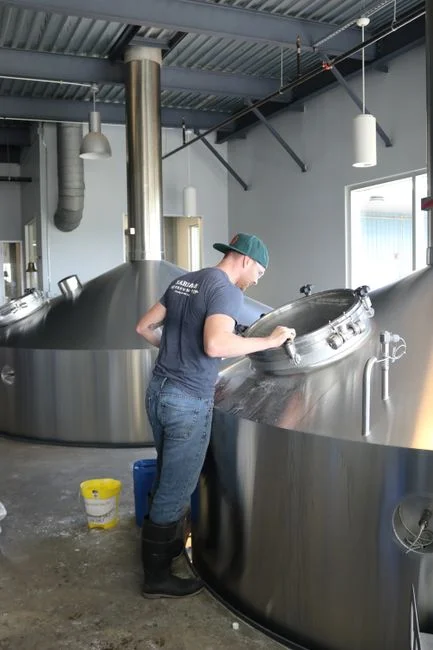
Sedalia's industrial mix in and around Pettis County tilts heavily toward high-FOG streams. Meat processing, dairy and cheese operations, craft brewing and distilling, and grain-handling facilities all generate waste streams where fats, oils, grease, proteins, and starches dominate over mineral solids. For those streams, the right primary clarifier is almost always a DAF unit — and three local factors sharpen that conclusion.
First, regulatory exposure. Missouri's Clean Water Commission pretreatment rules, administered through Missouri DNR, require food and beverage indirect dischargers to meet local POTW limits — typically FOG in the 100-200 mg/L range and TSS in the 250-300 mg/L range for the Sedalia area, though exact numeric limits must be confirmed directly with the local POTW. A DAF hitting 95% FOG capture gives a wide safety margin during production ramp-ups, CIP events, or recipe changeovers that send spikes of free oil toward the headworks (Ecologix Systems, 2026). A lamella clarifier's 50-70% FOG performance on emulsified oil rarely clears that bar without a polishing step.
Second, biological-stage protection. The 40-60% BOD reduction delivered by a properly designed DAF (Clean Technology Post, 2026-08) shaves peak load off downstream MBBR or activated sludge systems — important in Sedalia where smaller plants often run a packaged biological stage with limited buffering. A FOG spike that hits a clarifier-only train at 200+ mg/L flows straight to the aeration basin and can wipe out biomass for days; a DAF front-end intercepts that shock load at the surface.
Third, flow variability. Meat and dairy plants batch-clean, brew houses strip CIP between fermenters, and grain facilities wash down on harvest schedules. A DAF's quiescent separation zone and continuous float-skim cycle tolerate 2-3x hourly flow swings better than a gravity clarifier, where peak flows resuspend already-settled sludge and re-introduce TSS to the overflow. For an operator weighing compliance risk, biological stability, and process flexibility in one decision, DAF is the lower-regret default for any Sedalia stream with FOG above 200 mg/L. Plant engineers comparing the same choice in nearby markets can cross-reference the Saint Albans food & beverage DAF vs clarifier guide and the Paris food and beverage DAF vs clarifier guide for comparable regional benchmarks.
When a Clarifier Still Wins in a Food or Beverage Plant
A clarifier is not a fallback — it is the right tool in specific cases. Three scenarios in a Sedalia plant favor a lamella clarifier or a hybrid train over a standalone DAF.
Heavy settleable solids. Vegetable processing wash water, fruit pomace handling, and grain dust slurries carry grit, fiber, and starch granules that are denser than water and resist attachment to microbubbles. A lamella clarifier on these streams achieves 80-90% TSS reduction at much lower OPEX, because there is no need to run a saturator, compressor, or polymer skid (Ecologix Systems, 2026 — mining analogue at 90% solids reduction). The plates do the separation; the scraper handles the underflow.
Low-FOG sidestreams. Clean-in-place rinse water with surfactant carryover, boiler blowdown blended with cooling-tower bleed, and reverse-osmosis reject streams often arrive at the headworks with FOG well under 100 mg/L and modest TSS. A packaged lamella unit in the 5-20 m³/h range is typically 30-40% cheaper to install and avoids the compressor and saturator OPEX burden — a fit for very small operations under ~5 m³/h with tight 2026 capex constraints.
Hybrid train for tight effluent. When the POTW imposes both a low FOG limit (under 100 mg/L) and a low TSS limit (under 200 mg/L), a DAF followed by a lamella polishing stage is a robust answer: DAF strips the floatables and most of the BOD, then the lamella captures residual TSS before the biological reactor. The combined OPEX is higher than either unit alone, but the redundancy pays off in plants that have already received a Notice of Violation and need a defensible compliance margin (Ecologix Systems, 2026). For dairy-heavy operations, the MABR for dairy wastewater 2026 guide is a useful downstream reference when sizing the biological stage after primary clarification.
Sizing and Cost Reality Check for a 10-50 m³/h Sedalia Plant
Translate the comparison into numbers a procurement manager can put in front of finance, and the picture is straightforward. A complete DAF system — saturator, recycle pump, air compressor, skimmer, chemical reaction zone, and PLC — typically runs 1.5-2.5x the capital cost of an equivalent-capacity lamella clarifier (manufacturer field data, 2026). The added OPEX is recurring: compressed-air power, polymer consumption typically 5-20 mg/L depending on FOG load, and a service interval on the saturator pump every 12,000-20,000 hours. What the buyer gets for that premium is 90-97% FOG removal, 2-6% DS sludge that dewaters cheaply, and a footprint roughly 3-5x smaller than a clarifier for the same hydraulic load.
For a Sedalia plant in the 10-50 m³/h band, the DAF system covers 4-300 m³/h across 13 models and ships in 304SS with 316SS and polypropylene options for higher-chloride wash streams. A plug-and-play compact skid handles up to about 15 m³/h in a single unit; flows above 15 m³/h stack into a modular two-skid configuration with a shared chemical panel (Clearwater Industries, 2026-04). On the clarifier side, the HydropureWater lamella clarifier delivers 20-40 m³/m²·h surface loading in a footprint that fits a corner of an existing headworks room. Pair either primary with an automatic polymer and coagulant dosing skid sized to the jar-test-confirmed dose. The responsible engineering advice: request a jar test and pilot quote on the actual Sedalia stream before final selection, because polymer response, A/S ratio, and float-handling differ enough from site to site that vendor-quoted generic curves are a starting point, not a guarantee.
Decision Framework: Pick the Right Primary Clarifier in Five Steps
Run this checklist on Monday morning with the plant's last 12 months of wastewater lab data and the latest POTW discharge permit in hand.
- Characterize the stream. Quantify FOG, TSS, BOD/COD, pH, temperature, and hourly flow variability across production shifts and CIP cycles. Anything above 200 mg/L FOG or 60% hourly flow swing pushes the shortlist toward DAF.
- Map against permit limits. Compare each parameter to the Sedalia POTW and Missouri DNR pretreatment limits. If FOG or TSS targets sit below what a clarifier reliably delivers on emulsified oil, DAF becomes the compliance default.
- Shortlist by dominant contaminant. FOG-bound stream or variable flow → DAF. Heavy settleable grit, fiber, or pomace with low FOG → lamella clarifier. Mixed goal → hybrid DAF + lamella polish.
- Run a jar test to confirm chemistry. Validate coagulant and flocculant type, dose, and A/S ratio within the 0.005-0.06 mL/mg design band (Clean Technology Post, 2026-08). This step is non-negotiable for DAF sizing — saturator pressure and recycle ratio both depend on it.
- Pilot, then procure with the right options. A 2-4 week on-site pilot eliminates the guesswork. Specify VFDs on the recycle pump and skimmer, PLC controls with effluent turbidity feedback, and SS316 wetted parts for hot CIP or chlorinated wash streams to lock in 15-20 year service life (Wastewater Machinery, 2026).
Frequently Asked Questions
Should a high-FOG food plant pick DAF or a clarifier?
Pick DAF. Food-industry DAF units deliver 90-97% FOG removal on emulsified streams versus 50-70% for a clarifier on the same waste, and they cut BOD by 40-60% before biological treatment (Clean Technology Post, 2026-08). A lamella clarifier is the wrong primary on FOG-dominated streams from meat, dairy, or brewing because emulsified oil does not settle efficiently.
Can a DAF and a clarifier be used together?
Yes, and the hybrid is common in food plants with both FOG and grit or fiber. A DAF first strips floatables and most of the BOD, then a lamella clarifier polishes residual TSS to under 200 mg/L before the biological stage (Ecologix Systems, 2026). Capex is higher than either unit alone, but compliance margin improves measurably.
What removal rates can a food-industry DAF realistically hit?
Field performance on food and beverage streams: FOG 90-97%, TSS up to 97%, BOD 40-60%, COD 60-80% (Wastewater Machinery, 2026; Clean Technology Post, 2026-08). Actual numbers depend on jar-test-confirmed polymer dose, saturator pressure held at 4-6 bar, and the A/S ratio staying inside the 0.005-0.06 mL/mg window.
How does sludge handling differ between DAF and clarifier?
DAF float is typically 2-6% dry solids, roughly 2-3x thicker than a clarifier underflow at 1-2% DS (Clean Technology Post, 2026-08). That difference reduces dewatering energy, polymer consumption at the belt press or screw press, and hauled sludge volume — a real OPEX advantage over a 10-20 year asset life.
How much polymer does a food-plant DAF consume?
Cationic or anionic polymer dose typically lands in the 5-20 mg/L range for food and beverage waste, set by jar testing on the actual stream (Clean Technology Post, 2026-08). Coagulant demand (ferric chloride or polyaluminum chloride) is similar and should be tuned to the FOG fraction rather than the total flow to avoid overdosing on low-load shifts.