
Why Tuckerman Petroleum Plants Are Re-evaluating Oil-Water Separation in 2026
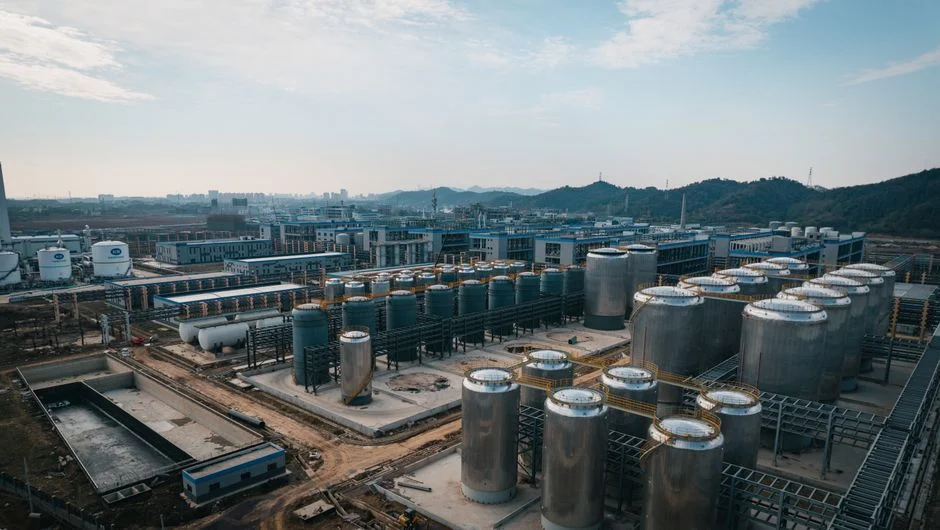
Jackson County, Arkansas does not host a large refinery, but it does host the kind of petroleum infrastructure that drives most oily wastewater permitting questions in 2026: petroleum bulk storage terminals, lube oil blending operations, used-oil collection and small re-refining sites, and the periodic tank-farm washdown campaigns that come with each. A plant engineer reviewing a 2026 capital request in Tuckerman is not choosing between a refinery-scale dissolved gas flotation tower and a corrugated plate interceptor — the choice is between a packaged dissolved air flotation (DAF) unit and a gravity clarifier (conventional or lamella) as the primary oil-water separator upstream of any biological polishing or POTW discharge.
Two regulatory pressures make 2026 the right year to revisit that choice. First, the federal categorical standard at 40 CFR Part 419 — the petroleum refining point source category — continues to set oil and grease, TSS, and COD limits that any pretreatment narrative must reconcile, even for subcategories (lubricating oils, cracking, re-refining) that small Jackson County sites may not realize apply to their waste streams. Second, the Arkansas Department of Energy & Environment, Division of Environmental Quality (DEQ) has tightened operator reporting and sheen-monitoring language in recent permit cycles, and many local facilities discharge to a Jackson County POTW whose sewer-use ordinance imposes oil and grease caps in the 10-15 mg/L monthly-average band. A legacy clarifier designed in the 1990s rarely meets those numbers on an emulsified stream; a modern DAF skid with chemical conditioning typically does.
The core tension is straightforward. Legacy clarifier designs struggle with the emulsified oil and fine suspended solids produced by modern additive packages — especially in lube blending where emulsions are intentional. At the same time, DAF technology has become more energy-efficient over the last five years, with better aeration control, smaller footprints, and packaged skids that fit a bulk-terminal pad. The rest of this article works through influent-driven logic — oil/FOG concentration first, TSS second, flow third — to put a specific technology against your specific permit limit.
How a DAF Works vs How a Clarifier Works on Oily Streams
Both technologies separate a two-phase mixture, but the physics is different and that difference is exactly what the 40 CFR 419 effluent numbers respond to.
A DAF system saturates a pressurized side stream of clarified effluent with air at 4-6 bar, then releases the pressure through a needle or breakout valve at the inlet of the flotation tank. The dissolved air comes out of solution as a cloud of 20-40 micron micro-bubbles (per DAF Corp's micro-bubble generator specification). Those bubbles attach to oil droplets and fine floc and lift them to the surface, where a rotating skimmer pushes the float into a sludge hopper. The float is typically 2-4% dry solids. Hydraulic retention time is short — 15-30 minutes — which is why a 200 GPM DAF skid fits on a single trailer pad. Chemical conditioning with coagulant and polymer (typically 5-20 mg/L polymer dose on petroleum streams) is expected when emulsified oil is present, not optional. Research framing DAF as a robust front end for oily wastewater before biological polishing (SSRN 4731382) treats the chemical conditioning step as a standard part of the design, not an add-on.
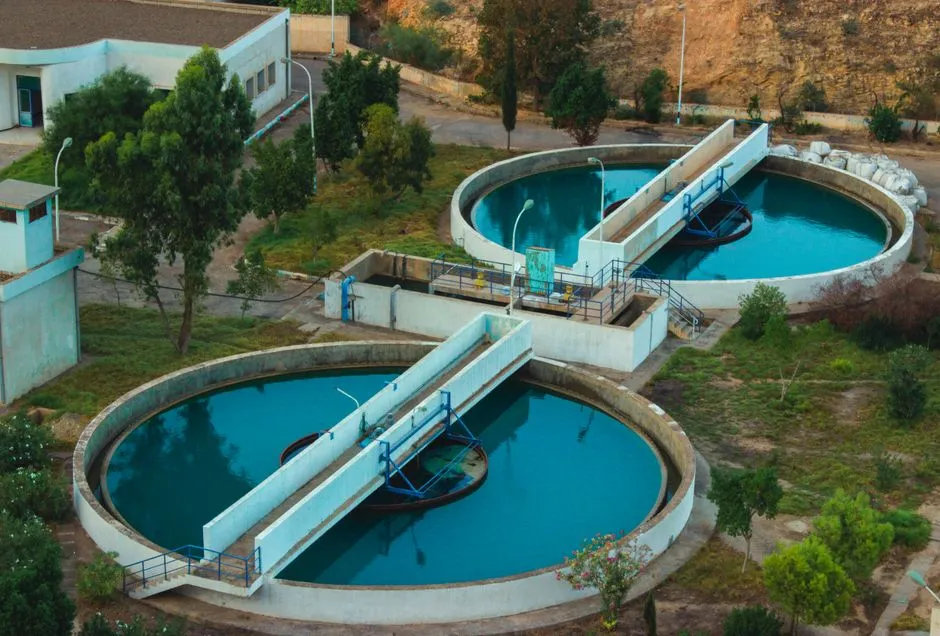
A gravity clarifier — including a lamella plate clarifier — relies on Stokes-law settling. Free oil rises because its density is below water; dense grit and TSS sink. The clarifier does nothing to droplets smaller than about 20 microns, which is exactly the size band that modern emulsified cutting fluids, lube blending intermediate streams, and additive package washwater produce. Retention time runs 2-4 hours, which is why a clarifier needs a tank measured in tens of feet, not the 6-15 ft footprint of a packaged DAF. A lamella clarifier shortens the settle path with inclined plates and can hit higher hydraulic loading, but it still depends on gravity separation and still misses stable emulsions. Upset conditions — a slug of hot emulsified oil from a blender, a washdown with detergent — short-circuit a clarifier for hours. A DAF recovers in minutes because its separation mechanism does not depend on quiescent conditions.
DAF vs Clarifier: Side-by-Side Performance Parameters
The table below is the artifact most procurement managers will screenshot. Numbers are drawn from manufacturer published data and 2025-2026 industry comparisons (DAF Corp, Ecologix, WesTech). Where Ecologix reports 95% FOG removal on a DAF versus 70% on a clarifier for the same oily stream, and DAF Corp reports 92-98% TSS on circular FC Maximizers and 85-90% on rectangular RC UniMax units, those ranges are used directly. Footprint numbers come from WesTech's mobile DAF trailer (47'-6" x 8'-6" small unit; 51'-7" x 8'-6" large unit) and VanAire's modular aeration skid (approximately 6' x 4' x 6' tall at 150-450 GPM).
| Parameter | DAF (Dissolved Air Flotation) | Gravity Clarifier (incl. Lamella) |
|---|---|---|
| FOG removal (typical) | ~95% (Ecologix 2026 update) | ~70% on the same oily stream (Ecologix 2026 update) |
| TSS removal (typical) | 92-98% circular; 85-90% rectangular (DAF Corp) | 60-80% on petroleum streams; ~90% on heavy mining sediment (Ecologix) |
| Free oil capture | Excellent, with chemical aid | Good for coarse free oil only |
| Emulsified oil capture | Good with polymer conditioning | Poor — sub-20-micron droplets pass through |
| Hydraulic retention time | 15-30 minutes | 2-4 hours |
| Footprint (200 GPM example) | 6-15 ft diameter or 47'-6" trailer pad | 30-50 ft diameter for equivalent flow |
| Typical CAPEX band | Higher unit cost; packaged skid | Lower unit cost; field-erected tank |
| Typical OPEX driver | Air compressor energy, polymer, float disposal | Sludge pumping, periodic dredging, larger footprint utilities |
Reading those rows for a petroleum context: if the permit limit or the local POTW sewer-use cap is set in the 10-15 mg/L oil and grease range, only the DAF column reliably gets you there on an emulsified stream. The clarifier column is the right answer when the stream is predominantly heavy sediment, when free oil dominates and can be roughed out in an upstream API separator, or when the operator is willing to accept effluent in the 30-50 mg/L range and use the clarifier as a pre-treatment step before a biological polishing stage. Most Tuckerman petroleum streams do not fit that description — they are emulsified, intermittent, and tied to a tight permit.
Which Petroleum Wastewater Profile Fits Each Technology
Generic comparisons ignore the fact that "petroleum wastewater" is at least four different streams. The right separator depends on which one is hitting your equalization tank.
Tank-farm washdown. Low flow, intermittent, mix of free oil from valve and fitting drips plus settled grit and rainwater sediment. A DAF with a grit pre-screen handles this cleanly because the slug loads are short and the chemistry can be turned on only when washdown is active. A lamella clarifier is acceptable if oil is consistently below about 50 mg/L and grit removal is the primary goal. A heavy-sediment clarifier is the right answer only when the washdown stream is essentially stormwater with trace oil — uncommon at a real bulk terminal.
Lube oil blending. Emulsified oil in the 200-1,000 mg/L range, often warm (90-130°F), with surfactant and additive package residues. This is the stream that breaks legacy clarifiers. A dissolved air flotation system with chemical conditioning — polymer dose typically 5-20 mg/L, sometimes paired with a coagulant — is the standard 2026 answer. A clarifier alone will not meet a 15 mg/L oil and grease limit on this stream without a downstream polishing step.
Small re-refining or used-oil recovery. High TSS, variable oil, occasional solvent or glycol contamination. A DAF as primary, optionally followed by a HydropureWater lamella clarifier as a second stage for fine floc, is a common configuration. The DAF takes out the bulk of the oil and floatable solids; the lamella polishes residual TSS before discharge or before biological treatment.
API separator effluent going to a polishing step. When the upstream API separator has already removed free oil to below about 50 mg/L, a conventional or lamella clarifier can be adequate as the polishing primary. Pushing a DAF in front of an already clean stream is over-spec.
Produced-water-style brine with high TDS. DAF is still the right choice for the oil phase; downstream RO or evaporation handles the salt. No clarifier will reduce TDS meaningfully.
Sizing a DAF or Clarifier for a Tuckerman Facility
Most petroleum sites in the Tuckerman area fall in the 50-500 GPM bracket, with peak flows during batch discharges or washdown campaigns running 1.5-2x the daily average. DAF Corp's skid-mounted FC Maximizer covers 48-450 GPM in standard sizes (6 ft to 15 ft diameter), which lines up with this entire range. The RC UniMax rectangular DAF covers 10-1,000 GPM, and VanAire's modular aeration skid is shared across 150, 300, and 450 GPM units with a 6' x 4' footprint and 6 ft height — a useful benchmark for a tight pad.
Hydraulic loading is the second sizing lever. DAF systems run at 2-5 GPM/ft² of effective flotation area; gravity clarifiers run at 0.5-1 GPM/ft². That 4-5x difference is why a 200 GPM DAF fits on a 12 ft diameter pad while a 200 GPM clarifier needs roughly 35-40 ft of diameter for equivalent settling. On a constrained Jackson County site, that footprint alone often decides the technology.
The air-to-solids ratio on a DAF is typically 0.05-0.15 lb air per lb solids. Underdosing produces cloudy effluent; overdosing wastes compressor energy. Vendor packaged systems arrive with the aeration pump, saturation tank, and breakout valve pre-sized, so this is more a commissioning variable than a design variable — but it is worth asking a vendor to confirm the ratio they sized for, especially on a high-TSS re-refining stream.
Size for peak, not average. Petroleum facilities are slug-loaded by nature — a blender dumps an emulsion batch, a tank farm runs a quarterly washdown, a re-refining campaign pushes a week-long slug. Equalization ahead of the separator is the cheapest insurance a 2026 capital budget can buy. Without it, a separator sized for average flow will fail permit during peaks. Permanent DAF skids carry a 2-4 week engineering lead time per DAF Corp and VanAire; mobile DAF units (WesTech) can be on-site and online within a single day, which is the right interim move while a permanent unit is being fabricated.
Compliance and Permitting Considerations in Arkansas
40 CFR Part 419 establishes effluent limitations and standards for the petroleum refining point source category, broken into subcategories such as Topping, Cracking, Lubricating, Re-Refining, and Integrated. A small lube blender in Arkansas does not always trigger the full refining categorical standard, but the same oil and grease, TSS, and (in some subcategories) COD limits are what Arkansas DEQ references when writing a permit narrative. The practical number to design to is an effluent oil and grease of 10-15 mg/L monthly average; a DAF with chemical conditioning routinely delivers below 15 mg/L, while an un-aided clarifier on an emulsified stream will not.
Arkansas DEQ administers the NPDES program in the state. For facilities that discharge to a POTW — common in Jackson County where municipal sewer service exists — the controlling document is the local sewer use ordinance, which often mirrors the categorical standard's oil and grease cap and adds monitoring, sampling, and reporting frequency. For facilities with a direct discharge to surface water, an individual NPDES permit with effluent limits tied to 40 CFR 419 subcategory numbers is the path. Either way, the permit-defensible design narrative should reference the specific subcategory, the influent characterization, and the demonstrated removal efficiency of the proposed separator.
Pilot data is the strongest permit evidence. DAF Corp offers a pilot FC-60 at 48 GPM and an RC UniMax pilot at 80-100 GPM, both at 2,000 PPM loading — enough to generate defensible removal data on your actual stream. WesTech's mobile DAF fleet is a full-scale pilot option that can be on a Jackson County site in a day. Bench-scale jar testing on a real sample, followed by a two-week on-site pilot, is the sequence that survives an Arkansas DEQ permit review. An automatic polymer and coagulant dosing system is the supporting equipment that turns pilot data into a reproducible operating range.
Decision Framework: Pick DAF or Clarifier in Five Steps
Use this sequence when you have to write a memo to a plant manager justifying a 2026 capital decision. Each step is a single question with a clear go/no-go answer.
- Characterize the influent. Measure oil and grease, TSS, temperature, and flow variability across at least two weeks including a batch discharge event. If emulsified oil exceeds 50-100 mg/L or TSS regularly exceeds 500 mg/L, the answer is trending toward DAF.
- Check the discharge limit. If oil and grease must be below 15 mg/L monthly average — the typical POTW or 40 CFR 419 anchor — DAF with chemical conditioning is the only single-step technology that reliably hits it on an emulsified stream.
- Weigh the footprint. On a constrained bulk-terminal pad, a packaged dissolved air flotation system on a 12-15 ft skid beats a 40 ft diameter clarifier tank. On a greenfield site with land to spare, a lamella clarifier is a defensible lower-CAPEX option for a low-oil stream.
- Evaluate OPEX honestly. DAF OPEX is dominated by air compressor energy (typically 5-15 kW at 200 GPM), polymer consumption, and float disposal. Clarifier OPEX is dominated by sludge pumping and periodic dredging. On a heavily emulsified stream, clarifier OPEX rises because the unit underperforms and the downstream polishing step is over-loaded.
- Plan for future permit tightening. If you anticipate a biological polishing step, a metals-removal step, or stricter sheen limits in the next permit cycle, DAF is the better front end. Research framing DAF as a robust primary before biological polishing (SSRN 4731382) supports this. A packaged MBR biological polishing system downstream of a DAF is a 2026 configuration that scales with future regulation.
Cost, Lead Time, and Pilot Testing: What to Plan in 2026
Permanent DAF skid lead times run several weeks once a purchase order is signed (per DAF Corp and VanAire's published project language). Mobile DAF is a different procurement mode: WesTech's mobile DAF clarifier can typically be delivered and brought online within a single day, depending on site readiness, which is the right answer when an existing separator is failing or a permit deadline is closer than the fabrication schedule.
The right first spend in 2026 is a pilot, not a permanent unit. DAF Corp's pilot FC-60 at 48 GPM and the RC UniMax pilot at 80-100 GPM are both sized to run on a real stream at representative loading (2,000 PPM) and produce the removal-efficiency data that a permit reviewer expects to see. WesTech's mobile DAF is a full-scale pilot that doubles as interim production capacity. A two-week pilot on a real lube blending or tank-farm washdown stream in Jackson County, with jar testing beforehand and an automatic chemical dosing system in line, is the cheapest insurance a capital project can buy.
Compare on lifecycle, not sticker. Polymer consumption, compressor energy, float disposal, and the avoided cost of a permit excursion or a downstream polishing over-build all belong in the OPEX column. For Tuckerman-area sites, a phased path — pilot DAF in 2026, permanent DAF skid in 2027, optional biological polishing as a third phase if permit limits tighten — minimizes 2026 capital exposure while keeping the permit narrative defensible. The same phased logic is laid out in our parallel petroleum buyer's guide for Newport, and the compliance playbook for petroleum pretreatment walks through the permit-defensible testing sequence in more detail. For a comparable buyer's guide framed around an Alabama petroleum hub, see the Mobile, AL petroleum DAF vs clarifier guide.
Frequently Asked Questions
DAF vs clarifier for petroleum wastewater — which is better in 2026?
For emulsified or free oil above roughly 50-100 mg/L, DAF is the better primary separator in 2026 because it delivers 85-98% TSS removal and approximately 95% FOG removal versus about 70% for a clarifier on the same stream. A clarifier is the better answer when the stream is predominantly heavy sediment with low oil, or when the facility accepts a larger footprint in exchange for lower chemistry cost.
At what oil concentration does DAF start to outperform a clarifier?
The crossover sits around 50-100 mg/L influent oil and grease for most petroleum streams. Below that, a lamella or conventional clarifier can deliver adequate removal for a downstream polishing step. Above it, the clarifier's inability to capture sub-20-micron emulsified droplets drives effluent oil above typical 15 mg/L permit limits, and DAF becomes the only single-step technology that hits the target.
Does a DAF need chemicals to treat oily wastewater?
Yes, in practice. While DAF can operate without chemicals, coagulants or flocculants are normally recommended to improve float separation and sludge concentration, especially on emulsified petroleum streams. WesTech's own documentation notes that coagulants or flocculants are often recommended for that reason. Typical polymer dose on petroleum streams is 5-20 mg/L.
How long does a mobile DAF pilot take to install at a petroleum site?
WesTech's mobile DAF clarifier can typically be delivered and brought online within a single day, depending on site readiness and utility availability. The trailer needs a level surface, power, and piping connections for influent, effluent, float, and drain. No permanent foundation is required, which makes it a fast interim option while a permanent DAF skid is being engineered and fabricated.
What 40 CFR subcategory governs a small lube oil blender in Arkansas?
The Lubricating Oils subcategory under 40 CFR Part 419 is the most likely anchor for a small lube blending operation, with the Re-Refining subcategory applicable to used-oil recovery sites. Both set oil and grease, TSS, and (in some subcategories) COD limits that an Arkansas DEQ permit narrative will reference, even when the local discharge is to a POTW rather than directly to surface water.