
What an Albuquerque Chemicals Plant Is Actually Treating in 2026
Albuquerque chemicals manufacturers in 2026 run four contaminant families through primary treatment, and the equipment choice falls out of that mix. Free and emulsified fats, oils, and grease (FOG) arrive from batch reactor discharge and cleaning operations, often stabilized by surfactants that defeat gravity settling. Fine suspended solids and metal hydroxides come from pH-adjustment and neutralization steps, where iron, nickel, chromium, and copper precipitate as gelatinous floc. Total dissolved solids (TDS) and process salts push specific gravity close to water and defeat simple settling. pH swings from pH 1 acid wastes to pH 13 caustic cleaning solutions hit the sewer in slugs rather than steady flow.
Three sub-streams dominate: reactor washwater (carries the highest FOG and TDS load), scrubber blowdown (carries soluble metals and heat), and clean-in-place (CIP) effluent (carries caustic, surfactants, and emulsified product). Each must meet the City of Albuquerque Industrial Pretreatment Program (IPP) discharge limits for oil and grease, pH, metals, and TSS before reaching the POTW. Plants sending any portion of the flow to on-site disposal or reuse must also satisfy NMED 20.6.2 NMAC surface and groundwater standards, which are tighter than IPP limits on several metals and on nitrate.
The Rio Grande basin is a documented 2026 water-stress zone, so higher-quality effluent is worth real money on this site: a plant can reuse polishing effluent as cooling-tower make-up or landscape irrigation and offset the cost of imported PNM-served water. That reuse credit is what shifts the economics away from a pure OPEX-minimum clarifier toward a DAF-led train.
DAF vs Clarifier: How Each Technology Works on a Chemical Stream
A Dissolved Air Flotation (DAF) system saturates a recycle stream with air at 4.8 bar, then releases that pressure inside the flotation tank. Micro-bubbles 20–80 µm in diameter attach to oil droplets, surfactant micelles, and fine floc, lifting them to the surface in roughly 0.5 h for skimming. The ChemEngineering refinery case anchors the operating envelope: 4.7 m tank diameter, 2.5 m water depth, 60.3 m³/m²·d hydraulic loading rate, 0.15 air/solids ratio, and a polymer dose of about 0.001 g/kg — a tight dose that works only when influent pH and emulsifier load are stable (ChemEngineering, 2019).
A clarifier — gravity settling for circular units, lamella plates for footprint-constrained sites — relies on Stokes-law settling. The same refinery study specifies an 11 m circular clarifier, 0.69 m³/m²·h surface overflow rate (≈16.6 m³/m²·d), 4.5 m side water depth, 1.03 specific gravity for the sludge, 1% underflow concentration, and a 186.3 m³/m·d weir overflow rate. The lamella plate version of this geometry, packaged as a lamella clarifier for chemical-plant duty, compresses the same settling area into a 2–4 m tank.
Removal performance splits by contaminant. The Ecologix 2026 selection guide reports DAF at ~95% oil and grease removal on an oily stream versus ~70% for a clarifier on the same feed; a clarifier on a heavy mining sediment stream hits ~90% suspended-solids reduction (Ecologix, 2026). The chemistry that lets either technology meet the Albuquerque IPP limit is upstream: cationic polyacrylamide for FOG and emulsified oil, ferric chloride or alum for metals, and lime or NaOH for pH conditioning. Without that conditioning train, neither unit hits discharge limits on a chemical stream.
| Parameter | DAF (refinery case) | Clarifier (refinery case) |
|---|---|---|
| Tank diameter / geometry | 4.7 m circular | 11 m circular, flat bottom |
| Water depth | 2.5 m | 4.5 m side water depth |
| Hydraulic loading / overflow | 60.3 m³/m²·d | 0.69 m³/m²·h (≈16.6 m³/m²·d) |
| Air/solids ratio | 0.15 | n/a |
| Polymer dose | 0.001 g/kg | none baseline, flocculant aid if used |
| Underflow concentration | float 3–6% TSK | 1% by mass |
| O&G removal on oily stream | ~95% | ~70% |
Head-to-Head Comparison: Removal, Footprint, OPEX, and Shock-Load Response
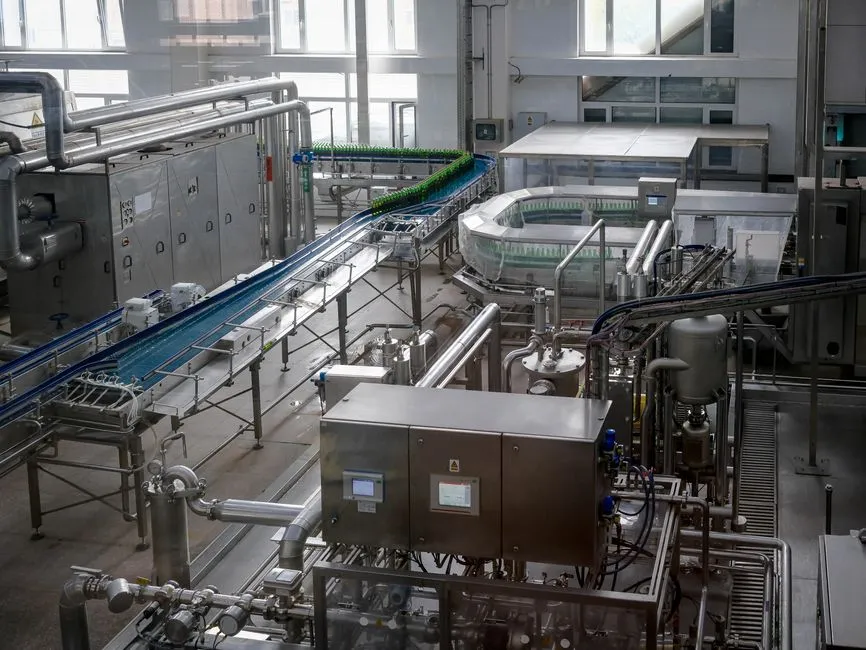
DAF wins on FOG, emulsified oil, and fine SS; clarifier wins on heavy settleable solids and metal-hydroxide sludges. The 95% vs 70% gap on oil and grease is the single most quoted number in capital-committee discussions of oily chemical streams, and it comes from the same Ecologix 2026 dataset.
Footprint is the second-quoted number. DAF at 60.3 m³/m²·d gives roughly 3.6× the hydraulic loading of the clarifier at 16.6 m³/m²·d, so for the same flow a DAF unit occupies about one-third the tank area. On the crowded Kirtland, Mesa del Sol, or West Mesa sites, that often means the difference between fitting primary treatment inside an existing building and breaking ground on a pad outside.
OPEX is where the clarifier claws back ground. A clarifier has no saturator, no recycle pump, and no air compressor, so its specific energy draw is materially lower; the DAF polymer dose is modest at 0.001 g/kg but the saturator and recycle pump run continuously. EPA's Detailed Costing Document for the Centralized Waste Treatment Industry (EPA 821-R-98-016) breaks DAF and clarifier O&M cost curves at 20 gpm — below 20 gpm DAF unit-cost is high, above 20 gpm DAF scales more economically but OPEX still grows faster than clarifier OPEX on the same flow range (EPA 821-R-98-016, 1998-12).
Shock-load response is the differentiator most spec sheets underrate. DAF tolerates pH swings from roughly 1 to 13 because float dynamics are not gravity-dependent, and a surfactant upset floats rather than emulsifies into a clarifier blanket. A clarifier under a 200 mg/L emulsified-oil spike will blank out within hours, with the oil rising as a stable layer that has to be broken mechanically; the same spike on a DAF becomes part of the float and is skimmed. For batch-driven Albuquerque plants this is the operating reason DAF wins most sites.
| Metric | DAF | Clarifier | 2026 Albuquerque implication |
|---|---|---|---|
| FOG / emulsified oil removal | ~95% | ~70% | DAF clears IPP oil & grease limit more reliably |
| Hydraulic loading | 60.3 m³/m²·d | ≈16.6 m³/m²·d | DAF ~3.6× smaller tank |
| Energy draw | saturator + recycle pump + skimmer | rake drive only | Clarifier wins on kWh/m³ |
| Polymer / coagulant | 0.001 g/kg + coagulant | flocculant aid only | DAF chemistry budget is higher |
| pH 1–13 swing tolerance | high | low without neutralization | DAF better for batch reactors |
| Surfactant upset | floats | blankets, loses clarifier | DAF better for CIP effluent |
Decision Matrix: Pick DAF, Clarifier, or a Hybrid Train for Your Albuquerque Site
Three plant archetypes cover most Albuquerque chemicals operations. Archetype A is a specialty or batch formulator near Mesa del Sol with high FOG and surfactant load but low heavy-solids duty: a single DAF as primary, no clarifier, polishing with a multi-media filter is the cleanest answer. Archetype B is an inorganic chemicals plant running acid neutralization or metal finishing, with heavy TSS and low FOG: a primary lamella clarifier with chemical precipitation, with a small DAF held in reserve as a polishing step only for residual oil. Archetype C is a complex mixed stream, the analog of the SSRN/Elsevier refinery case where DAF and MMBBR run in series: a hybrid train with DAF as primary for oil and colloidal removal, a clarifier as secondary for biomass and sloughed floc, and an SBR or MBR for organics — the 2026 default for full-service Albuquerque chemical plants (SSRN/Elsevier, 2024).
Decision rules are simple enough to put in a capital-committee slide. FOG above 100 mg/L or any measurable surfactant load → DAF first. Settleable SS above 70% of total TSS → clarifier first. Both present → hybrid train. Below 20 gpm the EPA cost curves show DAF unit-cost is disproportionately high, so for very small flows a packaged clarifier often wins on CAPEX even when DAF wins on performance.
| Influent profile | Primary unit | Secondary unit | Typical CAPEX band |
|---|---|---|---|
| FOG > 100 mg/L, surfactants present, low TSS | DAF | Multi-media filter | Low to mid |
| Settleable SS > 70% of TSS, metals, low FOG | Lamella clarifier + precipitation | Optional DAF polish | Mid |
| Mixed: FOG + metals + TDS, batch pH swings | DAF (primary) | Clarifier (secondary) → SBR/MBR | High |
| Flow < 20 gpm, modest contaminant load | Packaged clarifier | Sand filter | Lowest |
Designing the 2026 Hybrid Train: Putting DAF and Clarifier on the Same Flow Sheet
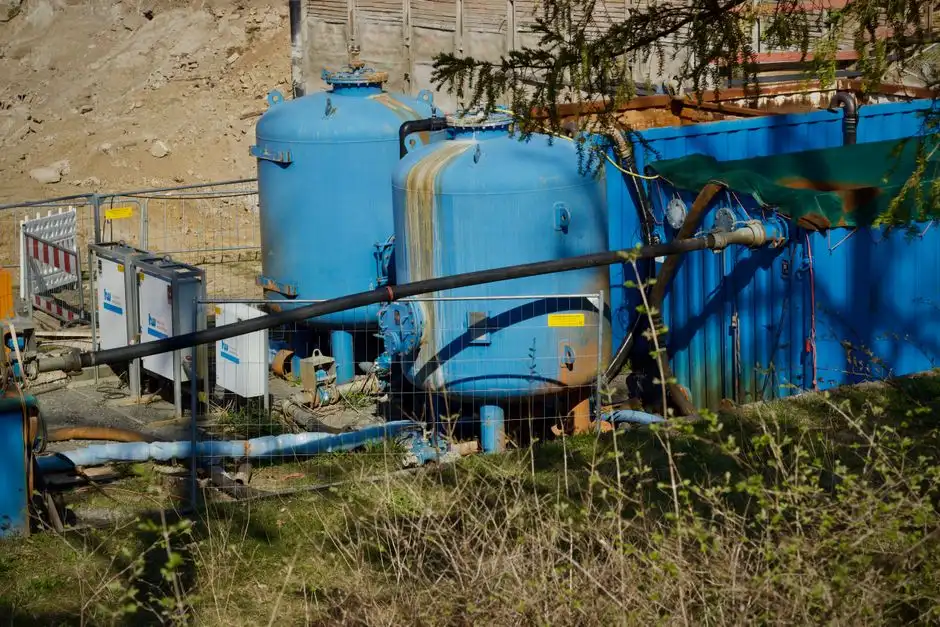
The 2026 reference flow sheet for a mid-size Albuquerque chemicals plant runs equalization first to damp batch swings, then pH adjustment and coagulant dosing with an automated coagulant and pH dosing skid, then the Dissolved Air Flotation (DAF) system as primary, then a lamella clarifier for chemical-plant duty as secondary polishing and sludge thickener, then a biological step — SBR for variable flow, MBR for tighter effluent — and finally chlorination or UV before reuse or discharge.
The ChemEngineering refinery case provides a directly scaleable geometry anchor: 4.7 m DAF diameter, 2.5 m water depth, 4.8 bar saturator, 0.5 h flotation HRT for the primary; 11 m circular clarifier, 4.5 m side water depth, 0.69 m³/m²·h surface overflow for the secondary. Albuquerque plants typically scale the DAF down to a 2.5–3.5 m unit for flows under 50 m³/h and pair it with a 5–7 m lamella clarifier rather than a circular gravity unit, because the lamella geometry fits the same settling area into less than half the footprint.
Sludge handling is the line item capital committees miss. DAF float at 3–6% total suspended kiln (TSK) goes to a sludge thickener; clarifier underflow at 1% by mass goes directly to a filter press for chemical sludge dewatering to reach a 25–35% cake. The cake is usually RCRA-characteristic on a chemical plant — corrosive (D002) from low pH, or toxic (D004–D043) from regulated metals — so filter-cake disposal is a separate budget line, and EPA 821-R-98-016 prices it independently of the dewatering equipment.
2026 Cost Framework: CAPEX, OPEX, and Albuquerque-Specific Drivers
Use EPA 821-R-98-016 as the costing framework, not a 2026 dollar figure. The CWT cost curves segment DAF and clarifier capital and O&M costs at the 20 gpm flow breakpoint; below 20 gpm unit costs run high because equipment is sold in standard sizes, above 20 gpm both technologies scale roughly linearly with flow on log-log plots. The same document prices filter-cake disposal as a separate O&M line, which is the correct treatment for chemical-plant sludge.
Albuquerque-specific OPEX drivers in 2026: PNM commercial electricity, cationic polyacrylamide and ferric chloride delivered to New Mexico at truckload rates, NMED self-monitoring lab fees for IPP compliance, and filter-cake disposal to a Subtitle C or industrial landfill. Plants that reuse DAF polishing effluent as cooling-tower make-up under NMED 20.6.2 NMAC recover enough of the avoided water cost to shift the 5-year NPV in DAF's favor — typically the reuse credit is the second-largest line on the OPEX ledger after chemicals.
The ROI logic that closes the capital discussion: DAF's shorter retention time and smaller tank cut civil cost, higher OPEX from the saturator and polymer is offset by lower sludge volume (float sludge dewaters to a drier cake than clarifier underflow) and by the resale value of reuse-quality water. A standalone clarifier wins on lowest 5-year OPEX only if the plant has no reuse and a steady, low-FOG influent.
| Cost line | Driver | 2026 Albuquerque note |
|---|---|---|
| Civil / tankage | Tank volume, site prep | Smaller with DAF (3.6× higher loading) |
| Equipment CAPEX | Saturator, skimmer, rake | Use EPA CWT curves, 20 gpm breakpoint |
| Energy OPEX | kWh/m³, PNM tariff | Clarifier wins on kWh; DAF offset by reuse credit |
| Chemicals OPEX | Polymer, ferric chloride, NaOH | DAF dose 0.001 g/kg + coagulant |
| Sludge disposal | Filter cake, RCRA class | Separate line per EPA 821-R-98-016 |
| Reuse value | Cooling-tower make-up, irrigation | Offsets OPEX under NMED 20.6.2 |
Albuquerque Compliance Checklist Before You Buy
Step 1: pull 12 months of influent characterization — FOG, TSS, TDS, pH, regulated metals, surfactant class, and temperature — and bench-test DAF and clarifier jar trials on the actual stream, not a synthetic. Step 2: confirm the City of Albuquerque IPP discharge limits for oil and grease, pH, metals, and TSS, and check whether any local limit is tighter than the federal 40 CFR Part 465 categorical standards for the chemicals subcategory. Step 3: confirm NMED 20.6.2 NMAC groundwater and surface-water requirements if any portion of the flow goes to on-site disposal, evaporation, or reuse, because those limits are typically the binding constraint on metal-bearing streams. Step 4: design for chemical-sludge handling as part of the project — DAF float and clarifier underflow from a chemicals plant are usually RCRA-characteristic, so a filter press for chemical sludge dewatering and a manifest-class disposal route must be in scope from day one. Step 5: run a 60–90 day on-site pilot of the chosen configuration before issuing the purchase order — the 2026 procurement standard for any Albuquerque chemicals plant treating a variable batch feed.
Frequently Asked Questions
Which is better for chemicals wastewater with high oil and grease, DAF or a clarifier?
A DAF is the correct primary unit for chemical streams carrying emulsified oil, FOG above 100 mg/L, or surfactants, because DAF removes roughly 95% of oil and grease versus about 70% for a clarifier on the same oily feed (Ecologix, 2026).
When does a clarifier beat DAF on a chemical plant wastewater stream?
A clarifier beats DAF when the influent is dominated by heavy settleable suspended solids and metal-hydroxide sludges with low FOG, because clarifiers hit about 90% suspended-solids reduction on those streams at lower energy cost and without saturator OPEX (Ecologix, 2026).
What is the 2026 flow breakpoint where DAF becomes cost-effective versus a clarifier?
EPA's CWT costing document (EPA 821-R-98-016) segments DAF and clarifier O&M cost curves at 20 gpm; below 20 gpm packaged clarifiers usually win on CAPEX, above 20 gpm DAF scales more economically and the hybrid train becomes the cost-effective default for mixed streams (EPA 821-R-98-016, 1998-12).
What regulations govern primary-solids equipment selection at an Albuquerque chemicals plant in 2026?
Discharge to the POTW is governed by the City of Albuquerque Industrial Pretreatment Program, the federal categorical standards at 40 CFR Part 465 for the chemicals subcategory, and — for any on-site disposal, evaporation, or reuse — NMED 20.6.2 NMAC surface and groundwater standards, which are typically the binding limit on metal-bearing chemical streams.