
Why Castleberry Mining and Metals Factories Are Rethinking Primary Solids Separation in 2026
Castleberry sits in southern Escambia County, AL, between the Conecuh River and Murder Creek sub-basins, and the industrial footprint in its draw area is dominated by aggregate washing, mineral processing, fabricated metals, and electroplating. Plants that historically discharged through a settling pond or a basic circular clarifier are running into a 2026 reality: influent total suspended solids (TSS) routinely swings between 300 and 3,000 mg/L after summer convective storms, flotation reagent carryover from ore-dressing circuits still arrives at the outfall, and ADEM is enforcing EPA anti-degradation expectations more strictly than it did five years ago. The combination of variable solids load, regulated metals, and rising pressure for process-water reuse has pushed the dissolved air flotation (DAF) versus lamella clarifier question from a textbook chapter into a 2026 capital line item. The relevant decision lens now spans footprint, CAPEX/OPEX, compliance under 40 CFR Part 436 (Ore Mining and Dressing) versus 40 CFR Part 433 (Metal Finishing), and a measurable water-reuse KPI. For a comparable regional analysis on the same decision, the Rimini mining and metals DAF vs clarifier guide walks through the same engineering trade-offs in a different watershed.
How a DAF System Actually Separates Solids, FOG, and Metals
Dissolved air flotation removes particles by attaching them to rising microbubbles, not by letting them sink. A pressurized recycle stream is saturated with air at 3–4 bar and then released into the flotation tank at atmospheric pressure; the pressure drop generates bubbles typically smaller than 100 μm that collide with and adhere to hydrophobic or flocculated particles (Ozturk et al., 2026, Polish J. Environ. Stud.). In a real metal-plating pilot, the authors operated a 1.23 m² DAF at a 200 μm bubble diameter, 53 minutes of contact time, 1 m³/h flow, and a hydraulic loading rate of 2 m³/m²·h, with a 0.37 kW scraper at 9 rpm and a 0.55 kW feed pump, for 2.96 kWh per 8-hour shift (Ozturk et al., 2026). Because raw metal-plating particles carry negative surface charges, chemical conditioning is not optional: Ozturk et al. screened FeCl₃ (40%), PAC (17%), and Al₂(SO₄)₃ (20%) with an anionic polyelectrolyte (AP) flocculant aid, settling on NaOH (0.1 N) + FeCl₃ (240 mg/L) + AP (0.5 mg/L) as the working set. The reported removal rates from that pilot are the data point most Alabama engineers should anchor to: COD 83%, Ni 94%, Zn 99%, Cr⁺⁶ 99%, SO₄²⁻ 90%, with Cu and CN⁻ trailing at 33% and 46% (Ozturk et al., 2026). The commercial envelope that maps to those numbers is the dissolved air flotation system range, covering 4–300 m³/h across 13 standard models with automatic skimming. The headline implication: DAF pulls the sub-100 μm clays, emulsified oils, and precipitated metal hydroxides that a gravity tank simply cannot capture in a single pass.
How a Lamella Clarifier Handles the Same Wastewater
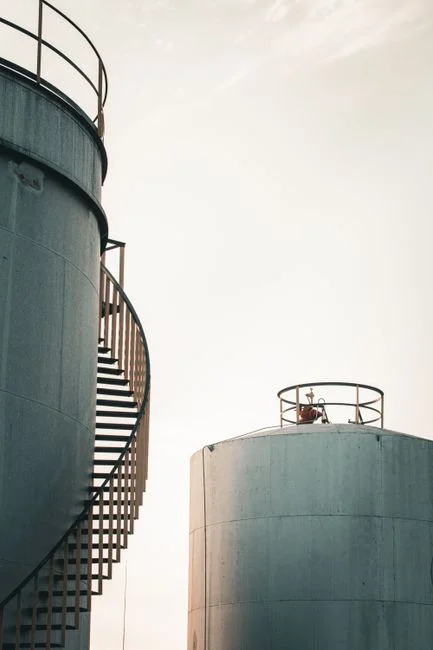
A lamella clarifier relies on gravity and an inclined-plate pack to shorten the settling path. Wastewater enters a flocculation zone, flocs form under gentle mixing, and the water then rises through a stack of inclined plates spaced to give an effective settling area many times larger than the plan footprint of the tank. Solids slide down the plate faces into a sludge hopper, clarified water exits at the top, and a sludge recirculation pump returns a fraction of the bed to maintain contact. Surface loading rates of 20–40 m³/m²·h are typical, which is roughly 10–20× the loading of a DAF tank, and chemical programs typically cut coagulant and polymer consumption by up to 30% compared with conventional clarifiers (HydropureWater high-efficiency sedimentation tank data, 2026). The HydropureWater high-efficiency lamella clarifier package delivers that envelope. Where the technology runs out of headroom is on particles below roughly 100 μm, emulsified oils, and buoyant FOG — those either pass through the plate pack or float on top of the sludge blanket rather than report to the underflow. For a Castleberry aggregate or coarse-ore washing line, a lamella clarifier alone is often a defensible primary step; for anything that includes a metal-finishing sidestream or fine flotation tailings, it has to be followed by something that floats rather than settles.
DAF vs Clarifier: Parameter-by-Parameter Comparison
The matrix below is the artifact you should be able to hand to a procurement director without translation. Numbers are drawn from the 2026 Ozturk et al. metal-plating DAF pilot, HydropureWater lamella clarifier operating data (2026), and the standard 40 CFR Part 433 metal-finishing daily maximums.
| Parameter | Dissolved Air Flotation (DAF) | Lamella Clarifier |
|---|---|---|
| TSS removal efficiency | 80–95% (>90% documented for Cr⁺⁶ and Zn in CF-DAF pilot, Ozturk et al. 2026) | 50–75% in mining service; drops further on sub-100 μm particles |
| FOG / emulsified oil removal | High; bubbles attach to oil droplets and lift them to the float | Poor; oil tends to coat the plate pack and re-entrain |
| Fine particle capture (<100 μm) | Effective — designed for colloidal and flocculated fines | Inefficient — Stokes settling losses dominate |
| Hydraulic loading rate | ~2 m³/m²·h (Ozturk et al. 2026 pilot) | 20–40 m³/m²·h (HydropureWater spec) |
| Footprint at 50 m³/h | ~25 m² of tank area; taller profile | ~1.5–2.5 m² of plan area; shallow profile |
| CAPEX order of magnitude | Higher (skid + saturator + compressor + scraper) | Lower (tank + plate pack + sludge pump) |
| OPEX drivers | Compressed air, recycle pump (0.55 kW), scraper (0.37 kW), polymer | Polymer, sludge recirculation pumping only |
| Sensitivity to flow / TSS surges | Tolerates spikes; float layer thickens without breakthrough | Sludge blanket can wash out above design solids |
| 40 CFR 433 daily max compliance | Required to consistently hit Cr⁺⁶, Cu, Ni, Zn limits | Not sufficient alone for Cr⁺⁶, Ni, Zn daily maximums |
| Water-reuse compatibility | High — float is thick, downstream RO/membrane protected | Moderate — clarified water often needs polishing before reuse |
Two implications worth flagging. First, the 10–20× hydraulic loading advantage of the lamella unit is what makes it cheap on a CAPEX-per-m²-of-footprint basis, but DAF's 1.5–2× better TSS recovery and its ability to handle the contaminants the lamella cannot capture is what makes it cheap on a total-cost-of-ownership basis when metals compliance is in scope. Second, the energy footprint shown in the Ozturk pilot — 0.37 kW scraper plus 0.55 kW pump for 1 m³/h — is small enough that DAF rarely loses an OPEX argument on power alone; the OPEX difference is almost always chemical, not electrical. Coagulant and flocculant selection is also worth treating as a controllable OPEX lever rather than a fixed cost, which is why most plants pair a clarifier or DAF with a programmable HydropureWater automatic chemical dosing system.
Mapping the Decision to 40 CFR 436 and 40 CFR 433
The choice between DAF and a clarifier collapses into a much shorter argument once the federal subcategory is on the table. Active ore mining and primary mineral processing in Castleberry typically discharges under 40 CFR Part 436 Ore Mining and Dressing, where the limits of practical concern are TSS and settleable solids; a well-operated lamella clarifier can meet those limits for coarse-ore washing circuits, especially where the solids are dense, sandy, and free of reagent carryover. The harder case is any facility that runs an electroplating line, surface treatment, fabricated metals operation, or printed circuit board shop: those discharge under 40 CFR Part 433 Metal Finishing, and the daily maximums the engineer has to defend in an ADEM filing are 0.86 mg/L Cr⁺⁶, 4.5 mg/L Cu, 7.0 mg/L Ni, and 5.2 mg/L Zn, among others (40 CFR Part 433, 2026). A lamella clarifier alone will not hold Ni and Zn inside those daily maximums on a feed that already runs 5.30 mg/L Ni and 12.1 mg/L Zn (Ozturk et al. 2026 influent characterization) — the chemistry has to be paired with a physical separation step that captures the precipitated metal hydroxides, which is precisely what CF-DAF does. Alabama's anti-degradation posture and EPA's 2026 mine-water reuse expectations reinforce the same conclusion: a clarifier-only train is increasingly hard to defend in an ADEM permit review, and a clarifier-plus-DAF polishing train is the configuration regulators are most comfortable signing off on.
CAPEX, OPEX, and Footprint: A 2026 Cost Lens for Castleberry Plants
The way to keep the budget conversation from being decided on sticker price alone is to walk it through total annual cost. Lamella clarifier packages typically price 25–40% below a DAF skid at the same hydraulic throughput, but they spend the savings back on chemical polishing, on sludge hauling, and on the permit risk of a metals excursion. DAF systems carry CAPEX for the saturator, compressor, scraper mechanism, and pressurized recycle piping, but their float is significantly thicker than clarifier underflow — typically 3–6% dry solids versus 0.5–2% — so downstream dewatering and haul-off cost falls sharply. That downstream dewatering step is most often a plate and frame filter press for sludge dewatering, which takes a DAF float to a 25–35% dry cake and cuts annual disposal tonnage by an order of magnitude in many flows. The table below is a 50 m³/h, 24/7 operation profile, numbers in 2026 USD, intended as a defensible planning estimate rather than a binding quote.
| Cost / footprint item | Lamella Clarifier alone | DAF alone | Clarifier + DAF (hybrid) |
|---|---|---|---|
| Plan footprint | ~2 m² | ~25 m² | ~27 m² |
| CAPEX order of magnitude (50 m³/h) | Lowest | Highest | Mid (but distributed) |
| Annual polymer + coagulant cost | Lowest | Higher (FeCl₃ + AP program) | Comparable to DAF alone |
| Annual energy cost | Low (sludge pump only) | Moderate (0.37 + 0.55 kW base plus compressor) | Moderate |
| Annual sludge haul-off cost | Highest (thin underflow, more tons) | Lower (thick float) | Lowest (clarifier sludge + DAF float both dewater well) |
| 40 CFR 433 metals compliance risk | High without polishing | Low | Low |
| 5–10 year TCO expectation (Castleberry, 20–150 m³/h) | Acceptable for coarse-ore only | Defensible | Lowest risk for mixed influent |
For a typical Castleberry plant in the 20–150 m³/h range with mixed ore-dressing and metal-finishing flows, the hybrid configuration is the most defensible answer to a procurement director: the lamella clarifier does the cheap bulk-TSS work, the DAF polishes the metals and the fines, and the plate-and-frame press locks in the disposal savings.
Sustainability and the 2026 LCA Argument for DAF
The 2026 evidence base for DAF is no longer only about removal efficiency — it now includes quantified life-cycle data. In the Ozturk et al. (2026) metal-plating study, the integrated CF-DAF system was modeled in SimaPro 9.4.0.3 against the ReCiPe 2016 Midpoint (H) and Environmental Footprint 3.1 methods, and benchmarked against prior integrated CF-DAF installations such as the Tüpraş refinery in Kocaeli, Türkiye, where a 90% reduction in marine ecotoxicity and an 84% reduction in aquatic eutrophication were reported. For a 2026 capex justification, that translates to three arguments a Castleberry engineer can put in writing: (1) DAF-enabled water reuse cuts freshwater intake, which is the single largest LCA lever for a mining/metals site; (2) chemical program optimization across FeCl₃, PAC, and Al₂(SO₄)₃ is a real sustainability lever, not just an OPEX lever, because coagulant production is a major contributor to eutrophication and human toxicity in the impact assessment; (3) a thicker float reduces sludge volume, which directly cuts haul-off emissions and landfill burden. The combination is the basis for the DAF-led trains now being written into 2026 sustainability capital plans. For the chemistry behind the metals precipitation step that feeds the DAF, the heavy metal chemical precipitation 2026 engineering guide walks through dosage and pH windows for Ni, Zn, and Cr⁺⁶.
Which Should Your Castleberry Facility Choose? A Decision Framework
The decision is a four-branch tree, not a binary choice.
- If your influent TSS is consistently below 300 mg/L, solids are coarse and settleable, and there are no Cr⁺⁶ or emulsified oil streams → lamella clarifier alone. This is the rare case in Castleberry; it generally applies to aggregate washing and coarse-ore washing circuits with no metal-finishing sidestream.
- If your facility has any metal-finishing line, FOG, sub-100 μm clays, or must hit 40 CFR Part 433 daily maximums → DAF as the primary separation step, sized on the 4–300 m³/h envelope of the dissolved air flotation system.
- If flow exceeds 100 m³/h and you must meet both 40 CFR Part 436 and Part 433 limits → hybrid train: a lamella clarifier for bulk TSS reduction, a DAF for polishing and metals compliance, and a plate-and-frame filter press for sludge dewatering. This is the most defensible configuration for the typical Castleberry mixed influent.
- If water reuse for mineral processing is a 2026 KPI → DAF-led train, full stop. The float quality and the Ozturk 2026 LCA results both point this direction.
If you can send the engineering team your influent characterization (TSS, COD, the metals you care about, and the daily flow) along with your ADEM permit number, they can size the unit and the chemical program to your specific wastewater — framed as engineering sizing support, not a sales proposal.
Frequently Asked Questions
What TSS can a DAF remove in mining wastewater?
A well-operated DAF delivers 80–95% TSS removal in mining and metals service, with the upper end of that range documented in the Ozturk et al. (2026) metal-plating pilot at >90% removal for Cr⁺⁶ and Zn on a feed that ran 12.1 mg/L Zn and 5.64 mg/L Cr⁺⁶.
Is a clarifier enough for 40 CFR Part 433 compliance?
Not on its own for Cr⁺⁶, Cu, Ni, and Zn daily maximums. A lamella clarifier removes settleable solids efficiently but does not capture sub-100 μm precipitated metal hydroxides reliably; a CF-DAF polishing step is normally required to hold the 0.86 mg/L Cr⁺⁶, 4.5 mg/L Cu, 7.0 mg/L Ni, and 5.2 mg/L Zn daily maximums (40 CFR Part 433).
How much does a DAF system cost for a 50 m³/h mining plant in 2026?
CAPEX for a 50 m³/h DAF skid is materially higher than for a lamella clarifier at the same flow, but the DAF model range from 4–300 m³/h covers that flow in a single standardized package, and OPEX is dominated by polymer and sludge handling rather than the unit price. A site-specific quote requires the influent characterization, but the DAF envelope is the right starting frame for 2026 budget planning.
Can a DAF handle the summer storm surges common in Alabama?
Yes. The float mechanism tolerates rapid TSS spikes that would wash a clarifier sludge blanket out of the plate pack; the air-saturation system continues to generate bubbles at design pressure regardless of influent solids, and the float layer simply thickens during a surge. This is the same property that makes DAF the standard choice for stormwater-equivalent flows in food and refinery service.
Do I need a clarifier AND a DAF?
For small sites with flows under ~20 m³/h and a single waste stream, a single DAF is usually the right call. For mixed ore-dressing and metal-finishing flows above ~100 m³/h, a hybrid clarifier-plus-DAF train pays back through lower chemical cost on the bulk stream, lower CAPEX than a DAF sized for full flow, and lower sludge haul-off cost through downstream dewatering.