Why Chemical Plant Wastewater in Winter Haven Is a Different Decision
Winter Haven, FL chemical factories discharging to the Peace River and Swannanoa watershed in 2026 face a wastewater envelope that generic DAF-versus-clarifier articles never cover. Process streams from specialty-chemical, fertilizer-adjacent, and coatings operations swing across pH 2-12 during batch campaigns, carry stable solvent emulsions from cleaning operations, and carry surfactant spikes that defeat gravity settling. Many of these facilities sit inside the broader Polk County phosphate corridor, so the same FDEP discharge report lists oil and grease, ammonia, total phosphorus, and trace metals — a parameter set that no food-processing or mining case study fully represents. The decision also has to clear FDEP Chapter 62-620 industrial pretreatment limits on TSS, O&G, and pH before a single gallon hits the POTW. The working claim for the rest of this article: DAF wins on the floatable and emulsified fractions (up to 95% FOG removal in published cases), a lamella or conventional clarifier wins on heavy settleable inorganics (around 90% TSS reduction), and most Winter Haven chemical plants need both in series.
How DAF and Clarifiers Actually Work on a Chemical Stream
A dissolved air flotation unit pressurizes a sidestream of clarified effluent (typically 20-30% of forward flow) with air at 4-6 bar in a saturator vessel, then drops that recycle through a needle valve or specialized nozzle into the flotation tank. The pressure drop releases the dissolved air as 10-100 micron microbubbles, which attach to particles and reduce their effective density below that of water. The floated layer is scraped by a top skimmer to a discharge hopper, and clarified effluent exits under a baffle. Bottom collectors are frequently added to the DAF tank to remove the heavier settleable fraction that would otherwise accumulate — this is why hybrid DAF designs dominate in chemical plants (per Komline-Sanderson product literature, 2026).
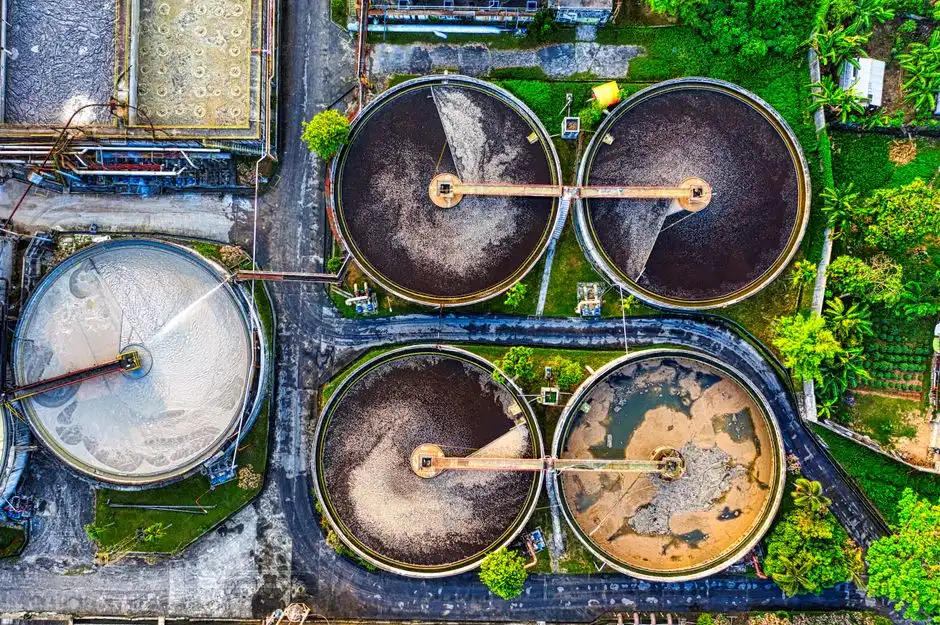
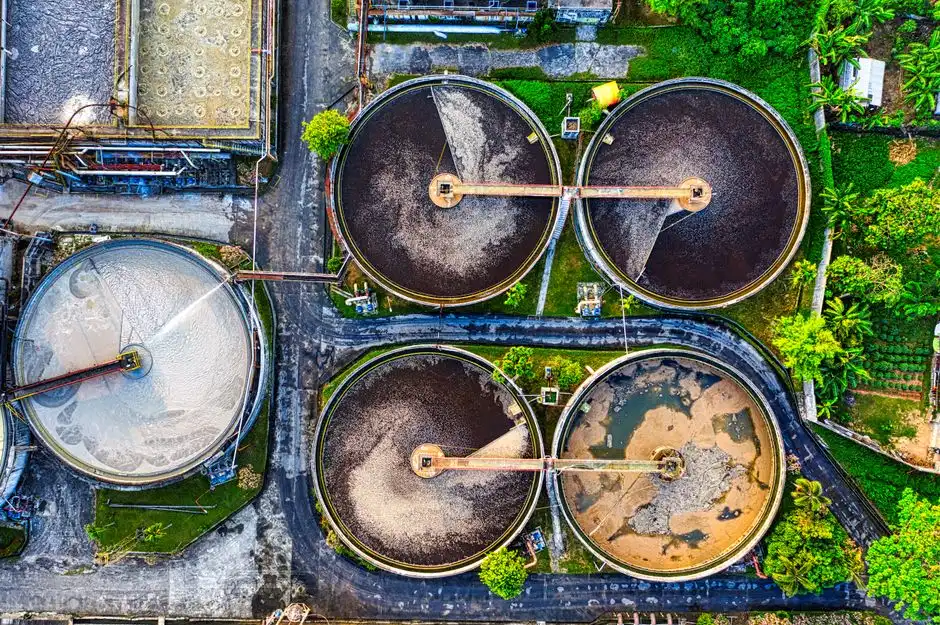
A clarifier does the opposite: it lets gravity pull particles down across a 2-4 hour hydraulic residence time, accumulates them in a sludge blanket, and pulls clarified water off the top through peripheral weirs. A lamella clarifier stacks inclined plates at 55-60° inside the tank to multiply the effective settling area, which compresses the footprint of an equivalent conventional clarifier by a factor of 4-6. Lamella units are the default choice for sites like Winter Haven industrial parks where pad space is constrained.
Across both technologies, chemical conditioning is the controllable bridge. Coagulants — alum, polyaluminum chloride (PAC), or ferric chloride — neutralize colloidal charge, and a polyacrylamide flocculant aggregates the destabilized particles into pin flocs that either float (DAF) or settle (clarifier) readily. The Komline design guide (2026) explicitly lists chemical pretreatment, utilities, and operator attention among the variables that determine success, and notes that a bench jar test is the first reliable predictor of which technology will work on a given stream.
DAF vs Clarifier for Chemicals: Contaminant-by-Contaminant Match
The clearest published benchmark for a chemical-or-process wastewater decision remains the 95% FOG figure for DAF against roughly 70% for a clarifier on the same surfactant-loaded stream (Ecologix, 2026 update), and the 90% TSS reduction achieved by a clarifier on a heavy-sediment mining stream (Ecologix, 2026 update). Those numbers transfer cleanly to chemical streams when the contaminant class matches. The table below maps the major contaminant classes a Winter Haven chemical plant actually handles against the winning technology.
| Contaminant class | DAF performance | Clarifier / lamella performance | Recommended primary | Notes |
|---|---|---|---|---|
| FOG, free oils, hydrocarbons | Up to 95% removal | ~70% on the same stream | DAF | Coagulant dosing required for stable emulsions |
| Emulsified solvents, cutting fluids | Effective with chemical conditioning | Poor — stable interface persists | DAF | Break emulsion upstream with surfactant-tolerant coagulant |
| Heavy settleable inorganics (mineral salts, catalyst fines, filter aid) | 60-75% with bottom collectors | ~90% TSS reduction | Lamella clarifier | Common at phosphate-adjacent Winter Haven sites |
| Fine colloids, low-density particulates | Strong after coagulation | Slow; requires long residence time | DAF | Matches Komline's "settle slowly or tend to float" criterion |
| Variable-pH batch streams | Tolerant: 15-30 min HRT | Sensitive: 2-4 hr HRT amplifies shock | DAF as primary | Equalize upstream for either technology |
| Trace metals and toxics | Carrier only — co-removes with float | Carrier only — co-removes with sludge | Either as primary | Downstream precipitation, IX, or RO handles polishing |
The decision is rarely binary. Hybrid trains — DAF first to strip FOG and emulsions, then a lamella clarifier to catch what DAF bottom-collects and to handle settleable fines — are the norm in chemical plants with mixed streams, and the Ecologix 2026 selection guide explicitly endorses hybrid configurations for complex wastewater.
Winter Haven Climate and Site Constraints That Tip the Balance
Florida climate reshapes the DAF-versus-clarifier calculation in three ways the generic selection guides miss. First, influent arriving at 25-32 °C for most of the year actually favors DAF: warmer water holds less dissolved air at saturation, so the recycle-to-flotation mass-transfer step releases more air per unit of pressure drop, improving microbubble yield and float stability. Second, the occasional Polk County winter cold snap — nights below 5 °C roughly every other year — hits clarifier hydraulics harder than DAF, as documented in the UFC 3-240-03 (2019) winter-problems tables, which flag clarifier sludge-blanket settling, weir icing, and density-current short-circuiting as recurring cold-season failure modes. DAF tanks lose some microbubble density in cold water, but the impact is smaller because the recycle stream is pressurized and temperature-controlled at the saturator.
Third, the same warm, humid conditions that define a Polk County summer accelerate biological growth in both clarifier weirs and DAF saturator vessels. Chemical plants discharging nutrient-rich streams (phosphate, ammonia from fertilizer-adjacent operations) must budget for periodic chlorine or biocide dosing on the saturator and weir troughs, or accept biofouling that drives performance drift over a 6-12 month window.
Site constraints reinforce the climate case. Winter Haven industrial parks are tight; DAF's 15-30 minute hydraulic retention time versus a clarifier's 2-4 hours can shrink the required tank footprint by 60-80% on a like-for-like hydraulic basis (qualitative, derived from the Komline and Ecologix 2026 design descriptions). For batch campaigns and turnarounds, mobile DAF trailers can typically be delivered and brought online within a single day (WesTech, 2026), which gives Winter Haven plants a real peak-shaving option that a permanent clarifier cannot match.
CAPEX and OPEX Ranges for a Winter Haven Chemical Plant in 2026
The honest cost picture is a band, not a number. Across the published guidance, DAF systems carry a higher upfront and operational cost than gravity clarifiers of equivalent hydraulic throughput, driven by the recycle pump, air compressor, saturator vessel, and tighter chemical conditioning requirements (Ecologix, 2026). Clarifiers have lower OPEX — no compressor, modest chemical demand, and a slow-speed rake drive as the main power consumer — but they cost more in footprint and in residence-time equalization volume.
For procurement conversations in 2026, the realistic range to discuss is a packaged HydropureWater DAF system in the 4-300 m³/h hydraulic band, set against a lamella clarifier of similar throughput for the settleable-fraction side of the train. The single largest controllable OPEX line on either system is chemical conditioning — coagulant plus flocculant — and a HydropureWater automatic chemical dosing skid tied to a streaming pH and TSS signal is the most reliable way to stop over-feed, which is the most common cause of avoidable OPEX in chemical-plant DAF operations.
Two downstream differences matter for the OPEX roll-up. DAF float typically pulls off at 3-6% dry solids, while clarifier underflow runs 1-3% DS. That ratio directly changes the size and runtime of any downstream dewatering unit — including a plate and frame filter press for sludge dewatering — so the technology choice propagates into the solids-handling CAPEX line as well. Energy also diverges: a DAF draws continuously on its recycle pump and air compressor, while a clarifier draws only on the sludge rake and feed pump, a meaningful difference for plants on Florida demand charges.
Recommended Configuration for a Winter Haven Chemical Plant
For most Winter Haven chemical plants with a mixed process stream, the default 2026 train is a HydropureWater DAF system as the primary unit, fed by an automatic chemical dosing skid for pH adjustment and coagulant/flocculant addition, followed by a HydropureWater lamella clarifier as the polishing and pH-shock buffer. The DAF strips FOG, surfactants, and emulsified solvent residues; the lamella catches the heavier inorganic fines that escape the DAF bottom collectors and provides hydraulic stability during a pH excursion from an upstream batch.
At phosphate-adjacent sites where the stream is dominated by heavy inorganics rather than FOG, invert the train: lamella clarifier as primary, DAF held in reserve as a FOG-polish step that runs only when surfactant loads spike. Either way, design the train against the full FDEP Chapter 62-620 industrial pretreatment permit envelope — TSS, O&G, pH, ammonia, total phosphorus, and any site-specific metals — not just the headline contaminant, because the technology has to hit every limit on the discharge report, not the one that motivated the project.
For plants planning a 5-10 year OPEX horizon, build in pilot testing before procurement. A jar test confirms which technology matches the actual stream; a 2-4 week on-site pilot of a mobile DAF or a pilot lamella confirms the design hydraulic loading, the chemical dose, and the float or sludge yield that will drive downstream dewatering sizing. DAF vs clarifier for chemicals factories in Fredericksburg, PA covers a related mid-Atlantic case where the same hybrid logic applies under different permit and climate drivers.
Frequently Asked Questions
Which technology better handles a Winter Haven chemical plant's variable-pH batch discharges?
DAF is more tolerant of pH swings because its 15-30 minute hydraulic residence time is short relative to a clarifier's 2-4 hours, so a pH shock passes through the DAF before it can disrupt the sludge blanket. Even so, equalization upstream and an automatic pH-correcting coagulant dose are required to protect either technology.
How does a Polk County winter cold snap change the DAF vs clarifier decision?
Cold snaps hit clarifier hydraulics harder than DAF, per the UFC 3-240-03 winter-problems tables for clarifiers, which document sludge-blanket settling failures, weir icing, and density-current short-circuiting as recurring cold-season failure modes. DAF microbubble yield drops in cold water, but the saturator is pressurized and the impact is smaller than the clarifier's loss of settling velocity.
What FDEP permit limits should drive the technology choice for a chemical plant?
FDEP Chapter 62-620 industrial pretreatment limits typically cover TSS, oil and grease, pH, ammonia, and any site-specific metals. The technology choice has to clear all of these simultaneously, which is why most Winter Haven chemical plants run a hybrid DAF-then-lamella train rather than relying on a single unit to hit the entire permit envelope.
What CAPEX order of magnitude should a Winter Haven plant plan for in 2026?
Treat the conversation as a band: a packaged DAF in the 4-300 m³/h range set against a lamella clarifier of similar hydraulic throughput, with DAF carrying higher upfront and OPEX in exchange for higher FOG removal (Ecologix, 2026). The largest controllable OPEX line on either system is coagulant and flocculant consumption, which an automatic dosing skid typically reduces by 15-30% versus manual feed.
Should a Winter Haven chemical plant run a pilot before committing to a DAF or clarifier?
Yes. A jar test confirms which technology matches the stream chemistry, and a 2-4 week on-site pilot of a mobile DAF or a pilot lamella confirms the design hydraulic loading, the steady-state chemical dose, and the float or sludge yield that drives downstream dewatering sizing — all of which directly affect the 5-10 year OPEX projection.
Related Equipment
- HydropureWater DAF system — specifications, capacity range, and technical data
- HydropureWater lamella clarifier — specifications, capacity range, and technical data
- HydropureWater automatic chemical dosing skid — specifications, capacity range, and technical data