
Why Nome Mining Plants Face a Different DAF-vs-Clarifier Decision in 2026
40 CFR 437 (Ore Mining and Dressing Point Source Category) sets daily-maximum and monthly-average effluent limits for total suspended solids, total recoverable lead, zinc, copper, and iron, with a pH discharge band of 6.0–9.0 for any release to waters of the United States (per 40 CFR 437.30–437.32). That is the same regulatory floor a Conroe, TX taconite concentrator faces, but the operating envelope around it is not. A Nome, Alaska mining or metals plant runs into a different physics problem before it runs into a permit problem: dense metal-hydroxide floc — Fe(OH)₃, Al(OH)₃, magnetite, silica fines — with intermittent tramp oil from on-site maintenance. That stream is the opposite of the FOG-heavy food-processing profile most DAF articles assume.
Capital-cycle pressure is the second driver. Many in-service clarifiers in the Nome industrial corridor date to the 1970s, and ESG-driven closed-loop water-reuse targets have pushed replacement to board-level decisions in 2026, not maintenance line items. A third pressure is climate: Bering Sea air temperatures sit below freezing for 5–6 months a year, and any open-vault clarifier must be engineered for freeze protection, not just insulated. The cold-weather rule, the permafrost vault cost, and the intermittent placer/tailings flow profile are why a generic DAF-vs-clarifier article from a warm-climate analogue (such as the DAF vs clarifier for mining wastewater in Claremore 2026 guide) does not transfer cleanly to a 2026 Nome spec.
How DAF and Clarifier Technologies Actually Work on Metals Streams
Dissolved air flotation (DAF) units float solids using micro-bubbles generated from a pressurized recycle stream. Clarified water is drawn off the DAF outlet, pressurized to approximately 6 bar (87 psi), and saturated with air in a packed saturation vessel. When the saturated recycle is depressurized back into the flotation tank at atmospheric pressure, dissolved air comes out of solution as 30–50 µm bubbles (per S1, S4, S5). Those bubbles attach to chemically conditioned floc and lift it to the surface, where a skimmer sweeps the float into a sludge trough; clarified water exits below the float blanket and heavy settleable solids drop to a bottom sediment compartment. Removal performance for DAF in this service class is >90% for TSS, FOG, COD, and BOD (per S5), and the unit can also capture particulate metals and colloidal silica when upstream chemistry is right (per S4).
Lamella clarifiers, also called inclined-plate settlers or high-rate sedimentation tanks, stack inclined plates inside a compact tank. The plates multiply effective settling area, so surface loading climbs to 20–40 m/h and footprint drops by roughly an order of magnitude versus a conventional clarifier at the same flow. A conventional gravity clarifier is a large rectangular or circular tank operating at just 1–2 m/h surface loading, which is why its footprint runs 5–8 m² per m³/h (per S1, S10). Many lamella designs include a sludge-recirculation loop that re-injects settled sludge to contact fresh influent, cutting coagulant consumption by up to 30% (per HydropureWater P10 data).
Coagulant chemistry is the lever that makes either technology work on a metals stream. Polyaluminum chloride (PAC), ferric chloride, or alum paired with an anionic polymer flocculant at 1–5 mg/L is the standard menu (per S1, S4). Without that conditioning, micro-bubbles pass right past colloidal fines and DAF underperforms; a lamella without proper coagulation simply sends colloids out the overflow. For engineering depth on the recycle loop, micro-bubble mechanics, and selection criteria, the DAF engineering process and selection guide 2026 is the right reference.
The Three Rules That Decide Between DAF and Lamella for a Nome Plant
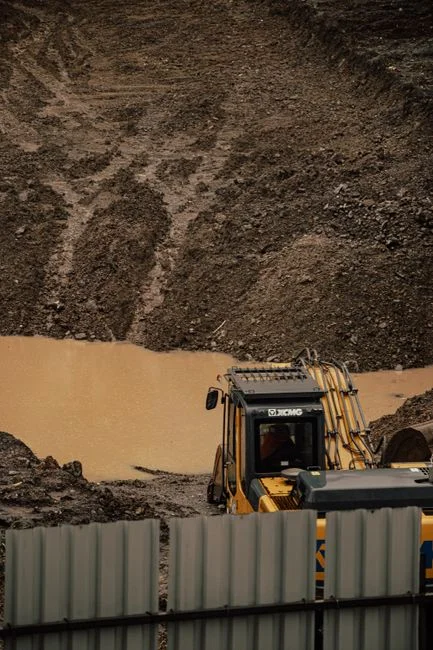
Floc density is the primary selection factor. Chemically conditioned floc with specific gravity >1.05 settles readily and favors a lamella; the same floc, once polymer-conditioned, also binds tightly to 30–50 µm micro-bubbles, so either technology works when chemistry is right (per S2, S4).
Free oil and grease (FOG) do not settle in a clarifier's residence time — they exit in the overflow — so any FOG load has to be handled upstream or in a polish step, which is why a dissolved air flotation system is non-negotiable wherever cutting oil, hydraulic oil, or fuel wash is present.
Cold weather remains the critical variable for Nome plants. Micro-bubble nucleation kinetics slow 20–30% at 5°C versus 20°C (HydropureWater field data, 2026). For a Nome plant that runs through winter, that translates into a 10–15% sizing margin on the recycle pump and saturation vessel. A lamella or conventional clarifier in the same conditions carries a different cold-weather risk: freezing in the sludge hopper of an unheated vault, which is a different engineering problem to solve but no less serious.
The three rules stack: pick the floc-density winner first, route the FOG stream to DAF regardless, then apply the cold-weather margin to whichever equipment you have chosen. Run the same logic on a future stream change and the same verdict falls out.
Head-to-Head Parameter Table for DAF, Lamella, and Conventional Clarifier
This data supports non-technical decision-making for dense metal-hydroxide streams. Rows are tuned for heavy metals, not food-processing FOG defaults. CAPEX is expressed as a multiplier at equal flow with a lamella set at 1.0x, so the equipment premium shows up directly against the vault civil cost a Nome procurement lead will actually see on the bill of materials.
| Parameter | DAF | Lamella Clarifier | Conventional Clarifier |
|---|---|---|---|
| TSS removal on dense Fe(OH)₃ / Al(OH)₃ floc | 90–95% (per S5) | 85–92% | 70–85% |
| Footprint at equal flow | 0.2–0.4 m² per m³/h | 0.3–0.6 m² per m³/h | 5–8 m² per m³/h |
| CAPEX multiplier (lamella = 1.0x) | 1.5–2.5x (HydropureWater field data, 2026) | 1.0x | 0.7–0.9x equipment, but huge civil cost |
| Energy use | 8–15 kWh/m³ (compressor + recycle) + chemistry | 0.1–0.3 kWh/m³ (scraper drive) + chemistry | 0.05–0.2 kWh/m³ + chemistry |
| Coagulant demand | Standard dose | Up to 30% lower (sludge recycle per HydropureWater P10) | Standard dose |
| Float / underflow dryness | 4–8% DS float (easier dewatering) | 2–5% DS underflow | 1–3% DS underflow |
| Cold-weather performance (<10°C) | Moderate — size 10–15% margin on recycle loop | Low — freezing risk in unheated sludge hopper | Low — same freeze risk, larger vault |
| Best-fit stream | FOG, emulsified oil, colloidal fines, light floc | Dense settleable hydroxide floc, high flow, no oil | Legacy installations with very large basins only |
For a high-rate lamella primary, the HydropureWater high-efficiency sedimentation tank covers the 20–40 m/h plate-pack loading band that keeps the lamella column competitive in the first place.
Three Nome-Realistic Scenarios for 2026
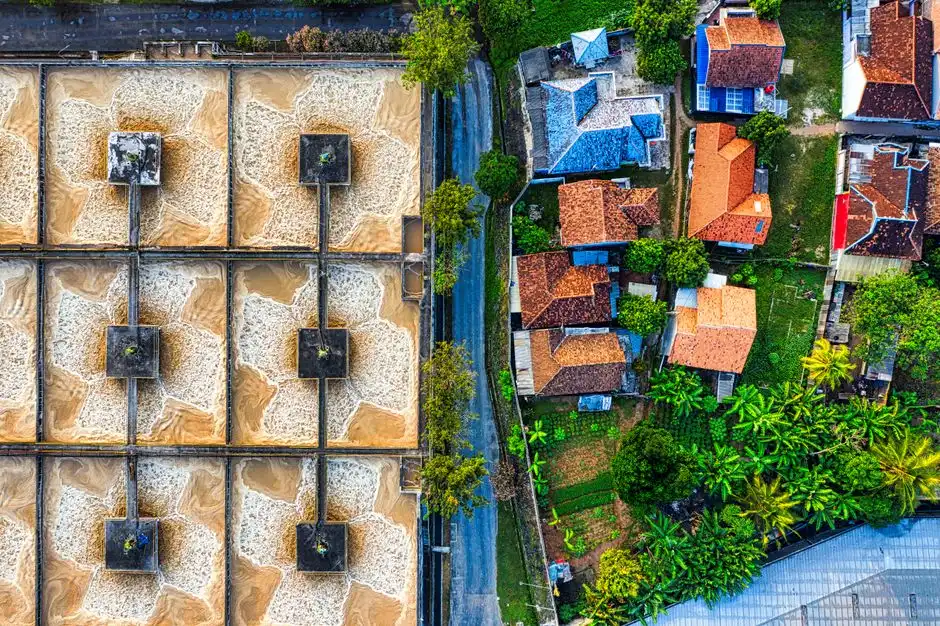
Scenario A — Inland gold placer with reclaim water, ~250 m³/h, no oil. The stream carries 1,500–3,000 mg/L TSS as Fe(OH)₃ plus silica fines and magnetite, with no tramp oil from a maintenance shop. The flow and density favor a high-rate lamella primary at 30 m/h surface loading, requiring roughly 8–9 m² of plate area. A DAF polish is justified only if the on-site garage starts contributing FOG intermittently. Expected 40 CFR 437 effluent: TSS <30 mg/L with the lamella alone; metals controlled at the upstream precipitation step against the daily-maximum limits for Pb, Zn, Cu, Fe (per 40 CFR 437.30–437.32).
Scenario B — Small base/precious-metals refinery with on-site machine shop, ~80 m³/h. Combined process wastewater runs 100–300 mg/L TSS plus 50–200 mg/L emulsified cutting oil. DAF is non-negotiable as primary because a lamella would discharge emulsified oil to the NPDES outfall and trip the 40 CFR 437 envelope on oil-and-grease as well as TSS. A small lamella follows as polish for residual TSS to give margin against the 40 CFR 437 daily-maximum metals limits. The 80 m³/h flow sits mid-band on a standard dissolved air flotation system with no custom-engineering premium, paired with an automatic chemical dosing skid to hold the dose tight against variable influent.
Scenario C — Seasonal copper-mine dewatering sump, ~15 m³/h, intermittent winter operation. A 15 m³/h sump discharge that starts and stops across the cold months. A compact DAF skid brings online in minutes and tolerates the variable influent; a lamella in an unheated Nome vault risks freezing in the sludge hopper and is harder to insulate. The DAF's higher unit CAPEX pays back in operational uptime through a Bering Sea winter. For dewatering the resulting float, the downstream plate-and-frame filter press handles the 4–8% DS float band without re-engineering.
Cold-Weather Engineering Margin for Nome Installations
Insulate or heat-trace the DAF saturation vessel and recycle line; spec the recycle pump and saturation volume with a 10–15% margin because micro-bubble nucleation slows 20–30% at 5°C versus 20°C (HydropureWater field data, 2026). That is the rule that turns a generic DAF specification into a sub-Arctic DAF specification.
For a lamella or conventional clarifier in an unheated vault, plan for sludge-hopper heat tracing and a heated building envelope. Freezing risk is non-trivial through a Nome winter and is not solved by insulation alone — the sludge hopper is a low point with restricted access, and once it freezes the unit is down until spring. House the equipment inside an insulated, heated equipment room where possible. At remote Nome sites the building cost is real but is still less than unscheduled winter downtime, and a heated envelope simplifies both the DAF recycle loop and the lamella hopper at the same time. The downstream plate-and-frame filter press for float or underflow dewatering should be inside the same envelope, with heat-traced sludge lines between units.
Frequently Asked Questions
Does 40 CFR 437 require a DAF or a clarifier?
No. The rule sets daily-maximum and monthly-average limits for TSS, total recoverable lead, zinc, copper, and iron, plus pH 6.0–9.0 (
Frequently Asked Questions
Does 40 CFR 437 require a DAF or a clarifier for mining wastewater?
40 CFR 437, the Centralized Waste Treatment Point Source Category, does not mandate specific equipment like Dissolved Air Flotation (DAF) or clarifiers. Instead, it dictates performance-based effluent limitations for constituents such as heavy metals, oil and grease, and total suspended solids (TSS).
Compliance is determined by the final water quality discharged from your treatment train. While clarifiers are standard for heavy metal precipitation, a DAF may be necessary if the influent stream contains high concentrations of emulsified oils or low-density particulate matter that fails to settle within the regulatory detention times required by the EPA standards.
Can a DAF system run through a Nome Alaska winter?
A DAF system can operate in Nome, but only if it is housed within a climate-controlled enclosure maintained above freezing. The saturation system, which relies on precise pressure and temperature stability to maintain dissolved air levels, is highly susceptible to nozzle icing and line freezing in sub-zero ambient conditions.
Furthermore, the increased viscosity of cold process water significantly impacts bubble-particle attachment efficiency. For reliable 2026 operations in arctic environments, all piping, recycle pumps, and the flotation tank must be heat-traced and insulated to prevent heat loss and ensure the air-to-solids ratio remains within the 0.01 to 0.05 mg air/mg solids range.
How much does a lamella clarifier cost compared to a DAF for a small mine?
For a small-scale mining operation, a lamella clarifier typically represents a lower capital expenditure (CAPEX) than a DAF system, generally ranging from $40,000 to $120,000 depending on plate material and flow capacity. A DAF system of similar throughput often commands a 30% to 60% price premium due to the complexity of the air saturation, recycle pump, and pressurized vessel components.
Operational expenditure (OPEX) for the DAF will also be higher, as it requires continuous power for the air compressor and recycle pump, as well as higher chemical dosing costs for coagulants and flocculants required to achieve the necessary flotation kinetics.
Is a lamella alone enough for a placer gold reclaim water system?
A lamella clarifier alone is rarely sufficient for a placer gold reclaim system because placer water typically contains high concentrations of colloidal silts and clays that do not settle via gravity alone. These particles often require chemical coagulation and flocculation to increase their settling velocity before they enter the clarifier.
Additionally, if the reclaim water contains high levels of dissolved organic matter or fine gold-bearing fines that remain buoyant, the lamella may fail to meet turbidity requirements for process reuse. A redundant filtration step, such as a multi-media filter or a secondary polishing pond, is typically required to protect downstream process equipment from excessive wear.
What surface loading should I design a lamella for on iron hydroxide floc?
For iron hydroxide floc, which is relatively light and prone to shearing, you should design for a conservative surface loading rate of 0.2 to 0.4 gallons per minute per square foot (gpm/ft²) of projected plate area. Because iron flocs are sensitive to turbulence, maintaining a low Reynolds number within the lamella plates is critical to preventing re-suspension of the settled solids.
It is recommended to incorporate a safety factor of 1.5 to account for fluctuations in iron concentration and potential temperature-induced changes in water viscosity, which can significantly alter the settling velocity according to Stokes' Law.