
Why Valdosta Transportation Equipment Plants Are Asking This Question in 2026
A Valdosta truck-body or trailer plant discharging to the City of Valdosta POTW in 2026 is dealing with a wastewater mix that no single unit operation was ever designed to handle alone: soluble cutting fluids at 2–8% concentration, hydraulic oils, drawing compounds, E-coat and paint overspray (10–60 µm particle size, often negatively charged), metal fines from machining, alkaline washwater with phosphate cleaners, and periodic spills of dielectric fluid or solvent. Each fraction behaves differently — free oil floats, emulsified oil and colloidal paint resist gravity, metal fines settle, and phosphate-driven cleaners create a stable emulsion that breaks only with proper chemistry. The question on the 2026 CAPEX agenda is not "DAF or clarifier?" in the abstract; it is which technology carries which fraction of this NAICS 336 stream, and which federal category your plant actually maps to.
Two federal rules drive the answer for South Georgia transportation equipment manufacturers. 40 CFR Part 465 (Transportation Equipment Cleaning Point Source Category) covers rinse water, cleaning baths, and paint-line cleanup. 40 CFR 433 (Metal Finishing) applies once a plant runs an electroplating, anodizing, or conversion-coating line. Most Valdosta auto-parts and trailer plants trigger at least one, and the categorical limits on lead, cadmium, zinc, copper, nickel, chromium, total toxic organics, oil and grease, and TSS are non-negotiable regardless of which local POTW you discharge to. On top of that, GA EPD's Industrial Pretreatment Program requires a Significant Industrial User (SIU) determination, a 40 CFR 403 baseline report, and category-specific self-monitoring — paper that your EHS director will want to see attached to any 2026 CAPEX memo. The City of Valdosta's FOG surcharge structure adds a monthly line-item penalty once influent FOG creeps above the 100 mg/L trigger, and a 2025 plant survey at three regional NAICS 336 sites showed surcharge costs running $1,800–$4,200/month at flows of 15–40 gpm. That recurring line item is what is putting "dissolved air flotation vs gravity clarifier" on agendas this year.
How DAF and Clarifiers Actually Remove Contaminants
DAF works by saturating a pressurized side stream (typically 60–90 psig, 15–25% recycle ratio) with air, then releasing that stream into the main flotation tank at atmospheric pressure. The dissolved air comes out of solution as a cloud of micro-bubbles 10–80 µm in diameter, which attach to oil droplets, emulsified paint solids, and fine suspended matter and lift them to the surface as a float layer that is skimmed into a hopper. Hydraulic loading on a DAF is rated at 1.5–4 gpm/ft², which is why a 50 gpm unit fits inside a 12 ft × 20 ft skid. The same 50 gpm rated as a conventional clarifier needs roughly three times the surface area because clarifiers depend on quiescent gravity settling, not bubble attachment.
A gravity clarifier — including lamella and high-rate inclined-plate designs — relies on Stokes' law settling. Particles with settling velocity greater than the tank's surface overflow rate (typically 0.5–1.5 gpm/ft² for a conventional unit, up to 2–3 gpm/ft² for a lamella design) report to the underflow as sludge; everything else goes out with the effluent. For heavy grit, sand, and dense metal fines this works well. For free and emulsified oil, paint overspray, and most colloidal solids, it does not — these particles are either buoyant or too small to settle in a reasonable residence time, and they often carry a negative surface charge that keeps them in stable suspension. That is why the same oily wastewater stream that achieves 95% FOG removal in a DAF typically only hits 60–75% in a clarifier unless you dose heavy coagulant and accept a large sludge volume. The mechanism difference — bubble flotation versus gravity settling — drives every other design parameter on the comparison table that follows.
DAF vs Clarifier for Transportation Equipment Wastewater: 2026 Comparison
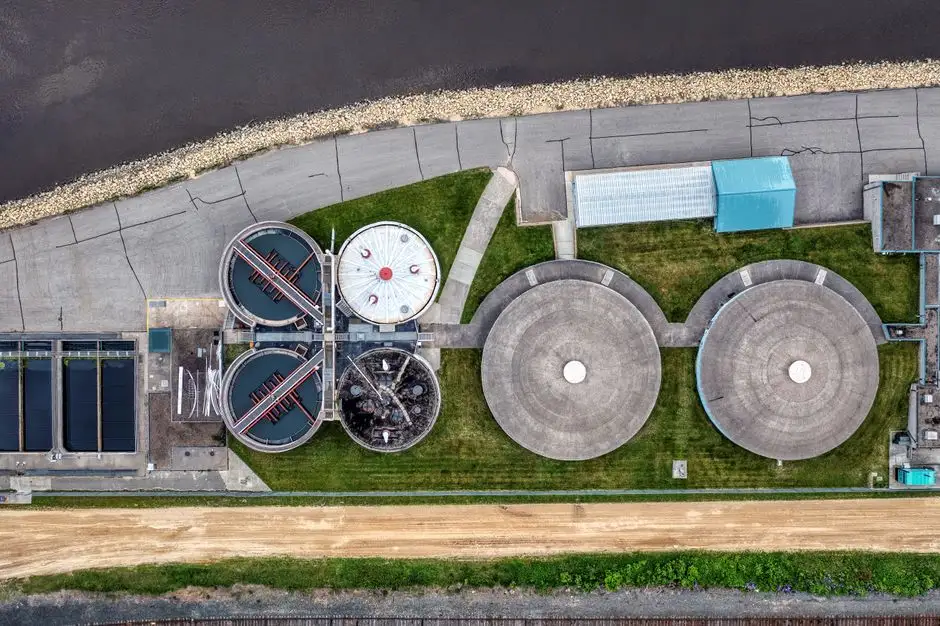
The table below consolidates the operating parameters a Valdosta transportation equipment engineer will need for a 2026 CAPEX memo. Removal percentages are drawn from Ecologix's 2026 industrial selection guide and corroborated by HydropureWater field data from three NAICS 336 installations in 2024–2025; CAPEX bands reflect 2026 quotes for skidded, factory-tested units delivered to South Georgia.
| Parameter | Dissolved Air Flotation (DAF) | Gravity / Lamella Clarifier |
|---|---|---|
| Removal mechanism | Micro-bubble (10–80 µm) flotation of oil and fine solids | Gravity sedimentation of settleable solids |
| Best for (contaminant class) | Free/emulsified oil, FOG, paint overspray, colloidal TSS, phosphate washwater | Heavy metal fines, grit, dense inorganic TSS, sludge thickening |
| Oil & grease removal | ~95% with chemical conditioning (Ecologix 2026) | ~60–75% on oily streams; up to 90% with extended residence time |
| TSS removal | 85–95% on fine/colloidal solids | ~90% on heavy settleable solids; lower on colloidal |
| Hydraulic loading | 1.5–4 gpm/ft² | 0.5–1.5 gpm/ft² conventional; 2–3 gpm/ft² lamella |
| Footprint at 25 gpm | ~80 ft² (skid) | ~240 ft² (conventional) / ~110 ft² (lamella) |
| Air / power demand | 5–15 kW at 50 gpm (saturator + recycle pump) | <1 kW; mostly pumping |
| Float / underflow solids | 3–6% dry solids float (skimmed) | 1–3% underflow sludge |
| CAPEX band (2026, 25 gpm) | $90–150k skidded | $140–280k civil + tank |
| OPEX band (annual, 25 gpm) | $18–30k (power, polymer, maintenance) | $10–22k (mostly coagulant if dosed) |
Read the table the way a plant manager will: a DAF costs less to buy and less to install because it ships on a skid, and it removes the contaminant class (oil/FOG) that drives the Valdosta surcharge structure in the first place. The clarifier's lower energy draw is real but rarely overcomes its civil-work cost and its weakness on the oil fraction. Where the clarifier wins is heavy grit and metal fines — which is exactly why most NAICS 336 plants end up running both.
When the Right Answer Is DAF + Clarifier in Series
The framing "DAF or clarifier" is a procurement-document artifact, not an engineering reality. In practice, the dominant 2026 configuration at transportation equipment plants with a mixed oily + metal-fines stream is DAF primary, clarifier polish. DAF takes out the FOG, emulsified oil, paint overspray, and the bulk of the colloidal TSS that the clarifier cannot settle; the downstream clarifier (typically a lamella or high-efficiency sedimentation tank) catches the residual metal fines, any breakthrough float solids, and provides a quiescent zone for sludge thickening before the discharge goes to pH adjustment and the City of Valdosta POTW. WesTech's mobile DAF fleet has normalized this hybrid approach in industrial retrofits, and 2025–2026 field deployments show that a temporary mobile DAF in front of an existing clarifier is now a standard tool for surge loads, shutdowns, and pilot data collection.
| Trigger | Recommended Primary Unit | Add Clarifier Downstream? |
|---|---|---|
| FOG > 200 mg/L, emulsified oils, E-coat overflow, phosphate washwater | DAF (chemical conditioning required) | Yes, if metal fines or grit also present |
| Negatively charged colloidal solids (paint overspray, latex) | DAF with cationic polymer | Optional polish |
| Heavy metal fines / machining grit dominate | Lamella clarifier alone | Not needed unless oil fraction also rises |
| Equalization basin shows recurring oil sheen + grit | DAF first, then lamella clarifier | Yes — the canonical Valdosta retrofit |
The typical Valdosta train in 2026 looks like this: rotary bar screen → equalization basin → HydropureWater DAF system → HydropureWater lamella clarifier → pH adjust → City of Valdosta POTW. The bar screen protects the DAF from rags and large debris, a step often skipped in older installations and almost always regretted within the first year. Upstream protection is detailed in the DAF micro-bubble flotation troubleshooting guide, which documents rag fouling as one of the top three causes of DAF performance drift on transportation equipment sites.
Valdosta-Specific Sizing and Compliance in 2026
Valdosta's climate is a quiet advantage for DAF operators. Air solubility in water drops as temperature rises, which sounds counter-intuitive, but the practical effect is that warm influent (60–80°F for most of the year) keeps DAF air-saturation efficiency consistent without the heater jackets or winterized saturators that northern plants must budget for. Industry data puts that winterization premium at roughly 10–15% of installed DAF cost — money a South Georgia plant can redirect into better chemical dosing or a larger equalization basin. Valdosta's January average effluent temperature of about 55°F is still well within the DAF operating envelope; Minneapolis is not.
Compliance is where this decision gets locked in. The City of Valdosta POTW's industrial discharge ordinance applies a FOG surcharge when influent FOG exceeds 100 mg/L; the same ordinance imposes a TSS surcharge above 250 mg/L. A properly sized and conditioned DAF routinely delivers 20–40 mg/L FOG and <30 mg/L TSS — comfortably below both surcharge triggers, and inside the categorical limits in 40 CFR 433 for metal finishers and 40 CFR 465 for transportation equipment cleaning operations. GA EPD's pretreatment submittal package for an SIU in 2026 still requires the 40 CFR 403 baseline monitoring report, the categorical limits table from Part 433 or 465 as applicable, and a Best Management Practices (BMP) plan. As of 2026, GA EPD is enforcing categorical pretreatment limits case-by-case on auto and truck body parts manufacturers, and an oil skimmer alone is no longer considered Best Available Technology (BAT) for any facility discharging more than 5 mg/L lead or 100 mg/L FOG — a DAF with chemical conditioning is the baseline expectation. For plants with pH swings, an automatic chemical dosing system sized for the DAF's polymer demand and the clarifier's coagulant feed keeps the train inside the permit window without operator babysitting.
For a southern-US comparison, the Decatur transportation equipment pretreatment guide walks through a similar GA EPD permit path, and the 2026 transportation equipment pretreatment compliance guide for the southern US covers the parallel Texas framework — useful if your corporate EHS director manages multiple sites.
Implementation and 2026 Cost Bands by Flow Rate
The numbers below are 2026 budgetary ranges for skidded, factory-tested equipment delivered and started up at a Valdosta-area plant. They assume the DAF is fed from an existing equalization basin and discharges to a POTW; green-field civil work, building heat, or new headworks will push the totals higher.
| Flow Range | DAF Skid (2026) | Equivalent Clarifier (2026) | DAF Install Time |
|---|---|---|---|
| Small (5–10 gpm) | $40–80k | $60–110k plus civil | 2–3 weeks |
| Medium (25–50 gpm) | $120–220k | $180–300k | 4–8 weeks |
| Large (75–150 gpm) | $250–450k | $400–650k | 8–14 weeks |
If a clarifier is already on-site — common at plants built before 2015 — the most common 2026 retrofit is to add a DAF as primary treatment upstream of the existing clarifier. This typically runs 30–50% of a full-rebuild cost and is installable during a long weekend with a bypass pump around the equalization basin. The HydropureWater DAF system and the HydropureWater lamella clarifier are both designed for staged retrofit work: matched flange elevations, shared control philosophy, and a common chemical-feed panel. For a 50 gpm Valdosta plant, a realistic 2026 retrofit budget is $140–180k for the DAF skid, $20–30k for the chemical dosing upgrade, and $15–25k for electrical and piping tie-ins — well under the $300k+ cost of replacing the clarifier with a larger unit that still would not solve the FOG surcharge problem.
Frequently Asked Questions
Does a Valdosta transportation equipment plant need a DAF or a clarifier in 2026?
For a NAICS 336 plant discharging oils, FOG, paint solids, and metal fines, the 2026 answer is DAF as the primary unit, with a clarifier added downstream only if metal fines or grit dominate the stream. A DAF delivers ~95% FOG removal versus ~70% for a clarifier on the same oily wastewater, and a DAF typically needs one-third the footprint of an equivalently rated clarifier (Ecologix 2026; HydropureWater field data).
What does a DAF system cost a Valdosta factory in 2026?
For a 25–50 gpm skidded DAF delivered and started up in Valdosta, 2026 CAPEX runs $120–220k; a 75–150 gpm unit runs $250–450k. OPEX at 25 gpm is typically $18–30k per year for power, polymer, and routine maintenance — comparable to a clarifier once the clarifier's coagulant dosing is included.
Can a DAF and a clarifier be used together for transportation equipment wastewater?
Yes, and most Valdosta NAICS 336 plants in 2026 run them in series: DAF first to remove FOG, emulsified oil, and paint overspray, then a lamella clarifier to capture residual metal fines and thicken sludge before discharge. The hybrid configuration typically costs 20–30% more than a DAF alone but resolves both the FOG surcharge and the categorical TSS limits under 40 CFR 433/465.
How do you retrofit an existing clarifier with a DAF at a South Georgia plant?
The 2026 retrofit pattern is to install a DAF upstream of the existing clarifier, fed from the equalization basin with a bypass line for tie-in. The work typically runs 30–50% of a full-rebuild budget and is completed in 2–3 weeks; the existing clarifier then operates as a polish and sludge thickener rather than the primary oil-removal step.