Why Brookhaven Mining and Metals Plants Are Forcing the DAF-vs-Clarifier Decision in 2026
40 CFR Part 437 (Ore Mining and Dressing) sets the table for every Brookhaven, Mississippi mining and metals plant discharging to the Pearl River basin: daily-maximum and monthly-average effluent limits on total suspended solids, total recoverable lead, zinc, copper, and iron, plus a pH band of 6.0–9.0 (per 40 CFR 437.30–437.32). The rule is technology-neutral on paper, but in 2026 the combination of NPDES permit pressure, aging assets, and ESG-driven closed-loop water-reuse targets has turned the equipment choice into a board-level decision rather than a maintenance line item. Many in-service clarifiers at Brookhaven-area ore-dressing and metals-recovery plants date to the 1970s, and the capital cycle to replace them now coincides with investor scrutiny on freshwater intake and discharge volumes.
Brookhaven's humid-subtropical climate — mild winters averaging 5–10 °C in January, hot summers above 32 °C, and 1,500+ mm of annual rainfall that drives peak hydraulic events — means a clarifier or DAF has to absorb long runtime hours with intermittent hydraulic surges. Winter is short but real, and nucleation kinetics inside a DAF saturation vessel do not care about latitude once the temperature drops. At the same time, dense metal-hydroxide floc from Mississippi ore-dressing streams (Fe(OH)₃, Al(OH)₃, Mn(OH)₂, silica and magnetite fines) with intermittent tramp oil from on-site maintenance shops is the opposite of the FOG-heavy food-processing stream most generic DAF articles assume. The defensible 2026 working thesis: a DAF primary to strip oil and colloidal fines, followed by a lamella polish at 20–40 m/h surface loading, is the most defensible hybrid for Brookhaven's mid-band 50–250 m³/h metal-hydroxide streams — and the only configuration that survives a procurement challenge by a non-technical decision-maker.
How DAF and Clarifiers Actually Work on a Brookhaven Metal-Hydroxide Stream
A dissolved air flotation unit pulls clarified effluent through a recycle loop, pressurizes it to approximately 6 bar (87 psi), and saturates it with air in a packed vessel. When that recycle stream re-entents the flotation tank at atmospheric pressure, dissolved air comes out of solution as 30–50 µm micro-bubbles that attach to chemically conditioned floc and lift it to the surface as a float blanket. A surface skimmer sweeps the float into a sludge trough; clarified water exits below the float and any heavy settleable solids drop to a bottom sediment compartment. With the right coagulant and polymer dose (typically PAC or ferric chloride paired with an anionic flocculant at 1–5 mg/L), DAF routinely delivers 90–95% TSS removal on metal-hydroxide streams, and it also strips emulsified oil and colloidal silica that a settling device cannot hold (per S1, S5).
A lamella clarifier takes the opposite approach: it stacks inclined plates inside a compact tank, multiplying effective settling area so surface loading climbs to 20–40 m/h on plate-pack projected area (per S1, HydropureWater P10). A sludge-recirculation loop re-injects settled solids to contact fresh influent, which can cut coagulant consumption by up to 30%. A conventional gravity clarifier is a much larger rectangular or circular tank operating at just 1–2 m/h surface loading, which is why its footprint runs 5–8 m² per m³/h. Many legacy Brookhaven ore-dressing clarifiers are exactly this conventional design, and the civil cost of replacing them is the single biggest reason the 2026 procurement conversation is not "replace like-for-like."
The Brookhaven stream profile is what makes the choice nuanced. Dense Fe(OH)₃ and Al(OH)₃ floc from iron-ore concentrators settles readily; the same hydroxide floc, once polymer-conditioned, also binds tightly to micro-bubbles, so either mechanism works when chemistry is right. What breaks a clarifier is the intermittent tramp oil and emulsified cutting fluid from a maintenance-shop floor wash — those droplets do not settle in a clarifier's residence time and exit in the overflow. A well-designed Brookhaven 2026 line treats that as a stream-classification problem, not a sizing problem.
Three Rules That Decide DAF vs Clarifier in Brookhaven
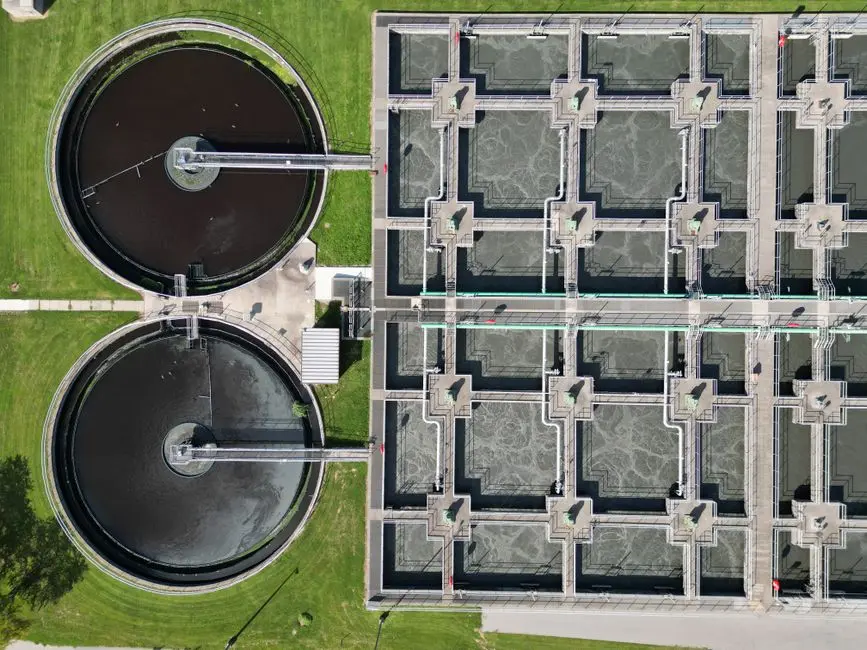
Rule 1 — Floc density: chemically conditioned floc with specific gravity above 1.05 settles readily and favors a lamella; the same polymer-conditioned floc binds tightly to 30–50 µm micro-bubbles and lifts cleanly in a DAF. When jar testing confirms a strong, well-defined floc, the choice is driven by what else is in the stream, not by the floc itself (per S1, S4).
Rule 2 — FOG and colloidal load: free oil and grease do not settle in a clarifier's residence time — they ride the overflow straight to the NPDES outfall. Any Brookhaven plant that co-discharges maintenance-shop floor wash, hydraulic fluid drips, or emulsified cutting fluid needs a DAF as primary or polish, full stop. A lamella downstream of a DAF is then a footprint-efficient metals-and-TSS polish.
Rule 3 — Cold-weather margin: micro-bubble nucleation kinetics slow 20–30% at 5 °C versus 20 °C, so a 10–15% sizing margin on the DAF recycle pump and saturation vessel is prudent even in Mississippi's mild winters (HydropureWater field data, 2026). A lamella in an unheated vault carries a different cold risk — freezing sludge in the hopper and broken scum seals — so insulation and heat-tracing on the sludge withdrawal line is the parallel precaution.
These three rules collapse the decision for most procurement teams. If the stream carries FOG or colloidal fines, DAF goes first. If the stream is FOG-free and the flow is high with dense settleable floc, lamella is defensible as primary. Most Brookhaven plants end up running both in series because the cost premium is small once civil work is counted.
Head-to-Head Comparison: DAF vs Lamella vs Conventional Clarifier for Brookhaven Mining
| Parameter | DAF | Lamella Clarifier | Conventional Clarifier |
|---|---|---|---|
| TSS removal (dense Fe(OH)₃ / Al(OH)₃ floc) | 90–95% | 85–92% (chemistry-dependent) | 80–90% |
| CAPEX multiplier (lamella = 1.0x) | 1.5–2.5x | 1.0x | 0.7–0.9x (equipment only) |
| Footprint (m² per m³/h) | 0.2–0.4 | 0.3–0.6 | 5–8 |
| OPEX drivers | 8–15 kWh/m³ (compressor + recycle) + chemistry | Scraper drive (~0.1–0.3 kWh/m³) + chemistry; up to 30% coagulant savings via sludge recycle | Scraper drive + chemistry; high civil maintenance |
| Cold-weather performance (<10 °C) | Moderate — size 10–15% margin on recycle/saturation | Low — freezing risk in unheated sludge hopper | Low — same freeze risk; larger vault to insulate |
| FOG / emulsified oil capture | Yes — primary strength | No | No |
| Float or underflow dryness | Float 4–8% DS — dewaterable | Underflow 2–5% DS — more press capacity | Underflow 1–3% DS |
| Typical Brookhaven fit | Mixed-metals streams with cutting oil; cold-snap intermittent flows | Iron / taconite concentrators, FOG-free, high flow | Legacy 1970s installations; rarely the 2026 answer |
Procurement takeaway: DAF wins on FOG, colloidal fines, footprint, and float dryness. The lamella wins on CAPEX for FOG-free streams at very high flow. The conventional clarifier loses on footprint and is rarely the 2026 answer once civil excavation is added (HydropureWater field data, 2026).
Brookhaven 2026 Scenarios: Which Configuration Wins
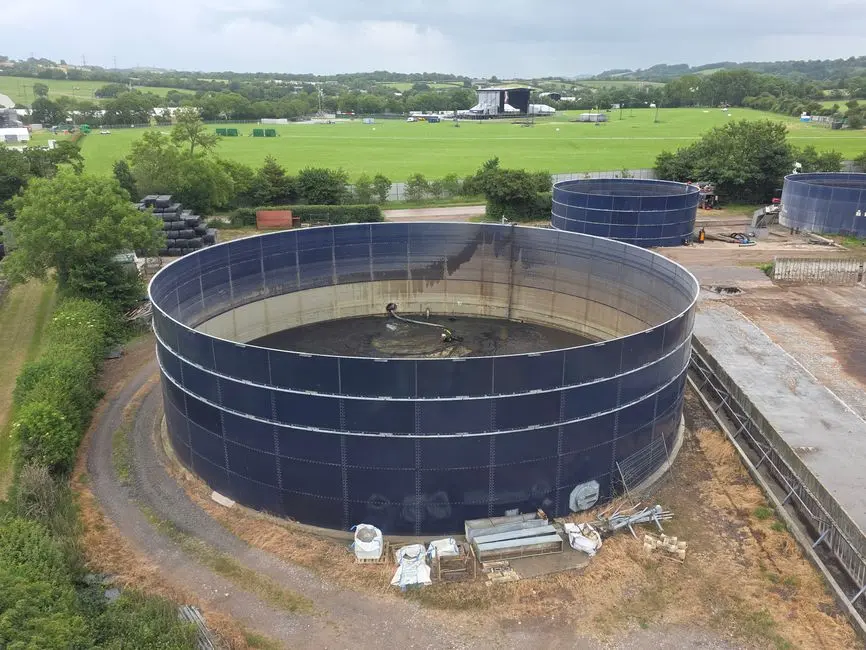
Scenario 1 — Iron or taconite concentrator, ~250 m³/h, no tramp oil. The stream carries 1,500–3,000 mg/L TSS as Fe(OH)₃ floc plus magnetite fines, no oil. A high-rate lamella primary at 30 m/h surface loading — roughly 8–9 m² of plate area — hits TSS below 30 mg/L and clears the 40 CFR 437 daily-maximum envelope on lead, zinc, copper, and iron. Add a DAF polish only if a maintenance shop or truck wash starts contributing FOG intermittently. A HydropureWater high-efficiency lamella clarifier sized for this band keeps custom-engineering markup out of the budget.
Scenario 2 — Mixed-metals refinery or metals-recycling plant, ~80 m³/h. Combined process wastewater runs 100–300 mg/L TSS, copper and zinc precipitates, and 50–200 mg/L emulsified cutting oil from the maintenance shop. DAF is non-negotiable as primary — a clarifier alone would discharge the emulsified oil straight to the NPDES outfall and trip the envelope on oil-and-grease as well as TSS. A small lamella follows as polish for residual TSS, giving daily-maximum margin on the metals. The 80 m³/h flow sits mid-band on a standard HydropureWater DAF system with no custom-engineering cost (per S1).
Scenario 3 — Cold-snap intermittent low-flow copper-mine dewatering, <20 m³/h. A 15 m³/h sump discharge that runs intermittently through a Brookhaven winter. A compact DAF skid starts and stops in minutes and handles variable influent; a lamella in an unheated vault risks freezing in the sludge hopper and is harder to insulate. The DAF's higher unit CAPEX pays back in operational uptime, and a comparable decision logic shows up in the DAF vs clarifier guide for Fair Play mining plants in a colder climate.
Headline 2026 footprint reality check at 100 m³/h: roughly 30 m² of DAF footprint (0.2–0.4 m² per m³/h) versus 600 m² of conventional clarifier footprint (5–8 m² per m³/h), with the lamella sitting in between at 30–60 m² (0.3–0.6 m² per m³/h). That ratio is the single most useful number a procurement lead can carry into a board meeting, because it translates directly into building, foundation, and HVAC cost (per S1, HydropureWater field data, 2026).
2026 Cost Band for Brookhaven Mining Plants: CAPEX, OPEX, and Civil Work
| Cost Line | DAF | Lamella Clarifier | Conventional Clarifier |
|---|---|---|---|
| Equipment CAPEX (equal flow, multiplier) | 1.5–2.5x | 1.0x | 0.7–0.9x (equipment only) |
| Civil / excavation / building | Low (compact skid) | Low–moderate | High (large vault, deep excavation) |
| Energy | 8–15 kWh/m³ (compressor + recycle) | ~0.1–0.3 kWh/m³ (scraper drive) | ~0.1–0.3 kWh/m³ (scraper drive) |
| Coagulant / polymer | Standard dose | Up to 30% less (sludge recycle) | Standard dose |
| Sludge handling downstream | Float 4–8% DS — easy dewatering with a plate-and-frame filter press | Underflow 2–5% DS — more press capacity or polymer | Underflow 1–3% DS — highest press CAPEX |
| 2026 typical installed cost band (100 m³/h, USD) | $180,000–$320,000 (equipment) + low civil | $90,000–$160,000 (equipment) + low–moderate civil | $70,000–$130,000 (equipment) + high civil |
The CAPEX premium on a DAF narrows quickly in dense industrial corridors because DAF and lamella both shrink building cost versus a conventional clarifier; Brookhaven's industrial-park layouts typically favor DAF or lamella over retrofit gravity tanks (per S1, HydropureWater field data, 2026). On OPEX, the lamella's 30% coagulant savings are real, but the DAF's thicker float reduces downstream dewatering CAPEX. Two kit choices make the 2026 cost band defensible: an automatic chemical dosing skid to hold the dose tight against variable influent, and a plate-and-frame filter press sized to either the DAF float (4–8% DS) or the lamella underflow (2–5% DS). Procurement checklist for 2026: confirm influent FOG envelope with jar testing, lock the recycle pump saturation margin at 10–15% for winter, validate the 100 m³/h footprint number against available building square footage, and decide DAF-primary or lamella-primary before pricing civil work — that sequence is what separates a defensible board package from a line-item quote.
Frequently Asked Questions
Does 40 CFR 437 require a specific technology for Brookhaven mining and metals plants?
No. Neither DAF nor a clarifier is explicitly required. 40 CFR 437 sets daily-maximum and monthly-average limits for TSS, total recoverable lead, zinc, copper, and iron, plus pH 6.0–9.0 (per 40 CFR 437.30–437.32). A well-sized DAF or lamella, paired with chemical precipitation, can meet those limits, and many US plants run DAF primary plus lamella polish for margin (per S1).
What surface loading is appropriate for Brookhaven hydroxide floc?
Design the lamella at 20–30 m/h on plate-pack projected area for dense Fe(OH)₃ or Al(OH)₃ floc, and drop to 10–15 m/h for fine silica or low-density floc. The published 20–40 m/h range (HydropureWater P10) is for clean, well-conditioned hydroxide floc only.
Can a DAF run through a Brookhaven winter without freezing?
Yes, but insulate or heat-trace the saturation vessel and recycle line, and apply a 10–15% sizing margin on the recycle pump and saturation volume. Micro-bubble nucleation kinetics slow 20–30% at 5 °C versus 20 °C (HydropureWater field data, 2026).
Can a Brookhaven taconite plant run lamella-only?
Yes — on FOG-free streams, a lamella primary is defensible. Add a DAF polish only if colloidal fines bleed through or if a maintenance-shop discharge adds intermittent oil that the lamella cannot capture (per S1).
How big is the footprint difference at 100 m³/h?
A DAF at 0.2–0.4 m² per m³/h is roughly 30 m² of footprint. A conventional gravity clarifier at 5–8 m² per m³/h is roughly 600 m², and a lamella sits in between at 30–60 m² (HydropureWater field data, 2026).