Why 40 CFR 437 Forces the 2026 Decision in Tuskegee
40 CFR 437 (Ore Mining and Dressing), specifically subcategories 437.30 through 437.32, sets the regulatory floor for any Tuskegee-area mining or metals plant that discharges directly to waters of the United States. The rule names five regulated parameters — total suspended solids, total recoverable lead, zinc, copper, and iron — plus a continuous pH band of 6.0 to 9.0, and it imposes both a daily-maximum and a monthly-average limit on each (per 40 CFR 437.30–437.32). The monthly-average is the number that drives steady-state clarifier or DAF sizing, because the unit has to hit it across 30 days of operation; the daily-maximum is the number that triggers upset margin, because a single bad shift can take a plant out of compliance. Alabama Department of Environmental Management (ADEM) holds the delegated NPDES authority over 40 CFR 437 in the state, so a Tuskegee direct-discharger must clear both the federal envelope and the state monitoring frequency. That two-layer enforcement is the hammer.
The second pressure is capital-cycle. A large share of the in-service clarifiers in the Tuskegee industrial corridor date to the 1970s; tankage and mechanisms have already exceeded two design lives, and 2026 ESG and closed-loop water-reuse targets have pushed replacement from a maintenance line item to a board-level capital request. For procurement framing on pretreatment compliance across the wider Gulf and Southeast basin, the comparable walkthrough for 2026 pretreatment compliance for industrial plants applies the same logic to a different matrix.
The Tuskegee Stream Profile Is Not a Food-Plant FOG Stream
The default DAF-versus-clarifier article assumes a food-processing matrix — free fats, oils, and grease at a few hundred mg/L, light floc, warm temperatures. The Tuskegee matrix is the opposite. Influent typically runs 1,500 to 3,000 mg/L TSS at an iron or taconite concentrator in the form of dense Fe(OH)₃ floc with magnetite and silica fines; 100 to 300 mg/L TSS at a mixed-metals refinery; and a 50 to 200 mg/L layer of emulsified cutting oil from an on-site maintenance shop that bleeds into the equalization basin. Al(OH)₃ and Mn(OH)₂ hydroxide floc appear wherever pH adjustment crosses the 7.5 to 9.0 band that aluminum and manganese precipitation requires. The floc is heavy enough to settle — specific gravity commonly lands between 1.05 and 1.20 — which is the part the food-processing copy gets wrong. The floc is also dirty enough that any tramp oil rides on top of the settleable solids rather than dissolving into them, so a clarifier alone discharges emulsified oil straight to the outfall.
Climate sets the second variable. NOAA NCEI data for the Tuskegee area puts the annual mean near 16.6°C, with winter lows in the 4 to 7°C band and annual rainfall above 50 inches — much of it delivered in spring storm surges that hit the equalization basin as a slug. That climate profile does two things to the design: it forces a sizing margin on the saturation vessel and recycle pump for any DAF that runs through winter, and it forces equalization tankage sized for a 2x to 3x nominal-day flow during peak rain events. The other Southeast comparator — DAF vs clarifier for fabricated metals in Birmingham — runs warmer in winter but shares the high-rainfall spring surge pattern.
Three Rules That Decide DAF vs Lamella vs Conventional Clarifier
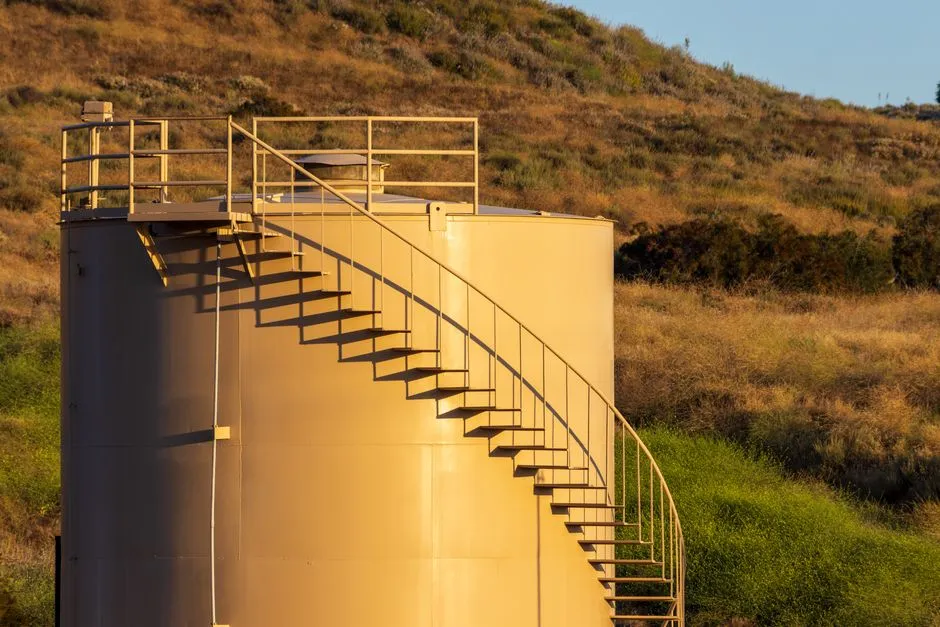
Rule one is floc density. Polymer-conditioned metal-hydroxide floc with specific gravity above 1.05 settles readily in a lamella clarifier; the same floc, once dosed with 1 to 5 mg/L anionic polymer, also binds tightly to 30 to 50 µm micro-bubbles inside a DAF, so when chemistry is right either technology can clear the 40 CFR 437 envelope (HydropureWater field data, 2026). The mechanism is not the bottleneck — chemistry and hydraulic residence time are.
Rule two is FOG. Free oil, grease, and emulsified tramp oil do not settle in the residence time of a conventional or lamella clarifier; they ride over the weir and out the NPDES outfall. Any FOG-bearing stream therefore needs a DAF as primary, with the lamella acting only as a polish step. This is the single rule that turns a "lamella-only is cheaper" CAPEX argument into a non-starter on a mixed-metals fab line.
Rule three is cold weather. Micro-bubble nucleation kinetics slow 20 to 30% at 5°C versus 20°C, so a 10 to 15% sizing margin on the recycle pump and saturation vessel is prudent for any Tuskegee DAF that runs through winter (HydropureWater field data, 2026). The same cold-weather risk hits a lamella in an unheated vault as a freezing sludge hopper, but the failure mode is mechanical rather than kinetic. A compact, insulated DAF system is the standard answer for cold, low-flow, intermittent streams.
The fourth meta-rule for 2026 is footprint. DAF footprint is 0.2 to 0.4 m² per m³/h, lamella 0.3 to 0.6, and conventional gravity clarifier 5 to 8. For a 100 m³/h stream, that is the difference between roughly 30 m² and 600 m² of building footprint, which often decides the winner once civil, excavation, and building cost are bundled. Civil and building costs routinely flip the CAPEX ranking on dense industrial sites.
40 CFR 437 Effluent Envelope a Tuskegee Plant Must Hit
The table below translates 40 CFR 437 into the numbers a permit memo or CAPEX justification actually needs. Values reflect the published daily-maximum and monthly-average limits for active ore mining under subcategory 437.30; facility-specific subcategory applicability and any ALDEM-issued alternative limits must be confirmed against the current permit before design freeze.
| Parameter | Daily maximum (mg/L) | Monthly average (mg/L) | Notes |
|---|---|---|---|
| Total Suspended Solids (TSS) | ~50 | ~30 | Steady-state driver for sizing; DAF + lamella polish typically delivers 5–15 mg/L headroom |
| Total Recoverable Lead | ~0.6 | ~0.3 | Controlled at upstream precipitation; clarifier overflow must not resuspend Pb-laden floc |
| Total Recoverable Zinc | ~1.5 | ~0.8 | pH-stable band 8.0–9.0 keeps Zn(OH)₂ precipitated |
| Total Recoverable Copper | ~0.6 | ~0.3 | CuS precipitation preferred over hydroxide for tight envelope |
| Total Recoverable Iron | ~3.5 | ~2.0 | Drives the largest equalization tankage in iron/taconite plants |
| pH | 6.0–9.0 | 6.0–9.0 | Continuous band, not instantaneous; recordable on every shift |
A well-sized DAF as primary plus a lamella as polish gives roughly 20 to 30% margin against the daily-maximum envelope on TSS and metals, which is the operational space ADEM expects to see. A lamella alone is tight against the monthly-average on FOG-free, dense-floc streams above 100 m³/h and fails outright on FOG-bearing streams — the float simply cannot settle. ADEM's monitoring frequency (typically weekly composite for metals, daily for TSS and pH on direct discharges) is what forces the redundant-unit decision in practice: a single clarifier is hard to qualify as "reliable" against the daily-max when one bad shift is a violation. Adjacent metals-fabrication framing for the broader Alabama basin is covered in the DAF vs clarifier for fabricated metals in Birmingham guide.
Tuskegee-Specific Scenarios: Red-Iron, Kaolin, Mixed-Metals Fab
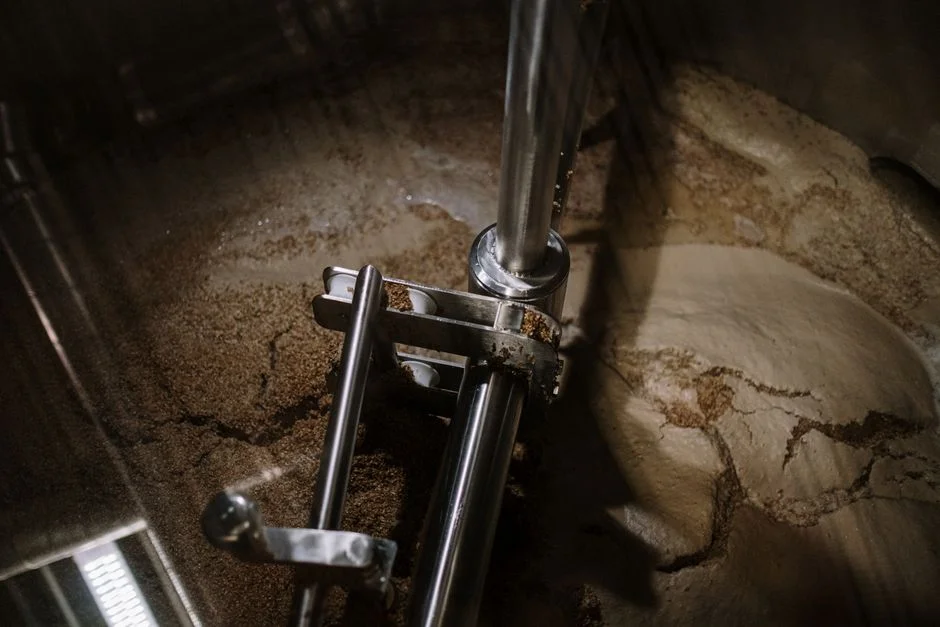
Scenario one is a red-iron or taconite concentrator running roughly 250 m³/h with no oil. The stream carries 1,500 to 3,000 mg/L TSS as Fe(OH)₃ floc plus magnetite fines, with no FOG contribution. The flow and density favor a high-rate lamella primary at 30 m/h surface loading, requiring roughly 8 to 9 m² of plate area; TSS below 30 mg/L is achievable with the lamella alone. A DAF polish is justified only if a maintenance shop or truck wash starts contributing FOG intermittently, in which case a small DAF upstream of the lamella is a clean retrofit.
Scenario two is a mixed-metals fabrication plant at roughly 80 m³/h with cutting-oil emulsions. Combined process wastewater runs 100 to 300 mg/L TSS, copper and zinc precipitates, and 50 to 200 mg/L emulsified cutting oil from the on-site maintenance shop. DAF is non-negotiable as primary — a clarifier would discharge the emulsified oil straight to the outfall and trip the 40 CFR 437 envelope on oil-and-grease as well as TSS. A small lamella follows as polish for residual TSS, giving margin against the daily-maximum metals limits. The 80 m³/h flow sits mid-band on a standard DAF system with no custom-engineering markup.
Scenario three is cold-weather, low-flow copper-mine or kaolin dewatering under 20 m³/h. A sump discharge that runs intermittently through winter demands a compact DAF skid that starts and stops in minutes and handles variable influent. A lamella in an unheated vault risks freezing in the sludge hopper and is harder to insulate. DAF's higher unit CAPEX pays back in operational uptime, and an insulated saturation vessel with a 10 to 15% recycle-pump margin closes the cold-weather performance gap.
Scenario four is kaolin wash-water with high silica fines, low metals, and no FOG. A HydropureWater lamella clarifier primary with coagulant-only conditioning handles the bulk TSS without a polymer polish step. Reserve a small DAF skid for upset events — a clarifier overflow on a chemistry upset is the most common permit excursion in this service. This is also the configuration where lamella sludge recycle can cut coagulant consumption by up to 30% on a stable stream (HydropureWater P10 design data, 2026).
2026 Cost Band: CAPEX, OPEX, and Footprint Side by Side
Headline numbers for a 2026 capital request, drawn from HydropureWater field data (2026) and 40 CFR 437 envelope assumptions above:
| Cost dimension | Dissolved Air Flotation (DAF) | Lamella Clarifier | Conventional Gravity Clarifier |
|---|---|---|---|
| Equipment CAPEX (equal flow, multiplier) | 1.5–2.5x | 1.0x (reference) | 0.7–0.9x equipment, but high civil/building cost |
| Footprint per m³/h | 0.2–0.4 m² | 0.3–0.6 m² | 5–8 m² |
| Energy | 8–15 kWh/m³ (compressor + recycle) | ~0.1–0.3 kWh/m³ (scraper drive only) | ~0.05–0.2 kWh/m³ (scraper drive) |
| Coagulant demand | Standard | Up to 30% less (sludge recycle, P10 design) | Standard |
| Sludge dryness out of unit | 4–8% DS (float) — easier downstream dewatering | 2–5% DS (underflow) — needs conditioning before pressing | 1–3% DS (underflow) — heavy conditioning load |
| Cold-weather performance (<10°C) | Moderate with 10–15% sizing margin and heat-trace | Low (freezing risk in unheated sludge hopper) | Low (same freeze risk, larger vault) |
| Best fit stream | FOG, emulsified oil, colloidal fines, light floc | Dense settleable hydroxide floc, high flow, no oil | Legacy installations, very large settling basins |
The DAF CAPEX premium is real — 1.5 to 2.5x a comparable lamella at equal flow — but it shrinks fast once civil work, excavation, and footprint-driven building costs are added. A 100 m³/h stream at 30 m² DAF footprint versus 600 m² conventional clarifier footprint is the difference between a small equipment pad and a structural building, and that delta routinely shows up as $1.5M to $3M of bundled site work on a 2026 Tuskegee replacement. Pair the choice with an automatic chemical dosing skid to hold the dose tight against variable influent, and a downstream plate-and-frame filter press sized to the float (4 to 8% DS) or underflow (2 to 5% DS) band the selected unit actually produces.
Procurement-Ready Checklist for a 2026 Replacement Decision
- Pull six months of influent TSS, FOG, and metals data, and bench-test polymer dose on the actual floc before sizing DAF or lamella plate area — do not size off vendor curves.
- Confirm the applicable 40 CFR 437 subcategory and the ADEM permit limits in writing before freezing any design; do not rely on prior-cycle limits, which ADEM can revise at renewal.
- Insist on insulated or heat-traced saturation vessel and recycle line for any Tuskegee DAF that runs through winter, with a 10 to 15% sizing margin on the recycle pump to absorb the 20 to 30% nucleation slowdown at 5°C.
- Pair the primary unit choice with an automatic chemical dosing skid to hold the dose tight against variable influent, and a plate-and-frame filter press sized to the float or underflow DS band the chosen unit will actually produce.
- Document the equalization basin capacity against the spring rainfall surge — a 50+ inch annual rainfall climate with a spring peak routinely delivers 2x to 3x nominal-day flow.
Frequently Asked Questions
Does 40 CFR 437 require a DAF or a clarifier?
No. 40 CFR 437 sets effluent limits — daily-maximum and monthly-average for TSS, total recoverable lead, zinc, copper, and iron, plus a continuous pH band of 6.0 to 9.0. A well-sized DAF as primary plus a lamella as polish, or a lamella alone on FOG-free streams above 100 m³/h, can meet the envelope when paired with proper chemical precipitation.
What lamella surface loading works for Tuskegee red-iron floc?
For dense Fe(OH)₃ or Al(OH)₃ floc, design at 20 to 30 m/h on the plate-pack projected area. Drop to 10 to 15 m/h for fine silica or low-density floc. The published 20 to 40 m/h range (HydropureWater P10) is for clean, well-conditioned hydroxide floc only.
Can a DAF run through a Tuskegee winter?
Yes, but the saturation vessel and recycle line should be insulated or heat-traced. Micro-bubble nucleation kinetics slow 20 to 30% at 5°C versus 20°C, so a 10 to 15% sizing margin on the recycle pump and saturation volume is prudent for any plant that runs through winter (HydropureWater field data, 2026).
Can a lamella alone be primary on a taconite or kaolin stream?
Yes, on FOG-free streams with chemically conditioned floc. Add a DAF polish only if colloidal fines bleed through or if a maintenance shop discharge adds intermittent oil that the lamella cannot capture.
What is the real footprint difference between a DAF and a conventional clarifier?
Roughly one-twentieth. A DAF at 0.2 to 0.4 m² per m³/h versus a conventional clarifier at 5 to 8 m² per m³/h, which for 100 m³/h is 30 m² versus 600 m² of building footprint. That delta routinely dominates the bundled site-work cost on dense industrial sites.