Why Indianapolis Food and Beverage Plants Are Rethinking Clarification in 2026
Indianapolis food and beverage manufacturers discharging to the Southport Advanced Wastewater Treatment Plant and other Citizens Energy Group POTWs are facing tighter 2026 enforcement around FOG, TSS, and BOD pretreatment limits, with inspectors increasingly flagging slug-load FOG events from CIP cycles that overwhelm legacy gravity clarifiers. The core dilemma is mechanical: an existing clarifier that handled 1,200 mg/L TSS and modest butter/whey residue three years ago now underperforms when the plant adds creamers, flavored dairy, or rotates to craft-beer fermenter dumps that push FOG above 200 mg/L in 15-minute windows. The right decision frame is not "DAF or clarifier as a brand choice" but "pick by FOG loading and TSS concentration, sized to the worst slug your CIP system produces, not the daily average." Krofta has documented that DAF pretreatment substantially reduces FOG, TSS, insoluble BOD, and COD before discharge to a POTW, and also protects downstream high-rate biological systems where MBBR media can become coated with oil or where UASB granule density drops enough to wash out of the reactor.
How DAF and Gravity Clarifiers Actually Work
A dissolved air flotation system saturates a recycle stream with air under pressure, then releases that pressure inside a flotation tank through nozzles or an air-mixing tube, generating a cloud of 20–40 micron microbubbles that attach to suspended solids and emulsified fats and lift them to the surface in a dense float that a skimmer scrapes off in 3–5 minutes. These systems provide a compact alternative to traditional settling tanks, which rely on gravity to separate solids from liquid. A gravity or lamella clarifier holds the wastewater in a quiescent tank, often with inclined lamella plates spaced at 50–60 mm to shorten effective settling depth to roughly 50–100 mm equivalent, so settleable solids drop to a sludge cone over 30–90 minutes of hydraulic retention while clarified water overflows weirs at the top. The plate packs allow surface loading rates of 20–40 m/h in a footprint typically one-quarter to one-fifth of an equivalent conventional clarifier.
FOG inverts the comparison because oil and grease are less dense than water, meaning a settling tank asks a buoyant particle to behave like a heavy one; skim paddles on a clarifier recover only the fraction that rises on its own—usually 20–50% of emulsified FOG. A DAF attaches microbubbles directly to oil droplets and short-circuits the buoyancy problem. Modern high-rate DAF designs such as the MicroRise circular system scale beyond 80 ft in diameter, integrate Colloidal Gas Aphron (CGA) microbubbles and an Air Dissolving Pump (ADP) for chemical-light flotation, and fit into retrofits where an existing clarifier footprint is repurposed. For plants that need a primer on how these same mechanisms apply in non-food industrial streams, the Crossett pulp & paper DAF vs clarifier guide covers the analogous trade-offs in a different influent envelope.
DAF vs Clarifier: 2026 Head-to-Head Comparison Matrix
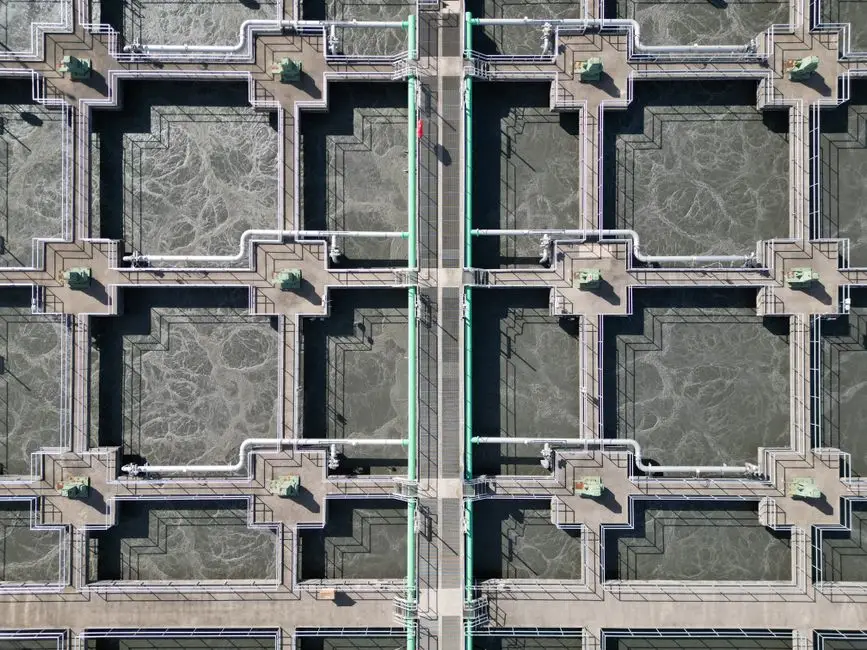
Procurement teams often rely on comparative data to determine the most effective wastewater strategy for their specific plant requirements. The matrix below reflects typical industrial food and beverage duty; site-specific jar testing and pilot work is the only way to confirm numbers for a given effluent.
| Parameter | DAF (dissolved air flotation) | Gravity / Lamella Clarifier |
|---|---|---|
| TSS removal on high-FOG streams | 85–98% | 40–70%; drops as FOG fraction rises because oil re-suspends in the sludge blanket |
| FOG removal with chemical conditioning | 70–95% with polymer/alum or ferric dose tuned via jar test | 20–50% with surface skimmers; emulsified FOG largely passes through |
| Hydraulic retention time | 3–5 minutes in the flotation zone | 30–90 minutes for lamella, 2–4 hours for conventional gravity clarifier |
| Footprint per MGD equivalent flow | Compact — skid units from 48 GPM to 11,000 GPM available | Lamella is 4–5x smaller than conventional; conventional clarifier needs 2–4 hr buffer volume |
| Sludge consistency from clarifier | 2–4% thickened solids — reduces downstream dewatering CAPEX | 0.5–2% — usually requires a thickener or DAF as a second stage before dewatering |
| CAPEX drivers | Saturated recycle pump, air compressor or AMT, skim mechanism, chemical dosing skid | Steel or concrete tank, scraper, lamella plate packs, simple controls |
| OPEX drivers | Polymer and coagulant, compressed air, periodic nozzle maintenance | Sludge pumping, more frequent dewatering, labor for skimmer adjustment |
| RAS temperature loss | <1 °F loss | 12–15 °F loss — meaningful reheat load on mesophilic digesters |
| Operator skill required | Moderate to high — chemical dosing, recycle saturation pressure, float depth | Low to moderate — simpler chemistry, fewer moving parts |
| Footprint retrofit | Often fits inside an emptied clarifier footprint | N/A |
The cold-climate row is the one that swings 2026 economics for Indianapolis plants with covered anaerobic systems. Less heat lost from the RAS/WAS stream means less boiler gas burned to hold mesophilic setpoint near 95 °F, which means more biogas available for higher-value uses such as CHP or thermal offset in the brewhouse or cook line.
When an Indianapolis Food Plant Should Choose DAF in 2026
Self-qualification starts with two numbers: FOG in mg/L on your worst 15-minute slug, and TSS concentration after equalization. Above roughly 100–150 mg/L FOG or 1,500–2,000 mg/L TSS, gravity clarification efficiency drops sharply and DAF becomes the lower-risk choice even before you price it. Krofta DAFs are field-proven across milk, butter, ice cream, and cultured-product plants, including the new-SKU category of flavored creamers and ice cream mixes that pushed FOG ratios higher than legacy dairies were designed for. Meat and poultry processors, condiment and sauce cookers, and craft breweries running fermenter-dump events all generate the same high-FOG signature that the float mechanism is built to remove.
The biological-protection argument is the second reason plants specify DAF. Krofta has documented that DAF pretreatment prevents FOG coating of MBBR media—which complicates start-up and lengthens commissioning—and prevents FOG-induced density loss in UASB granules, which can float out of the reactor and force the operator to repurchase granule inventory. For older Indianapolis plants with limited headroom, retrofitting a high-rate DAF into an existing clarifier footprint is now a documented option, and the HydropureWater DAF system ships as a skid-mounted package sized from small brewery flows up to 11,000 GPM-class industrial units. For an honest look at where the OPEX actually lands on a meat line, the meat processing wastewater OPEX breakdown walks through the polymer, sludge, and labor components.
When a Lamella or Gravity Clarifier Still Wins in 2026
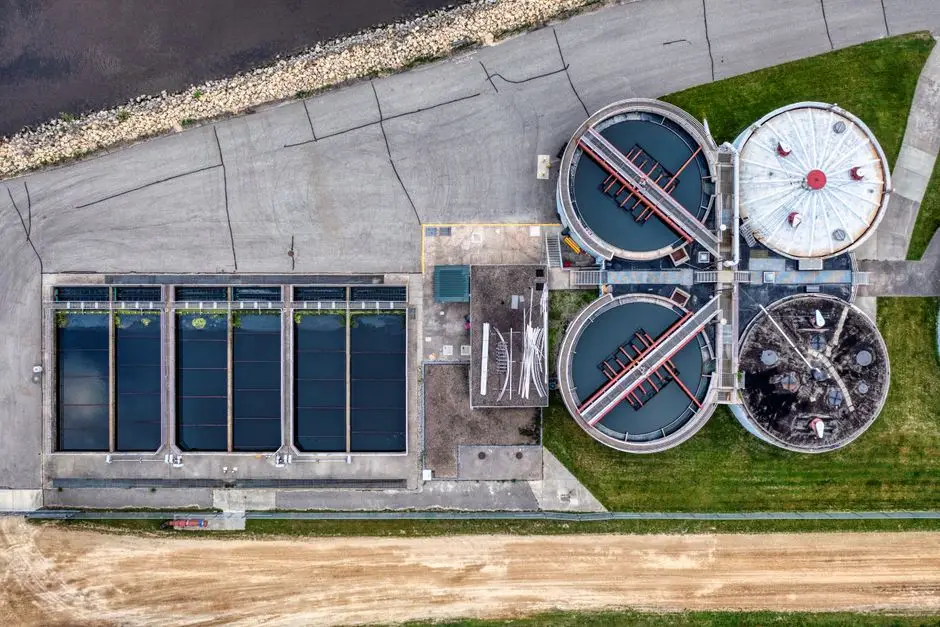
DAF is the right tool for high-FOG, high-TSS, and slug-loaded streams, but it is not the right tool for every food and beverage effluent. Lamella clarifiers continue to win in three common Indianapolis scenarios. First, low-FOG, low-TSS streams, such as bottle wash, produce wash, and post-fermentation brewery CIP rinses that test below 80–100 mg/L FOG and below 500 mg/L TSS, do not justify the chemical dosing, compressed air, and operator attention a DAF demands. Second, operator-thin plants without a dedicated wastewater chemist prefer a lamella clarifier because it runs on simpler chemistry and fewer moving parts, and the failure modes are usually visible (sludge blanket rising, weirs plugging) rather than chemical. Third, for capital-constrained 2026 projects, a new DAF with a saturated recycle skid and chemical dosing system costs materially more than a lamella clarifier of equivalent flow. For those applications, a HydropureWater lamella clarifier paired with existing equalization is the right sizing. The decision rule is simple: do not over-engineer a stream that is already within the local limit and within the plant's operational capacity.
Indianapolis Pretreatment, Permitting, and Pilot Testing in 2026
Indianapolis food and beverage plants discharging to the Southport AWWTP or the Belmont WWTP fall under the Citizens Energy Group Industrial Pretreatment Program, which enforces categorical and local limits for FOG, TSS, BOD, and pH through 40 CFR Part 403. The 2026 enforcement priority is slug-load FOG events; inspectors expect to see daily flow, FOG, and TSS logs that show the plant knows its peak instantaneous loading, not just its 24-hour composite. Citizens pretreatment permits typically require 90-day compliance reports and reserve the right to impose surcharges or schedule-based discharge restrictions on plants that exceed local FOG or TSS limits repeatedly.
Pilot testing is the practical safeguard before any 2026 CAPEX commitment. DAF Corporation and other tier-one vendors conduct laboratory jar tests followed by on-site pilot feasibility studies, usually 30 days on the actual plant effluent, before committing to a sized unit. Polymer and coagulant selection is the single most sensitive DAF variable—the wrong dose cuts FOG removal from 90% to 60% and produces a thin, watery float that won't thicken—so budget jar testing and a 30-day pilot as a hard line item. For plants that already run a DAF, pairing it with a HydropureWater automatic chemical dosing skid stabilizes the polymer-to-flow ratio and removes a major source of OPEX drift. The Food Processing Australia F&B water rethink coverage is a useful outside-Indiana read on where the broader F&B sector is moving on reuse and pretreatment in 2026.
Frequently Asked Questions
What FOG and TSS thresholds should trigger DAF over a clarifier in Indianapolis?
Above roughly 100–150 mg/L FOG or 1,500–2,000 mg/L TSS on the worst 15-minute slug, DAF outperforms gravity clarification on both removal efficiency and float-handling, and the OPEX delta from polymer dosing is usually recovered in lower surcharges and drier sludge.
What FOG removal can a DAF realistically achieve on dairy or meat processing wastewater?
With jar-test-tuned polymer and coagulant, industrial DAFs deliver 70–95% FOG removal and 85–98% TSS removal on dairy, meat, and brewery streams.
Is polymer cost the main OPEX driver for a DAF in 2026?
Polymer and coagulant are the largest variable OPEX line for a DAF, sensitive to influent variability and dose tuning, while compressed air, periodic nozzle maintenance, and skimmer wear are the predictable fixed lines; automatic dosing skids materially reduce polymer waste.
Do Indianapolis food plants need a Citizens Energy Group permit to change clarification technology?
Yes—a material change in pretreatment equipment, including a DAF retrofit, typically requires notification under the Citizens Energy Group Industrial Pretreatment Program and 40 CFR Part 403, and a 30-day pilot report is the standard evidence package.
How long should a DAF pilot test run before a 2026 CAPEX decision?
Plan for 30 days of on-site pilot testing on the actual plant effluent after jar-test screening, long enough to capture CIP-cycle FOG slugs and weekend low-loading periods; anything shorter risks under-sizing the unit.