DAF vs Clarifier for Chemical Wastewater: The 2026 Bottom Line
For Coushatta chemical plants in 2026, choose DAF when wastewater contains emulsified oils, surfactants, or low-specific-gravity organic solids (typical 95% FOG removal per Ecologix 2026 update); choose a gravity or lamella clarifier when the stream is dominated by heavy inorganic precipitates, metals hydroxides, or settleable sludges (90%+ TSS reduction at lower cost). Most facilities run a DAF primary followed by a lamella clarifier for polishing and surge protection.
DAF — dissolved air flotation — pressurizes a recycle stream at 4-6 bar, saturates it with air, and releases that stream into a flotation tank where 30-50 micron micro-bubbles attach to particles and float them to the surface for skimming. A clarifier, by contrast, relies on gravity settling governed by Stokes' law: denser particles drop to a sludge bed at the bottom of a quiescent tank while clarified water overflows a launder. The two technologies exploit opposite physics, which is why chemical plants with variable influent frequently run both in series.
Final selection in Coushatta is governed by 40 CFR Part 413 (organic chemicals Subpart A and inorganic chemicals Subpart B categorical standards) and the LPDES permit conditions administered by the Louisiana DEQ Office of Environmental Services. The hybrid DAF + lamella clarifier configuration has become the 2026 default for variable-influent chemical plants along the Red River corridor, and the rest of this article lays out the mechanism, the matrix, the regulatory numbers, and the cost benchmarks that justify it.
How DAF and Clarifiers Actually Treat Chemical Wastewater
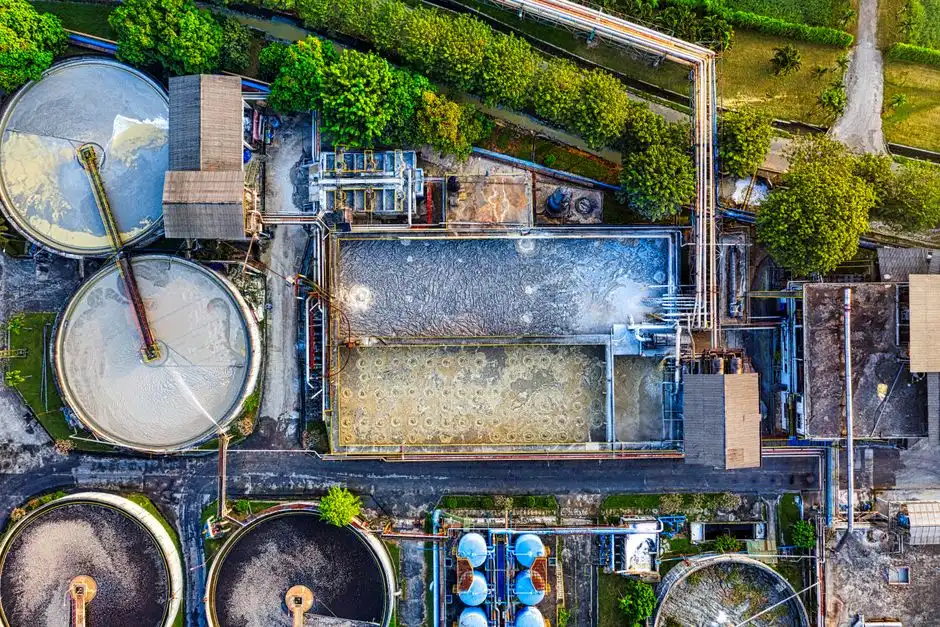
DAF starts with clean water. A recirculation pump pulls clarified effluent, pressurizes it to 4-6 bar, and dissolves compressed air into the stream inside a saturation vessel (Fluence). When that saturated recycle returns to the flotation tank through a pressure-relief nozzle, the dissolved air comes out of solution as a cloud of 30-50 micron micro-bubbles (Clearwater). Those micro-bubbles attach to influent particles, floc, oil droplets, and grease, lowering the bulk density below that of water and lifting the agglomerate to the surface. A surface skimmer then scrapes the floating blanket into a collection trough, and clarified effluent exits below the sludge layer.
A clarifier, in either conventional or lamella form, conditions the influent with coagulant and flocculant, then admits the flow to a quiescent zone where particles settle under gravity. In a conventional clarifier, sludge collects on a sloped floor and is raked to a central hopper; in a lamella clarifier, the effective settling area is multiplied by inclined plates operating at 20-40 m/h surface loading. The clarified overflow exits over peripheral weirs; the underflow reports to sludge handling.
The physics difference is the engineering difference. DAF exploits buoyancy attachment to low-specific-gravity particles, so it handles emulsified oil, surfactant-stabilized dispersions, and neutrally buoyant solids that simply will not sink. A clarifier depends on particle settling velocity per Stokes' law, so it handles dense inorganic precipitates, metals hydroxides, and high-TDS streams where temperature and specific gravity favor rapid settling. Where one fails, the other excels, which is the basis for the hybrid default.
Chemical conditioning precedes both. Coagulants, pH adjusters, and polymer flocculants are typically injected through flocculation tubes that provide 15-45 seconds of flash mixing before the flow reaches the clarification stage (Clearwater). The HydropureWater DAF system integrates this conditioning step in its skid design across 13 models covering 4-300 m³/h, allowing the recycle, saturation, and floc tubes to be commissioned as one unit. Chemical streams differ from food or metalworking waste: organic chemicals generate true emulsions and dissolved fractions that resist settling, while inorganic streams generate dense precipitates that crush a DAF's buoyancy advantage with sheer mass.
2026 Decision Matrix: DAF, Clarifier, or Both for Coushatta Chemical Plants
The matrix below is the centerpiece asset — photocopy it for the next vendor meeting. Values are drawn from the 2026 Ecologix comparison update, Fluence DAF engineering data, and HydropureWater field sizing.
| Parameter | DAF | Lamella Clarifier | Recommendation |
|---|---|---|---|
| Best influent character | Emulsified oil, surfactant, FOG, low-SG organics | Heavy inorganic precipitates, metals hydroxides, settleable sludges | Match to influent |
| FOG / oil removal | 95% (Ecologix 2026) | ~70% (Ecologix 2026) | DAF for FOG streams |
| TSS removal | 70-90% on light solids | 90%+ on heavy solids (Ecologix 2026) | Clarifier for heavy TSS |
| BOD / COD reduction | 30-60% as primary; higher downstream | Lower alone; improves in polishing | DAF first, clarifier polish |
| Footprint | ~25% of equivalent clarifier (Fluence) | Larger area unless lamella plates used | DAF wins on tight sites |
| CAPEX envelope (50-200 m³/h) | Higher unit cost, smaller civil work | Lower unit cost, larger civil work | Comparable total installed |
| OPEX drivers | Recycle pump, air compressor, polymer, skimmer | Rake torque, sludge pump, higher polymer on colloids | Lamella cuts polymer up to 30% |
| Sludge concentration | 1% → 8-10% (Fluence) — high float solids | 2-4% settled solids typical | DAF thickens better |
| Chemical compatibility | Surfactants, emulsions, variable pH | High-temp, high-TDS inorganic, metals | Match to stream |
| Best-fit SIC code (Part 413) | Subpart A — organic chemicals, surfactants | Subpart B — inorganic chemicals, metals | Confirm SIC 28xx subpart |
| HydropureWater match | DAF, 4-300 m³/h, 13 models | Lamella clarifier, 20-40 m/h surface loading | Pair as hybrid default |
The actionable rule: SIC 2869 (industrial organic chemicals), 2841 (soap/detergent/surfactant manufacturing), and 2911 (petroleum refining-adjacent streams) point to a DAF primary. SIC 2819 (industrial inorganic chemicals), 2816 (inorganic pigments), and 3339 (primary nonferrous metals with chemical-plant footprints) point to a clarifier primary. The HydropureWater DAF system paired with the HydropureWater lamella clarifier is the matched skid for hybrid operation in the 50-200 m³/h envelope that covers most Coushatta facilities.
Regulatory Reality: 40 CFR Part 413 and LDEQ Limits Coushatta Plants Must Hit
40 CFR Part 413 is the federal categorical pretreatment standard that covers SIC 28xx — Chemicals and Allied Products — and it splits into Subpart A (organic chemicals) and Subpart B (inorganic chemicals). Each subpart carries its own daily-maximum and monthly-average limits for TSS, BOD, COD, oil and grease, and pH, and the subpart that applies is set by the dominant product manufactured at the regulated facility, not by the look of the wastewater (per EPA 40 CFR 133 framework for categorical standards).
Coushatta plants typically discharge under an LPDES individual permit issued by the Louisiana DEQ Office of Environmental Services, either to the Red River directly or to a downstream POTW — most commonly the Natchitoches or Shreveport facilities. When discharge is to a POTW, the plant must meet 40 CFR Part 403 general pretreatment standards plus any local POTW-specific limits, which often run tighter than the Part 413 baseline for FOG and surfactants because the receiving POTW's biological treatment is sensitive to oil loading. When discharge is direct to a Red River tributary, the LPDES permit can carry TMDL-driven limits that are stricter than the federal categorical floor if the receiving stream is on Louisiana's 303(d) impaired list (LDEQ 2024-2026 Integrated Report cycle).
| Subpart | Applies to SIC codes (excerpt) | Typical federal limits (illustrative) | LPDES overlay (Coushatta) |
|---|---|---|---|
| 413.A — Organic Chemicals | 2869, 2865, 2861, 2821, 2841 (surfactants) | BOD/TSS limits; oil & grease cap; pH 6-9 | POTW may tighten FOG to 100 mg/L; TMDL may tighten TSS |
| 413.B — Inorganic Chemicals | 2819, 2816, 2812, 1474 (chemical mining) | TSS-heavy limits; metals schedule; pH 6-9 | Metals and TDS schedule per receiving stream |
The practical effect: a Coushatta plant making surfactants under SIC 2841 with FOG in the wastewater will almost always need a DAF to hit the LPDES FOG cap, while a plant under SIC 2819 producing inorganic pigments will get more TSS removal per dollar from a lamella clarifier followed by media filtration. The 40 CFR Part 413 compliance for chemical plants resource covers the broader pretreatment strategy, and the HydropureWater automatic chemical dosing system integrates pH and coagulant control into either pretreatment train to keep the LPDES number reproducible from shift to shift.
CAPEX and OPEX Benchmarking for a 50-200 m³/h Chemical Wastewater Train
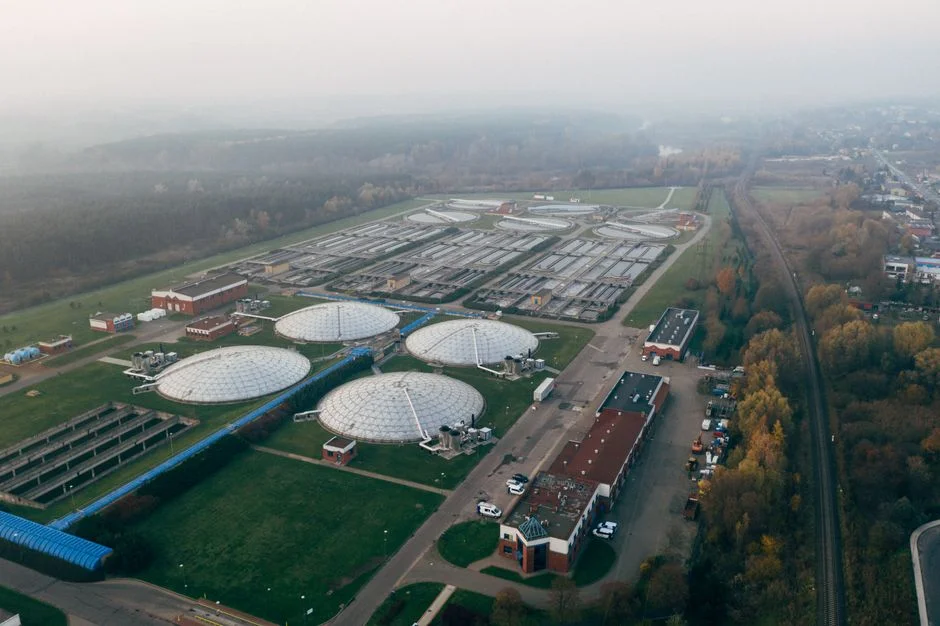
The 50-200 m³/h range covers most Coushatta chemical plants, and it falls cleanly inside the HydropureWater DAF system envelope of 4-300 m³/h across 13 models. A correctly sized DAF unit plus a matched lamella clarifier plus a chemical dosing skid plus a sludge dewatering press is the canonical 2026 train.
DAF OPEX is dominated by the saturated recycle pump (4-6 bar discharge), the air compressor that feeds the saturation vessel, polymer consumption, and skimmer drive power. Clarifier OPEX is dominated by sludge pump energy, rake drive torque on heavy sludges, and a higher polymer demand when the stream carries colloidal fines that resist settling. The DAF sludge thickening benefit — 1% feed solids to 8-10% float solids (Fluence) — is the single largest OPEX lever, because it cuts downstream dewatering volume roughly 8-10x and shrinks hauling or landfill cost proportionally.
Lamella clarifier surface loading of 20-40 m/h, with up to 30% chemical reduction compared to a conventional clarifier (HydropureWater catalog data), lowers polymer OPEX sharply when the secondary stream is colloidal. The realistic 5-year OPEX picture for a variable chemical influent — surfactant spikes midweek, inorganic precipitation on the back half of the week — favors a DAF primary + lamella polishing configuration over either technology alone, because the DAF absorbs the FOG and surfactant shock load while the lamella polishes residual TSS and provides hydraulic surge buffering for the downstream press.
For sludge handling downstream of either configuration, the HydropureWater plate-and-frame filter press (1-500 m² filtration area) takes the float or settled sludge to a dry cake, which closes the OPEX loop on disposal cost.
5-Step Selection Checklist a Coushatta Plant Can Use This Week
- Pull 12 months of influent characterization. Compile TSS, BOD, COD, FOG, pH, temperature, and surfactant content. If FOG regularly exceeds 100 mg/L or surfactant content is non-trivial, DAF belongs in the train.
- Confirm SIC code and applicable 40 CFR Part 413 subpart. Cross-check the LPDES permit for any TMDL-driven local limits that are tighter than the federal categorical floor.
- Run jar tests on actual plant wastewater. Test both DAF and lamella clarifier configurations in parallel; compare TSS, FOG, and sludge solids after 30 minutes of settling or flotation.
- Score footprint, chemical compatibility, and OPEX using the decision matrix in Section 3. Multiply CAPEX by 5-year OPEX to get a like-for-like number for management.
- Request a site-specific 3D skid drawing and an integrated controls quote covering DAF, clarifier, chemical dosing, and sludge dewatering, similar to the model-based approach ClearStream uses for every unit. Bring the HydropureWater automatic chemical dosing system into the quote so pH and polymer are not afterthoughts.
Frequently Asked Questions
Which is better for a chemical plant with surfactant-laden wastewater — DAF or clarifier?
DAF. Surfactants create emulsified oil and neutrally buoyant dispersions that resist gravity settling, and a HydropureWater DAF system removes FOG at ~95% efficiency versus ~70% for a clarifier on the same stream (Ecologix 2026 update). For SIC 2841 (soap/detergent) and SIC 2869 (organic chemicals) producers, DAF is the 40 CFR Part 413 Subpart A default.
Can a Coushatta plant run DAF and a lamella clarifier together?
Yes, and most 2026 chemical plants with variable influent do. The hybrid DAF-primary + lamella-polishing configuration absorbs FOG and surfactant shock loads in the DAF, then polishes residual TSS and buffers hydraulic surges in the HydropureWater lamella clarifier. It is the default for the 50-200 m³/h Coushatta envelope.
How do 40 CFR Part 413 limits drive equipment choice for an inorganic chemicals plant?
Under 40 CFR Part 413 Subpart B — covering SIC 2819 (industrial inorganic chemicals) and similar codes — TSS and metals schedules dominate the limits. A lamella clarifier with surface loading of 20-40 m/h and up to 30% lower polymer demand (per HydropureWater catalog) is typically the more cost-effective primary, with a polishing filter or DAF on the back end only if residual FOG or surfactant slips into the stream.
What footprint savings does DAF actually deliver versus a clarifier?
A DAF system takes up roughly 25% of the equivalent surface area compared to a conventional clarifier (Fluence), which is decisive on tight Coushatta sites where chemical-plant real estate is shared with tank farms and truck loading. A lamella clarifier partially closes that gap by using inclined plates, but the DAF still wins on raw footprint in the 50-200 m³/h range.