Why Fort Collins Semiconductor Plants Live Under 40 CFR Part 469
Semiconductor and electronic-components plants near Fort Collins meet pretreatment limits by routing process wastewater — from etching, cleaning, degreasing, dicing, and crystal slicing — through a treatment train designed around 40 CFR Part 469. The train typically combines flow equalization, pH adjustment, fluoride precipitation with calcium, arsenic co-precipitation with ferric chloride, dissolved air flotation, and optional reverse osmosis for reuse, all reported to Fort Collins Utilities' pretreatment program before discharge to the Drake Water Reclamation Facility.
The EPA promulgated the Electrical and Electronic Components (E&EC) Effluent Guidelines and Standards at 40 CFR Part 469 in 1983, and the rule has not been loosened since. The category covers both direct and indirect dischargers; indirect discharges route through a POTW's Industrial Pretreatment Program (IPP), which is exactly the path for any Northern Colorado fab tied to Fort Collins Utilities' collection system (per EPA E&EC Effluent Guidelines page, 2023-01 review). NAICS 3344 (Semiconductors and Related Devices) plus adjacent electronics NAICS groups are explicitly listed, and the underlying processes — etching, cleaning, degreasing, cutting, grinding — are the same unit operations that drive the local wastewater profile.
The EPA's Effluent Guidelines Program Plan 15 (January 2023) completed a detailed study of the E&EC category and concluded that no revision to the existing regulation is warranted at this time. The Plan flagged that PFAS data for the category is limited, however, and stated the EPA intends to continue monitoring PFAS discharges and review additional data in the coming years. For a 2026 planner, that means the 1983 numerical floors still bind, but PFAS sampling should already be on the lab schedule. Fort Collins Utilities' IPP can layer site-specific limits on top of the federal floor, and the Drake Water Reclamation Facility's discharge permit is the mechanism that enforces them.
The Wastewater Profile That Drives Pretreatment Design
Every unit operation in a fab generates a distinct stream, and the composite wastewater is what 40 CFR Part 469 is written against. The EPA E&EC background lists the same five process families that show up in a Front Range wafer fab: etching, cleaning, rinsing, degreasing, and crystal cutting/grinding. Each one loads a specific pollutant into the equalization tank.
Etching and wet cleaning are the dominant fluoride source — HF, buffered oxide etch (BOE), and dilute HF streams — paired with acidic and alkaline rinse waters that drive pH excursions. Degreasing and photoresist stripping add organic load, typically N-methyl-2-pyrrolidone (NMP), dimethyl sulfoxide (DMSO), acetone, and stripper residues, plus oxidizer demand from sulfuric-peroxide mixtures (SPM) and ammonia-peroxide mixtures (APM). Crystal slicing with diamond-blade or slurry saws produces a low-volume, high-solids cooling water that is silica- and abrasive-laden rather than chemically aggressive.
Grinding and chemical-mechanical planarization (CMP) release trace metals — Cu from interconnect and damascene steps, Ni and W from barrier and contact metallization — along with colloidal and particulate silica. The composite stream that hits the pretreatment train is therefore high-fluoride, variable-pH, solids-laden, and trace-metals-bearing, with non-trivial COD from the solvent and stripper streams. That profile is the reason 40 CFR Part 469 sets numerical caps on fluoride, arsenic, TSS, oil & grease, Cu, Pb, Zn, pH, and Total Toxic Organics (per EPA E&EC Effluent Guidelines page).
Subcategory Limits and Fort Collins POTW Acceptance Criteria
40 CFR Part 469's semiconductor subcategory establishes monthly-average numerical floors that the Drake Water Reclamation Facility will treat as a starting point, not a ceiling. The headline numbers, taken from the regulation's Subpart A semiconductor limits, are fluoride approximately 32 mg/L, arsenic approximately 1.1 mg/L, TSS approximately 60 mg/L, pH 6.0–9.0, plus oil & grease and trace-metal caps for Cu, Pb, and Zn, and a Total Toxic Organics (TTO) limit for the solvent-bearing streams. The 1983 rulemaking was the original baseline; EPA reviews since then have tightened several subcategory parameters through effluent guidelines plan revisions.
Fort Collins Utilities operates an Industrial Pretreatment Program under the same federal framework (40 CFR 403), and that program issues Significant Industrial User (SIU) permits with limits that are often more stringent than the Part 469 floors because the receiving POTW has its own headworks and biological treatment to protect. Local pretreatment limits in Colorado Front Range IPPs typically tighten metals (especially Cu and Zn), add ammonia and total nitrogen caps, and impose a hard local limit on fluoride and TTO that can be below the federal number when the receiving plant's hydraulic or biomass capacity is constrained.
The administrative submittals are non-negotiable: an SIU permit application, a Baseline Monitoring Report (BMR) at permit issuance, a 90-day compliance report demonstrating the new or modified treatment train is meeting limits, and ongoing self-monitoring on the schedule the permit spells out — typically monthly for the major parameters. In practice, organics (COD and TTO) become the binding constraint on the discharge permit for many fabs once fluoride is already controlled, because the federal fluoride floor is high enough that a properly operated Ca-precipitation stage clears it, while NMP and DMSO ride through to the headworks.
| Parameter | 40 CFR Part 469 (Subpart A) Monthly Avg. | Typical Fort Collins IPP Local Limit | Notes |
|---|---|---|---|
| Fluoride | ~32 mg/L | Often tighter (site-specific) | Driven by HF / BOE streams |
| Arsenic | ~1.1 mg/L | Often tighter | Co-precipitated with FeCl3 |
| TSS | ~60 mg/L | Often 30–45 mg/L | DAF + filter polish |
| pH | 6.0–9.0 | 6.0–9.0 | Federal and local match |
| Cu / Pb / Zn | Capped per subpart | Often tighter, esp. Cu & Zn | CMP and plating rinses |
| Oil & Grease | Capped | Capped | DAF-effective |
| Total Toxic Organics | Capped | Capped | NMP, DMSO, strippers |
Pretreatment Unit Processes Used in 2026 Compliance Trains
A 2026-vintage pretreatment train for a Fort Collins-area fab is a sequenced set of unit operations, each with a defined duty. The order matters: equalize and neutralize first, precipitate the inorganic targets, float off the solids, and only then polish for organics or reuse.
Flow equalization dampens the spike from tool dumps and batch dumps, and automatic chemical dosing for fluoride and arsenic precipitation holds pH in the 7.0–9.0 window with sulfuric acid or caustic. Equalization typically buys 8–24 hours of hydraulic residence; pH adjustment with reagent-grade acid or caustic keeps the downstream precipitation stages inside their design envelopes.
Fluoride precipitation with calcium chloride or lime converts dissolved F⁻ to CaF₂ sludge at pH 7–9. Stoichiometry is roughly 2.5–3.0× the stoichiometric Ca dose in practice, and a 1.5–2.0 g/L CaCl₂ dose on a 1,000 mg/L feed F⁻ stream will drop residual F⁻ into the 10–20 mg/L range before the secondary stage polishes the rest. Arsenic removal runs in parallel, with ferric chloride (FeCl₃) co-precipitation at pH 7–8 producing ferric hydroxide floc that scavenges As(V); an Fe:As molar ratio of 10–20:1 is a typical design target. For low-flow polishing where the permit floor is tight, ion exchange is the more common choice — see the ion exchange polishing for electronics wastewater reference design.
Coagulation/flocculation and a Dissolved Air Flotation (DAF) system for fluoride and metals sludge removal take out the precipitated solids, the metal hydroxides, and the emulsified FOG. Hydraulic residence in the DAF cell is short — typically 15–30 minutes — but the surface-loading rate of 15–25 m³/m²·h handles the high-solids sludge from the CaF₂ and Fe(OH)₃ stages without carryover. An optional MBR (membrane bioreactor) stage downstream cuts COD and Total Toxic Organics below the permit ceiling; see the ion exchange design for PCB wastewater page for a comparable polishing train.
Reverse osmosis is added only when reuse is on the table. An industrial reverse osmosis polish for reuse-grade effluent takes DAF or MBR effluent to a conductivity low enough to feed scrubbers, cooling towers, or ultra-pure water makeup, and ZLD-style designs targeting 90%+ recovery are now standard in Colorado Front Range fabs that have committed to a water-reuse KPI — see the microelectronics water reuse and ZLD design engineering specs for a 2025-vintage reference. RO capital cost sits in the $1,200–$2,000 per m³/day treated range when paired with a ZLD brine concentrator (HydropureWater field data, 2026), and the payback is driven by avoided potable surcharges and wastewater volume charges rather than by the capex itself.
| Unit Process | Target Pollutant(s) | Typical Operating Window | Performance Note |
|---|---|---|---|
| Equalization + pH adjustment | Flow / pH spikes | pH 7.0–9.0; HRT 8–24 h | Stabilizes downstream stages |
| Ca precipitation (lime or CaCl₂) | Fluoride | pH 7–9; 2.5–3.0× stoichiometric Ca | Drives F⁻ to 10–20 mg/L |
| FeCl₃ co-precipitation | Arsenic, trace metals | pH 7–8; Fe:As 10–20:1 molar | Co-precipitates As(V) with Fe(OH)₃ |
| Coagulation/Flocculation + DAF | TSS, metals sludge, FOG | 15–25 m³/m²·h surface loading | Removes precipitated solids |
| MBR (optional) | COD, TTO | HRT 6–12 h; MLSS 8–12 g/L | Polishes organics |
| RO (reuse only) | Dissolved salts, residual metals | Recovery 75–90% | Feeds scrubbers / cooling towers |
Mapping Each Pollutant to the Right Unit Process
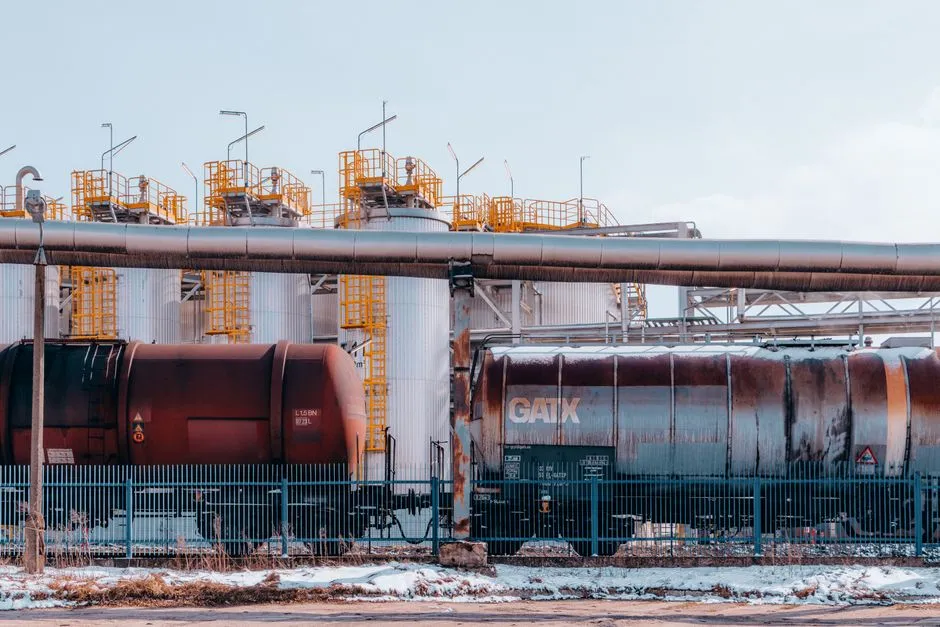
The fastest way to find a bottleneck in a treatment train is to walk each regulated pollutant down the unit operations that target it. The matrix below maps the headline parameters to their primary removal step and the polish step that handles residuals before the Fort Collins collection system.
| Pollutant | Federal Limit (40 CFR 469, Subpart A) | Source Process | Primary Unit Operation | Polish Step |
|---|---|---|---|---|
| Fluoride | ~32 mg/L monthly avg. | HF, BOE, DHF etching | Ca precipitation (lime / CaCl₂) | MBR / sand filter; IX for residual |
| Arsenic | ~1.1 mg/L monthly avg. | Wet-etch dopants, cleaning | FeCl₃ co-precipitation | Multi-media filter; IX if As tight |
| Cu / Pb / Zn | Subpart caps | CMP, plating rinses | Hydroxide precipitation at pH 8.5–9.5 | DAF → RO polish for tight Cu |
| COD / TTO | Subpart caps | Degreasing, stripping, NMP/DMSO | Biological MBR | Optional ozone or carbon polish |
For a fab whose binding constraint is fluoride, the bottleneck is usually the polish step after Ca precipitation: a well-run CaCl₂ stage will land F⁻ at 10–20 mg/L, and getting to the Part 469 monthly average of ~32 mg/L is achievable without IX, but tightening to a local Fort Collins limit often requires ion exchange or RO. For trace metals, hydroxide precipitation at pH 8.5–9.5 is the workhorse, with DAF carrying the precipitated sludge; the polish step only matters when the local limit is below what hydroxide chemistry can reliably hit.
Meeting Fort Collins Utilities' Reporting and Compliance Workflow
The treatment hardware is half the job. The other half is the Fort Collins Utilities Industrial Pretreatment Program workflow, which administers SIU permits for fabs discharging to the Drake Water Reclamation Facility. The 2026 reporting cadence is the same one the program has run for years, but each deliverable has to land on time or the permit status flips to delinquent.
The 2026 deliverables in practice: a monthly self-monitoring report (DMR or equivalent) covering flow, pH, fluoride, arsenic, TSS, Cu/Pb/Zn, COD, and oil & grease; an annual slug control plan review confirming that the SIU's chemical management practices prevent pass-through of slug loads; and an SIU permit renewal cycle on the schedule the permit spells out — typically every 3–5 years for semiconductor facilities. EPA's continued PFAS monitoring under Plan 15 is the forward-looking item: start targeted sampling now so the data is available when EPA's next review of the E&EC category lands, and so the local IPP has a baseline it can reference if it chooses to add a PFAS parameter to the SIU permit.
Frequently Asked Questions
What is the binding federal fluoride limit for a semiconductor plant discharging to a Colorado POTW?
40 CFR Part 469's Subpart A sets a semiconductor monthly-average fluoride limit of approximately 32 mg/L. Fort Collins Utilities' local pretreatment limit can be tighter than the federal floor, so the design target on the Ca-precipitation stage is usually 10–20 mg/L to leave headroom for a tightening local limit.
Does the EPA plan to revise 40 CFR Part 469 in 2026?
No. EPA's Effluent Guidelines Program Plan 15 (January 2023) reviewed the E&EC category and concluded that no revision is warranted at this time. EPA flagged that PFAS data for the category is limited and stated it intends to continue monitoring, so PFAS sampling is the forward-looking compliance item.
When is reverse osmosis worth adding to a semiconductor pretreatment train near Fort Collins?
RO is only worth the capex when the plant has a reuse target — for example, sending RO permeate to scrubbers, cooling towers, or ultra-pure water makeup. HydropureWater field data from 2026 puts the RO + ZLD brine concentrator capex in the $1,200–$2,000 per m³/day treated range, and the payback is driven by avoided potable and wastewater volume charges rather than by equipment cost alone.