Why the DAF vs Clarifier Question Hits Differently in Grand Rapids EV/Auto Plants
Grand Rapids EV and auto factories should choose a DAF system in 2026 when their wastewater contains oils, greases, paint overspray, or cathode-coating solids — DAF achieves 95% oil and grease removal versus 70% for a clarifier on the same stream. Choose a lamella clarifier for heavy inorganic sludge like stamping lube emulsions and metal hydroxide floc, and run a DAF + clarifier hybrid when both FOG and metals are present, the typical case in paint and phosphating shops.
A Grand Rapids-area EV battery module line generates a distinctive wastewater fingerprint: PVDF/NMP cathode coating slurry washdown, residual LiPF6 electrolyte traces, solvent rinse water, and fine binder solids. The stream is dominated by low-density organics and fine suspended solids rather than heavy inorganics, which already steers the technology choice toward flotation rather than sedimentation.
An auto assembly paint shop in the same corridor produces a different stream entirely: phosphate cleaning rinse water, e-coat bleed, overspray scrubber blowdown, and tramp lubricants. That mix is FOG-dominated and emulsified, with high oil/grease loading and paint solids that refuse to settle under gravity alone.
A metal stamping and parts-washing cell adds the third fingerprint: alkaline cleaner rinse, lube oil emulsion broken at the washer, and iron-rich flash rust solids. Total suspended solids climb past 1,000 mg/L on this stream and the solids are dense, settling readily if given basin residence time.
These three streams do not point at the same primary technology. That is the core problem with every generic "DAF vs clarifier" article currently ranking for the query — they treat the question as a single trade-off rather than a stream-specific decision. The discharge ceiling is the same for all three plants, set by EGLE Part 22 and by 40 CFR Part 433 (Metal Products) and 40 CFR Part 436 (Metal Finishing), but the unit that gets you under the ceiling changes with each fingerprint. For the broader regulatory context that frames all three, see this 2026 EV/auto pretreatment compliance guide.
How DAF and Clarifiers Actually Separate Contaminants
A dissolved air flotation (DAF) unit saturates a pressurized side stream (typically 5–7 bar) with air, then releases that stream to atmospheric pressure inside a contact zone. The pressure drop nucleates a dense population of 10–100 μm micro-bubbles that attach to oil droplets, grease flocs, and fine suspended particles; the buoyant bubble–particle aggregate rises to the surface in minutes and is skimmed off as a float layer (per the commercial DAF literature summarized in the Ecologix 2026 selection guide and the WesTech mobile DAF spec sheet).
A clarifier does the opposite work. Influent enters a quiescent basin, heavier particles settle under gravity to a conical or hopper bottom, and clarified water overflows a peripheral weir. The underflow sludge is drawn off at the bottom. A lamella clarifier adds inclined plate packs at 55–60°, which shorten the effective settling distance and increase the equivalent settling area inside a much smaller footprint than a conventional circular clarifier.
High-rate DAF variants such as the Clari-DAF reach surface loading rates up to 20 gpm/ft² (≈50 m/h) and deliver up to 82.7% footprint reduction versus conventional settling (Lenox Institute / Xylem, 2019). The mechanical difference is straightforward: DAF applies buoyancy to lift what gravity cannot pull down in a reasonable residence time, while a clarifier relies on density differential and Stokes' law to let heavier particles fall.
The practical consequence is a single rule of thumb that drives every downstream choice: DAF wins on buoyant and fine particles — oils, greases, emulsions, paint overspray, and cathode-coating fines. Lamella clarifiers win on dense inorganic solids — metal hydroxide floc, stamping lube emulsions once broken, and iron flash rust. Hybrid configurations (DAF primary for FOG, clarifier polish for TSS, or the reverse) cover streams where both populations coexist.
Side-by-Side: DAF vs Clarifier for the EV/Auto Stream Families
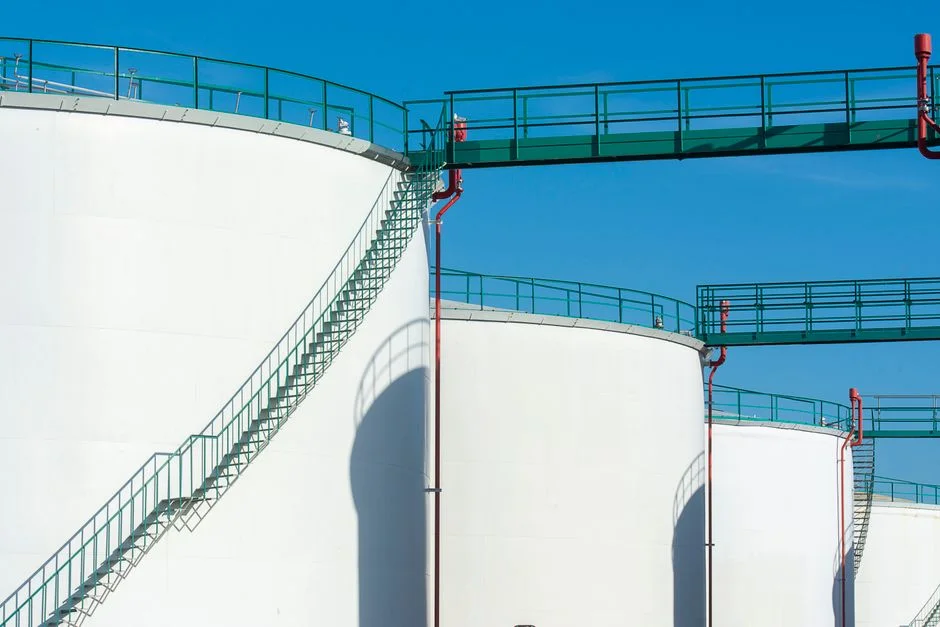
The table below condenses the head-to-head performance for the parameters that matter when an engineer in Grand Rapids sizes a unit for a 4–300 m³/h stream band. Numbers are drawn from the Ecologix 2026 selection guide (95% vs 70% oil and grease removal), the Lenox Institute / Xylem Clari-DAF paper (20 gpm/ft², 82.7% footprint reduction), and standard lamella clarifier design practice.
| Parameter | Dissolved Air Flotation (DAF) | Lamella Clarifier |
|---|---|---|
| Oil & grease removal | ~95% (per Ecologix 2026) | ~70% (per Ecologix 2026) |
| TSS removal (dense inorganics) | 60–80% (float-favorable only) | 85–95% (settling-favorable) |
| Surface / hydraulic loading | Up to 20 gpm/ft² (≈50 m/h) per Clari-DAF | 20–40 m/h on plate area (lamella design range) |
| Hydraulic residence time | 15–30 min typical | 1–3 hr typical |
| Footprint vs conventional settling | ~17% of conventional basin area (82.7% reduction) | ~30–40% of conventional via inclined plates |
| Typical chemical demand | Coagulant (PAC) + low-dose flocculant | Flocculant only; up to 30% less chemical by mass |
| CAPEX band (packaged skid, 10–50 m³/h) | Low-to-mid six figures USD installed | ~15–30% below DAF CAPEX |
| OPEX driver | Air compressor + saturator power, chemical | Lower chemical and energy, higher sludge hauling |
| Sludge solids content | 3–6% typical float; higher with thickening | 1–3% underflow; needs thickening before hauling |
Map those numbers onto the three Grand Rapids stream families and the per-stream recommendation follows directly:
- Cathode-coating & electrolyte washdown: fine, low-density solids and solvent residues → DAF system as primary.
- E-coat and paint overspray: FOG-dominated, emulsified paint solids → DAF primary; add a clarifier polish only if metal-bearing rinse joins the line.
- Stamping lube emulsion: dense, broken emulsion with high TSS → HydropureWater lamella clarifier primary, with a DAF polish if free oil breaks through.
- Mixed paint + phosphating: both FOG and metals present → DAF first for FOG and paint solids, lamella clarifier second for metal hydroxide floc.
The 4–300 m³/h capacity band of the DAF covers the typical mid-size Grand Rapids EV cell line or paint shop without parallel trains, which is the sizing assumption used in the rest of this guide.
2026 Compliance Drivers Specific to Grand Rapids
Any technology choice in West Michigan has to clear three regulatory ceilings. EGLE Part 22 wastewater rules govern discharges to the Grand Rapids Water Resource Recovery Facility and typically cap oil and grease at ≤100 mg/L daily max for industrial streams, with TSS, pH, and metals enforced through local limits. The federal anchor for metal products work is 40 CFR Part 433 — illustrative daily-max ceilings include lead 0.69 mg/L, cadmium 0.69 mg/L, nickel 3.98 mg/L, and total chromium 2.77 mg/L — while 40 CFR Part 436 covers metal finishing rinse lines (per EPA categorical standards, current as of 2026-01).
The Ecologix 2026 update to its DAF-vs-clarifier guide explicitly refreshed these benchmarks and noted that DAF effluent on paint and cathode streams typically lands below the FOG ceiling without secondary polishing, whereas clarifier effluent on the same streams often misses the daily-max FOG number and needs a DAF polish stage. For a lamella clarifier handling an EV/auto mixed wastewater, FOG breakthrough is the failure mode to plan around; for a DAF on the same stream, the failure mode is usually a metals excursion that a downstream clarifier or media filter catches.
Procurement teams sometimes push back on DAF selection as "engineering preference." The 2026 numbers remove that objection: when FOG is on the permit and the stream is buoyant-favorable, a clarifier alone is a compliance risk. The same logic applies in reverse for dense inorganic sludge with metals in the panel — a DAF alone misses the TSS ceiling.
A Practical Decision Tree for Grand Rapids EV/Auto Plants
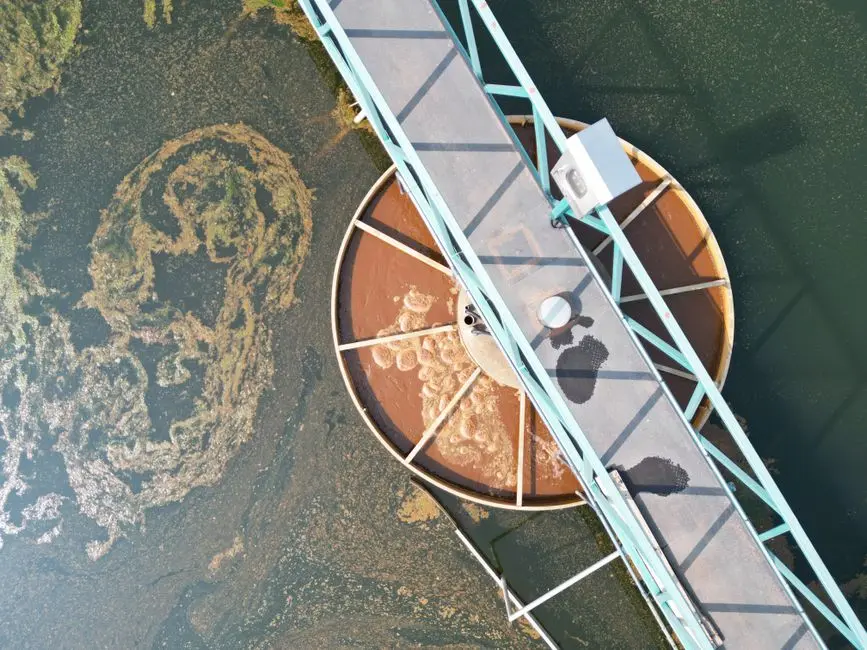
The flowchart below is what a process engineer should run on Monday morning with the most recent weekly composite sampler report in hand. Six steps, each with a measurable gate.
- Measure: total flow (m³/h), FOG (mg/L), TSS (mg/L), pH, temperature, and a metals panel (Pb, Cd, Ni, Cr, Al, Li).
- Pick the dominant stream: FOG > 50 mg/L and TSS < 500 mg/L → DAF primary. TSS > 1,000 mg/L and mostly inorganic → lamella clarifier primary. FOG > 50 mg/L and TSS > 1,000 mg/L → DAF first, clarifier polish.
- Size the unit: use surface loading as the design constraint — DAF ≤ 20 gpm/ft² (Clari-DAF, 2019); lamella 20–40 m/h on plate area (HydropureWater catalog).
- Decide on chemistry: DAF typically needs coagulant (PAC 50–150 mg/L) plus a flocculant dose; lamella can run flocculant-only with up to 30% lower chemical mass. A packaged automatic chemical dosing skid keeps the curves stable across shift changes.
- Check footprint: a single 50 m³/h DAF unit replaces roughly five times the basin area of a conventional clarifier (82.7% reduction per Clari-DAF), which matters in tight Grand Rapids industrial parks where setbacks and access roads already constrain the treatment pad.
- Plan sludge handling: route float or underflow to a plate-and-frame filter press for dewatering to 25–35% dry solids before disposal; float from a DAF typically dewaters more easily than clarifier underflow.
| Stream Profile | FOG / TSS | Primary | Polish Stage |
|---|---|---|---|
| Cathode coating / electrolyte wash | Low FOG, fine TSS | DAF | Media filter for Li/Ni if needed |
| E-coat / paint overspray | High FOG, moderate TSS | DAF | Optional clarifier for paint solids |
| Stamping lube emulsion | Moderate FOG, high dense TSS | Lamella clarifier | DAF polish for free oil |
| Mixed paint + phosphating | High FOG, high metals TSS | DAF | Lamella clarifier for metal floc |
| Parts washing (alkaline + lube) | Moderate FOG, moderate TSS | DAF or lamella (jar-test) | DAF or clarifier as needed |
2026 Cost and Footprint Reality Check for Grand Rapids
Procurement will ask two questions first: what does it cost, and what does it displace. The directional bands below are consistent with the Ecologix 2026 guide's note that DAF carries higher upfront cost but can be more cost-effective for oily streams, and that clarifiers generally have lower operational cost where chemistry is light.
CAPEX. A packaged DAF skid in the 10–50 m³/h range typically lands in the low-to-mid six figures USD installed, including the air saturator, recycle pump, and controls. A comparable lamella clarifier skid lands roughly 15–30% below DAF CAPEX because there is no saturator, no recycle pump, and the plate pack is the only internal structure. These are ranges, not quotes — confirm with a current vendor proposal.
OPEX. Clarifier OPEX is lower where chemistry is light and sludge volume is moderate. DAF OPEX rises with the air compressor and saturator power plus coagulant and flocculant, but is partly offset by higher float solids (3–6%) which cuts sludge hauling cost per ton of dry solids. The net is usually a wash on OPEX for streams with strong FOG loading; the differentiator is footprint and compliance headroom.
Space. The 82.7% footprint reduction figure (Clari-DAF) often outweighs the DAF CAPEX premium in Grand Rapids, where industrial parcels along the I-96 and US-131 corridors are tight and treatment pads must share space with truck courts and stormwater controls. A single 50 m³/h DAF system displaces roughly five times the basin area of a conventional clarifier; a HydropureWater lamella clarifier displaces roughly two to three times.
2026 fast-deployment option. For plants still in construction or commissioning, a mobile DAF can be delivered and brought online within a single day, on a frac-tank trailer with no permanent foundation (per the WesTech mobile DAF spec sheet). This buys six to twelve months of operating data and treated-effluent sampling while the permanent system is engineered, permitted, and installed — a useful 2026 hedge against schedule slip on the building pad.
Frequently Asked Questions
DAF vs clarifier for EV/auto wastewater: which removes more oil and grease?
DAF removes roughly 95% of oil and grease on a typical paint-shop or cathode-coating stream, while a clarifier on the same stream removes about 70% (per the Ecologix 2026 selection guide). On that basis alone, DAF is the better FOG unit; clarifier wins on dense inorganic TSS.
How do I pick between DAF and a lamella clarifier for a Grand Rapids EV/auto plant?
Run the six-step decision tree above: measure FOG, TSS, and metals; choose DAF primary when FOG is the controlling limit and clarifier primary when dense inorganic TSS is the controlling limit; add a polish stage of the other technology when both populations are present. The 4–300 m³/h capacity band of a DAF covers a typical mid-size cell line without parallel trains.
Can a DAF and a clarifier be used together?
Yes, and for paint + phosphating streams in Grand Rapids it is the standard configuration: DAF first to remove FOG, paint overspray, and cathode fines, then a lamella clarifier to settle the metal hydroxide floc that the DAF leaves behind. The hybrid reliably meets both the FOG daily max under EGLE Part 22 and the metals ceilings under 40 CFR Part 433/436.