Why Billings petroleum bulk wastewater behaves differently from generic industrial streams
Petroleum bulk wastewater in the Billings, Yellowstone County area is dominated by free oil, emulsified oil, slop oil, tank-bottom water, and produced-water streams. The EPA-450/3-79-019 refinery survey lists "Slop Oil Emulsion Solids" as Stream 1 and "Dissolved Air Flotation Skimmings" as Stream 9 among the 20 priority petroleum-refinery waste streams. The Billings, MT Continental Oil (Conoco) refinery is identified as Refinery #7 in EPA Table 3-1 of that same survey, confirming that the Billings market has historical and current petroleum-handling infrastructure that generates oil-loaded wastewater requiring primary treatment. Bulk terminals, tank farms, and small refinery pretreatment skids in the Billings climate routinely see winter ambient temperatures that lift oil viscosity and slow gravity-driven separation, so a unit that relies on Stokes-law settling will underperform the same unit on a Gulf Coast or Sun Belt feed. Bulk wastewater is also slug-loaded — a slug from a tank-bottom pump-out, a rail-car unloading event, or a desalter upset can spike oil content in minutes — so the primary unit must tolerate shock loads and emulsion spikes without passing the spike downstream.
How DAF and clarifiers actually separate oil and solids
A dissolved air flotation (DAF) system pressurizes a side-stream of clarified effluent, saturates it with air at 60–80 psig, and releases that recycle into the flotation cell, where the dissolved air comes out of solution as a cloud of micro-bubbles typically 10–100 µm in diameter. These bubbles attach to oil droplets and chemically conditioned floc, lifting the float to the surface where a skimmer removes it. The mechanism handles the contaminant fraction a clarifier cannot: free oil, emulsified oil, FOG, fiber, and low-density solids (per Spectrum Water, 2026 product literature).
A clarifier (gravity settler, lamella, or API separator) relies on Stokes-law settling: a particle settles when its density is greater than the surrounding water, with terminal velocity proportional to the density difference and the square of the particle diameter. Stokes-law settling works for heavy, dense grit and biological floc, but it cannot break oil emulsions or lift low-density solids; oil and FOG tend to slip through a clarifier or accumulate as a rag layer at the surface. The Flotation Technology handbook (Ali, Springer/Humana, doi:10.1007/978-1-60327-133-2) explicitly distinguishes "Dissolved Air Flotation Clarifier" and "Secondary Sedimentation Clarification" as separate unit operations — the two technologies are not interchangeable, and treating them as substitutes for the same duty is the root cause of most failed petroleum-pretreatment skids. Selecting the correct technology requires understanding how these mechanisms perform under specific site conditions.
DAF vs clarifier: a 2026 selection matrix for oil-loaded streams
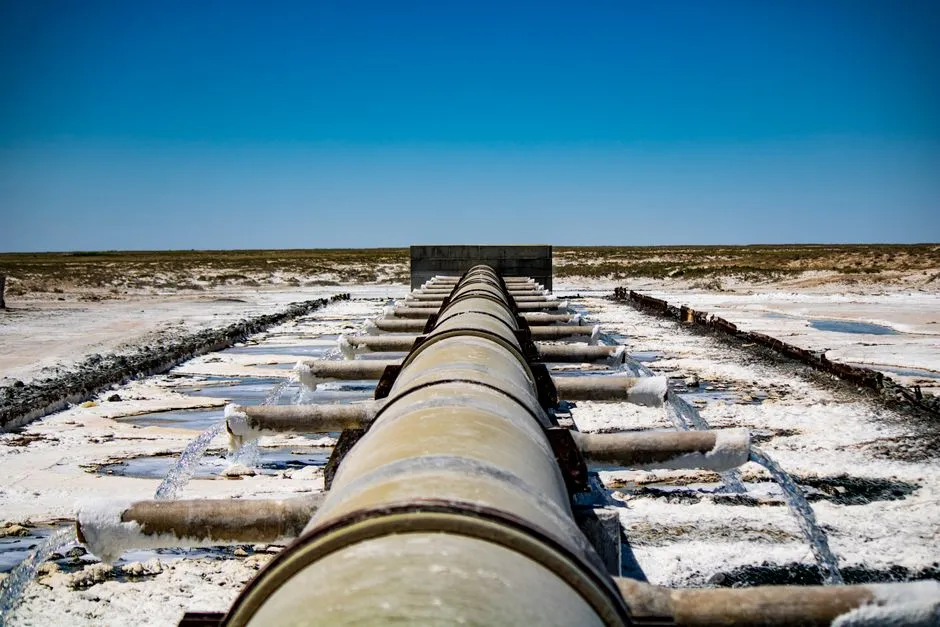
The table below provides the data a Billings engineer can use for a 2026 capex memo. Removal numbers come from the Ecologix 2026 DAF-vs-clarifier selection guide; physical parameters reflect typical industrial ranges observed in field commissioning (HydropureWater field data, 2025–2026).
| Parameter | DAF | Gravity / Lamella Clarifier |
|---|---|---|
| Removal mechanism | Micro-bubble flotation of oil and low-density solids | Gravity settling of dense solids |
| Target contaminant | Free & emulsified oil, FOG, TSS, fiber | Heavy sediment, grit, biological floc |
| Oil & grease removal | ~95% (Ecologix 2026) | ~70% (Ecologix 2026) |
| TSS removal on heavy sediment | 70–85% | ~90% (Ecologix 2026) |
| Hydraulic loading rate | 3–6 gpm/ft² (high overflow rate) | 0.5–1.5 gpm/ft² conventional; 20–40 m/h lamella |
| Retention time | 5–15 minutes | 2–4 hours |
| Footprint | Compact (small footprint for the same gpm) | Large (large footprint, civil-heavy) |
| Polymer / coagulant demand | 2–10 mg/L polymer typical for oil streams | Lower polymer demand; floc-only on sediment |
| Freeze protection (Billings winter) | Enclosed skid; air saturator indoors; trace heat on recycle | Open tank; exposed launder; ice management required |
| Capex signal | $15–40 per gpm installed (packaged, 2026 market) | $8–20 per gpm installed (civil-built, 2026 market) |
| Opex signal | Compressed air + polymer + skimmer drive | Rake/torque + sludge pumping, lower energy per gallon |
| Best fit | Oil, FOG, emulsified streams; slug loads | Heavy sediment, produced water, sludge thickening |
| Spec example | HydropureWater DAF system | HydropureWater lamella clarifier |
The verdict per row: oil & FOG → DAF primary; heavy grit and produced water → clarifier; mixed stream → DAF primary with a clarifier as downstream sludge thickener. The 5–15 minute DAF retention versus the 2–4 hour clarifier retention is the biggest footprint differentiator and the reason most 2026 capex projects inside tank-farm berms default to a packaged DAF. For the packaged DAF row, the spec anchor is the HydropureWater DAF system; for the clarifier row, the spec anchor is the HydropureWater lamella clarifier.
40 CFR Part 413 and Part 403: the compliance lens that locks in the choice
Refineries and bulk petroleum-handling facilities discharging to a publicly owned treatment works (POTW) must satisfy 40 CFR Part 413 (the petroleum refining category) on top of 40 CFR Part 403 (general pretreatment standards). Part 413 sets subcategory-specific limits for oil & grease, TSS, and COD, and Part 403 prohibits pass-through and interference. Oil & grease is the parameter that most often pushes a Billings discharger out of compliance when a clarifier is the only primary step: a clarifier's ~70% oil & grease removal frequently cannot reach a 50 mg/L or lower daily-max oil & grease target on a slop-oil or tank-bottom stream (Ecologix 2026). The EPA refinery waste survey (EPA-450/3-79-019) flags DAF skimmings and API separator sludge as high-VOC, high-hydrocarbon streams that must be captured, not released, reinforcing the need to float oil off upstream of any clarifier. In most 2026 petroleum trains, the clarifier belongs downstream as a sludge-thickening or polishing step, but it should not be the first unit the oil sees. For context on how this compliance lens is applied elsewhere in the region, see the Montana petroleum pretreatment compliance guide and the comparable petroleum pretreatment compliance across other U.S. basins.
Billings-specific sizing, climate, and sludge-handling notes
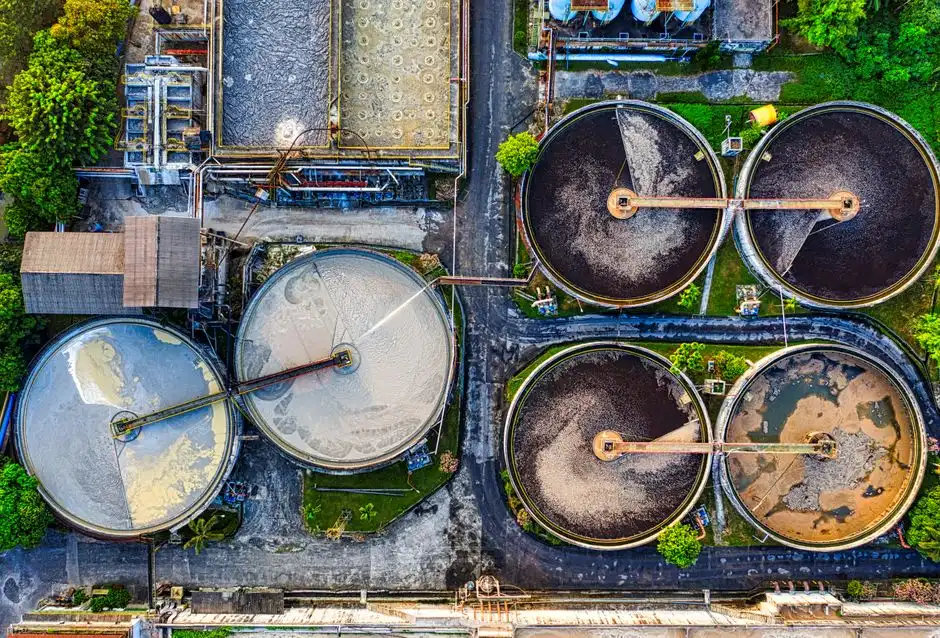
Winter operations are the largest local variable. As ambient temperatures drop, oil viscosity rises and free oil tends to emulsify faster in cold pipework and cold equalization basins, which slows gravity overflow in a clarifier and shifts more of the oil-removal burden onto chemistry and bubble attachment in a DAF. A DAF saturator and recycle line in a Billings skid should be located in a heated enclosure or trace-heated, and the float-skipper should be checked more frequently in winter because the skimmed float thickens at low temperature. On the sludge side, a DAF typically produces a 3–6% solids float of oil and FOG that is not directly dewaterable in a plate-and-frame press without a thickening step — for a packaged train, a HydropureWater plate and frame filter press handles the dewatering after the float is conditioned. Chemical conditioning is necessary: a DAF is only as effective as its coagulant/flocculant program, so a HydropureWater automatic chemical dosing skid ships as part of the unit. For facilities near the Yellowstone River, the surface-water sheen risk from an underperforming primary step is the legally and reputationally safer reason to capture oil upstream of any clarifier — sheen events on a receiving water routinely trigger state and federal follow-up that costs more than a correctly sized DAF.
When a clarifier is still the right answer in 2026
A clarifier is the right primary choice when the petroleum bulk stream is dominated by heavy sediment, sand, and produced water with very low oil & grease. In that case, a lamella clarifier at 20–40 m/h surface loading, like the HydropureWater lamella clarifier, is the lower-capex, lower-opex unit. Clarifiers also win as a secondary sludge thickener behind a DAF, or as a polishing step on biologically treated effluent, where they catch what the biology sheds. For very large equalization basins, a civil-built clarifier can be the cheaper civil-structure option, with a DAF retrofit planned for when oil & grease drives surcharges. The 2026 rule of thumb: oil & grease above ~200 mg/L in the feed → DAF primary; below that with high TSS and dense sediment → a clarifier may suffice, and a side-by-side DAF vs clarifier in mining wastewater comparison shows the same logic carries across heavy-sediment duty classes.
Frequently Asked Questions
DAF or clarifier for oil and grease?
DAF, with ~95% oil and grease removal versus ~70% for a clarifier on the same stream (per Ecologix 2026). For free and emulsified oil, the bubble-flotation mechanism is the correct tool; gravity settling cannot break emulsions.
Can a clarifier hit refinery oil and grease limits on its own?
Rarely on slop-oil or tank-bottom streams. 40 CFR Part 413 sets oil & grease limits by subcategory, and a clarifier's ~70% removal (per Ecologix 2026) usually cannot reach a 50 mg/L or lower daily-max target on a high-oil feed.
What regulation applies to Billings petroleum bulk wastewater?
40 CFR Part 413 (petroleum refining category) plus 40 CFR Part 403 (general pretreatment standards), enforced through the local POTW's sewer-use ordinance. Part 413 sets the subcategory limits; Part 403 controls pass-through and interference.
Is a DAF worth the higher opex?
Yes, when oil and FOG drive POTW surcharges or surface-water sheen risk. The comparison is avoided surcharge plus avoided sheen-event liability versus higher compressed-air and polymer cost; in most Billings capex cases, the avoided surcharge pays back the DAF opex delta in months.
What pretreatment chain is standard in 2026?
Screening → equalization → DAF primary → clarifier (sludge thickening) or biological treatment → disinfection or RO polishing. The DAF sits upstream of any clarifier when oil and FOG are present, which is the standard for petroleum bulk wastewater.