Why Aluminum Processing Wastewater Is Hard to Treat
Three wastewater streams dominate the aluminum sector, and each one punishes a single-step treatment train. Anodizing bath bleed-off carries 50–200 mg/L free fluoride, 200–800 mg/L dissolved Al³⁺, and 500–3,000 mg/L sulfate from the sulfuric acid electrolyte. Smelter scrubber blowdown arrives saturated with suspended alumina (often 1,000–4,000 mg/L TSS) plus HF and SO₂ scrubber residuals that depress pH to 2–3. Rolling-mill and alloy pickling rinse water adds the co-metals that complicate discharge permits: zinc (atomic weight 65.4), chromium (52.0), nickel (58.7), and copper (63.5) — all sitting inside the 63.5–200.6 atomic-weight range typical of regulated heavy metals (S5).
Lime precipitation handles the bulk, but it stalls at the wrong window for the engineer. CaF₂ chemistry leaves 5–30 mg/L fluoride in solution because CaF₂ solubility bottoms out around that level; the same precipitate pathway co-precipitates calcium sulfate scale that fouls clarifiers. Dissolved Al³⁺ remains in the 1–10 mg/L range after settling, well above the 0.4 mg/L benchmark that lets effluent meet drinking-water acceptance limits. Worldwide, more than 750 million m³ of fluoride-bearing industrial wastewater is generated every year — roughly 0.6–1.6 m³ per ton of product — so the polishing gap is not a niche problem (per S4, Environmental Science and Pollution Research, 2021).
How Ion Exchange Works in an Aluminum Wastewater Train
Ion exchange is a bead-level swap: a synthetic polymer matrix holds counter-ions that the target contaminant displaces as feed water passes through the bed. Three families cover the aluminum wastewater matrix. Strong-acid cation (SAC) resins in the Na⁺ or H⁺ form grab dissolved Al³⁺, Ca²⁺, Mg²⁺, and any Zn²⁺/Ni²⁺ leaking past precipitation; sulfate and fluoride pass through untouched. Weak-base anion (WBA) resins in the free-base form pick up F⁻ and SO₄²⁻ once feed pH sits below 8, but they lose working capacity above pH 7 because the tertiary amine deprotonates. Chelating resins — iminodiacetic (IDA) and aminomethylphosphonic (AMPA) functional groups — lock onto specific metals through multi-dentate coordination and, when pre-loaded with Al³⁺, exchange the bound Al for F⁻ during the polishing step. In the S4 study, Cl⁻ ions loaded on Al-doped TP260 were exchanged for F⁻ on the resin, driving effluent fluoride below 1 mg/L from a 26.7 mg/L feed (per S4, 2021).
Resin format matters as much as chemistry. Macroporous and magnetic resins shorten diffusion paths, which can shrink vessel volume 20–40% for the same duty — relevant when an existing clarifier deck leaves little floor space for a polishing skid (S1, Springer, 1985). Before any resin sees feed water, suspended solids and free oil have to come out: the S4 bench protocol used a 0.45-μm membrane filter, and full-scale plants typically run 10–25 μm multi-media filtration ahead of the bed to prevent blinding and organic fouling.
Resin Selection: Strong-Acid, Weak-Base, and Aluminum-Doped Chelating Resins Compared
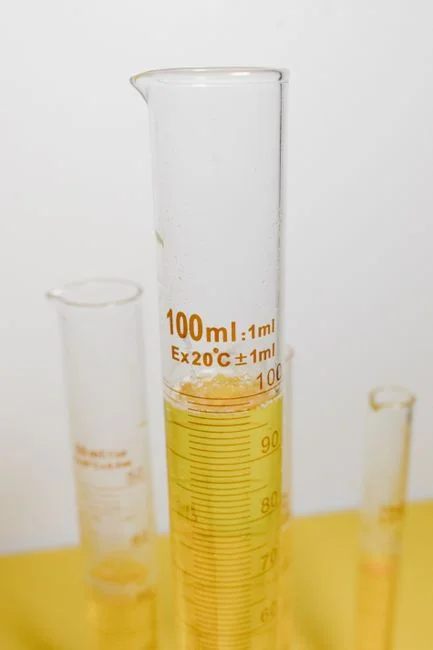
This table is the working artifact for resin selection. Working capacities are vendor-typical ranges for a feed in the 1,000–2,000 mg/L TDS band; site piloting at 300 mL scale (per the S4 method) should confirm the actual number before procurement.
| Resin type | Target contaminants | F⁻ vs. SO₄²⁻ selectivity | Operating pH window | Working capacity (eq/L) | Regenerant | Fouling risk |
|---|---|---|---|---|---|---|
| Strong-acid cation (SAC, gel/macro) | Al³⁺, Ca²⁺, Mg²⁺, Zn²⁺, Ni²⁺ | Does not load F⁻ or SO₄²⁻ | 0–14 | 1.8–2.2 | 4–8% HCl or 8–12% NaCl | Iron oxide, silica |
| Weak-base anion (WBA, macroporous) | F⁻, SO₄²⁻, organic acids | Prefers SO₄²⁻ over F⁻ at equal normality | 0–7 | 1.0–1.4 | 4% NaOH | Humic acids, oils |
| Al-doped iminodiacetic (e.g., TP207) | F⁻ (via Al–F exchange), Cu²⁺, Ni²⁺ | High F⁻ uptake once Al³⁺-loaded | 2–6 | 0.8–1.2 (as F⁻ capacity) | 5–10% AlCl₃ re-doping + NaOH | Organic load, Fe³⁺ competition |
| Al-doped AMPA (e.g., TP260) | F⁻, heavy metals (Cd, Cu, Zn, Pb) | Higher F⁻ removal than IDA at equal dosage | 2–6 | 0.9–1.3 (as F⁻ capacity) | 5–10% AlCl₃ re-doping + NaOH | Organic load, Fe³⁺ competition |
Two field-tested points sharpen the decision. In the S4 work, Al-doped TP260 outperformed Al-doped TP207 on F⁻ removal at every matched resin dosage, with the gap widening above 10 g/L — the practical bench test delivered <1 mg F⁻/L effluent at 10 g/L dosage, and saturation behaviour diverged most clearly at 20–25 g/L (S4, 2021). For plants whose rinse water carries oily rolling emulsion or pickle liquor organics, plan for the documented 30% capacity loss seen in conventional resins exposed to organic matter (S4, citing 2006 literature). The good news for chelating kinetics: a hydroxypropyl chitosan-based chelating system (HACC) can clear more than 99% of Cd²⁺, Cu²⁺, Zn²⁺, and Pb²⁺ from a composite-spiked feed in 50 minutes when residence time is the bottleneck (S5, ScienceDirect, 2022).
Designing the Ion Exchange Skid for an Aluminum Plant
The canonical train runs equalization → pH adjustment → multi-media filtration → carbon polish (if COD > 200 mg/L) → cation unit → chelating or anion unit → rinse recycle. Target pH 5–6 ahead of the chelating bed so the amine/carboxylate sites stay protonated and Al³⁺ stays in solution; the SAC bed wants pH 7–8 to keep hardness ions dissociated and avoid Al(OH)₃ precipitation inside the bed. Use multi-media filtration ahead of the ion exchange bed to drop TSS below 5 mg/L, then run PLC-controlled chemical dosing for pH adjustment and regeneration so the regenerant strength does not drift.
Start resin dosage at 10 g/L for polishing duty after a working lime clarifier — that was the S4 bench condition that produced <1 mg F⁻/L effluent and held Al below 0.4 mg/L across cycles. Push to 20–25 g/L when feed fluoride climbs past 30 mg/L or when residence time is constrained by a tight hydraulic profile. Operate two columns in parallel (one in service, one in regeneration/standby) for continuous duty, and design for a 4–6 hour service cycle before breakthrough; this lets one shift regenerate while the other polishes. Before any full-scale purchase, replicate the S4 300 mL bench protocol at site temperature and TDS, because kinetics shift measurably below 15 °C.
Regeneration, Resin Life, and Operating Cost in 2026
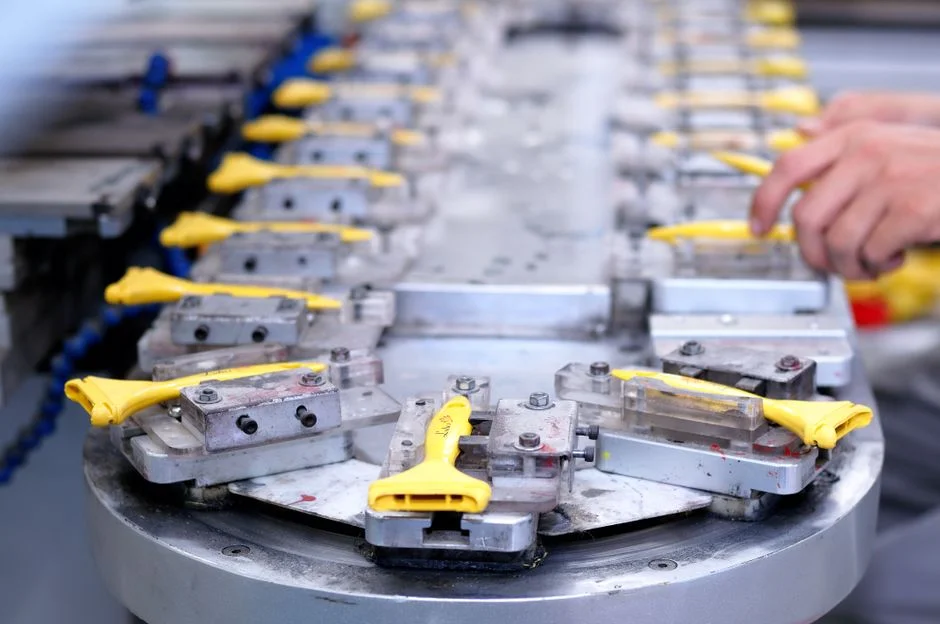
Regeneration chemistry is where OpEx lives or dies, and it is also where 2026 chemical pricing will make or break the resin business case. The table below summarizes the inputs you need to build a per-m³ cost model.
| Resin / cycle step | Regenerant | Typical strength | Bed volumes per cycle | Indicative 2026 chemical band (USD/kg) | Operating note |
|---|---|---|---|---|---|
| SAC cation | HCl | 4–8% | 2–4 | 0.18–0.32 (32% tech grade) | Co-flow acceptable; counter-flow saves 20–30% chemical |
| WBA anion | NaOH | 4% | 2–4 | 0.45–0.75 (50% liquid) | Warm NaOH (35–40 °C) raises capacity ~15% |
| Al-doped chelating re-doping | AlCl₃ + NaOH | 5–10% AlCl₃ | 2–3 | AlCl₃·6H₂O: 1.10–1.60; NaOH: 0.45–0.75 | Re-dope every 5–15 cycles depending on F⁻ load |
Translated into a per-m³ treated figure using the resin-dosing envelope above (10 g/L polishing, 20–25 g/L for higher-F feeds), 2026 regeneration cost typically lands in the USD 0.35–1.10 per m³ treated band for SAC duty, USD 0.55–1.40 per m³ for WBA, and USD 1.40–2.80 per m³ for Al-doped chelating with periodic re-doping. The Al-doped premium reflects the cost of AlCl₃·6H₂O, which has run 20–35% above 2024 averages through 2025–2026 on titanium-co-product supply tightness. Across the S4 cycling data, effluent Al stayed under 0.4 mg/L even after repeated regeneration — so the chelating resin can be reused rather than discarded when re-doping is part of the routine (S4, 2021). Typical resin life is 3–5 years for chelating grades and 5–8 years for SAC under disciplined pretreatment; regeneration chemistry drives roughly 60–70% of lifetime OpEx, which is why PLC-controlled chemical dosing pays back fastest on the regenerant skid.
When to Choose Ion Exchange Over RO or Electrocoagulation
The decision rule comes down to three questions: what is the target, what is the feed TDS, and what is the plant's tolerance for brine volume. Pick ion exchange when the goal is selective polishing of dissolved metals and fluoride, feed TDS is moderate (under 2,000 mg/L), and the plant values a small brine footprint over a large permeate stream. The Bolto and Pawlowski review in the Springer wastewater-recycling literature makes the case bluntly — ion exchange has "greater utility for the treatment of wastewater than is currently realised," largely because conventional flowsheets leave it out of the tertiary slot (S1, 1985). Pick RO when the goal is full water reuse and discharge TDS is regulated below 500 mg/L; the downstream RO step for closed-loop reuse handles dissolved solids ion exchange cannot, at the cost of a 25–35% reject stream. Pick electrocoagulation when feed fluoride is below 10 mg/L and sludge disposal is cheap, because the technology excels in that band and falls off as fluoride climbs.
For procurement defense, the strongest configuration is hybrid: ion exchange polishing immediately after lime precipitation, with RO added only if the plant is committed to closed-loop reuse. A well-designed chelating skid drops F⁻ to <1 mg/L and Al to <0.4 mg/L without the high-pressure pumping and concentrate disposal that drag RO into CapEx debates. When the alloy line adds regulated co-metals, the same chelating bed — selected for AMPA functionality — recovers Zn, Cu, Ni, and Pb alongside fluoride, consolidating what would otherwise be two or three polishing stages. For cross-references on co-metal trains, see the chromium and mixed heavy-metal treatment process guide, the zinc and alloy-metal removal in mixed wastewater ROI model, and the broader industrial heavy-metal removal process selection framework.
Frequently Asked Questions
What effluent fluoride and aluminum limits can a polishing ion exchange train realistically meet?
With Al-doped AMPA resin at 10 g/L dosage, fluoride drops from 26.7 mg/L to below 1 mg/L, and effluent aluminum stays under 0.4 mg/L — below the 0.4 mg/L acceptance benchmark used in the S4 study and consistent with WHO drinking-water guidance for aluminum.
What is the typical OpEx for running an ion exchange polishing skid in 2026?
Regeneration-driven OpEx runs USD 0.35–1.10 per m³ for strong-acid cation duty, USD 0.55–1.40 per m³ for weak-base anion, and USD 1.40–2.80 per m³ for Al-doped chelating with periodic AlCl₃ re-doping — driven mainly by 2026 HCl at USD 0.18–0.32/kg, NaOH at USD 0.45–0.75/kg, and AlCl₃·6H₂O at USD 1.10–1.60/kg.
How long does chelating resin last in an aluminum wastewater service, and how do I extend it?
Chelating resins typically last 3–5 years versus 5–8 years for strong-acid cation under disciplined pretreatment. Drop TSS below 5 mg/L with multi-media filtration, hold feed pH in the resin's working window, and re-dose with AlCl₃ every 5–15 cycles to keep the F⁻-exchange sites loaded; this routine held Al below 0.4 mg/L across multiple cycles in the S4 bench work.