
What an Ultrafiltration System Does in a Hotel Wastewater Train
An ultrafiltration system for hotel wastewater design in 2026 is engineered as a submerged 0.1 µm PVDF membrane module operating inside a membrane bioreactor (MBR), delivering reuse-quality permeate of COD ≤30 mg/L, BOD ≤5 mg/L, TSS ≤5 mg/L, and turbidity ≤1 NTU at a design flux of 15–25 LMH. Per the Racoman glossary, ultrafiltration is a pressure-driven membrane barrier with pore sizes from 0.001 to 0.1 µm that physically rejects suspended solids, bacteria, viruses, endotoxins, and most colloids — far tighter than the 5–10 µm that conventional activated-sludge clarifiers can guarantee. In a submerged MBR, the membrane sits directly in the aeration tank, eliminating the secondary clarifier, the sand filter, and most of the tertiary hardware that conventional hotels still operate in parallel.
Field performance is documented at the Trident Nariman Point 800 KLD UF-MBR in Mumbai: 98.13% TSS, 96.34% BOD, 88.63% COD, 77.38% TN, and 84.80% TP removal, with complete elimination of Total and Fecal Coliforms confirmed by Membrane Filtration Technique analysis (per the Trident case study, S1). That dataset is the closest publicly available field benchmark for a luxury urban hotel, and the numbers anchor the design envelope in the sections that follow. Hotels are uniquely suited to submerged UF-MBR because their flows carry 2–3× diurnal peaks from breakfast rushes and banquets, intermittent FOG and surfactant spikes from kitchens and on-site laundry, and a year-round sewage temperature of 18–28 °C that holds biological kinetics stable. Tightening 2026 reuse mandates in the UAE, Saudi Arabia, and Singapore — alongside stricter local discharge limits — have made conventional activated-sludge effluent non-compliant without expensive tertiary polishing, which is why submerged MBR is now the hospitality default. The full MBR for hotel wastewater design 2026 engineering specs and cost guide covers the integrated train in greater detail.
Hotel Sewage Characteristics Every Designer Must Lock In First
Hotel sewage is medium-strength and stays predictable across regions when the influent envelope is locked before any m² of membrane is ordered (HydropureWater field data, 2026). The table below gives the working bands for a 2026 design; every parameter drives either biological kinetic sizing or membrane flux sizing downstream.
| Parameter | Typical Range | Design Implication |
|---|---|---|
| COD | 400–800 mg/L | Aeration tank load and blower kW |
| BOD | 200–400 mg/L | Food-to-microorganism ratio, SRT |
| TSS | 200–350 mg/L | MLSS ceiling, membrane flux |
| Oil and grease | 40–80 mg/L | DAF pre-treatment required upstream |
| NH₃-N | 20–50 mg/L | Nitrification volume, alkalinity demand |
| Surfactants (LAS) | 5–15 mg/L | Foaming control, MLSS tolerance |
| Sewage temperature | 18–28 °C | No reactor heating required |
Hydraulic sizing starts from guest-nights, not from population equivalent, because occupancy and per-guest water use dominate every other variable. Use 150–250 L per guest-night average and 350–450 L peak; luxury resorts trend higher once spa, laundry, and pool backwash are counted. Occupancy assumptions: 1.5–2.0 guests per occupied room, 0.6–0.85 seasonal occupancy for resort hotels, 0.85–1.0 for business hotels (per HydropureWater 2026 design bands). Worked example: a 200-room business hotel at 85% occupancy × 1.7 guests × 200 L = 57.8 m³/day average, and 115 m³/day design flow once a 2.0 peaking factor is applied. FOG and surfactant load from kitchens and on-site laundry must be treated as a separate upstream design constraint — these compounds foul membranes within weeks if not tamed first.
The 2026 Process Flow: From Kitchen Drain to Reuse-Quality UF Permeate
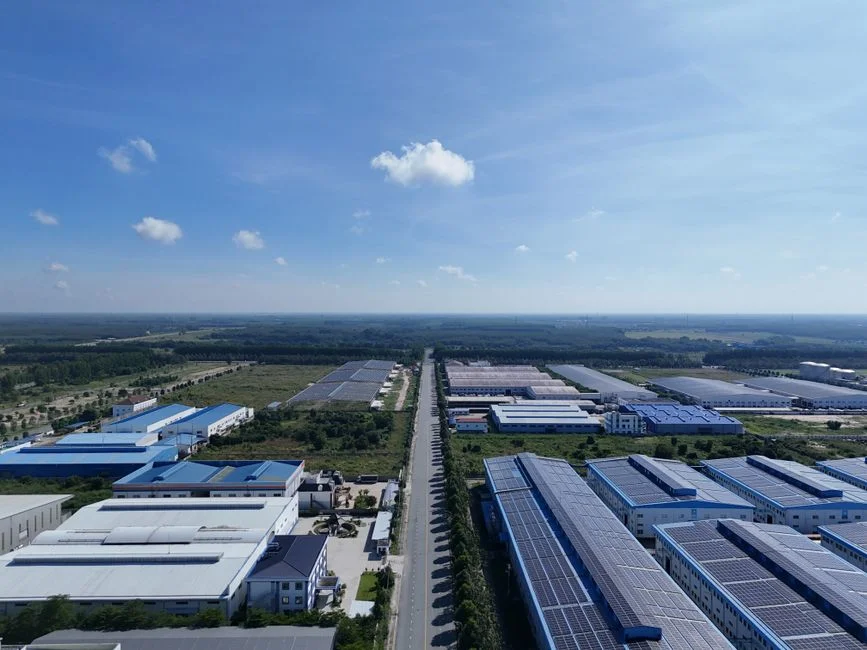
The full process train a designer draws on a hotel P&ID runs in five stages, and each stage has a defensible removal target rather than a generic label.
- Rotary mechanical bar screen (e.g. GX-series rotary mechanical bar screen) — strips rags, hair, and fibrous cleaning wipes at 2–5 mm aperture before they reach the membrane tank.
- DAF pre-treatment — a dissolved air flotation (DAF) pre-treatment unit (4–300 m³/h) cuts oil and grease below 30 mg/L and protects the downstream membrane life.
- Anoxic + aerobic biological zone — single MBR tank, no separate clarifier; HRT 6–10 h, SRT 20–40 days, MLSS 8,000–12,000 mg/L.
- Submerged 0.1 µm PVDF flat-sheet UF module — operating at 15–25 LMH inside an integrated MBR membrane bioreactor system, using the DF-series PVDF flat-sheet MBR membrane module at 80–225 m² per stack.
- Polishing disinfection — chlorine dioxide at 1.5–2.5 mg/L with a 30-minute CT from a chlorine dioxide generator, or UV at 40 mJ/cm² for sites that avoid residual chlorine.
The Trident field dataset maps directly onto this train: complete coliform elimination occurs at the membrane, while COD and BOD removal happen upstream in the bioreactor, which is why membrane integrity — not disinfection — is the reuse compliance gate. The deeper equipment selection logic is laid out in the MBR for hotel wastewater design 2026 engineering specs and cost guide.
Sizing the Ultrafiltration Membrane: Flux, Area, and Aeration
The design envelope for 50–500 m³/day hotel flows on a submerged flat-sheet MBR is aeration-tank HRT 6–10 h, SRT 20–40 days, and MLSS 8,000–12,000 mg/L — roughly 2–3× the MLSS of conventional activated sludge, which is precisely what makes the downstream membrane flux stable. Design flux is 15–25 LMH on 0.1 µm PVDF flat-sheet, with a 30 LMH short-term allowance for banquet or event surge days. Worked calculation: 120 m³/day peak flow ÷ 20 LMH ÷ 24 h × 1000 = 250 m² of membrane area required, and two DF-series PVDF flat-sheet MBR membrane modules at 125 m² each deliver this with one full module held as installed redundancy.
Aeration demand splits into 0.3–0.5 m³ of air per m³ of permeate for biological oxygen transfer plus 0.2–0.3 m³/m³ for membrane scour — this combined figure drives blower kW sizing and is 10–20× lower than cross-flow hollow-fiber designs because flat-sheet modules rely on rising-bubble scour rather than pumped cross-flow. Observed sludge yield is 0.3–0.5 kg MLVSS per kg COD removed, and the wasted sludge dewatered on a plate-and-frame filter press hits 18–22% DS without an extra thickening stage. The Trident paper documents flux recovery from 27 to 31 L/m²·h after chemical cleaning, which is the operating case for routine CIP being baked into the OPEX rather than treated as a failure event.
Flat-Sheet vs Hollow-Fiber UF for Hotels: The 2026 Decision
Geometry choice matters more in hospitality than in municipal work because hotel sewage carries hair, lint, fibrous cleaning wipes, and food particles that foul hollow-fiber capillaries aggressively. The table below gives the head-to-head comparison an engineer needs to defend the spec in front of a developer.
| Parameter | PVDF Flat-Sheet (DF series) | Hollow-Fiber |
|---|---|---|
| Typical flux | 15–25 LMH (30 LMH peak) | 20–35 LMH |
| Packing density | Lower per m² of plan area | Higher, 1.5–2× plan density |
| Hair/fiber fouling tolerance | High — integrated aeration-box scour | Low — capillaries clog at hair ingress |
| Cleaning regime | Weekly relax + backwash; 6–12 month CIP | Monthly NaOCl + citric acid CIP |
| Element replacement | Individual elements in minutes | Module-level replacement |
| Plant-room retrofit | Tolerates low ceiling clearance | Needs taller service clearance |
| Membrane life | 8–10 years | 5–7 years typical |
| Best-fit flow | 10–200 m³/day (boutique to mid-scale) | >500 m³/day (resort cluster) |
Decision rule for 2026: specify a DF-series PVDF flat-sheet MBR membrane module for 10–200 m³/day — the majority of hotels from boutique to mid-scale; consider hollow-fiber for >500 m³/day resort clusters where footprint per m² of membrane area outweighs fouling tolerance. The MBR for hotel wastewater design 2026 engineering specs and cost guide covers the full module selection logic in greater depth.
Reuse Allocation, Compliance Targets, and Permeate Quality
MBR permeate from a properly designed flat-sheet system is reuse-quality water straight out of the membrane tank: COD ≤30 mg/L, BOD ≤5 mg/L, TSS ≤5 mg/L, turbidity ≤1 NTU, and NH₃-N ≤5 mg/L after nitrification. Typical resort reuse splits the treated flow as toilet flushing 40–50%, landscape irrigation 20–30%, and cooling-tower makeup 15–25%, giving a 60–70% reuse rate; business hotels with limited landscape area typically reach 40–55% reuse. Compliance for 2026 hospitality projects is achievable against China GB 18918-2002 Grade 1A, EU UWWTD 91/271/EEC, US EPA Title 22 §60301 et seq., Singapore PUB "NEWater" criteria, and UAE Federal Law No. 24 of 1999 with local emirate addenda — all of these frameworks map to MBR permeate plus ClO₂ or UV polishing. At $2–$4 per m³ avoided potable purchase, 60% reuse on 100 m³/day saves $44K–$88K annually (HydropureWater 2026 cost bands).
2026 CAPEX and OPEX Bands for Hotel Ultrafiltration Systems
Turnkey CAPEX (USD, including civil works, tanks, MBR modules, blowers, controls, and ClO₂ skid) bands for 2026:
| Hotel Segment | Rooms | CAPEX Range (USD) | Benchmark |
|---|---|---|---|
| Boutique | ≤80 | $80,000–$220,000 | $35–$75 per guest-night |
| Mid-scale | 80–250 | $220,000–$650,000 | $35–$75 per guest-night |
| Resort | 250–500 | $650,000–$1,800,000 | $35–$75 per guest-night |
| Mixed-use | >500 | $1,800,000–$4,500,000 | $35–$75 per guest-night |
OPEX runs $0.18–$0.32 per m³ treated, split as energy 45%, membrane replacement amortized over 8–10 years 25%, chemicals 12%, and labor 18%. Membrane replacement is the largest single OPEX variable, which is why geometry choice and the dissolved air flotation (DAF) pre-treatment unit upstream matter so much. Wasted sludge dewatered on a plate-and-frame filter press hits 18–22% DS without an extra thickening stage. A reuse-capable CAPEX premium pays back in 4–7 years on a 60% reuse allocation at typical hospitality water tariffs. Packaged integrated MBR membrane bioreactor systems collapse civil works and shrink the install footprint on tight urban sites.
Frequently Asked Questions
What MBR size handles a 100-room hotel?
A 100-room business hotel at 85% occupancy × 1.7 guests × 200 L = 28.9 m³/day average, with a 2.0 peaking factor giving ~58 m³/day design flow. One DF-series PVDF flat-sheet MBR membrane module at 80 m² operating at 20 LMH covers this with one stack of installed redundancy.
What reuse percentage is achievable with MBR in a hotel?
Resorts routinely hit 60–70% reuse across toilet flush, landscape irrigation, and cooling-tower makeup; business hotels with limited landscape area typically achieve 40–55%. MBR permeate quality (TSS ≤5 mg/L, turbidity ≤1 NTU) is the enabler for the higher figure.
How often does an MBR membrane need cleaning in a hotel?
Flat-sheet submerged MBR runs 6–12 months between recovery cleans with weekly in-place relax + backwash; hollow-fiber typically needs monthly NaOCl and citric-acid CIP. Pre-treatment with a dissolved air flotation (DAF) pre-treatment unit holds the interval at the long end.
What is the membrane life expectancy in hotel service?
PVDF flat-sheet elements last 8–10 years with proper maintenance, recovery cleans, and FOG control upstream. Membrane replacement amortized over that horizon is the largest single OPEX line in a hotel MBR budget.
Does an MBR replace a septic tank?
Yes — a packaged integrated MBR membrane bioreactor system combines biological treatment and membrane filtration in one unit, replacing septic tank, clarifier, sand filter, and tertiary disinfection, and produces reuse-quality effluent that a septic tank cannot.
How does design differ for a Brisbane hotel in 2026?
Brisbane hotels run warmer sewage (22–30 °C) year-round, which favors biological kinetics, but face stricter state reuse rules; the Brisbane hotel wastewater treatment guide 2026 covers the local compliance overlay. The 15–25 LMH flux envelope and 250 m² membrane area example in this article transfer directly to a 200-room Brisbane property.