
Why Color in Wastewater Is a Compliance Problem, Not Just an Aesthetic One
Color in industrial wastewater is a regulated, measurable parameter, not a cosmetic one. Operators report it in Hazen Units (HU), also called Platinum-Cobalt Units (PCU), on a scale defined by EPA Method 110.2 and equivalent ISO 6271 protocols; one PCU equals one milligram per liter of platinum as chloroplatinate ion, the reference standard. Industrial discharge permits typically cap color between 50 and 200 HU depending on jurisdiction and receiving water body, and a single Notice of Violation for visible color has historically triggered fines ranging from $10,000 to $50,000 per day for non-compliant textile and pulp & paper facilities in the US.
Four industrial sectors dominate the color-load problem. Textile, food processing, cosmetics, and pulp & paper together generate the bulk of strongly colored effluent, with over 10,000 different dyes and pigments in global commercial use as of 2025. Beyond fines, the environmental case is concrete: a 1% reduction in light transmittance at 1 m depth measurably depresses primary productivity in receiving streams, and azo and anthraquinone dyes have documented LC50 toxicity to aquatic fauna in the 1–10 mg/L range (per peer-reviewed textile effluent studies, 2024). Iron and algae can also color effluent but are typically addressed upstream of the color train; this article focuses on synthetic dye and color-body sources.
Where Color Comes From in Industrial Effluents
Diagnosing the dye or pigment class driving your color problem is the first engineering step, because chemistry dictates which unit operations will work. The textile industry is the largest global contributor of colored effluent, driven by synthetic reactive, disperse, acid, and vat dyes; reactive and vat dyes are the most resistant because their covalent or polymeric structures were designed to survive washing and light (per peer-reviewed textile effluent studies, 2024). Acid dyes ionize in water and respond well to charge-based processes like coagulation, while disperse dyes are non-ionic hydrophobic particles that respond to membrane size exclusion rather than chemical precipitation.
Food processing effluents draw color from natural pigments such as beet-derived betalains, anthocyanins from berry processing, and caramelized organics, plus residual additives; these streams are typically biodegradable but very high in dissolved color. Cosmetics and personal care manufacturing produces streams with synthetic dyes and organic compounds that resist conventional biological treatment. Pulp and paper color comes from lignin and chlorinated lignin derivatives formed during bleaching, producing dark brown to black effluent with high molecular weight chromophores. Beverage and tea processing introduces tannins, a class of dissolved organics that create persistent yellow-brown color resistant to simple settling.
The practical mapping is: reactive and vat dyes are most resistant and usually need AOPs or activated carbon; acid dyes respond to coagulation; disperse and macromolecular color bodies respond to membrane separation; tannin-type color responds to coagulation plus activated carbon polishing.
Coagulation and Flocculation: The Workhorse First Step
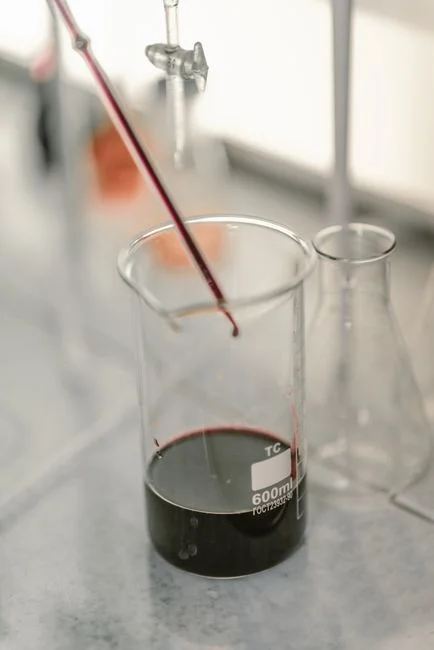
Coagulation and flocculation remain the lowest-cost first step in most color trains, but they are pre-treatment, not a complete solution. The mechanism is charge neutralization and sweep flocculation: dosing alum (aluminum sulfate), ferric chloride (FeCl3), or cationic polyelectrolytes destabilizes colloidal color bodies and aggregates them into settleable or floatable flocs that downstream clarification can remove. An automatic chemical dosing system for coagulant and pH control is the practical way to hold dose and pH in the tight window each dye class requires.
The realistic performance band for coagulation is 50–80% color removal on reactive and disperse dyes when pH (typically 5.5–7.5 for FeCl3, 6.5–7.5 for alum) and dose are jar-tested and optimized; outside that window, removal can collapse to under 20% (per peer-reviewed textile effluent studies, 2024). For textile and food effluent where dye chemistry is amenable to charge neutralization, this band is often enough to drop the load to a level a downstream biological or membrane step can finish. For truly dissolved reactive and vat dyes, coagulation removes a fraction and the engineer must plan for a polishing step.
Limitations matter: coagulation generates 0.3–0.8 kg of dry chemical sludge per kg of dye removed, which must be dewatered and disposed, and it performs poorly on truly dissolved dye molecules below roughly 1,000 daltons. For low-density flocs and FOG-laden streams where settling is slow, a dissolved air flotation system for color-laden effluent clarification is the preferred clarification step. See our DAF versus clarifier selection guide for clarification trade-offs.
Adsorption on Activated Carbon: Reliable but Capacity-Limited
Activated carbon is the most widely installed industrial color-removal polishing step, and it works through physical adsorption rather than chemical destruction. Granular activated carbon (GAC) columns and powdered activated carbon (PAC) dose-in systems both rely on the same property: typical GAC has a surface area of 500–1,500 m²/g, providing enormous adsorption capacity for color bodies, residual COD, and odor compounds. PAC doses in the 50–500 mg/L range are common for color polishing, while GAC columns handle continuous polishing at empty bed contact times of 10–30 minutes.
The realistic performance band for activated carbon as a polishing step is greater than 90% color removal when fed pre-treated water (coagulation effluent or secondary biological effluent), and a documented textile case study combining coagulation + activated carbon + nanofiltration achieved >95% color removal (per peer-reviewed textile effluent studies, 2024). The 2020 Angeles et al. study in Environmental Science: Water Research & Technology showed similar performance on trace organics, with ozonation plus GAC exceeding 95% removal of monitored pharmaceuticals across seven sewage treatment facilities.
Limits: GAC is sensitive to fouling by oil, high TDS, and suspended solids, so robust pre-treatment is mandatory. It is correctly characterized as filtration rather than purification because it does not remove dissolved salts or bacteria. The dominant operating cost is media replacement or thermal regeneration, typically every 6–24 months depending on loading, and this OPEX line is what often pushes engineers toward AOP or membrane alternatives at higher color loads.
Membrane Filtration: Nanofiltration and Reverse Osmosis for Color-Body Rejection
Nanofiltration (NF) is the most versatile membrane option for color removal in industrial water, and the technology of choice when a reuse-quality permeate is the goal. NF operates at 50–250 psi, between ultrafiltration and reverse osmosis, and rejects color through two mechanisms working in parallel: size exclusion, with a nominal molecular weight cutoff around 200–1,000 daltons, and charge-based repulsion of anionic dye molecules by the negatively charged polyamide membrane surface. This dual function means NF softens water while removing color, which suits textile and pulp & paper streams that carry both color bodies and high hardness.
Performance band: standalone NF on pre-treated water routinely achieves 95–99% color and organics rejection, and full hybrid trains in textile effluents have delivered >95% color removal in published case studies (per peer-reviewed textile effluent studies, 2024). Compared with reverse osmosis, NF uses roughly half the operating pressure, gives higher flux, and cannot produce ultrapure permeate, but for most industrial reuse targets that is the right trade. An industrial RO system for color-free reuse permeate is the right choice when discharge TDS limits are tight (typically under 500 mg/L) and reuse is the goal.
Limits and pre-treatment: NF cannot tolerate suspended solids, oil, or scaling species, so coagulation followed by a multi-media filter for NF and RO pre-treatment is standard. Ultrafiltration handles colloidal and macromolecular color but not truly dissolved dye molecules below roughly 1,000 daltons; if you skip NF and use UF only, expect color removal to fall into the 60–85% band. Concentrate disposal is a real cost line, typically 15–30% of feed flow at 3–5× feed concentration.
Advanced Oxidation Processes (AOPs): Destroying Persistent Dyes
AOPs are the only technologies that chemically destroy the chromophore, the part of the dye molecule that absorbs light, rather than transferring it to another phase. The mechanism is generation of hydroxyl radicals (·OH), the second-strongest aqueous oxidant after fluorine, with a reduction potential of 2.80 V. Common AOP variants include ozone (O3), ozone/UV, H2O2/UV, Fenton's reagent (Fe²⁺ + H2O2), and photocatalysis (TiO2/UV). These radicals attack the conjugated double bonds that give dyes their color, breaking them into smaller, less colored, and often more biodegradable fragments.
Performance band: the 2020 Angeles et al. study, which monitored seven sewage treatment facilities, showed that ozonation plus GAC achieved >95% removal of monitored trace organics including antidepressants, antibiotics, and common over-the-counter drugs. Known failure modes are real: in the same study, ozonation did not affect bupropion or primidone, and similar dye-class-specific resistance is documented for some anthraquinone structures. AOPs also generate transformation products; ozonation in particular can form bromate and other hazardous by-products when bromide is present, and AOP effluents almost always need a biological polishing step to mineralize fragments to CO2 and water.
Two published hybrid case studies illustrate realistic deployment: beet processing wastewater was treated with ozone pre-treatment followed by a constructed wetland, achieving effective color removal (per peer-reviewed textile effluent studies, 2024). A pulp and paper mill used H2O2/UV AOP to reduce color, with activated sludge polishing to meet regulatory discharge. AOPs are energy- and oxidant-intensive, so they earn their place when the chromophore is too recalcitrant for adsorption or membrane rejection, or when concentrate volume must be minimized.
Biological Treatment and Hybrid Trains: Putting It Together
No single unit operation wins on color alone; the realistic path to consistent compliance and reuse is a hybrid treatment train. Conventional activated sludge (secondary biological treatment) achieves partial color reduction on biodegradable load, but it cannot handle most synthetic textile dyes because they were designed to resist microbial attack; secondary treatment is therefore framed as a COD/BOD step that incidentally removes some color (per peer-reviewed textile effluent studies, 2024). A 2020 monitoring study confirmed that primary treatment removed essentially no trace organics, while secondary biological treatment removed most but not all.
Two biological upgrades extend color removal: bioaugmentation, dosing specialized microbial strains or white-rot fungi (notably Phanerochaete chrysosporium) capable of degrading azo and anthraquinone dyes through lignin-degrading enzymes, and constructed wetlands as a low-OPEX polishing step for biodegradable color fragments. For plants with limited footprint, an MBR membrane bioreactor for combined biological and membrane color removal delivers a compact alternative that produces a low-TSS feed for downstream NF or RO polishing.
The following table compares the major unit operations on mechanism, realistic color removal, and OPEX posture, useful when justifying train selection to a plant manager.
| Technology | Removal mechanism | Typical color removal | Influent constraint | OPEX posture |
|---|---|---|---|---|
| Coagulation/Flocculation | Charge neutralization, sweep flocculation | 50–80% | Colloidal/particulate color; pH-sensitive | Low chemical cost; sludge disposal |
| Activated carbon (GAC/PAC) | Physical adsorption | >90% as polish; >95% in hybrid train | Needs pre-treatment; oil/TDS fouling | Media replacement/regeneration dominates |
| Nanofiltration | Size exclusion + charge repulsion | 95–99% | Requires coagulation + media filtration upstream | Membrane replacement, energy, concentrate disposal |
| Reverse osmosis | Size exclusion (near-total) | >99% | Strict pre-treatment required | Higher energy than NF; concentrate disposal |
| Ozonation / AOP | Hydroxyl radical oxidation of chromophore | >95% trace organics (per Angeles et al. 2020) | Some dye classes resist ·OH; by-product control needed | Oxidant and energy intensive |
| Activated sludge / MBR | Aerobic biodegradation | Partial; poor on synthetic reactive/vat dyes | Needs biodegradable substrate and adequate HRT | Low chemical; aeration energy |
Decision rule: secondary biological treatment first for biodegradable load, then AOP or activated carbon for recalcitrant color, then NF or RO for the polishing and reuse step. Coagulation sits at the head whenever colloidal color or suspended solids would otherwise foul downstream equipment.
Choosing the Right Treatment Train: A 2026 Selection Framework
A useful train selection starts with characterization, not equipment. Step 1: measure true color and apparent color in HU/PCU by EPA Method 110.2 or equivalent, plus TSS, TDS, pH, COD, and BOD5, and identify the dye or pigment class if you can. Step 2: define the discharge target. Industrial permits in the US, EU, and India typically require effluent color between 50 and 200 HU depending on receiving water classification, and reuse targets (boiler feed, process rinse, cooling makeup) usually tighten to under 15 HU and under 50 mg/L COD. Step 3: match dye class to primary method, as outlined in the decision table below.
| Effluent type | Dominant color class | Recommended primary step | Recommended polish | Reuse-ready path |
|---|---|---|---|---|
| Textile (reactive/vat dyes) | Covalent/polymeric, non-biodegradable | Coagulation + AOP (O3 or Fenton) | GAC column | NF train, target <15 HU |
| Textile (acid/disperse dyes) | Anionic ionic, hydrophobic particles | Coagulation (FeCl3, pH 5.5–7.5) | GAC or DAF + GAC | NF or RO, target <15 HU |
| Food processing (beet, berry, caramel) | Natural pigments, biodegradable | Biological (activated sludge or MBR) | Constructed wetland or GAC | RO if boiler/cooling reuse, target <15 HU |
| Pulp & paper (bleached) | Chlorinated lignin, high MW | H2O2/UV AOP or ozone | Activated sludge polish | RO for high-purity reuse, target <15 HU |
| Cosmetics & personal care | Synthetic dyes, organics | Coagulation + biological | GAC | NF or RO, target <15 HU |
| Beverage / tea (tannins) | Dissolved organics, yellow-brown | Coagulation + biological | GAC or ozone | RO, target <15 HU |
Step 4: build the train in the order coagulation → sedimentation or DAF → biological (optional) → AOP or GAC → NF or RO polish. Step 5: pilot before scaling. Jar tests for coagulation, column trials for GAC, and flat-sheet or spiral-wound membrane trials for NF or RO are non-negotiable; performance can swing 20–40 percentage points based on real effluent chemistry versus lab simulations. Cost framing: coagulation carries the lowest CAPEX, GAC carries the highest media-replacement OPEX, NF and RO carry both CAPEX and membrane-replacement OPEX, and AOPs carry oxidant and energy OPEX. An integrated water purification system can collapse several of these unit operations into a single skid for plants under 50 m³/day, while a plate-frame filter press for sludge dewatering handles the chemical sludge the train will inevitably generate. For textile mill chlorination-stage selection, see our chlorine dioxide generator selection for textile mills guide, and for reuse-target justification see our wastewater reuse for irrigation in 2026 engineering breakdown.
Frequently Asked Questions
How is color measured in industrial wastewater?
Color is measured in Hazen Units (HU) or Platinum-Cobalt Units (PCU), with 1 PCU equal to 1 mg/L of platinum as chloroplatinate ion, per EPA Method 110.2. Apparent color is read on unfiltered samples; true color is read on filtered samples and is the regulated value.
Which treatment method removes the most color?
Hybrid trains consistently outperform single technologies. The cited textile case study achieved >95% color removal by combining coagulation, activated carbon, and nanofiltration, while the 2020 Angeles et al. study showed >95% trace-organic removal with ozonation plus GAC.
Can biological treatment alone remove textile dye color?
Conventional activated sludge removes partial color from biodegradable load but is ineffective on synthetic reactive and vat dyes, which were designed to resist microbial attack. Bioaugmentation with white-rot fungi or an AOP pre-treatment is required to extend biological color removal to those classes.
Is it cheaper to remove color or to dilute with clean water?
Dilution is rarely compliant because color is measured in absolute units, not concentration relative to clean water, and most permits cap color regardless of flow. A targeted coagulation-plus-GAC train typically costs less per cubic meter than the long-term freshwater purchase and NOV exposure that dilution implies.
What color level is required to reuse wastewater in industrial processes?
Reuse targets are typically tighter than discharge limits. Boiler feed, cooling-tower makeup, and process rinse usually require under 15 HU, compared with 50–200 HU for discharge. NF or RO polishing after biological or AOP treatment is the standard path to those reuse limits.