

The 2026 Montgomery decision: DAF, clarifier, or both
For a 2026 Montgomery, US mining or metals plant, DAF wins as primary when the stream carries FOG, emulsified oil, or colloidal fines; a lamella clarifier wins as primary on FOG-free, dense Fe(OH)3 or Al(OH)3 floc at high flow; most 2026 lines will run DAF primary plus a small lamella polish to hold 40 CFR 437 daily-maximum TSS and recoverable lead, zinc, copper, and iron inside the envelope, with conventional gravity clarifiers rarely the right answer because of 5–8 m² per m³/h footprint.
The regulatory frame is 40 CFR Part 437 (Ore Mining and Dressing), which sets daily-maximum and monthly-average effluent limits on TSS, total recoverable lead, total recoverable zinc, total recoverable copper, total recoverable iron, and a pH band of 6.0–9.0 for any discharge to waters of the United States (per 40 CFR 437.30–437.32). A Montgomery, AL plant layers an ADEM-administered NPDES permit on top of 40 CFR 437, so the same equipment must satisfy both. The decision therefore turns on local stream chemistry, civil footprint, and the 437 metals envelope — not on the FOG-heavy food-processing default that most DAF articles assume.
Three 2026 pressures push this past a maintenance decision. First, many in-service clarifiers on Alabama-basin sites date to the 1970s and need replacement. Second, ESG-driven water-reuse targets have moved pretreatment up to the board level. Third, the Montgomery stream profile is dense metal-hydroxide floc (Fe, Al, Mn hydroxides, silica fines, magnetite) with intermittent tramp oil from maintenance shops and truck washes — the opposite of a food-processing FOG stream, and the reason the comparison must be re-parameterized around hydroxide floc and metals precipitation, not emulsified cooking oil.
How DAF and clarifiers actually separate metal-hydroxide floc
A dissolved air flotation system separates solids by attaching them to micro-bubbles. Clarified effluent is drawn off the DAF outlet and pressurized to roughly 6 bar (87 psi) in a recycle loop, then saturated with air inside a packed saturation vessel. When the saturated recycle stream is depressurized back into the flotation tank at atmospheric pressure, dissolved air comes out of solution as a cloud of 30–50 µm bubbles. Those bubbles nucleate on chemically conditioned floc, drag it to the surface, and form a float blanket that a paddle skimmer sweeps into a sludge trough. Heavier settleable solids drop to a bottom sediment compartment (per S1, S5). Performance in this service class runs >90% on TSS, FOG, COD, and BOD when influent chemistry is right (per S5).
A high-efficiency lamella clarifier separates by gravity, but the inclined-plate pack multiplies the effective settling area. Surface loading climbs to 20–40 m/h, against just 1–2 m/h for a conventional rectangular or circular clarifier operating as a slow gravity settler (per EPA 625/1-75-003a, S3). Many lamella designs include a sludge-recirculation loop that re-injects settled solids to contact fresh influent, which cuts coagulant consumption by up to 30% (HydropureWater P10).
Chemistry gates both mechanisms. Polyaluminum chloride (PAC), ferric chloride, or alum paired with an anionic polymer flocculant at 1–5 mg/L is the standard conditioning train for hydroxide floc; without that conditioning, micro-bubbles pass right past colloidal fines and DAF underperforms, while a lamella or conventional clarifier sees the same fines bleed through into the overflow (per S1, S4). A second consequence lands downstream: DAF float runs 4–8% dry solids, against 2–5% DS for lamella underflow, so the dewatering train — typically a plate-and-frame filter press — sees a different feed from each technology.
Three rules that decide which one wins on a Montgomery stream
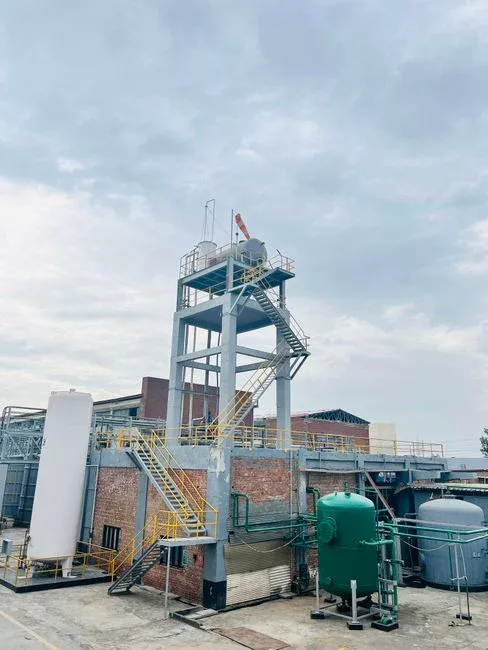
Floc-density rule. Chemically conditioned Fe(OH)3, Al(OH)3, or magnetite floc with specific gravity above roughly 1.05 settles readily under gravity and favors a clarifier. The same floc, once polymer-conditioned, also binds tightly to 30–50 µm micro-bubbles, so DAF works on the same stream when chemistry is right (per S1, S2, S4). On a pure hydroxide-floc stream with no oil, lamella is usually the cheaper answer; on a hydroxide-floc stream with colloidal fines that escape the lamella, DAF is the better answer.
FOG rule. Free and emulsified oil does not settle in a clarifier residence time — it exits in the overflow. Any FOG load forces DAF upstream or as a polish step (per S1, S4). For a Montgomery job-shop foundry or mixed-metals refinery with a maintenance bay, that single line in the process flow diagram often picks the technology before the rest of the comparison is run.
Footprint and civil rule. At 100 m³/h the DAF footprint is roughly 30 m², the lamella roughly 50 m², and the conventional clarifier roughly 600 m². The conventional clarifier's 5–8 m² per m³/h footprint routinely dominates the project through excavation, vault sizing, and building cost — enough to flip the CAPEX ranking on a tight industrial site (HydropureWater field data, 2026). For a 100 m³/h plant on a constrained Montgomery parcel, that 20x difference is rarely a footnote.
Cold-weather carry-over. Even in a warm Gulf climate, an unheated or partially covered vault sees winter-loaded streams below 10°C. Micro-bubble nucleation kinetics slow 20–30% at 5°C versus 20°C, so a 10–15% sizing margin on the recycle pump and saturation vessel is the standard engineering response (HydropureWater field data, 2026). For an Alabama site, this is a freeze-risk-on-the-skim-line calculation, not a full cold-climate design — but the margin still belongs in the spec.
DAF vs lamella vs conventional clarifier: 2026 parameter table
The block below reorganizes the comparison around the parameters a 40 CFR 437 procurement lead actually asks about — dense Fe(OH)3 / Al(OH)3 floc, FOG, footprint, CAPEX, energy, and cold-weather behavior — not around the food-processing FOG defaults most articles use.
| Parameter | DAF | Lamella clarifier | Conventional clarifier |
|---|---|---|---|
| TSS removal on dense Fe(OH)3 / Al(OH)3 floc | 90–95% | Comparable on conditioned floc | Lower and variable |
| FOG / emulsified oil removal | >90% | Near zero without upstream oil removal | Near zero |
| Footprint per m³/h | 0.2–0.4 m² | 0.3–0.6 m² | 5–8 m² |
| CAPEX multiplier (lamella = 1.0x) | 1.5–2.5x | 1.0x | 0.7–0.9x before civil |
| Energy | 8–15 kWh/m³ (compressor + recycle) | Scraper drive ~0.1–0.3 kWh/m³ | Scraper drive only |
| Cold-weather performance (<10°C) | Moderate — size 10–15% margin | Low — sludge-hopper freeze risk | Low — larger vault, same freeze risk |
| Float / underflow dryness | 4–8% DS float | 2–5% DS underflow | 1–3% DS underflow |
| Best-fit stream | FOG, emulsified oil, colloidal fines, light floc | Dense settleable hydroxide floc, high flow, no oil | Legacy installations, very large settling basins |
Sources: S1, S5, EPA 625/1-75-003a (S3), HydropureWater P10, HydropureWater field data 2026.
Montgomery stream scenarios: which technology goes first
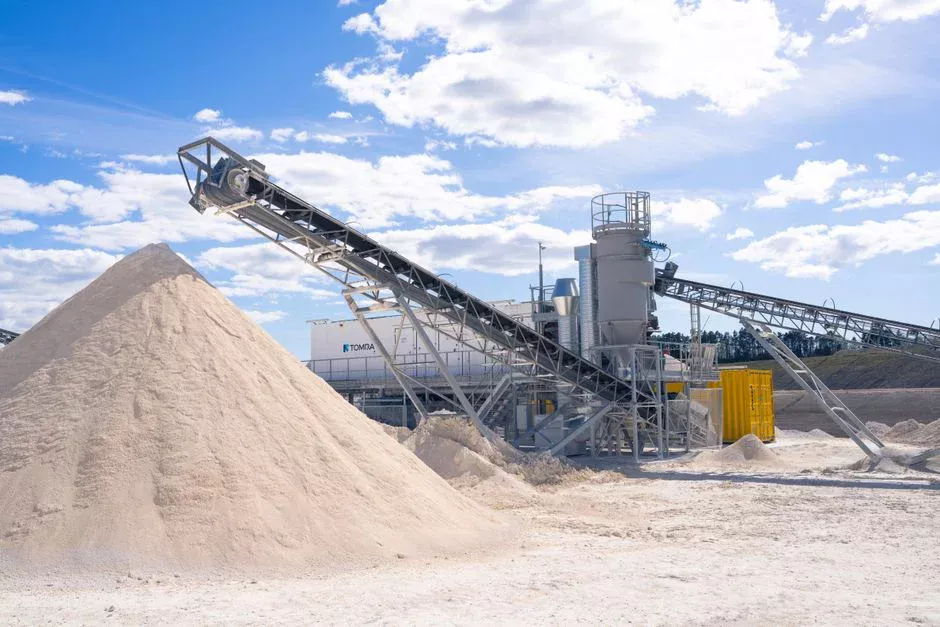
Scenario A — iron or taconite-style concentrator. Roughly 250 m³/h, 1,500–3,000 mg/L TSS as Fe(OH)3 plus magnetite fines, no tramp oil. The flow and density favor a high-rate lamella primary at 30 m/h surface loading, requiring roughly 8–9 m² of plate area. TSS below 30 mg/L is achievable with lamella alone, and recoverable lead, zinc, copper, and iron are controlled at the upstream precipitation step against the 40 CFR 437 daily-maximum limits. Add a dissolved air flotation system as polish only if a maintenance shop or truck wash starts contributing FOG intermittently (per S1).
Scenario B — mixed-metals refinery or job-shop foundry. Roughly 80 m³/h, 100–300 mg/L TSS plus Cu and Zn precipitates, with 50–200 mg/L emulsified cutting oil from the maintenance bay. DAF is non-negotiable as primary — a clarifier would discharge the emulsified oil straight to the NPDES outfall and trip the 40 CFR 437 envelope on both oil-and-grease and TSS. A small lamella follows as polish for residual TSS to give margin against the daily-maximum metals limits. The 80 m³/h flow sits mid-band on a standard DAF model with no custom-engineering premium (per S1, S5).
Scenario C — low-flow intermittent copper-mine or quarry dewatering. Below 20 m³/h, intermittent operation. A compact DAF skid starts and stops in minutes and handles variable influent; a lamella in an unheated Alabama vault risks skim-line freezing on the rare cold snap and is harder to insulate. DAF's higher unit CAPEX pays back in operational uptime, and a packaged DAF skid covering 4–300 m³/h in 13 standard models (per S1) — or a SigmaDAF/Clearwater COMPACT unit up to 66 GPM on a single skid, modular beyond (per S5) — keeps custom-engineering markup out of mid-band flows common in the Alabama basin.
For comparable engineering on the metals train, the Prattville mining and metals buyer's guide covers the same regulatory frame for the adjacent Autauga County site, and the heavy metal wastewater treatment engineering specs article walks through the broader pretreatment chain.
2026 CAPEX, OPEX, and downstream dewatering in plain numbers
Equipment-only CAPEX. DAF runs 1.5–2.5x a comparable lamella at equal flow; a conventional clarifier runs 0.7–0.9x the lamella — but only before civil and building cost. Add excavation, vault sizing, and a 600 m² footprint at a 100 m³/h flow, and the conventional clarifier stops looking cheap (HydropureWater field data, 2026). On a tight Montgomery industrial parcel, the lamella or DAF almost always wins on installed cost.
OPEX. The lamella saves up to 30% on coagulant via sludge recycle (HydropureWater P10), which is a real line item at 2026 chemical prices. DAF's air compressor and recirculation pump add 8–15 kWh/m³, but that energy buys a thicker float (4–8% DS) that dewaters more easily in a downstream plate-and-frame filter press (per S1). Holding the dose tight against variable influent is what keeps either system inside its design window — an automatic chemical dosing skid is the cheapest insurance on the line.
| Cost line | DAF | Lamella clarifier | Conventional clarifier |
|---|---|---|---|
| Equipment CAPEX, equal flow (multiplier vs lamella) | 1.5–2.5x | 1.0x | 0.7–0.9x |
| Energy | 8–15 kWh/m³ (compressor + recycle) | Scraper drive only (~0.1–0.3 kWh/m³) | Scraper drive only |
| Coagulant demand | Standard | Up to 30% less (sludge recycle) | Standard |
| Sludge to dewatering | Float 4–8% DS — easier dewatering | Underflow 2–5% DS | Underflow 1–3% DS |
| Civil / building cost driver | Low (small vault) | Low (compact plate pack) | High (excavation, large vault) |
Sources: S1, S5, HydropureWater field data 2026, HydropureWater P10.
The 100 m³/h example. Roughly 30 m² of DAF footprint versus roughly 600 m² of conventional clarifier footprint. For a tight Montgomery industrial site, that 20x difference is often the line item that decides the equipment before the chemistry review is finished (HydropureWater field data, 2026). The same logic applies to the Prattville mining and metals buyer's guide and the South Holland mining factory guide — footprint dominance is a basin-wide pattern, not a local quirk.
Frequently Asked Questions
Does 40 CFR 437 require DAF or a clarifier?
Neither technology is explicitly required by 40 CFR 437. The rule sets daily-maximum and monthly-average limits on TSS, total recoverable lead, zinc, copper, and iron, plus a pH band of 6.0–9.0 (per 40 CFR 437.30–437.32). A well-sized DAF or lamella, paired with chemical precipitation, can meet those limits; many US plants run DAF primary plus lamella polish to build margin against the daily-maximum envelope (per S1). For the metals-precipitation step itself, the 2026 process guide to lead removal from industrial wastewater walks through the chemistry.
What surface loading should I use to size a lamella on dense Fe(OH)3 floc?
Design at 20–30 m/h on the plate-pack projected area for dense Fe(OH)3 or Al(OH)3 floc. Drop to 10–15 m/h for fine silica or low-density floc. The published 20–40 m/h band (HydropureWater P10) assumes clean, well-conditioned hydroxide floc; under-conditioned or low-density floc lands at the lower end (per S1).
Does DAF work in Alabama winter conditions?
Yes, but insulate or heat-trace the saturation vessel and recycle line, and apply a 10–15% sizing margin on the recycle pump and saturation volume. Micro-bubble nucleation kinetics slow 20–30% at 5°C versus 20°C, so the margin belongs in the spec even for a warm Gulf climate where an unheated vault sees winter-loaded streams below 10°C (HydropureWater field data, 2026).
Can a lamella-only line work on a FOG-free taconite stream?
Yes. Many taconite concentrators run lamella-only as primary clarification on FOG-free streams. Add a DAF polish step only if colloidal fines start bleeding through the lamella underflow or if a maintenance shop discharge adds intermittent oil that the lamella cannot capture (per S1).
How does the DAF footprint compare to a conventional clarifier in real numbers?
A DAF at 0.2–0.4 m² per m³/h is roughly one-twentieth the footprint of a conventional gravity clarifier at 5–8 m² per m³/h, and about half the footprint of a lamella at the same flow. For a 100 m³/h stream, that is the difference between 30 m² and 600 m² of clarifier footprint — a ratio that routinely decides the equipment on a constrained industrial site (HydropureWater field data, 2026).