Why Phenol Is a Priority Pollutant in Industrial Wastewater
Phenol sits on the U.S. EPA and EU lists of priority pollutants, and the EPA sets a 2 mg/L drinking-water limit; the EU Drinking Water Directive lists the individual threshold at the same 2 mg/L band (source: Arvia Technology). Specialty chemical and pharmaceutical plants routinely target stricter local discharge or reuse consent of <0.5 mg/L, and some push for parts per trillion in process-water reuse loops. Phenol is monohydroxybenzene (C6H5OH), and the hydroxyl group forms strong hydrogen bonds with water, giving it very high aqueous solubility — roughly 83 g/L at 20 °C — which is why it is so difficult to strip and so persistent in aqueous effluent. It is the precursor for phenolic resins, bisphenol A, caprolactam, pharmaceuticals, disinfectants, and antioxidants, so it shows up in effluent from resin plants, refineries, coke ovens, pharmaceutical APIs, and electronics chemical lines.
Two target bands drive every decision in this article: <2 mg/L for general compliance and <0.5 mg/L (often parts per trillion) for specialty chemical, pharmaceutical, and reuse applications. The 6-carbon aromatic ring carries a high theoretical oxygen demand of about 2.4 g O2/g phenol for full mineralisation to CO2 and water, so even modest phenol loads can starve an aeration basin and cause shock loading in activated sludge (source: biologicalwasteexpert.com, Nov 2025). When you see foam, rising sludge volume index, or a sudden nitrification crash, suspect phenol.
Biological Toxicity Thresholds That Decide the Process Train
Before you pick a technology, you have to decide whether biology is even an option. The decision is governed by three toxicity bands (per Aster Bio / biologicalwasteexpert.com, Nov 2025):
| Microbial community | Inhibition threshold | Design implication |
|---|---|---|
| Heterotrophic aerobes (activated sludge) | 50–200 mg/L phenol | Acclimated biomass can degrade phenol up to ~200 mg/L; above that, washout and foaming risk rises sharply |
| Anaerobic methanogens | <100 mg/L | Anaerobic digesters stall early; VFAs accumulate |
| Nitrifiers (Nitrosomonas/Nitrobacter) | 10–20 mg/L | Even compliant effluent can collapse a nitrification stage; place phenol removal upstream of any biological nitrogen step |
Acclimated phenol-degraders (Pseudomonas, Rhodococcus, Acinetobacter) can use phenol as a primary substrate, but they need a stable, gradually ramped feed to dominate the consortium. A sudden spike causes acute toxicity, biomass washout, and foaming — the classic "Monday morning" failure after a weekend batch dump. The 6-carbon ring drives a high oxygen demand, so design DO must stay above 2 mg/L and often above 4 mg/L when phenol is the dominant substrate. Practical rule: if the stream exceeds ~100 mg/L phenol, plan either dilution/equalisation, an adsorption pre-step, or oxidation ahead of activated sludge or MBR. If it exceeds ~200 mg/L, biology is rarely a stable front end without pre-treatment.
Adsorption: Activated Carbon, Modified Clays, and Hybrid Media
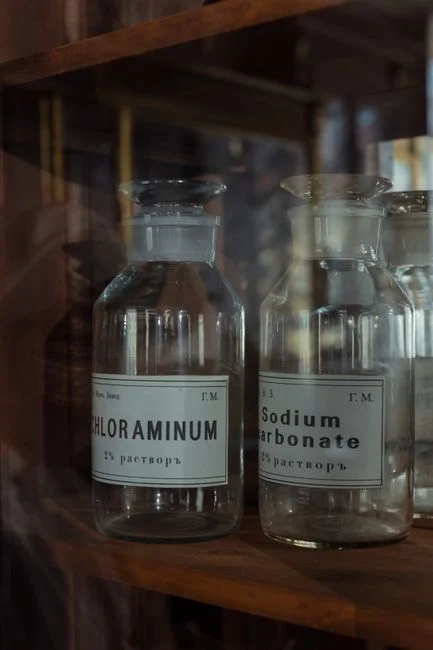
Adsorption is the most widely deployed polishing step for phenol, and recent 2026 work on organically modified clays has sharpened the operating envelope. Zhao et al. (Materials/Basel, 04 Aug 2026) synthesised octadecyl-trimethylammonium-modified hectorite in a one-pot route and reported 92.3% phenol removal from 50 mL of 100 mg/L solution at pH 12 with 0.5 g of adsorbent; the data fit both Langmuir and Freundlich isotherms, follow pseudo-second-order kinetics with an activation energy of about 11.15 kJ/mol, and the material retained high capacity over five regeneration cycles (source: Zhao Y, Wang X, Chen J, Materials 19(15):3318, 2026-08).
Conventional granular activated carbon (GAC) remains the workhorse for low-to-moderate influent (typically <200 mg/L) and is the only mainstream option that reliably hits <0.5 mg/L effluent in a single pass. The trade-off is spent carbon: every kilogram of loaded carbon becomes a hazardous waste stream that must be incinerated or reactivated off-site. For budget-driven or pilot work, agricultural-waste adsorbents offer a lower-cost alternative — Girish & Singh reported an RSM-optimised capacity of 12.59 mg/g for phosphoric-acid-treated tea-fibre waste, with equilibrium data fitting the Freundlich model and kinetics fitting a first-order model (source: Science Publishing, tea-fibre study). Capacity is roughly an order of magnitude lower than engineered GAC, so footprint rises, but the disposal cost is lower.
The operating envelope is consistent across the literature: adsorption works best as a polishing step on streams below about 200 mg/L, and it is the only method that consistently reaches <0.5 mg/L without secondary waste oxidation. Suspended solids and oil will foul the bed quickly, so a HydropureWater multi-media filter as a turbidity guard upstream of adsorption is standard practice in any full-scale train.
Biological Treatment: Activated Sludge, MBR, and Bioaugmentation
Biological treatment is the cheapest option per cubic metre, but only when the influent stays inside the inhibition bands above. The practical operating window for acclimated heterotrophs is roughly <100–200 mg/L phenol with steady feed; above that, you are feeding toxicant faster than the degraders can adapt, and the system collapses (source: biologicalwasteexpert.com, Nov 2025). For nitrification specifically, even 10–20 mg/L phenol in the feed can knock out ammonia oxidation, so any plant with a nitrification stage must handle phenol upstream.
Design choices that keep biological phenol removal stable: an equalisation basin sized to flatten shock loads, a graduated acclimation programme that ramps phenol concentration over 2–4 weeks, dissolved oxygen above 2 mg/L (and closer to 4–6 mg/L for high-loading designs), and bioaugmentation with proven degraders such as Candida tropicalis Z-04 or specialised Pseudomonas/Acinetobacter consortia. An MBR is the more robust form of this train: submerged PVDF membranes retain biomass at high MLSS (8,000–12,000 mg/L), tolerate feed fluctuations, and deliver a clearer effluent that protects downstream RO. A HydropureWater MBR system for stabilized biological polishing slots in as a compact, high-MLSS biological step after phenol pre-treatment when the influent is inside the safe band.
Advanced Oxidation and Hybrid Adsorption-Oxidation Systems
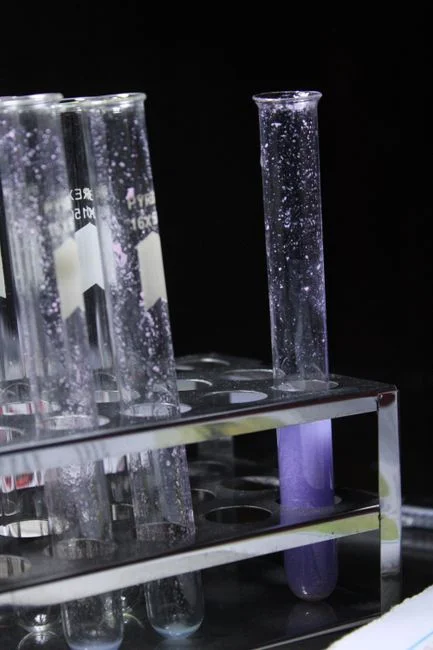
When the influent is refractory, or the effluent target is below 0.5 mg/L, the mainstream options are advanced oxidation processes (AOPs): ozone, ozone/H2O2, Fenton, photo-Fenton, wet air oxidation, and electrochemical oxidation. None of them generates spent adsorbent; the trade-off is reagent or electricity consumption. Hybrid systems combine adsorption and oxidation in one bed, regenerating the media in place and avoiding the spent-carbon problem. Arvia's Nyex Rosalox, for example, combines adsorption with low-current electrochemical oxidation, reaches <0.5 mg/L and often parts per trillion, runs at about 12.8 kWh per kg of phenol removed, and needs only an annual media top-up because the media regenerates inside the reactor (source: Arvia Technology, 2026 product data).
Hybrids are attractive for ZLD and water-reuse projects because there is no secondary waste stream, maintenance is limited to an annual top-up, and the same unit can polish COD from >300 mg/L to below limit of detection in a single pass. The caveat is real: AOPs and hybrid beds are CAPEX-heavy and sensitive to influent matrix, so screening, oil/grease removal, and equalisation are mandatory upstream to protect catalysts and electrodes. CAPEX typically runs 2–3× the equivalent biological train, but OPEX is dominated by electricity rather than media replacement, and there is no off-site hazardous-waste shipment.
Decision Matrix: Matching the Method to Influent and Target
| Method | Typical influent | Target effluent | Removal efficiency | Main OPEX driver | Main waste stream | Best-fit use case |
|---|---|---|---|---|---|---|
| Adsorption (GAC, modified clays) | <200 mg/L | <0.5 mg/L achievable | ~92% at 100 mg/L on modified hectorite (Zhao et al., 2026) | Media replacement / reactivation | Spent carbon or clay (hazardous) | Polishing to sub-mg/L on a low-moderate stream |
| Biological (activated sludge / MBR) | <100–200 mg/L (acclimated) | 1–5 mg/L typical | 90%+ when inside inhibition band | Aeration energy, sludge handling | Waste activated sludge | Steady, low-to-moderate influent, large flow, low target |
| AOPs (O3, Fenton, WAO) | 100–5,000+ mg/L | <1 mg/L achievable | 80–99% depending on matrix | Reagents or electricity | Spent reagents, iron sludge (Fenton) | Refractory or spike-driven loads, high inlet |
| Hybrid adsorption-oxidation (e.g., Nyex Rosalox) | 10–500 mg/L | <0.5 mg/L, often parts per trillion | To LOD | Electricity — ~12.8 kWh/kg phenol | Minimal; media regenerated in place | Reuse/ZLD, sensitive downstream RO, no secondary waste |
Rule of thumb: streams above ~200 mg/L usually need oxidation or a hybrid front-end before any biological polishing; streams below 100 mg/L with a steady feed can run on biology alone, with adsorption or hybrid as the final polish. If RO is downstream, phenol must already be at trace levels, because phenolic compounds damage polyamide RO membranes and shorten membrane life (per Arvia Technology process guidance).
Where the Phenol Step Fits in a Real Wastewater Train
The canonical 2026 train for a phenol-bearing industrial effluent is: rotary bar screen → DAF for oils and floatable solids → equalisation → phenol-removal step (adsorption / AOP / hybrid) → biological or MBR → RO / disinfection for reuse. The phenol-removal step sits after mechanical separation and before any biological or membrane step, and the reason is the failure mode: a phenol spike that hits activated sludge causes washout in hours, and a phenol leak into an RO skid damages membranes that cost more to replace than the entire upstream treatment train. Arvia's published guidance is to place the Nyex system second in line after mechanical filtration, ahead of biology and RO, when phenol loads are meaningful (source: Arvia Technology).
Two common placement mistakes still show up in 2026 spec reviews: putting the phenol step downstream of biology (by then the biomass is already stressed, and you are polishing contaminated effluent rather than protecting the bugs), and skipping equalisation (any shock load hits the biology full-strength). For plants targeting reuse, a HydropureWater DAF system for upstream oil and solids removal ahead of a rotary mechanical bar screen is the standard pre-treatment, and HydropureWater industrial RO for final reuse-grade polishing closes the train once phenol is at trace levels.
2026 Cost, Compliance, and Selection Outlook
OPEX breaks down by the dominant cost line: adsorption OPEX is media replacement and reactivation, biological OPEX is aeration energy and sludge disposal, AOP OPEX is reagent cost (ozone, peroxide, iron) or electricity, and hybrid OPEX is electricity — about 12.8 kWh/kg phenol is the published benchmark for the Arvia Nyex Rosalox (source: Arvia Technology). Biological remains the lowest-cost option per cubic metre when the influent is inside the inhibition band; AOP and hybrid cost more per m³ but unlock reuse and ZLD pathways that justify the spend through avoided water purchase and reduced discharge fees.
Three 2026 drivers are pushing plants toward hybrid and ZLD: tightening municipal pretreatment consents, water-reuse mandates in water-stressed jurisdictions, and CSR/ESG pressure on specialty chemical producers. A one-sentence selection heuristic: pick biological when influent is low and steady, adsorption when polishing to <0.5 mg/L from a moderate stream, AOP when influent is refractory or spiked, and hybrid when both targets are aggressive and secondary waste must be minimised. For multi-contaminant streams, the guide to removing chromium from industrial wastewater, the guide to removing lead from industrial wastewater, and the broader 2026 industrial wastewater treatment engineering guide for petrochemical and chemical plants extend the same decision logic to the other priority metals.
Frequently Asked Questions
What is the EPA limit for phenol in drinking water?
The U.S. EPA sets a 2 mg/L drinking-water limit for phenol, and both the EPA and the EU list phenolic compounds as priority pollutants. Many industrial discharge consents are stricter than the drinking-water limit, and specialty chemical reuse targets are typically <0.5 mg/L.
What concentration of phenol inhibits biological treatment?
Aerobic heterotrophs begin to be inhibited at roughly 50–200 mg/L depending on acclimation; anaerobic methanogens stall at <100 mg/L; nitrifiers (Nitrosomonas, Nitrobacter) are the most sensitive and can be knocked out at 10–20 mg/L. Place the phenol-removal step upstream of any biological nitrogen stage.
Can phenol be removed below 0.5 mg/L?
Yes. Hybrid adsorption-oxidation systems such as the Arvia Nyex Rosalox routinely reach <0.5 mg/L and have demonstrated parts-per-trillion effluent in specialty chemical service, at an energy demand of about 12.8 kWh per kg of phenol removed (source: Arvia Technology).
Is adsorption or biological treatment cheaper for phenol?
Biological is cheaper per cubic metre of treated water but only works inside roughly 100–200 mg/L with acclimated biomass; above that band you need adsorption, AOP, or hybrid pre-treatment. Adsorption OPEX is dominated by media replacement; biological OPEX is dominated by aeration energy and sludge handling.
Where should the phenol step be placed in a wastewater train?
After mechanical screening and DAF, before biological treatment and RO. This protects microbes from shock loads and protects RO membranes from organic fouling, and it lets the phenol step act as the primary control point for consent compliance.