Hawalli’s Industrial Wastewater Challenge: Why Pre-Treatment Is Non-Negotiable
Industrial wastewater treatment in Hawalli requires systems compliant with Kuwait’s EPA-equivalent standards (KEPA), where discharge limits for COD (<150 mg/L), BOD (<30 mg/L), and TSS (<50 mg/L) are stricter than Hawaii’s. The Hawalli WWTP, designed for 120,000 m³/day, operates at 130% capacity (2025 KEPA data), forcing industrial facilities to pre-treat effluent on-site. Activated sludge processes dominate but face aeration bottlenecks; alternatives like MBR or DAF systems achieve 95%+ removal rates with 40% lower energy use, per Alfa Laval’s 2026 benchmarks.
Hawalli WWTP loading currently exceeds its design capacity by 36,000 m³/day, creating a hydraulic bottleneck that has prompted KEPA to mandate on-site pre-treatment for all industrial zones in the governorate. This overcapacity is largely driven by the high concentration of industrial effluent, which contributes approximately 45% of the total inflow. For facility managers, the risk of non-compliance is no longer theoretical; KEPA’s 2026 enforcement timeline includes fines of up to KWD 10,000 per day for facilities exceeding the 150 mg/L COD limit or failing to meet heavy metal thresholds, such as chromium concentrations below 0.1 mg/L.
The industrial mix in Hawalli—spanning petrochemicals, textiles, and food processing—presents diverse chemical challenges. Petrochemical plants often struggle with high salinity and complex hydrocarbons, while food and beverage facilities face massive biological oxygen demand (BOD) and fats, oils, and grease (FOG) loads. A 2025 case study of a Hawalli food processing plant demonstrated that implementing a DAF system for food processing and textile effluent in Hawalli reduced BOD from 800 mg/L to under 30 mg/L. This upgrade allowed the facility to bypass municipal surcharges and avoid legal penalties that previously threatened operational viability.
| Metric | Hawalli WWTP Design Capacity | Actual Loading (2025) | Industrial Contribution |
|---|---|---|---|
| Flow Rate (m³/day) | 120,000 | 156,000 (130%) | 70,200 (45%) |
| COD Avg. (mg/L) | 400 | 650 | 1,200–3,500 (Sector Dep.) |
| BOD Avg. (mg/L) | 250 | 380 | 800–2,000 (Food/Textile) |
Kuwait’s Wastewater Regulations: KEPA Standards vs. Hawalli’s Industrial Needs
KEPA Decree 210/2025 imposes a COD limit of 150 mg/L for industrial discharge into the municipal sewer, a threshold significantly more stringent than the 250 mg/L standard common in many neighboring regions. These standards are designed to protect the aging Hawalli WWTP infrastructure from corrosive chemicals and biological overloading. For example, while Hawaii’s BOD limit for certain industrial discharges remains at 45 mg/L, KEPA requires a maximum of 30 mg/L. This 33% reduction in allowable organic load necessitates the use of advanced secondary or tertiary treatment technologies.
Heavy metal removal is a critical focus for Hawalli’s metalworking and textile industries. KEPA mandates that Hexavalent Chromium (Cr6+) must be below 0.1 mg/L, which is five times stricter than the general EPA benchmark of 0.5 mg/L. Facilities failing to meet these targets face immediate suspension of discharge permits. To achieve these levels, many plants are integrating nickel removal for Hawalli’s metalworking and textile effluents alongside primary chemical precipitation. any effluent with Total Dissolved Solids (TDS) exceeding 2,000 mg/L is subject to a Zero-Liquid Discharge (ZLD) mandate, particularly affecting petrochemical and desalination operations.
Navigating the permitting process requires meticulous documentation. KEPA currently maintains a 90-day approval timeline for new wastewater treatment system installations. This process requires third-party testing from ISO 17025-accredited laboratories to verify that the proposed engineering specs align with the projected influent profile. Understanding these local nuances is as vital as the technology itself, much like the Dammam’s wastewater treatment standards and cost benchmarks which also emphasize localized regulatory rigor.
| Parameter | KEPA 2026 Limit (Kuwait) | Hawaii DOH Limit (USA) | Treatment Requirement |
|---|---|---|---|
| COD (mg/L) | < 150 | < 250 (Typical) | Secondary (MBR/AS) |
| BOD (mg/L) | < 30 | < 45 | Biological Treatment |
| TSS (mg/L) | < 50 | < 60 | Clarification/DAF |
| Oil & Grease (mg/L) | < 10 | < 15 | DAF / Oil Separator |
| Chromium (Cr6+) | < 0.1 mg/L | < 0.5 mg/L | Ion Exchange / Chemical |
Treatment Technologies for Hawalli’s Industrial Effluent: Performance, Costs, and Trade-Offs
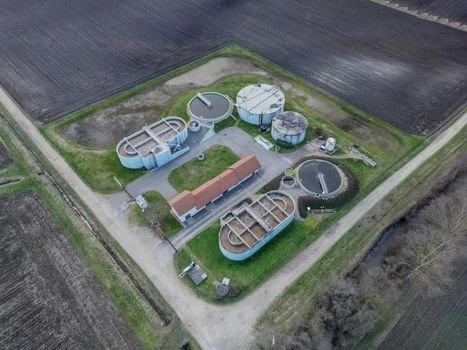
Membrane Bioreactor (MBR) systems in Hawalli achieve 95% chemical oxygen demand (COD) removal while occupying 60% less footprint than conventional activated sludge tanks, addressing the high land value and space constraints typical of Hawalli’s industrial plots. While the conventional activated sludge process remains popular due to lower initial CAPEX, its high aeration costs—estimated between $0.12 and $0.18 per kWh in Kuwait—make it less economical for the high-strength effluents found in the petrochemical sector. In contrast, MBR systems for Hawalli’s high-strength industrial effluent provide a superior permeate quality that often exceeds KEPA standards, though they require a membrane replacement budget of approximately $50–$80/m² annually.
For industries dealing with high suspended solids and emulsified oils, such as food processing and textiles, Dissolved Air Flotation (DAF) serves as an essential primary treatment step. DAF systems typically remove 90% of TSS and 80% of FOG, significantly reducing the load on downstream biological units. CAPEX for these systems in Hawalli ranges from KWD 50,000 to 150,000 for flow rates between 10 and 100 m³/h. If the facility is aiming for ZLD compliance due to high salinity, RO systems for zero-liquid discharge (ZLD) compliance in Hawalli are necessary, though they must be preceded by robust pre-treatment like ultrafiltration to prevent membrane fouling.
Advanced crystallization technologies are also gaining traction. Fluidized bed crystallization is increasingly utilized for high-salinity effluents from desalination brine, offering 95% recovery rates with 30% lower energy consumption than traditional thermal evaporation (Veolia 2025 case study). This is particularly relevant for Hawalli’s industrial plants that are moving toward circular water economies to mitigate the rising costs of desalinated water, which can reach KWD 5/m³.
| Technology | COD Removal Efficiency | Footprint Requirement | Energy Use (kWh/m³) | Best For |
|---|---|---|---|---|
| Activated Sludge | 85–92% | High | 0.8–1.2 | Low-strength organic |
| MBR | 95–99% | Low | 1.0–1.5 | High-strength/Space-limited |
| DAF | 60–80% (COD) | Medium | 0.4–0.6 | FOG/TSS Removal |
| RO (ZLD) | 99%+ (TDS) | Medium | 2.5–4.0 | High Salinity/Water Reuse |
Engineering Specs for Hawalli: Influent Characteristics and System Sizing
Petrochemical effluent in Hawalli typically presents a Chemical Oxygen Demand (COD) range of 1,200 to 3,500 mg/L and Total Dissolved Solids (TDS) up to 10,000 mg/L, necessitating multi-stage treatment to meet 2026 discharge mandates. Engineering a system for these parameters requires precise hydraulic retention time (HRT) calculations. For example, an activated sludge system treating petrochemical waste may require an HRT of 12 hours, whereas an MBR system for Hawalli’s high-strength industrial effluent can achieve the same results in 4 to 8 hours due to higher biomass concentrations (MLSS levels of 8,000–12,000 mg/L).
Sludge production is another critical design variable. Conventional systems produce 0.3–0.5 kg of TSS for every kg of BOD removed. MBR systems reduce this to 0.1–0.2 kg, which is significant given that sludge disposal fees at Kuwaiti landfills range from KWD 50 to 150 per cubic meter. For textile plants dealing with high color (ADMI 500–1,500) and chromium, inclined plate settlers as a pre-treatment option for Hawalli’s high-TSS effluents can be used to consolidate solids effectively before secondary treatment.
To calculate system capacity, engineers must look at the peak hourly flow rather than daily averages. For a textile facility producing 50 m³/h with 1,200 mg/L COD, an MBR system would require approximately 200 m² of membrane area to maintain a sustainable flux. Sizing errors often lead to premature membrane fouling or KEPA violations during production peaks, making conservative design safety factors (typically 1.2x) essential for Hawalli’s industrial applications.
| Industry Sector | Primary Pollutants | Avg. COD (mg/L) | Recommended HRT (Hours) |
|---|---|---|---|
| Petrochemical | Hydrocarbons, TDS | 1,200–3,500 | 8–12 (MBR) |
| Food Processing | BOD, FOG, TSS | 1,500–4,000 | 1 (DAF) + 6 (MBR) |
| Textiles | Color, Cr, COD | 600–1,800 | 4–8 (MBR + Chemical) |
| Metal Finishing | Ni, Cu, Cr, pH | 200–500 | 2–4 (Ion Exchange) |
Cost Breakdown: CAPEX and OPEX for Industrial Wastewater Systems in Hawalli
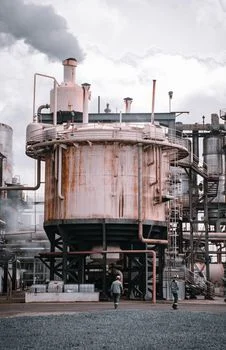
Capital expenditure (CAPEX) for a 100 m³/h Membrane Bioreactor (MBR) system in Hawalli ranges from KWD 200,000 to KWD 500,000, depending on the complexity of the influent and the required level of automation. While this is higher than the KWD 80,000 to 250,000 required for a similarly sized activated sludge plant, the total cost of ownership often favors MBR due to lower land requirements and higher reliability in meeting KEPA’s strict 2026 limits. DAF systems offer a more budget-friendly entry point for primary treatment, with CAPEX starting at KWD 50,000 for 10 m³/h units.
Operational expenditure (OPEX) is dominated by energy consumption and sludge management. In Kuwait, industrial electricity rates fluctuate, but wastewater aeration remains a significant draw. MBR systems typically cost $0.08–$0.15 per cubic meter of treated water in energy, while activated sludge can reach $0.20/m³ if the blowers are inefficient. Chemical dosing for DAF systems (coagulants and flocculants) adds another $0.05–$0.10/m³. For facilities utilizing RO for water reuse, the savings on freshwater purchases (KWD 2–5/m³) can result in a return on investment (ROI) within 24 to 36 months.
The "hidden" cost of non-compliance is the most significant financial driver. With KEPA penalties reaching KWD 10,000/day, a single week of system downtime or process failure can cost more than the entire CAPEX of a DAF unit. Therefore, investing in high-quality sensors and automated PLC controls is a standard recommendation for Hawalli facility managers to ensure zero-risk compliance.
| System Type | CAPEX Range (KWD) | OPEX (KWD/m³) | Maintenance Factor |
|---|---|---|---|
| DAF (10–100 m³/h) | 50,000 – 150,000 | 0.03 – 0.05 | Low (Mechanical) |
| MBR (50–200 m³/h) | 200,000 – 500,000 | 0.06 – 0.09 | Medium (Membranes) |
| RO (20–100 m³/h) | 150,000 – 400,000 | 0.12 – 0.18 | High (Fouling Mgmt) |
| Activated Sludge | 80,000 – 250,000 | 0.07 – 0.11 | High (Process Control) |
Zero-Risk Equipment Selection: A Decision Framework for Hawalli’s Industries
Selecting a wastewater treatment system for a Hawalli-based facility requires a five-step engineering audit to reconcile influent chemistry with KEPA’s zero-tolerance enforcement for heavy metals and high-salinity discharge. The first step must always be a comprehensive lab characterization of the influent under different production loads. Relying on "average" data often leads to undersized systems that fail during peak production cycles. Once the chemistry is understood, the facility must match these parameters against the 2026 KEPA mandates to determine if ZLD or specialized heavy metal removal is required.
Footprint constraints are the next priority. Many industrial plots in Hawalli are land-locked, making the compact nature of MBR or DAF systems preferable over large-scale clarifiers. Following this, a CAPEX vs. OPEX analysis should be performed. While a DAF system has lower upfront costs, an MBR might save more in the long run by reducing sludge volumes and enabling water reuse. Finally, operational complexity must be assessed; if the facility lacks a dedicated environmental engineering team, automated systems with remote monitoring capabilities are essential to prevent accidental discharge violations.
| If Influent Is... | Compliance Goal | Recommended Tech | CAPEX Priority |
|---|---|---|---|
| High FOG/TSS (Food) | KEPA Sewer Limits | DAF + Biological | Medium |
| High COD/Low Space | KEPA 2026 COD <150 | MBR | High |
| TDS >2,000 mg/L | ZLD Mandate | RO + Crystallization | Very High |
| Metal-Laden (Textile) | Cr <0.1 mg/L | Ion Exchange / DAF | Medium |
Frequently Asked Questions
What are the KEPA wastewater discharge limits for Hawalli industries in 2026?
Under KEPA Decree 210/2025, industrial facilities must meet limits of COD <150 mg/L, BOD <30 mg/L, and TSS <50 mg/L. Heavy metal limits are exceptionally strict, including Hexavalent Chromium at <0.1 mg/L and Nickel at <2 mg/L.
How does MBR compare to DAF for food processing wastewater in Kuwait?
DAF is primarily used for physical removal of fats, oils, and grease (80% removal) and suspended solids (90% removal). MBR is a secondary biological process that removes dissolved organics (95%+ COD/BOD removal) and provides a much higher quality effluent suitable for reuse or direct sewer discharge.
What is the cost of industrial wastewater treatment systems in KWD?
For a mid-sized facility (50–100 m³/h), CAPEX ranges from KWD 50,000 for simple DAF units to KWD 500,000 for advanced MBR systems. OPEX typically ranges from KWD 0.05 to 0.15 per cubic meter treated, depending on energy and chemical needs.
How can Hawalli plants achieve zero-liquid discharge (ZLD) for high-salinity effluent?
Plants must implement a multi-stage process involving high-recovery Reverse Osmosis (RO) followed by evaporation or crystallization. This is mandatory for effluents with TDS exceeding 2,000 mg/L to prevent damage to municipal infrastructure.