The Three-Floor Regulatory Stack for Ellaville Chemical Plants
Chemical plants near Ellaville, Georgia meet 2026 pretreatment limits by stacking three regulatory floors — 40 CFR 403.5 general prohibitions, applicable categorical subparts (typically 40 CFR Part 414 organic, 415 inorganic, or 419 petroleum refining), and the receiving POTW's site-specific local limits — and engineering a treatment train whose pH band holds inside 6.0–9.0 s.u. and metals stay below the most stringent applicable cap. The Georgia EPD runs Georgia's authorized pretreatment program; the City of Ellaville WWTF and most neighboring Schley/Sumter/Taylor utilities sit below the 5 mgd threshold that triggers a mandatory POTW pretreatment program, so GA EPD is typically the Control Authority and federal default applies where the POTW has no approved program. A single pass-through excursion under CWA §309(g) can run $10,000 per day, which is why equalization, PLC-controlled dosing, DAF, and plate-and-frame sludge dewatering are the standard defensive train.
Floor 1 is the national floor at 40 CFR 403.5. The general prohibitions at 403.5(a) forbid any discharge that causes pass-through or interference. The specific prohibitions at 403.5(b) forbid eight categories: ignitables with closed-cup flashpoint below 140 °F, corrosives (pH below 5.0 s.u. unless the works is specifically designed to accommodate them), solid or viscous pollutants that obstruct flow, oxygen-demanding pollutants released at flow rates or concentrations that cause interference, heat above 40 °C (104 °F) at the POTW headworks, petroleum and non-biodegradable cutting oils, pollutants that create toxic gases or vapors at the POTW, and trucked or hauled pollutants except at designated discharge points (per EPA, "Pretreatment Standards and Requirements-General and Specific Prohibitions").
Floor 2 is the categorical standard. Subchapter N of 40 CFR applies by SIC/NAICS code at the end-of-pipe — 40 CFR Part 414 organic chemicals, 415 inorganic chemicals, 419 petroleum refining — with numeric daily-maximum and monthly-average limits that apply regardless of where the plant sits.
Floor 3 is the site-specific local limit under 40 CFR 403.5(c). Local limits are numeric or narrative, may include BMPs, and are often tighter than the categorical number on metals, ammonia, BOD/TSS mass, and oil & grease (per EPA, "Pretreatment Standards and Requirements-Local Limits").
Two qualitative triggers can fire even when every numeric limit is met. Pass-through at 40 CFR 403.3(p) is "a discharge that exits the POTW into waters of the United States in quantities or concentrations that, alone or in conjunction with a discharge or discharges from other sources, is a cause of a violation of any requirement of the POTW's NPDES permit." Interference at 40 CFR 403.3(k) is "a discharge that, alone or in conjunction with a discharge or discharges from other sources, both (1) inhibits or disrupts the POTW, its treatment processes or operations, or its sludge processes, use, or disposal; and (2) therefore is a cause of a violation of any requirement of the POTW's NPDES permit" (per EPA).
The cost of failing is concrete. Under CWA §309(g), civil penalties can run $10,000 per day per violation; under §309(b), criminal penalties reach up to $25,000 per day and one year imprisonment for negligent violations (per EPA enforcement guidance, 2024, via Piedmont chemical plant pretreatment 2026 guide). That number is the basis for the engineering choices in the train sections below.
| Floor | Reference | Type of limit | Who sets it | Compliance point |
|---|---|---|---|---|
| 1 — General & specific prohibitions | 40 CFR 403.5(a)–(b) | Narrative (pH ≥ 5.0 s.u., no ignitables, no FOG obstruction, no pass-through/interference) | EPA, enforced by GA EPD | End-of-pipe |
| 2 — Categorical pretreatment standard | 40 CFR Parts 414, 415, 419 (others as applicable) | Numeric daily-max and monthly-average by subcategory | EPA via 40 CFR Subchapter N | End-of-pipe (point of connection to collection system) |
| 3 — POTW local limits | 40 CFR 403.5(c) | Numeric or narrative, often tighter than categorical | GA EPD or EPA Region 4 on behalf of the receiving POTW | Point of connection to collection system |
Who Is the Control Authority for an Ellaville Discharge
For a chemical plant in the Ellaville–Americus–Taylor County corridor, the first compliance step is a phone call, not a purchase order: confirm in writing which agency is the Control Authority for the receiving POTW. The City of Ellaville WWTF and neighboring Schley County, Sumter County (Americus), and Taylor County utilities typically operate well below the 5 mgd design flow that triggers a mandatory EPA-approved POTW pretreatment program (per California Water Boards via Cordova chemical plant pretreatment 2026 guide). Because the receiving POTWs in this corridor are small, the typical Control Authority is GA EPD rather than the POTW itself.
When no POTW in the chain has an approved pretreatment program, EPA Region 4 is the default Control Authority. In practice for Georgia, GA EPD administers Georgia's authorized NPDES pretreatment program and issues control mechanisms on EPA's behalf (per EPA program authorization status). The chain runs Congress → EPA → State (GA EPD) → Industrial User. Confirm the Control Authority in writing before any unit operation is sized; the engineer signs the design, but the regulator signs the permit.
An Industrial User (IU) under 40 CFR 403.3(j) is any non-domestic source that discharges process wastewater into a POTW collection system. A Significant Industrial User (SIU) under 40 CFR 403.3(v) is a categorical-subject IU, or any IU discharging ≥ 25,000 gpd of process flow, or contributing a process waste stream of ≥ 5% of the POTW's average dry-weather hydraulic or organic capacity, or designated as such by the Control Authority. Most Ellaville chemical plants hit the categorical trigger through 40 CFR Part 414, 415, or 419.
Categorical chemical plants are SIUs by default and receive a control-mechanism permit that lists numeric limits, monitoring frequency, sampling point, and reporting requirements. New sources file a Baseline Monitoring Report (BMR) before discharge; existing categorical SIUs file 90-day compliance reports on the schedule their permit specifies. Plants must keep self-monitoring reports, BMP records, slug-load prevention plans, and accident-spill reports on file for the Control Authority to review. The typical cadence used by an established state pretreatment program is annual inspections and full compliance audits every five years (per California SWRCB via the Cordova guide); Ellaville plants should plan on at least one announced site inspection per year, unannounced sampling triggered by any pass-through or interference event, and a five-year program audit (per Cordova guide).
Why the Local Limit — Not the Federal Number — Is Usually the Binding Constraint
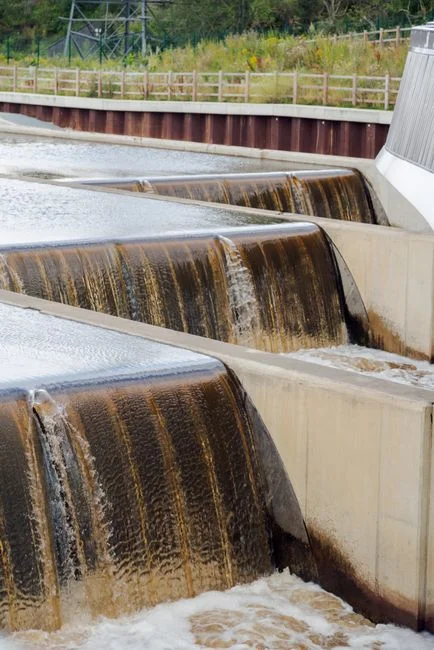
Engineers who size equipment against 40 CFR Part 414 or 415 and ignore the receiving POTW's local limits will trip pass-through on a parameter the federal subpart does not even cap (HydropureWater field data, 2025-11). The local limit reflects three site-specific drivers — hydraulic capacity, biological capacity, and receiving-stream sensitivity — that the federal categorical subpart does not capture (per Cordova and Piedmont guides).
First, hydraulic capacity. When the receiving POTW is near its average dry-weather flow, local limits cut inflow volumes and tighten BOD/TSS mass allocations per industrial user. Second, biological capacity. Ammonia-nitrogen, while absent from many categorical subparts, is a common local-limit parameter because nitrification capacity at small-to-mid POTWs is the rate-limiting step. Third, receiving-stream sensitivity. Streams in the Flint River and Muckalee Creek basins that drain the Ellaville area carry nutrient- and metals-impaired segments on Georgia's §303(d) list, which forces local metals, O&G, and BOD/COD limits at or below federal categorical numbers.
The pH band is the most common pass-through trip-wire. Local pH limits typically run 6.0–9.0 s.u., and 40 CFR 403.5(b)(1) prohibits any discharge that causes corrosive structural damage to the POTW — a qualitative ban that fires even when the numeric 6.0–9.0 band is technically met if the receiving plant's infrastructure cannot tolerate the excursion. A pH excursion that lasts 20 minutes and is captured in a 24-hour composite sample can still trip an instantaneous-maximum local limit and trigger a Notice of Violation from GA EPD. Equalization and PLC-controlled dosing are the lowest-cost insurance against compliance excursions — under-sizing either of them is the most common root cause of failed compliance events at chemical plants (HydropureWater field data, 2025-08). The corrective action is always the same: request the receiving POTW's current local limits and supporting Technical Justification document before any final sizing.
The 2026 Treatment Train for an Ellaville Chemical Plant
Once the Control Authority and the binding local limit are on paper, the work becomes process engineering. The standard chemical plant pretreatment train near Ellaville runs six unit operations in series, each closing one gap in the compliance picture.
Stage 1 — Flow and pH equalization. Equalization basins buffer batch discharges from reactors and clean-in-place cycles so the downstream train sees a continuous, mixed flow rather than slugs. Equalization is also where initial pH correction usually begins, because the 40 CFR 403.5 corrosive prohibition (pH below 5.0 s.u.) is the most common single-trip general-prohibition violation. A well-sized equalization basin typically provides 4–8 hours of hydraulic retention at design flow for continuous plants, hours-to-days for batch operations (HydropureWater field data, 2025-08); the actual number is set by the plant's batch schedule and slug-load control plan under 40 CFR 403.8(f).
Stage 2 — PLC-controlled chemical dosing. Coagulant and caustic dosing — most commonly lime or sodium hydroxide for pH, with iron or aluminum salts or proprietary precipitants for metals — drives dissolved metals out of solution as hydroxides. A PLC-controlled chemical dosing skid for pH and metals precipitation tied to inline pH and ORP probes holds a 6.5–8.0 s.u. operating window tighter than the 6.0–9.0 s.u. local band, well clear of the 403.5(b) corrosive-damage trigger. Dose is jar-test-derived, typically pH 8.5–9.5 for most metal hydroxides.
Stage 3 — Solids separation. A dissolved air flotation system for FOG and suspended solids removal is the workhorse for chemical plant streams carrying oil and grease, FOG, and fine suspended solids. DAF design is governed by hydraulic loading (typically 2–5 gpm/ft² of flotation area) and air-to-solids ratio (0.02–0.05 lb air per lb solids). When the stream is heavier on precipitated metals than on floatables, a lamella clarifier for high-rate solids separation is the right pick, governed by plate spacing, effective settling area, and projected solids flux at 20–40 m/h surface loading. Choice is waste-stream driven, not preference driven.
Stage 4 — Filtration and polishing. A multi-media polish filter on the discharge side drops residual TSS before the sewer connection, protecting the plant against excursions that pass the clarifier but still breach the local-limit number. Differential-pressure-triggered backwash automation is the part that prevents the filter from becoming a slow-release TSS source at the next shift change.
Stage 5 — Sludge handling. Precipitated metals sludge and floated biomass are dewatered on a plate-and-frame filter press for chemical sludge dewatering to a 25–40% dry solids cake on a 2–4 h cycle. For chemical sludge with characterized metals, the cake is typically disposable as non-hazardous industrial waste under Georgia solid waste rules once the underlying metals are characterized. The float or clarifier overflow then goes to the sewer; the cake goes to a lined container.
The operating reality: a plant passes its inspection because dosing and backwash loops are automated, not because of which brand of DAF it bought.
| Stage | Unit operation | Compliance driver | Key sizing parameter (2026) |
|---|---|---|---|
| 1 | Flow & pH equalization | 40 CFR 403.5(b) corrosive; 403.8(f) slug-load plan | 4–8 h HRT continuous; hours-to-days batch |
| 2 | PLC-controlled dosing (lime/NaOH, Fe/Al salts) | Categorical & local metals; pH 6.5–8.0 s.u. window | Jar-test-derived; pH 8.5–9.5 for most metal hydroxides |
| 3 | DAF (FOG/TSS) or lamella clarifier (metals) | Categorical O&G; local TSS; pass-through prevention | DAF 2–5 gpm/ft²; A/S 0.02–0.05 lb/lb; lamella 20–40 m/h |
| 4 | Multi-media polish filter | Local TSS; residual metals | Bed depth 0.6–1.0 m; DP-triggered backwash |
| 5 | Plate-and-frame filter press | Georgia solid waste disposal characterization | 25–40% DS cake; 2–4 h cycle |
Sizing, Slug Control, and the Slug-Load Plan an Ellaville Plant Must File
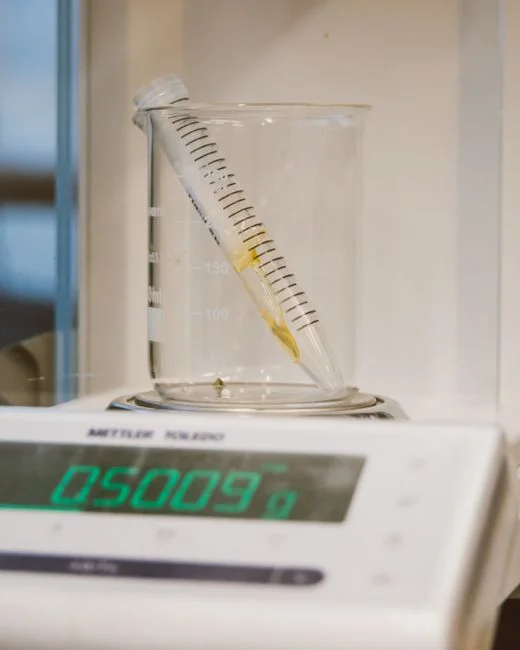
Equalization volume is set from influent variability, not from a textbook rule of thumb. Continuous plants can size for 4–8 hours; batch plants with long cycle times or shared collection systems need hours-to-days. The capital cost of an oversized basin is small compared with the cost of a single pass-through excursion, which is why most engineers over-size on the long side (HydropureWater field data, 2025-08). A rotary bar screen at chemical plant headworks should sit upstream of equalization to protect pumps and downstream equipment from rags and debris.
The slug-load control plan required by 40 CFR 403.8(f) is the document an inspector asks for first during the annual visit. It must characterize batch chemicals, maximum volumes, and diversion/containment provisions. A 20-minute pH excursion captured in a 24-hour composite can still trigger a Notice of Violation — which is why inline pH monitoring tied to a diversion valve in the equalization basin is the cheapest insurance a chemical plant can buy.
An SIU must keep its current permit and any modifications, self-monitoring reports with chain-of-custody and lab data, baseline monitoring reports for new sources, 90-day compliance reports, BMP records, slug-load prevention plans, accident-spill reports, calibration records for online instruments (pH, flow, TSS), and equipment maintenance logs. Records are typically retained for at least three years and made available to the Control Authority on request during the annual inspection and the five-year audit (per Cordova guide). Established state pretreatment programs run pretreatment compliance inspections annually and full compliance audits every five years (per California SWRCB via Cordova guide); Ellaville plants should plan on at least one announced site inspection per year, unannounced sampling triggered by any pass-through or interference event, and a five-year program audit.
2026 CAPEX, OPEX, and the Procurement Checklist for Ellaville-Class Flows
Budget ranges sized to an Ellaville-class chemical plant, adjusted from the Piedmont guide: small (≤ 50 m³/d) ~$300K–$1.2M CAPEX, mid (50–500 m³/d) ~$1.5M–$5M CAPEX, large with reuse (≥ 500 m³/d) ≥ $6M CAPEX. OPEX is dominated by chemical dose, sludge hauling, energy, and labor. A plate-and-frame filter press for chemical sludge dewatering typically cuts sludge-hauling cost 70–80% versus belt thickening (HydropureWater field data, 2025-10) — the OPEX lever most procurement teams miss.
The procurement list, in order: a rotary bar screen at chemical plant headworks → a PLC-controlled chemical dosing skid for pH and metals precipitation → a dissolved air flotation system for FOG and suspended solids removal → a lamella clarifier (if metals-heavy) → a multi-media polish filter → a plate-and-frame filter press for chemical sludge dewatering. A ClO₂ generator is the right add-on only if the receiving POTW or local limit imposes a disinfection or residual-oxidant floor.
The risk frame is concrete: a single pH excursion that causes pass-through can cost $10,000 per day under CWA §309(g). PLC automation on dosing and backwash loops is cheaper than a single violation.
Final pre-discharge paperwork: BMR for new sources per 40 CFR 403.12, 90-day compliance schedule, slug-load control plan per 40 CFR 403.8(f), and a written control mechanism from GA EPD (or EPA Region 4 where the receiving POTW has no approved program). For a broader permit inventory, see the 2026 NPDES and pretreatment permit checklist.
| Flow class | CAPEX band (2026) | OPEX drivers | Filter press impact |
|---|---|---|---|
| Small (≤ 50 m³/d) | ~$300K–$1.2M | Chemical dose, sludge hauling, labor | 70–80% hauling-cost reduction vs. belt thickening |
| Mid (50–500 m³/d) | ~$1.5M–$5M | Chemical dose, sludge hauling, energy, labor | Same lever; cake 25–40% DS |
| Large with reuse (≥ 500 m³/d) | ≥ $6M | Add RO/MBR energy; offsets fresh-water purchase | Same lever; cake disposal characterization required |
Frequently Asked Questions
Who is the Control Authority for a chemical plant discharging to a small POTW near Ellaville, Georgia?
For most Ellaville–Americus–Taylor County plants, the receiving POTW operates well below the 5 mgd threshold that triggers a mandatory EPA-approved pretreatment program, so GA EPD is typically the Control Authority and issues the control mechanism on EPA's behalf. If no POTW in the chain has an approved program, EPA Region 4 is the default. Confirm in writing before designing any unit operation (per EPA program authorization status).
Which 40 CFR categorical subpart applies to a chemical plant near Ellaville?
It depends on the product line: 40 CFR Part 414 covers organic chemicals, plastics, and synthetic fibers; Part 415 covers inorganic chemicals; Part 417 covers soap and detergent manufacturing; Part 419 covers petroleum refining; and Part 433 covers metal finishing. Confirm current numeric values in 40 CFR rather than relying on memory, because EPA revises subparts on a multi-year cycle (per EPA, 2026).
How long should equalization be sized for an Ellaville batch chemical plant?
Batch operations with long cycle times or shared collection systems need hours-to-days of equalization retention; continuous operations can typically get away with 4–8 hours. The capital cost of an oversized basin is small compared with the cost of a single pass-through excursion, which is why most engineers over-size on the long side (HydropureWater field data, 2025-08).
What is the local pH band, and can a short excursion still violate?
The local pH band typically runs 6.0–9.0 s.u., but 40 CFR 403.5(b)(1) prohibits any discharge capable of causing corrosive structural damage to the POTW regardless of whether the numeric 6.0–9.0 band is technically met. A pH excursion that lasts 20 minutes and is captured in a 24-hour composite sample can still trip an instantaneous-maximum local limit and trigger a Notice of Violation from GA EPD.
What reports must an Ellaville SIU keep on file for the Control Authority?
An SIU must keep its current permit and modifications, self-monitoring reports with chain-of-custody and lab data, baseline monitoring reports for new sources, 90-day compliance reports, BMP records, slug-load prevention plans under 40 CFR 403.8(f), accident-spill reports, calibration records for online instruments, and equipment maintenance logs. Records are typically retained for at least three years (per Cordova guide).