
Why Pharmaceutical Sludge Thickening Is a Different Problem
Pharma biological sludge is not municipal sludge with a higher price tag. Mixed-liquor suspended solids (MLSS) in a pharmaceutical activated-sludge or membrane bioreactor (MBR) system swing from 3,000 to 12,000 mg/L across a typical batch campaign, while the sludge volume index (SVI) routinely spans 80–200 mL/g depending on whether the basin is receiving API mother liquor, fermentation off-spec, or a clean-in-place (CIP) rinse (Siripattanakul-Ratpukdi, 2014, JOCET vol. 2 no. 2 pp. 150–153). The same study reported influent phenol of 0–100 mg/L and COD of 200–5,000 mg/L, with both parameters and MLSS independently driving removal efficiency — which is why a thickener sized on "average" municipal numbers will underperform within a week of real pharma operation.
Three feed characteristics make the difference. First, solvent carryover from API synthesis or extractive workups can re-emulsify polymer-conditioned floc in the thickener, dropping capture efficiency by 10–20 percentage points in a single shift. Second, antibiotic residues above roughly 10–20 mg/L can stun the biomass and produce pinpoint floc with SVI > 150 mL/g, which gravity thickeners simply will not capture. Third, CIP surges swing pH from 2 to 12 in hours, disrupting polymer charge demand and forcing a wider dose window than municipal plants ever see.
The thickener's job is concentration, not dewatering: it must take dilute biological sludge from 0.5–2% total solids (TS) and lift it to 4–8% TS so a downstream press can finish the job to the 18–25% cake TS typically required for off-site incineration. Confusing thickening with dewatering is the most common spec error in pharma CAPEX requests and is the reason plant engineers must treat the thickener as a standalone piece of equipment, not a "pre-stage" accessory.
Thickener Types Used in Pharmaceutical Plants
Five thickener architectures show up on pharma P&IDs. Each has a defined operating envelope, and the right choice is dictated by SVI, MLSS variability, and whether a DAF already exists upstream.
Gravity thickeners (circular clarifier-style with central drive and picket rake) deliver only 2–4% TS underflow and rely on settling velocity alone. They are footprint-heavy — typically 8–15 m² per m³/h of feed — and capture poorly on light, fluffy floc (SVI > 150 mL/g), so they appear mainly in older API plants that have not yet retrofitted.
Gravity belt thickeners (GBT) are the workhorse. A porous belt (30–60% open area) carries polymer-conditioned sludge through a gravity drainage zone, with hydraulic loading of 20–50 m³/h per meter of belt width and polymer injected upstream of a mixing/conditioning zone. They handle activated-sludge thickening reliably at 4–6% TS underflow and tolerate the feed swings seen in batch API plants.
Rotary drum thickeners pass sludge through an internal drum screen with a wash spray, concentrating to 4–7% TS. They accept MLSS from 3,000 to 12,000 mg/L, are forgiving of variable feed, and require less floor space than a GBT of equivalent capacity — useful in congested formulation facilities.
Dissolved air flotation (DAF) thickeners reach 3–5% TS underflow at an air-to-solids ratio of 0.02–0.05 (kg air per kg dry solids). They dominate when biological sludge is light (SVI > 150 mL/g) or when an upstream primary DAF is already producing float that can be co-thickened — a common arrangement in fermentation plants.
Mechano-chemical screw thickeners are a compact emerging option for 1–10 m³/h duties. A polymer-conditioned sludge cake is mechanically expressed through a screen basket, reaching 6–10% TS underflow at lower polymer dose than a GBT, and fits inside a 2–3 m² footprint — well suited to pilot API or small-batch cytotoxic facilities.
Side-by-Side Comparison: Which Thickener Fits Your Pharma Plant
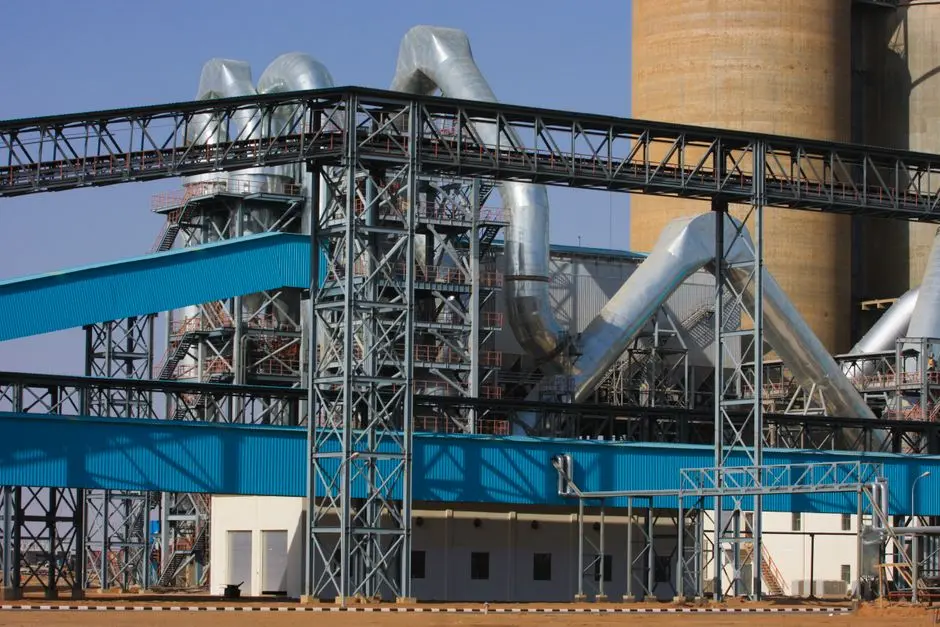
No single thickener fits all pharma cases. The decision pivots on SVI, feed variability, and whether DAF float is already on site. The matrix below is sized for mid- to large-scale pharma (10–200 m³/h feed) and is what to lift into a specification memo.
| Thickener type | Typical underflow TS | Hydraulic loading | Polymer dose (kg/dry ton) | Footprint (m² per m³/h) | CAPEX class | Primary OPEX driver | Best-fit pharma duty |
|---|---|---|---|---|---|---|---|
| Gravity (circular) | 2–4% | 1–2 m³/m²·h | 0–2 | 8–15 | Low | Sludge loss to overflow | Legacy sites with heavy, low-SVI sludge |
| Gravity belt (GBT) | 4–6% | 20–50 m³/h per m belt width | 3–8 | 2–4 | Medium | Cationic polyacrylamide | Workhorse for activated-sludge thickening |
| Rotary drum | 4–7% | 10–30 m³/h per unit | 3–6 | 1.5–3 | Medium-high | Polymer + washwater | Variable MLSS, space-constrained sites |
| DAF thickener | 3–5% | 5–25 m³/h per unit | 1–4 | 2–3 | Medium | Saturated recycle pump power | Light floc (SVI > 150) or co-thickened DAF float |
| Screw (mechano-chemical) | 6–10% | 1–10 m³/h per unit | 2–5 | 0.5–1.5 | Low-medium | Polymer + drive power | Small-batch / pilot API plants |
Gravity belt and rotary drum dominate mid- to large-scale pharma throughputs. DAF thickeners are preferred when the upstream primary treatment is already a DAF, when sludge is consistently light, or when a plant is already conditioned to operate saturator equipment. Mechano-chemical screw units are the right answer at 1–10 m³/h, where a full GBT line cannot be justified.
Sizing a Sludge Thickener: Worked Inputs from Pharma Duty
A defensible thickener spec starts with six inputs. Treat each as a measured or committed value, not a marketing estimate, because the thickener's hydraulic and polymer sizing falls out of them directly.
| Sizing input | Typical pharma range | Source / note |
|---|---|---|
| Feed flow (m³/d) | 50–2,000 | Plant flow balance |
| Feed TS (%) | 0.5–2.0 (3,000–12,000 mg/L MLSS band) | Siripattanakul-Ratpukdi (2014) |
| Target underflow TS (%) | 4–8 | Set by downstream press |
| Capture efficiency (%) | 90–98 (95 typical) | Polymer-dependent |
| Polymer dose (kg/dry ton) | 3–8 (cationic polyacrylamide) | Sludge-specific jar test |
| Available footprint (m²) | Site-specific | Plot plan |
Worked example for a representative mid-size API plant: 500 m³/d of waste activated sludge at 8,000 mg/L (0.8% TS) to be thickened to 5% TS at 95% capture. Dry-solids loading is 500 × 0.008 = 4,000 kg DS/d, or about 4 t/d. To lift from 0.8% to 5% TS at 95% capture, underflow mass is 4,000 × 0.95 = 3,800 kg DS/d, which equals 3.8 / 0.05 = 76 m³/d of thickened sludge, so roughly 3.2 m³/h around the clock. The GBT needed is 3.2 m³/h at 35 m³/h per m belt width → a 1.0 m belt running near the bottom of its range, with a design safety factor of 1.25–1.5× recommended where MLSS swings to 12,000 mg/L (Siripattanakul-Ratpukdi, 2014). That safety factor pushes the spec to a 1.25–1.5 m belt or a single larger rotary drum unit.
For gravity-thickener scopes — rare in pharma but still in scope for legacy sites — the solids-flux / Kynch methodology remains the correct backbone, as laid out in the Routledge chapter "Sources of Sludge and Thickener Design" (DOI 10.1201/9780203734209-16). The chapter's limiting-flux and underflow-concentration relationships should be used whenever a circular thickener remains in the design basis.
Polymer Conditioning and Operating Cost
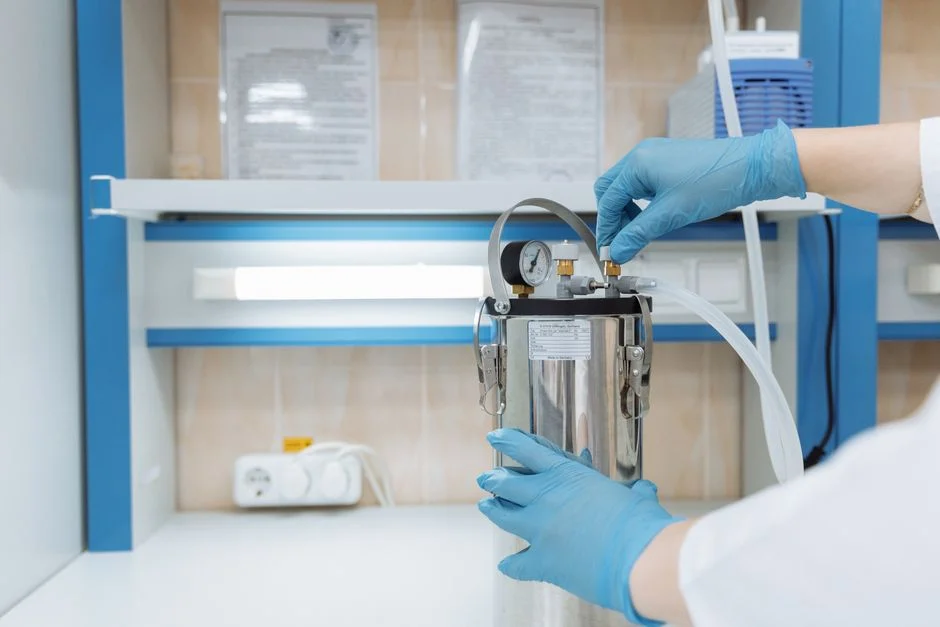
Polymer is the single largest controllable OPEX line on most pharma thickeners, and dose varies more in pharma than in municipal service. Cationic polyacrylamide doses of 3–8 kg per dry ton are typical for biological pharma sludge, with 0.05–0.3% neat-solution make-down. DAF thickening uses the lower end (1–4 kg/dry ton); gravity belt thickening runs the middle of the range (3–8 kg/dry ton). At 5,000 t DS/yr, the gap between DAF and GBT dosing is on the order of 10–20 t of polymer per year — a number that justifies the GBT only when the underflow TS benefit or footprint argument is real.
Worked OPEX for the sizing example: 4,000 kg DS/d × 5 kg polymer/t DS = 20 kg polymer/d, or about 7.3 t/yr. At 2026 cationic polyacrylamide prices, the polymer line alone lands in the low- to mid-five-figure USD range per year, before washwater and power. Ancillary OPEX is washwater at 5–10% of feed for GBT, and power at 0.05–0.15 kWh/m³ of feed.
| OPEX line | Unit consumption | Annualized for 500 m³/d, 0.8% TS case |
|---|---|---|
| Cationic polyacrylamide (GBT, 5 kg/t DS) | 20 kg/d | ~7.3 t/yr |
| Washwater (GBT, 7.5% of feed) | 37.5 m³/d | ~13,700 m³/yr |
| Power (GBT, 0.1 kWh/m³) | 50 kWh/d | ~18,250 kWh/yr |
| Polymer make-up skid footprint | — | 2–4 m² (paired with the automatic polymer dosing skid) |
Specifying the Right Thickener: 2026 Pre-Purchase Checklist
Run this list into every vendor meeting in 2026. Items in the second block are non-negotiable for most multi-product API and formulation sites.
- Feed characterization: MLSS range, SVI band, residual solvent panel, CIP surfactant profile, and peak-vs-average flow ratio across the batch cycle.
- Underflow target TS: set by the downstream press, not by the thickener vendor's catalog cut.
- Polymer system: dose window (kg/dry ton), make-down concentration, and aging time — typically paired with an automatic polymer dosing skid.
- Automation level: PLC integration with the upstream biological system, SVI-driven polymer trim, and remote trending of capture efficiency.
- Materials of construction: 304 stainless for non-solvent duties, 316L for wetted parts where chloride or solvent exposure is routine, ATEX-rated panels where the feed carries solvent vapors.
- CIP compatibility: elastomers and seal materials rated for the site's hot-CIP chemistry (typically pH 2–12, 60–80 °C).
- Discharge limits: soluble COD and TN in the thickener overflow, which can re-load the biological system if capture drops below 90%.
- Downstream pairing: the thickener should be specified alongside a downstream plate-and-frame filter press targeting 18–25% cake TS for off-site incineration. The 2026 sludge dewatering system design guide covers the press-side sizing math, and water-reuse trade-offs are detailed in the pharmaceutical water reuse engineering guide.
Frequently Asked Questions
What underflow TS should a pharmaceutical sludge thickener target?
Target 4–8% TS from the thickener, with 5% being a common design point for a downstream plate-and-frame or screw press to reach the 18–25% cake TS required for off-site incineration. Lower than 4% overloads the press; higher than 8% on a GBT or rotary drum usually requires polymer dose above 8 kg/dry ton and stops being economic (per the worked example above).
How does SVI change thickener selection for pharma biological sludge?
When SVI is consistently above 150 mL/g, gravity belt and rotary drum thickeners lose capture rapidly and a DAF thickener — or a DAF-thickener retrofit — is the right answer. Below 120 mL/g, a GBT or rotary drum is the more cost-effective choice, with polymer dose in the 3–6 kg/dry ton window (per Siripattanakul-Ratpukdi, 2014, on MLSS-SVI coupling in phenolic pharma systems).
Is the Routledge thickener-design chapter still the right methodology reference in 2026?
Yes. The chapter "Sources of Sludge and Thickener Design" (Routledge, DOI 10.1201/9780203734209-16) remains the standard methodology backbone for solids-flux and Kynch analysis wherever a gravity thickener is still in scope, and its limiting-flux approach is what most vendor selection software still uses for circular-thickener sizing.