Why the DAF-vs-Clarifier Question Is Different for Chemical Plants
For Malvern, PA chemical plants in 2026, choose DAF when the stream carries oils, surfactants, or light colloidal FOG (typical 87–95% removal per S3 and S5 field data), and choose a clarifier or lamella plate unit when the load is dense inorganic sludge, metal hydroxides, or settleable precipitates. Most chemical plants run a hybrid: DAF primary, lamella clarifier polish, then 40 CFR 403-compliant discharge to the local POTW.
The reason the generic DAF-vs-clarifier comparison fails in NAICS 325 sites is that chemical-plant wastewater is not one stream — it is at least three. The first sub-stream is light FOG and surfactant-stabilized emulsions from cleaning, batching, and reactor washdowns. The second is dense inorganic precipitates and metal hydroxides (Ni, Cu, Fe, Zn) from spent plating baths and neutralization steps, with sludge specific gravity often 1.2–1.4. The third is hot or pH-extreme process water from acid pickling or caustic stripping, where chemistry swings between pH 2 and pH 12 inside a shift. Each of these behaves differently in a flotation cell versus a settling tank, so the "one answer" most vendor articles publish is structurally wrong for a chemical site.
Clarifiers physically cannot capture sub-100 µm emulsified oil and surfactant-stabilized droplets — they do not settle under gravity at practical hydraulic residence times of 2–4 hours. Conversely, a DAF cell struggles with high-density metal-bearing sludge because micro-bubbles attach poorly to particles already at or above the density of the water column, and the float blanket rides irregularly with channeling. Picking the wrong primary unit for a chemical stream is not a sizing error — it is a permit-risk error that the 2026 capex reviewer should see coming on the P&ID, not the discharge monitoring report.
Removal Efficiency and Operating Parameters: DAF vs Clarifier Side by Side
Two specifications drive the chemical-plant DAF-vs-clarifier choice: removal efficiency against the binding contaminant, and footprint-energy balance at the target flow. The table below uses verified field data (S3 commercial case studies, S5 Moleaer DAF deployment data, and supplier catalog ranges) and is the comparison most 2026 RFPs for Malvern-area chemical plants will reference.
| Parameter | Dissolved Air Flotation (DAF) | Gravity / Lamella Clarifier |
|---|---|---|
| Target contaminant — emulsified FOG / surfactants | 87–95% removal (S3 food plant 95%; S5 Moleaer 87% inlet-to-outlet) | 60–75% removal on emulsified FOG |
| Target contaminant — light/colloidal TSS | 80–95% | 70–85% |
| Target contaminant — dense metal hydroxide / heavy inorganics | 60–85% (bubble attachment is the limiter) | 85–95% (S3 mining case: 90% at lower cost) |
| Hydraulic residence time | 15–30 minutes | 2–4 hours (gravity); 20–40 m/h surface loading (lamella) |
| Footprint per 10 m³/h | ~3–6 m² (compact DAF line covers 4–300 m³/h in 13 models) | ~8–18 m² (gravity); ~4–8 m² (lamella plate) |
| Energy intensity | 0.05–0.15 kWh/m³ (saturator + recycle pump + compressor) | 0.01–0.04 kWh/m³ (rake + sludge pump) |
| Sludge consistency | 3–6% DS float (good for plate press dewatering) | 1–3% DS underflow (thicker with sludge blanket) |
| Polymer / coagulant demand | Coagulant + flocculant typical; S5 cites up to 20% polymer reduction and up to 100% chemical elimination with nanobubble retrofit | Flocculant only; lower mass but higher volume pumped |
| Material of construction options | SS304, SS316, FRP — relevant for corrosive chemical streams | Carbon steel, SS304, FRP with appropriate coatings |
The two cells to focus on are FOG and dense inorganics — they are the rows that flip the recommendation. On an emulsified chemical stream, DAF is 20–35 percentage points more efficient than a clarifier; on a heavy metal-hydroxide stream, the clarifier wins by 5–10 points at roughly half the energy. The DAF system envelope of 4–300 m³/h and the lamella clarifier's 20–40 m/h surface loading rate are the practical sizing brackets a Malvern chemical plant with a 20–50 m³/h day-tank should be evaluating, not the 500+ m³/h municipal references most vendor white papers recycle.
Malvern, Pennsylvania Compliance Overlay: 40 CFR 403 and Local POTW Limits
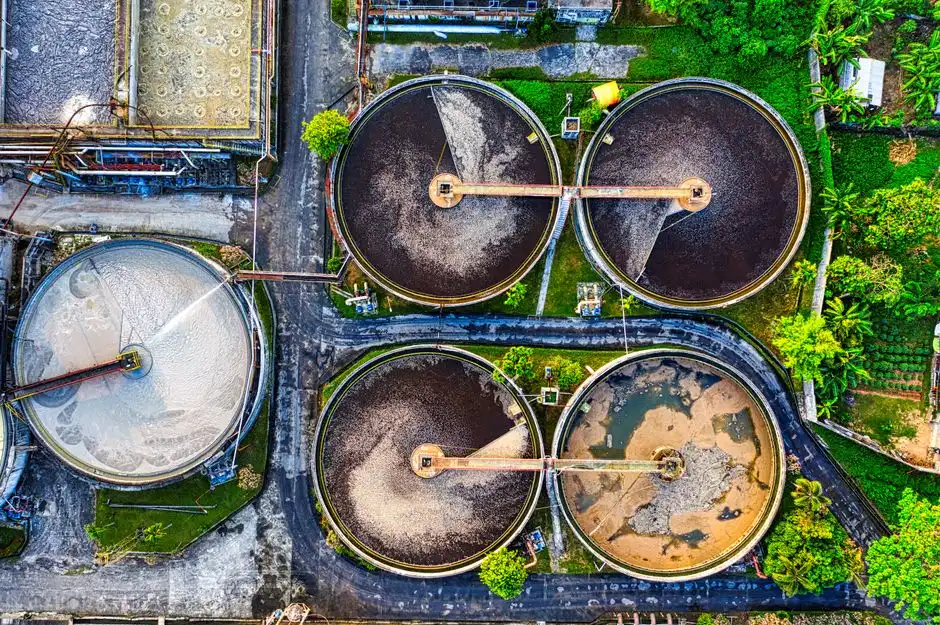
Most Malvern-area chemical manufacturers (NAICS 325) discharge to a local POTW — Aqua Pennsylvania wastewater systems or Chester County treatment authorities serving the Chester Creek and Delaware River watershed — under 40 CFR Part 403 General Pretreatment, with categorical standards layered on for inorganics, organics, or electroplating subcategories (commonly 40 CFR 413, 414, 433, and 469). The discharge permit, not the technology, is the constraint that defines whether DAF or a clarifier is "good enough."
| Parameter | Typical Malvern / SE PA POTW limit (industrial user) | Driving federal anchor | Implication for primary unit |
|---|---|---|---|
| Oil & grease (daily max) | 50–100 mg/L | 40 CFR 403.5(b)(7); local FOG ordinance | Clarifier alone often fails on emulsified chemical streams |
| Total suspended solids (daily max) | 250–350 mg/L | 40 CFR 403.5(b)(2); local limits | Either unit can meet on settleable loads; DAF preferred for colloids |
| pH | 5.0–10.0 (instantaneous) | 40 CFR 403.5(b)(1) | Requires equalization ahead of either unit; FRP/SS316 preferred |
| Metals — Cu, Ni, Cr, Zn (daily max) | Site-specific, often 1.0–4.0 mg/L each | 40 CFR 413/433 categorical; local site limits | Lamella clarifier is the workhorse; DAF struggles on dense flocs |
| Total toxic organics (TTO) | 2.13 mg/L (per 40 CFR 403 Appendix A) | 40 CFR 403 Appendix A | DAF or clarifier alone insufficient — needs carbon or biotreatment downstream |
The overlooked risk in the 2026 capex line item is the FOG row. Local POTWs in SE Pennsylvania have tightened FOG enforcement, with surcharges and IU violations triggered at 100 mg/L on chemical streams carrying surfactants. A clarifier-only design — selected because it is 40–60% cheaper to install — frequently fails the FOG limit on surfactant-laden chemical streams, which then converts the "savings" into a Notice of Violation, surcharges, and a forced upgrade within 12 months. The framing rule for a Malvern engineer is simple: if the binding permit limit is FOG or emulsified organics, DAF is structurally required; if the binding limit is settleable heavy metals or TSS on a heavy stream, lamella clarifier is sufficient; if both, run the hybrid. Comparable Piedmont chemical plant 40 CFR 403 pretreatment guide and Trenton-area chemical plant pretreatment guide analyses confirm the same POTW envelope for adjacent I-95 corridor jurisdictions.
Sized CAPEX and OPEX Bands for a 20–50 m³/h Chemical Plant
The reference case for a Malvern-area 2026 capex line item is a small-to-mid NAICS 325 plant along the US 202 / I-76 corridor: 20–50 m³/h average daily flow, single-shift (8 h/d) operation, mixed chemical stream at FOG 200–800 mg/L and TSS 300–1,200 mg/L, with periodic metal-bearing rinse spikes. This is the band where most procurement teams will sit down and either approve or defer the line item.
DAF unit CAPEX in this band runs from the mid-five-figures to low-six-figures USD, with the wide spread driven by material of construction (SS304 baseline, SS316 for chloride/chloride-bearing chemical streams, FRP for some acid streams) and packaging (skid-integrated vs field-built). The DAF system in the 20–50 m³/h size class anchors the low end of that range; SS316 builds with integrated skim package, press feed tank, and VFD-driven saturator sit at the top. A lamella or conventional clarifier of equivalent hydraulic capacity is typically 40–60% of DAF CAPEX because there is no saturator, no air compressor, and no automatic skim package.
OPEX is where the 2026 spec should change. DAF OPEX is dominated by compressor kWh (0.05–0.15 kWh/m³), polymer/coagulant dose, and skim-disposal hauling. Clarifier OPEX is sludge pumping and polymer at much lower mass, but at higher volume pumped to dewatering. The modern lever a 2026 spec should price in is intensification: Moleaer's S5 nanobubble data reports up to 100% reduction in chemical demand and up to 20% lower polymer consumption in DAF retrofits, with 400+ projects in the 0.5–40 MGD (80–6,300 m³/h) envelope — directly applicable to a 20–50 m³/h retrofit. Pair either primary with a HydropureWater automatic chemical dosing skid to lock in coagulant/polymer control and cut operator labor; both are standard line items a 2026 procurement team should bundle into the same bid package rather than issue as separate POs.
When to Use Each — A Decision Framework for Malvern Chemical Plants
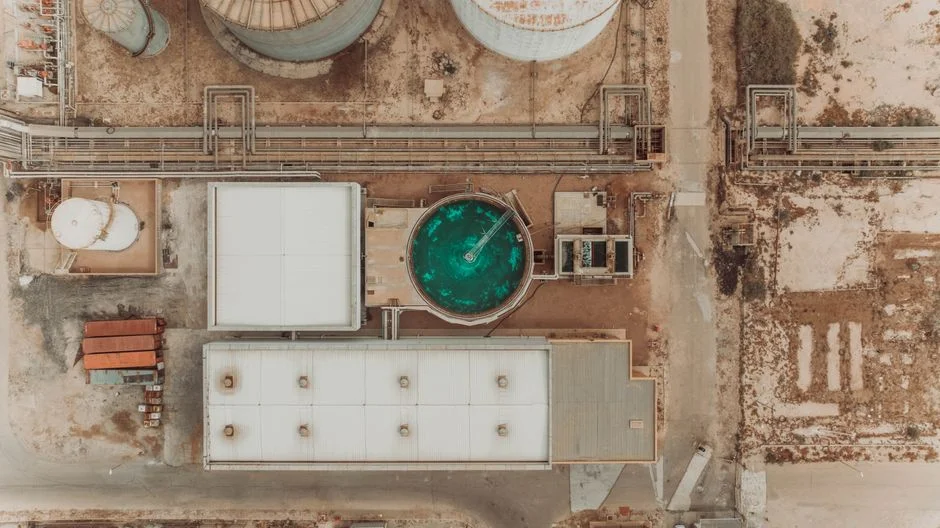
Use this four-question filter on your stream before talking to a vendor. Each step has a binary answer that moves the recommendation.
- Is the binding discharge limit FOG or surfactant-related? If yes, DAF is structurally required. A clarifier alone will not meet 50–100 mg/L FOG limits on emulsified chemical streams — the bubbles are doing the work gravity cannot. Size DAF for 87–95% FOG removal and verify with jar tests on your actual influent.
- Is the stream dominated by dense metal hydroxides or settleable inorganics? If yes, a lamella clarifier is the workhorse. DAF alone is over-spec and wastes energy on particles that want to sink, not float. Lamella's 20–40 m/h surface loading rate also keeps the footprint manageable on tight Malvern sites.
- Is flow above 100 m³/h with mixed chemistry (FOG AND metals in the same stream)? If yes, run a hybrid: DAF primary for the oil/surfactant fraction followed by a lamella clarifier polish for the heavy floc. The academic DAF + biofilm precedent (S4) supports adding a biological step downstream if BOD/COD is also a permit risk — most Malvern chemical plants do not need this unless they have an organic synthesis sub-stream.
- Is the site tight on footprint, or under an ESG mandate to cut chemical consumption? If yes, specify a modern high-rate DAF with nanobubble-style intensification (S5 Moleaer data: up to 100% chemical elimination, 20% polymer reduction) rather than a legacy saturator-only design. The 2026 ESG narrative is as much a procurement driver as the capex line itself.
The 2026 default rule of thumb most Malvern-area chemical RFPs should converge on: DAF as primary, lamella as polish, sludge dewatering via a plate and frame filter press for 18–25% DS cake, with an automatic chemical dosing skid upstream of the DAF to control coagulant and polymer on a flow-paced basis. This is the realistic answer for mixed chemical streams — not the binary DAF-or-clarifier that the top SERP results still publish, and the one a 2026 capex reviewer can defend to a plant manager, an EH&S director, and procurement on the same slide.
Frequently Asked Questions
DAF or clarifier for chemical plant wastewater — which should a Malvern plant choose in 2026?
Yes — the split is contaminant-specific. DAF removes 87–95% of emulsified FOG and surfactants, while a clarifier hits only 60–75% on the same stream (S3, S5). For a Malvern-area NAICS 325 plant with mixed chemistry, the realistic 2026 answer is a hybrid: DAF primary, lamella clarifier polish, plate-and-frame dewatering, then 40 CFR 403-compliant POTW discharge.
Can a clarifier meet Malvern-area POTW FOG limits on a chemical stream?
No — not reliably. Local POTWs in SE Pennsylvania enforce 50–100 mg/L FOG daily max (40 CFR 403.5(b)(7)), and surfactant-stabilized emulsions under 100 µm do not settle at practical clarifier residence times. A DAF unit is structurally required to consistently meet those limits on emulsified chemical wastewater; a clarifier-only design is a permit risk.
Is a hybrid DAF + lamella clarifier train worth the cost for a 30 m³/h chemical plant?
Yes, when the stream carries both FOG and metal hydroxides. At 30 m³/h the hybrid CAPEX premium over a single-unit design is typically 25–40%, and it eliminates the FOG permit risk while keeping lamella's high surface-loading rate on the heavy floc. For a 20–50 m³/h mixed chemical stream, the hybrid is the lowest life-cycle cost option over a 10-year horizon.
What 40 CFR 403 standards apply to a Malvern, PA chemical plant?
Most NAICS 325 sites discharge to a local POTW under 40 CFR Part 403 General Pretreatment, with categorical standards layered on for inorganics (40 CFR 413), organics (414), electroplating (433), or metal finishing (469). Site-specific metals, pH 5–10, and TTO limits are defined in the local IU permit; always confirm with the receiving POTW before finalizing the design basis.
How much chemical and polymer can a 2026 DAF save with modern intensification?
Field data from Moleaer (S5) shows up to 100% reduction in chemical demand and up to 20% lower polymer consumption on intensified DAF systems, with 400+ deployments at 0.5–40 MGD (80–6,300 m³/h). For a 20–50 m³/h Malvern plant, that translates to a measurable OPEX reduction and supports the 2026 ESG narrative around lower chemical footprint.