Why Muscatine Mining and Metals Plants Are Re-evaluating Primary Separation in 2026
Muscatine-area mining, quarry, and metals-finishing plants run a wastewater profile that is unusually punishing for primary separation: high-density mineral fines (silica, iron oxide, limestone dust), intermittent oils and hydraulic fluids from equipment wash-down, and make-up water pulled from the Mississippi River with seasonal turbidity swings that routinely push raw TSS above 1,000 mg/L during spring runoff. Coarse tailings and crusher wash water dominate by mass; oil and colloidal fines dominate by treatment difficulty. Iowa DNR administers the state's NPDES industrial pretreatment program, and because no federal effluent limitation guideline covers most quarry and aggregate operations, individual permits are written case-by-case using best professional judgment (BPJ), with the EPA having documented that BPJ-based permits "may vary, even within the same industrial category, because of the factors prevailing at a particular plant or locality" (per S1, EPA 1984 NPDES permit abstracts preface). The 2026 driver is simple: tighter site-specific limits on TSS, total metals, and oil & grease, combined with sludge-haul tipping fees that have climbed 8–15% year-over-year in the Midwest, are pushing plant engineers to upgrade primary separation rather than over-build biological or RO polish downstream where every pound of solids that escapes the front end becomes a pound the back end has to treat, pay to dispose of, or both.
DAF vs Clarifier: How the Two Mechanisms Actually Behave on Mining Water
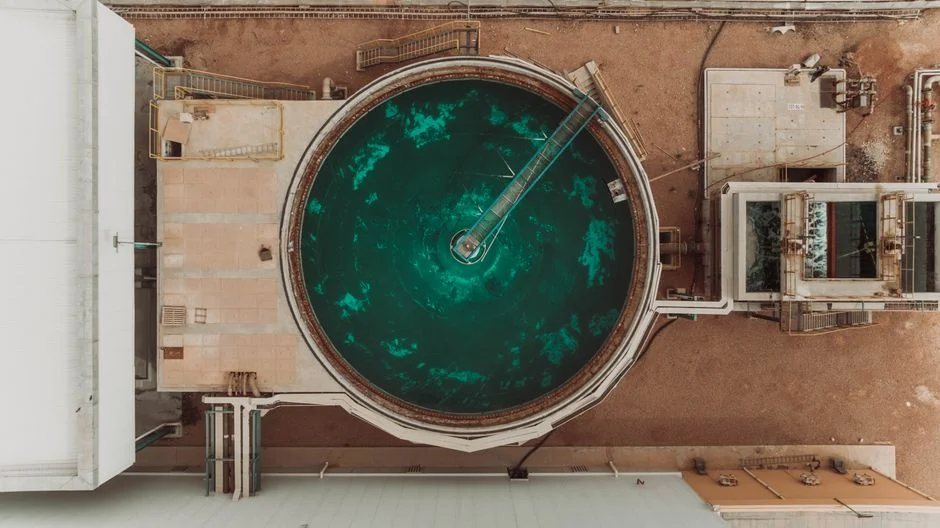
A clarifier removes solids by gravity sedimentation: heavy particles settle to a conical or hopper bottom and are scraped into a sludge pocket, while clarified water overflows a peripheral launder. This process works best when the particle density difference versus water is large, which is the condition met by coarse tailings, sand, and metal-oxide fines typical of a quarry or aggregate wash stream. Clarifiers therefore dominate the bulk-TSS cut on heavy-sediment mining flows (S2, gravity sedimentation principle). A DAF system for mining wastewater polishing removes solids by buoyancy: a pressurized recycle saturates water with air at ≥5 bar (per S4 selection dimension II), the saturated stream is then released into the main flow through proprietary nozzles, and microscopic bubbles nucleate onto chemically conditioned flocs and oil droplets, lifting them to the surface where a skimmer pulls the float layer off (S4 process flow: chemical treatment → air injection → separation → sludge removal → outlet). DAF reaches up to 97% TSS removal and 60–80% COD removal on treatable streams (S4). The engineering choice depends on particle density and surface chemistry; if a particle is emulsified, sub-50 µm, or oily, gravity settling loses efficiency, making the 2026 standard for mining flows a "clarifier as primary, DAF as polish" configuration to exploit both gravity and bubble chemistry.
Side-by-Side Comparison: DAF and Clarifier on the Metrics That Matter to a Plant
The matrix below is the single artifact a procurement engineer will lift into a 2026 bid memo. Numbers are drawn from the cited sources, not invented.
| Metric | Clarifier (gravity) | DAF (dissolved air flotation) |
|---|---|---|
| Mechanism | Gravity sedimentation; sludge raked from hopper bottom | Pressurized air recycle; bubbles attach to flocs/oil and float to surface |
| Footprint per m³/h | Large (long retention); lamella plates compress by ~5–10× | Small (short hydraulic residence, high HSR) |
| TSS removal | ~90% on heavy-sediment mining flow (S2) | Up to 97% on treatable streams (S4) |
| FOG / oil removal | ~70% on a shared oily stream (S2) | ~95% on the same stream (S2) |
| COD removal | Low to moderate; limited on colloidal COD | 60–80% (S4) |
| CAPEX driver | Tank volume, civil work, rake mechanism | Skid, saturator, recycle pump, compressor, PLC |
| OPEX driver / order of magnitude | Low — pumping energy + sludge rake; minimal chemicals | Moderate — recycle pump and air saturation energy plus coagulant + flocculant dose |
| Best mining fit | Primary cut on coarse tailings, sand, crusher wash, metal-oxide fines | Polish step on oil, grease, flotation reagents, sub-50 µm fines |
For order-of-magnitude OPEX framing, treat the clarifier as low and the DAF as moderate. On a mining stream with 1,000–3,000 mg/L TSS, the chemical spend on the DAF polish is the line item that drives OPEX more than energy does — budget for it during sizing, not after.
When a Clarifier Is the Right Answer for a Muscatine Mining Plant
Choose a lamella clarifier for primary mining wastewater treatment when the dominant load is coarse tailings, sand, crusher wash water, or metal-oxide fines with little emulsified oil. The lamella surface loading band of 20–40 m/h (HydropureWater product catalog) is the sizing argument versus a conventional clarifier, and the inclined-plate geometry delivers roughly 30% lower coagulant consumption than an equivalent circular basin because the effective settling area scales with the projected plate area, not the footprint. The result: clarifiers handle ~90% of the TSS on heavy-sediment mining streams at low OPEX, with sludge scraped cleanly into a hopper for downstream dewatering (S2, gravity sedimentation principle). Clarifiers underperform on emulsified oils, sub-50 µm colloids, and any stream that leaves a surface film in a beaker test. If the plant's discharge target is tight on those fractions, plan a DAF polish step next rather than over-dose coagulant into the clarifier.
When a DAF System Is the Right Answer in 2026
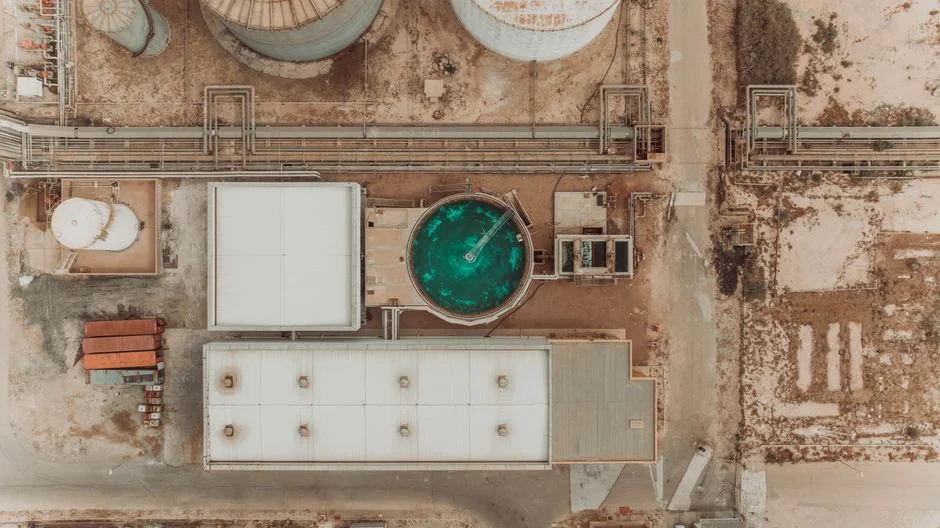
Choose a DAF when the stream contains oils, greases, flotation reagents, or sub-50 µm fines, or when the clarifier effluent is still missing the local TSS or oil & grease target. The 2026 selection criteria from the cited DAF engineering reference (S4 selection dimension table) are: hydraulic surface loading rate (HSR) at the lower end of the design range, saturation pressure ≥5 bar, VFD on the recycle pump, SS316 wetted parts, and PLC control with effluent monitoring. Standard model coverage runs DAF-003 at 3 m³/h through DAF-120 at 120 m³/h (S4 model table) — a mining plant mapping peak wet-weather flow to a unit should add a 20% hydraulic margin and confirm the saturator pump can hold ≥5 bar at that turndown. A DAF system for mining wastewater polishing requires a chemical dosing skid for coagulant and flocculant; under-dosing kills TSS performance, while over-dosing wastes reagent and pulls solids back into the effluent. Treat chemical cost as 30–60% of DAF OPEX on a mining stream and size the dose in jar tests before bid.
The 2026 Default: A Two-Stage Clarifier → DAF → Filter Press Train
For any Muscatine-area mining or metals flow above ~20 m³/h, the winning 2026 bid scope is a three-stage train. Raw wastewater enters grit removal, then a primary lamella clarifier takes out the bulk coarse TSS cheaply; equalization dampens wet-weather swings; a DAF polish step removes the residual oil, fines, and colloids the clarifier cannot; both sludge streams report to a filter press for DAF and clarifier sludge dewatering that produces a handleable cake for haul-off. The cited DAF application list explicitly includes mining, quarrying, and aggregate production (S4), and the hybrid clarifier-plus-DAF configuration is confirmed for complex wastewater streams (S2). The automatic chemical dosing for DAF and clarifier trains provides the reagent control necessary for both units to hit removal targets. This train lets each technology do what it is best at: the clarifier absorbs the volumetric shock of coarse solids at low OPEX, the DAF cleans up the residual colloidal and oily fraction, and the filter press consolidates two sludge streams into one disposal path.
Sizing and Spec Checklist for a 2026 Muscatine Mining Bid
The parameter table below is what an engineer copies into a spec sheet. Numbers are taken from the cited engineering references, not invented.
| Parameter | Threshold / range | Source |
|---|---|---|
| Influent TSS, mining flow | 1,000–10,000 mg/L typical | Site-specific characterization required |
| Target effluent TSS | ≤30 mg/L monthly average; site-specific BPJ | Iowa NPDES local limit (S1 BPJ framework) |
| Oil & grease presence | Intermittent; truck wash, hydraulic fluid | Site audit |
| Peak flow sizing margin | +20% over diurnal peak | S4 model band practice |
| Primary unit (clarifier) | Lamella, 20–40 m/h surface loading | HydropureWater product catalog |
| Polish unit (DAF) | Saturation pressure ≥5 bar; HSR low end of range | S4 selection dimension II |
| DAF model band | DAF-003 (3 m³/h) to DAF-120 (120 m³/h) | S4 model table |
| Clarifier TSS removal, heavy mining | ~90% | S2 mining case data |
| DAF TSS removal | Up to 97% | S4 |
| Sludge handling | Plate-and-frame filter press; ≥25% DS cake target | S4 dewatering endpoint |
Engineers should execute the following steps before the bid: (1) pull a full wastewater characterization across at least one wet-weather week, (2) run jar tests to lock coagulant and flocculant type and dose, (3) confirm the site-specific Iowa NPDES local limits in writing with the permit writer, (4) set a cake dryness target with the hauler, and (5) budget the saturator-pump energy at the design turndown. If your stream settles clean in a 1-L beaker in under five minutes, lead with a clarifier; if it leaves a surface film, stays cloudy, or carries emulsified oil, lead with a DAF or add a DAF polish step after the clarifier. For a related cross-industry view, see this lamella clarifier vs conventional clarifier engineering comparison, and for metals-specific dewatering see the filter press sizing for wire-drawing and metals wastewater reference.
Frequently Asked Questions
When should a Muscatine mining plant choose a DAF over a clarifier in 2026?
Choose a DAF when the stream carries emulsified oil, grease, flotation reagents, or sub-50 µm fines that defeat gravity settling; on those streams DAF reaches up to 97% TSS and ~95% FOG removal versus a clarifier's ~70% FOG on a shared stream (S2, S4).
Should a mining plant run a clarifier and a DAF together?
Yes — for flows above ~20 m³/h, the 2026 default is a clarifier as primary TSS cut feeding a DAF as oil and fines polish, with both sludge streams going to a filter press; hybrid trains are explicitly supported for complex wastewater (S2, hybrid-system note).
What TSS removal is realistic on Muscatine mining water with a clarifier?
A lamella or conventional clarifier reliably delivers ~9