The lamella clarifier surface loading rate 2026 design reference is 20–40 m/h with a hydraulic retention time (HRT) of 15–30 minutes. Conventional circular clarifiers stay near 1–2 m/h with HRT of 2–4 hours. Both can reach 85–95% Total Suspended Solids (TSS) removal when influent stays below 1,000 mg/L; standard lamella designs usually cap influent TSS near 3,000 mg/L.
lamella clarifier surface loading rate 2026: which system fits?
Lamella clarifiers suit settleable industrial solids when limited land makes 20–40 m/h plan-area loading useful. Conventional circular clarifiers suit heavier solids, floatables, or low-flow sites where 1–2 m/h, 2–4 hours of HRT, and larger volume are acceptable. The decision depends on peak flow, TSS, FOG, grit, coagulation, sludge withdrawal, and land value.
Lamella clarifiers deliver 20–40 m/h surface loading—about 10–20× conventional circular rates of 1–2 m/h—while cutting footprint by about 80–90% at equal capacity. Hydraulic retention time falls to 15–30 minutes versus 2–4 hours. TSS removal stays in the 85–95% band for influent below 1,000 mg/L. Payback often lands in 12–24 months when industrial land exceeds about US$300/m².
The phrase surface loading rate needs a defined area basis. A plan-area rate describes flow divided by the tank footprint, while a projected plate-area rate describes the settling surface created by inclined plates. Mixing those bases can make a compact unit appear either overloaded or oversized.
Specification snapshot: loading, HRT and solids limits
Lamella clarifiers achieve higher hydraulic loading than conventional circular clarifiers, so the same capacity fits a much smaller plan area. Both technologies target 85–95% TSS removal at influent concentrations below 1,000 mg/L, but operating windows differ. Lamella units typically run at 20–40 m/h surface loading with HRT of 15–30 minutes. Conventional clarifiers remain limited to 1–2 m/h and need HRT of 2–4 hours for comparable settling. Standard plate spacing is 50–100 mm, with underflow sludge often reaching 3–5% by weight. For solids loads above about 5,000 mg/L, or heavy floating solids, a conventional circular clarifier can still be the more robust choice because of larger settling volume and dedicated skimming.
According to the US EPA field manual, surface overflow rate is flow divided by effective settling surface area, and projected horizontal plate area belongs in the calculation for parallel-plate separators. The same manual recommends checking hydraulic loading, influent TSS, sludge level, sludge solids concentration, temperature, and pH during operation. Those measurements turn a catalogue rate into a controllable design envelope.
| Parameter | Lamella Clarifier | Conventional Circular Clarifier |
|---|---|---|
| Typical Surface Loading Rate | 20–40 m/h (500–1000 GPM/ft²) | 1–2 m/h (25–50 GPM/ft²) |
| Hydraulic Retention Time (HRT) | 15–30 minutes | 2–4 hours |
| Typical TSS Removal Range | 85–95% (for influent <1,000 mg/L) | 85–95% (for influent <1,000 mg/L) |
| Footprint Reduction | 80–90% compared to conventional | Baseline |
| Typical Plate Spacing | 50–100 mm (2–4 inches) | N/A (no plates) |
| Max Sludge Concentration (underflow) | 3–5% by weight | 1–3% by weight |
| Max Influent TSS (standard design) | 3,000 mg/L | 5,000 mg/L (with proper design) |
| Chemical Coagulant Savings | Up to 30% (due to enhanced flocculation) | Baseline |
lamella clarifier plate spacing and tss limit
Lamella clarifier plate spacing and tss limit are coupled: 50–100 mm gaps give floc room to pass while retaining a short settling path, but the gap does not remove the solids-loading limit. Standard designs target influent TSS below 1,000 mg/L for 85–95% removal and usually cap design influent near 3,000 mg/L.
Plate spacing should be checked against floc size, viscosity, cleaning access, and the expected sludge withdrawal pattern. Narrower channels can provide more projected area, yet they become less forgiving when grit, biological growth, or poorly formed floc enters the pack. Most plants we size for variable industrial flow run at the lower end of the hydraulic range until jar-test data support a higher setting.
US EPA operating guidance also warns that solids overloading can occur even when hydraulic loading is within its design value. Measure influent and effluent TSS, sludge depth, and sludge solids concentration; then adjust wasting or flow before plates blind. A plate pack is a settling device, not a replacement for screening, grit removal, or stable coagulation.
lamella clarifier footprint reduction calculation
Lamella clarifier footprint reduction calculation starts with the required flow divided by the selected surface loading rate, then compares that area with the conventional basin area at its lower loading rate. The article case uses 20–40 m/h for lamella service and 1–2 m/h for conventional service, producing an indicative 80–90% footprint reduction at equal capacity.
For a 50,000 m³/day (about 13.2 MGD) industrial expansion, the worked comparison assigns about 300 m² to the lamella unit and about 1,500 m² to the conventional circular clarifier. The difference is roughly 1,200 m². At US$1,000/m², the land-only comparison is US$300,000 versus US$1,500,000, or about US$1,200,000 in direct CAPEX difference. The result is a screening calculation, not a land valuation or a final civil estimate.
US EPA guidance supports using effective settling area rather than blindly using the outside tank dimensions. In a plate unit, include the projected horizontal area only where settling actually occurs, and remove inlet, outlet, and dead zones from the calculation. For the separate lamella clarifier surface loading rate effective or actual area basis, keep the area definition visible in the design note.
lamella clarifier chemical savings industrial wastewater
Lamella clarifier chemical savings industrial wastewater projects depend on floc strength and dose optimization, not on plate area alone. The example retains up to 30% coagulant savings at equal influent solids: ferric chloride (FeCl₃) falls from 28 mg/L to 20 mg/L in the cited 2024 plant data. A jar test must confirm the dose before an operating budget uses that reduction.
The US EPA ballasted-flocculation fact sheet describes Lamella plate clarification as normally used with coagulation and flocculation. Inclined plates increase settling surface area, reduce the settling depth, and shorten settling time compared with traditional clarifiers. That process sequence explains why chemical mixing, flocculation energy, recycle, and sludge withdrawal should be evaluated together rather than treating the plate pack as an isolated chemical-saving device.
For a buyer comparing equipment categories, the general lamella clarifier overview should be separated from the project-specific dose trial. The dose case remains useful for screening, but actual savings depend on pH, alkalinity, temperature, particle density, polymer selection, and effluent TSS requirements.
How high can lamella clarifier turbidity loads go?
For engineers asking how high the turbidity a lamella clarifier can treat, the practical answer is usually tied to TSS and floc quality rather than a universal turbidity number. Lamella clarifiers are typically sized for influent TSS below 1,000 mg/L when the target is 85–95% solids removal, and for a standard design ceiling near 3,000 mg/L. Turbidity tracks suspended solids closely in most industrial feeds, so those TSS windows are the practical turbidity limits unless jar tests show otherwise.
Above about 3,000 mg/L TSS, plate blinding risk rises unless sludge recycle or upstream pre-thickening is added. According to steeply inclined settler studies summarized by Reyes et al. (arXiv review), turbidity removal of 83–95% has been reported at surface overflow rates of 1–3 m/h for fine river-water flocs with alum coagulation. That result is a test reference, not a blanket industrial design value. For poorly flocculated high-turbidity feeds, lower the projected loading and confirm floc strength before locking plate count.
How inclined plates raise hydraulic density about 10×
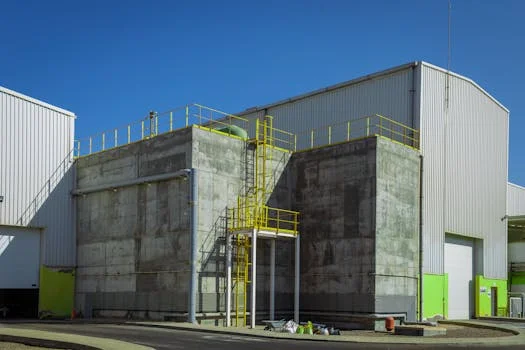
Inclined plates inside a lamella settler shorten the vertical distance a particle must fall before it contacts a surface. The settling path scales with the sine of the plate angle (sin θ). At typical plate angles of 55–60°, that geometric factor is about 0.82–0.86, creating stacked shallow settling zones. The result is roughly a 10-fold rise in High-Efficiency Sedimentation Tank (Lamella Clarifier) hydraulic density on the same ground footprint.
Plate gaps of 50–100 mm help keep channel flow laminar (Reynolds number below about 2,000) even near 30 m/h overflow on plan area, limiting resuspension. Vendor and datasheet figures often quote plan-area loading of 20–40 m/h; design on plate-projected area more often uses 0.3–1.5 m³/m²·h (MCBA engineering guide, 2026). Some packs return 2–4% of underflow sludge to the inlet to seed flocculation for fine solids.
According to the US EPA fact sheet, the Lamella plate system is generally used with non-proprietary coagulation and flocculation, while its inclined plates increase settling area and allow higher flow than traditional clarification. The EPA also describes thickening or routing underflow sludge back to flocculation as possible process features. Those options should be checked against the actual solids balance.
Compared with tube settlers, open-plate lamella channels foul less in cold service when viscosity rises and distribution suffers in small tubes (per NIHAO cold-weather data). Tube packs still share the shallow-settling idea, but their enclosed channels clog more readily with biological growth or large floc. For clogging and efficiency loss, use the tube settler clarifier troubleshooting guide. The Lamella Clarifier Working Principle: 2026 Engineering Specs, 98% TSS Removal Guide page covers plate flow paths in more detail.
Cost analysis: CAPEX, OPEX and payback calculator
Lamella clarifiers can carry a higher unit equipment price, yet land, civil works, chemicals, and energy often repay that premium quickly. A 50,000 m³/day (about 13.2 MGD) industrial expansion that switches from a conventional sedimentation tank to a lamella unit can cut footprint by about 80%, saving roughly 1,200 m². In high-value zones such as Shanghai industrial parks, land can exceed US$1,000/m², so land savings alone approach about US$1.2 million.
Concrete volume also falls. Lamella civil works often need about 0.15 m³ concrete per m³/h of treated capacity, versus about 0.8 m³/m³/h for conventional tanks. Coagulant use, such as ferric chloride (FeCl₃), can drop by up to 30% at equal influent solids (HydropureWater 2024 plant data: 28 mg/L reduced to 20 mg/L FeCl₃). Energy is typically below 0.01 kWh/m³ for lamella service versus about 0.03 kWh/m³ for conventional tanks that carry large scraper drives. Combined savings often yield a 12–24 month payback when industrial land costs exceed US$300/m².
The separate lamella clarifier cost comparison should therefore be read as a whole-life screen. Land, concrete, coagulant, energy, sludge handling, maintenance access, and replacement of fouled plates all belong in the same cash-flow model.
| Cost Category | Lamella Clarifier (Example for 50,000 m³/day plant) | Conventional Circular Clarifier (Example for 50,000 m³/day plant) | Annual Savings (Lamella vs. Conventional) |
|---|---|---|---|
| Land Footprint | ~300 m² | ~1,500 m² | 1,200 m² saved |
| Land Cost (CAPEX) | US$300,000 (at US$1,000/m²) | US$1,500,000 (at US$1,000/m²) | US$1,200,000 (direct CAPEX reduction) |
| Concrete Volume | 0.15 m³/m³/h | 0.8 m³/m³/h | ~80% less concrete volume |
| Chemical Consumption (OPEX) | 20 mg/L FeCl₃ | 28 mg/L FeCl₃ | ~30% reduction (HydropureWater 2024 data) |
| Energy Consumption (OPEX) | <0.01 kWh/m³ | 0.03 kWh/m³ | ~67% reduction (no scraper drive) |
| Typical Payback Period | 12–24 months (when land cost >US$300/m²) | N/A (baseline for comparison) | Significant ROI |
Design limits and when to stay with conventional
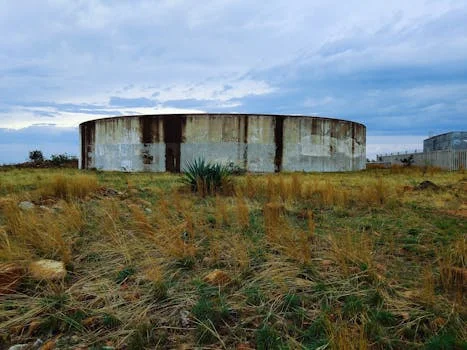
Standard 60° inclined plates remain effective for influent TSS up to about 3,000 mg/L. Higher solids loads need sludge recirculation or upstream cyclone pre-thickening to limit plate blinding. Floating fats, oils, and greases (FOG) above about 200 mg/L can build scum between plates; a conventional circular clarifier with strong scum removal, or a lamella unit with a scum-baffle upgrade, is then safer. Abrasive sand above about 50 mg/L wears plates early, so add grit removal upstream. Flows below about 100 m³/h with ample land can still favor a conventional circular clarifier on capital cost alone.
These are screening flags, not universal guarantees. Confirm the actual settling velocity, solids loading, peak flow, and sludge withdrawal rate with representative samples. A conventional tank can fail under hydraulic surges, and an inclined-plate unit can fail when its channels receive solids or floatables that pretreatment should have removed.
How do you select a clarifier system?
Clarifier selection for industrial wastewater starts with solids character, peak flow, and available footprint, then maps those constraints to primary settling, secondary polishing, lamella, or DAF. Use this checklist before you freeze equipment type:
- Measure influent TSS, turbidity trend, FOG, and grit at average and peak flow.
- Set effluent TSS or turbidity targets and note any chemical-dose limits.
- Compare plan footprint at 1–2 m/h conventional versus 20–40 m/h lamella loading.
- Confirm projected-area overflow against settling-column velocity after coagulation.
- Flag FOG >200 mg/L, sand >50 mg/L, or TSS >3,000 mg/L as lamella risk flags.
- Price land, concrete, coagulant, and scraper energy over a 12–24 month payback window.
- Decide whether DAF is needed for low-density solids that will not settle on plates.
Ireland's Water CFC Standard published in 2025 includes a dedicated lamella plate settler design section and treats lamella plates as clarification aids. A project should still reconcile that design basis with its permit, process guarantee, and site-specific jar-test results.
Where does a lamella clarifier fit in wastewater treatment?
Lamella clarifiers sit after coagulation and flocculation as compact primary or tertiary solids capture when land is scarce and solids are settleable. They are not a substitute for biological treatment or for buoyant oil removal that needs flotation.
Who this is for: plant engineers and EPC teams expanding capacity on constrained industrial plots. Who should look elsewhere: sites with chronic FOG above 200 mg/L, abrasive grit above 50 mg/L without pretreatment, or very low flow with cheap land. If you need a sized pack and chemical dose range for your wastewater, share flow and solids data through the project sizing review request for a written selection note.
Frequently Asked Questions
Clarifier buyers use the questions below to test hydraulic loading, solids tolerance, lifecycle cost, and operating fit before requesting a final design.
What are the main advantages of a lamella clarifier over a conventional circular clarifier?
Lamella clarifiers run at 20–40 m/h surface loading versus 1–2 m/h for conventional circular tanks, so footprint often shrinks 80–90%. Chemical use can fall by about 30%, and energy is typically lower without heavy scraper drives. Payback commonly falls in the 12–24 month band when industrial land exceeds about US$300/m² and civil volume is constrained.
How do lamella clarifiers reach high settling efficiency in a compact tank?
Lamella clarifiers stack plates at about 55–60° so each particle travels only the short gap between plates before capture. That geometry multiplies projected settling area inside one footprint while 50–100 mm gaps keep channel flow closer to laminar. The same capacity therefore needs far less plan area than a deep conventional basin.
What turbidity or TSS can a lamella clarifier treat?
Standard lamella designs target influent TSS below 1,000 mg/L for 85–95% removal and use about 3,000 mg/L as a common upper design limit. Turbidity usually moves with TSS, so treat those solids windows as the practical turbidity envelope unless site jar tests prove a higher load is stable. Above 3,000 mg/L TSS, add recycle or pre-thickening before plates.
When is a conventional circular clarifier still the better choice?
Conventional circular clarifiers remain preferred for influent TSS above about 5,000 mg/L, FOG above about 200 mg/L, or abrasive sand above about 50 mg/L without strong pretreatment. They also win on CAPEX for flows below about 100 m³/h when land is cheap. Dedicated skimming and larger sludge inventory handle floatables and shock loads more gracefully.
Can lamella clarifiers handle varying flow and influent quality?
Lamella clarifiers tolerate moderate flow swings when plate area is sized on peak hydraulic load and flocculation stays stable. Modular plate packs let you add projected area later if throughput grows. Large swings in turbidity, FOG, or grit still need upstream equalization, screening, or grit removal so plates do not blind or abrade.