Why the DAF-vs-Clarifier Decision Is Different for Chemicals Wastewater
Chemicals-manufacturing wastewater differs from food-processing or metals-finishing wastewater, and the standard DAF-vs-clarifier rule-of-thumb must be re-tested against the actual contaminant envelope in a batch reactor, specialty chemicals, petrochemical, or agrochemical plant. Typical streams run 500–5,000 mg/L COD, 200–2,000 mg/L TSS, with FOG concentrations that swing batch-to-batch, pH excursions from 2 to 12, and TDS frequently above 5,000 mg/L from salt cuts and acid neutralization. Surfactant-stabilized emulsions from cleaning, quench, and formulation steps defeat simple gravity settling because the dispersed phase has a specific gravity within 0.02–0.05 of water. A generic "DAF for oils, clarifier for heavy solids" shortcut collapses on a chemicals site because the same batch can carry emulsified oil, suspended catalyst fines, and dissolved organics in a single shift. The decision is therefore not binary — it is a stream-by-stream problem anchored in the chemistry, not in industry folklore.
The 2026 Regulatory Frame Arlington Chemical Plants Must Clear
EPA 40 CFR Part 403 sets the general pretreatment framework, and chemical plants in Arlington typically also fall under 40 CFR Part 414 (organic chemicals, plastics, and synthetic fibers) or Part 419 (petroleum refining), which impose categorical limits on BOD, TSS, and oil & grease that the primary separation unit must be sized to hit. 40 CFR 414.91 caps BOD at 275 mg/L and TSS at 71 mg/L for the organic chemicals subcategory at the categorical applicable point (per EPA 40 CFR 414), and the 40 CFR 419 petroleum refining category sets a 100 mg/L oil & grease ceiling — these are the numbers a 2026 primary unit must be able to feed downstream, not the number it must hit on its own. On top of federal categoricals, the Arlington Water Utilities Industrial Pretreatment Program (IPP) layers local discharge limits, including site-specific metals caps (mercury, silver, copper, zinc, lead, nickel) that depend on the chemistry handled at each facility (per Arlington Water Utilities IPP, 2025-08 user-charge and pretreatment schedule). The Trinity River watershed and TCEQ-implemented TMDLs add an FOG and floatables dimension: pushing oil out at the head of the plant reduces surcharging risk at the Water Utilities' Walnut Creek and Village Creek interceptors, which in 2024–2025 issued pass-through violations to multiple industrial users (per TCEQ enforcement docket, 2025-Q1). A unit that removes 90–95% of FOG up front is a permit-shaping choice that protects a plant from categorical violations and pass-through fines in the same 12-month capital window.
DAF vs Clarifier: Head-to-Head Comparison for Chemicals Streams
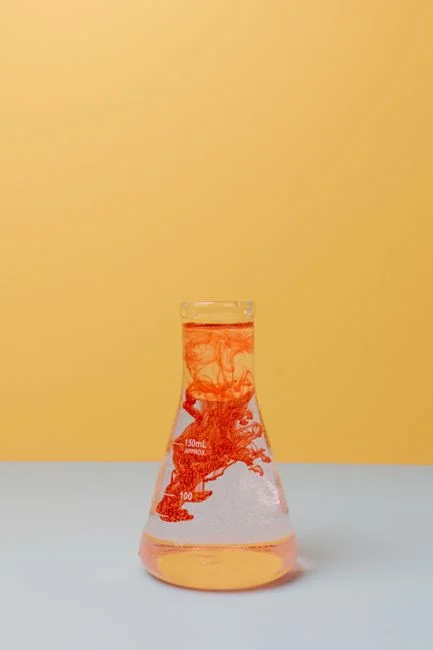
The table below distills the parameters a 2026 procurement evaluation needs to score, with the DAF side representing a high-rate rectangular unit and the clarifier side covering both conventional circular and high-rate lamella configurations as deployed on chemical sites. Choosing the correct technology requires matching the primary separation mechanism to the physical state of the waste stream.
| Parameter | Dissolved Air Flotation (DAF) | Lamella / Gravity Clarifier |
|---|---|---|
| Primary separation mechanism | Micro-bubble attachment floats flocs and oil | Gravity settling; lamella plates increase effective area |
| TSS removal on chemical streams | 80–95% on floc-bounded organics and floatables (per Academia S1, 2019) | ~90% on settleable inorganics; lower on colloidal organics (per Ecologix S2, 2026) |
| FOG / oil & grease removal | 90–95% on emulsified and free oils (per Ecologix S2 food case, 2026) | <70% on emulsified oils without coagulant aid (per Ecologix S2, 2026) |
| Surface loading rate | Up to 20 gpm/ft² (≈50 m/hr) (per Academia S1, 2019) | Lamella 20–40 m/h; conventional circular 1–2 m/h (per HydropureWater catalog, 2026) |
| Footprint vs. conventional clarifier | Up to 82.7% reduction (per Academia S1, 2019) | Lamella cuts area ~5–10× vs. circular; still larger than DAF at equal flow |
| Sludge dry solids | Float 3–5% DS — direct feed to filter press (HydropureWater field data, 2026) | Underflow 1–2% DS — requires thickening before pressing |
| Recycle / air system demand | Saturator, recycle pump, air compressor — moderate O&M (per ClearStream S5, 2026) | None; sludge scraper only — low O&M |
| Chemical demand | Coagulant + flocculant standard | Lower; sludge recirculation can cut coagulant use up to 30% (per HydropureWater catalog, 2026) |
| Best-fit stream on a chemical site | Emulsified oils, FOG, surfactant-laden organic flocs | Metal hydroxides, settleable crystalline salts, dense inorganic TSS |
For the chemicals segment, the DAF side points to a dissolved air flotation (DAF) system when FOG and floatables dominate, and the clarifier side maps to a HydropureWater high-efficiency lamella clarifier when the load is heavy inorganic TSS. Treating the two as substitutes on the same line is the most common 2025–2026 selection error on chemical plant retrofits.
Three Chemicals-Wastewater Scenarios in Arlington and the Right 2026 Pick
The three scenarios below cover roughly 80% of the chemicals plants operating in the Arlington industrial corridors — Centerport, Great Southwest, and the Dalworth–Euless industrial fringe — and map directly to the equipment decision. These profiles provide a baseline for determining whether flotation or sedimentation is required.
| Scenario | Stream Profile | Typical Influent (mg/L) | Recommended Primary Unit | Why |
|---|---|---|---|---|
| A — Specialty / organic chemical batch | Surfactant-stabilized emulsions, FOG, variable pH 4–10, low settleable solids | COD 1,500–5,000; TSS 200–800; O&G 200–1,500 | DAF as primary | DAF's micro-bubble attachment captures 90–95% of emulsified FOG that gravity cannot resolve (per Ecologix S2, 2026) |
| B — Inorganic chemical plant | Metal hydroxide sludge, settleable crystalline solids, no FOG phase | COD <500; TSS 1,000–2,000; metals variable | Lamella clarifier | Sludge recirculation cuts coagulant use ~30% and produces dense underflow compatible with 40 CFR 414/419 metals compliance |
| C — Mixed batch facility (most common) | FOG + heavy inorganic TSS, pH swings, intermittent surfactant loads | COD 800–3,000; TSS 500–1,500; O&G 50–500 | DAF primary + lamella clarifier polishing | Hybrid configuration protects downstream biological treatment from FOG upset while capturing settleable inorganics (per Ecologix S2, 2026) |
For Scenario C, the DAF is sized at 4–300 m³/h to cover batch swings, the lamella clarifier handles residual TSS at 20–40 m/h, and a PLC-controlled automatic chemical dosing system ties coagulant and flocculant feed to flow-paced setpoints. This configuration satisfies both the 40 CFR 414 BOD/TSS envelope and the IPP FOG cap without oversizing either unit. The same DAF-vs-clarifier logic maps onto metals streams as well — see the DAF vs clarifier selection for fabricated metals wastewater guide for a sister application.
2026 CAPEX, Footprint, and OPEX Snapshot for an Arlington Chemical Plant
Footprint is the decisive 2026 number for most Arlington sites because the remaining industrial parcels in the Centerport and Great Southwest corridors are sub-2-acre lots with tight setbacks. A DAF rated at 100 m³/h delivers the same removal as a conventional circular clarifier rated at the same flow but on roughly 17% of the floor area — the 82.7% footprint reduction documented in the Clari-DAF performance data (per Academia S1, 2019) translates directly into a smaller concrete pad, shorter pipe runs, and a smaller building envelope if the unit is indoors for odor control. CAPEX is roughly comparable when land cost and civil work are included, but the split is different: DAF carries higher mechanical cost (tank, saturator, recycle pump, compressor, skimmer), while the lamella clarifier carries higher tankage and civil cost (per HydropureWater field data, 2026). OPEX drivers split by equipment: DAF spends on compressed-air energy and polymer (~$0.04–$0.08 per m³ treated at typical recycle ratios), while a clarifier spends on sludge pumping energy and lower polymer demand. Sludge handling is where the two technologies diverge sharply — DAF float at 3–5% DS feeds directly to a plate and frame filter press in the 1–500 m² plate area range, while clarifier underflow at 1–2% DS needs either a thickener or a larger press to reach the same cake dryness. The downstream press sizing should be developed in parallel with the primary unit selection, and the 2026 sludge dewatering design criteria guide covers the cake-solids, cycle-time, and specific-cake-resistance inputs that drive the press area. For permit-side framing, the 2026 Piedmont chemical plant pretreatment guide is a useful regional parallel for the categorical and local-limit stack a 2026 capital submission must clear.
Frequently Asked Questions
Should an Arlington chemical plant choose DAF or a clarifier in 2026?
The choice depends on the dominant contaminant. Choose a DAF when the stream carries emulsified oils, FOG, or surfactant-stabilized suspensions — DAF removes 90–95% of FOG and floatables (per Ecologix S2, 2026). Choose a lamella clarifier when the load is heavy inorganic TSS, metal hydroxide sludge, or settleable crystalline solids. For mixed batch streams, run DAF primary and clarifier polishing in series.
Does a DAF meet 40 CFR 414 BOD and TSS categorical limits on its own?
No. A DAF is a primary separation unit, not a complete treatment train. 40 CFR 414.91 caps BOD at 275 mg/L and TSS at 71 mg/L at the categorical applicable point, and the primary unit must feed a downstream biological or physical-chemical chain to meet those numbers
Frequently Asked Questions
Should a chemical plant in Arlington choose a DAF or a clarifier in 2026?
The choice depends primarily on the density and settling characteristics of your specific wastewater contaminants. In 2026, DAF (Dissolved Air Flotation) is preferred for chemical plants handling low-density particles, oils, greases, or emulsions that have a specific gravity near or below 1.0. If your process stream contains heavy inorganic solids, sand, or grit, a conventional gravity clarifier remains the industry standard for reliable, low-maintenance separation.
What is the TSS removal efficiency of DAF versus a clarifier for chemicals wastewater?
DAF systems typically achieve TSS removal efficiencies between 80% and 95% for light, dispersed solids when supported by proper coagulation and flocculation chemistry. Conventional circular clarifiers generally achieve 70% to 90% TSS removal, provided the influent solids have sufficient settling velocity. In chemical applications, DAF efficiency is highly dependent on the air-to-solids ratio, which must be optimized to ensure effective floatation of chemical precipitates.
How does 40 CFR Part 414 affect the choice between DAF and clarifier for organic chemicals?
40 CFR Part 414 establishes stringent effluent limitation guidelines for the Organic Chemicals, Plastics, and Synthetic Fibers (OCPSF) industry. Because these regulations often mandate low BOD and TSS discharge limits, many facilities utilize DAF as a primary pretreatment step to reduce organic loading before biological treatment. If a clarifier is used alone, it may struggle to meet the strict limits for emulsified organics, potentially requiring additional downstream tertiary filtration that a properly tuned DAF might mitigate.
What footprint reduction does a DAF offer over a conventional clarifier in 2026?
A DAF system typically offers a footprint reduction of 60% to 80% compared to a conventional circular clarifier of the same hydraulic capacity. Because DAF units utilize air-induced buoyancy rather than gravity-based settling, they operate at significantly higher surface overflow rates—often 2 to 4 gallons per minute per square foot—allowing for a much smaller physical tank size, which is critical for space-constrained industrial sites in urban areas like Arlington.
Can a DAF and a lamella clarifier be used together in a chemical plant pretreatment train?
Yes, a dual-stage pretreatment train using both technologies is highly effective for complex chemical wastewater. In this configuration, the DAF is typically placed first to remove lighter oils, fats, and buoyant solids, while the lamella clarifier follows to capture denser precipitates and residual settleable solids. This combination provides a robust barrier against effluent spikes, ensuring compliance with local discharge ordinances by addressing both buoyant and settleable contaminants independently.