Why Mary Helen Mining Sites Can't Discharge Straight to the Sewer
Mining and metals plants near Mary Helen meet sewer-discharge pretreatment limits by first operating under an NPDES permit and any applicable EPA Categorical Standard (40 CFR 403, Attachment 3-1, Dec 2024), then proving compliance with the receiving POTW's local limits through a staged train: pH adjustment, heavy-metal precipitation, DAF or lamella clarification, multimedia filtration, and MBR polishing. Effluent targets typically include TSS <30 mg/L, total metals at parts-per-billion levels, and pH 6–9, verified by self-monitoring and POTW sampling.
The National Pretreatment Program is a component of the NPDES program — a cooperative effort of EPA, authorized states, and local municipalities established to protect water quality from industrial sources that discharge to publicly owned treatment works (POTWs) rather than directly to rivers or streams (source: EPA, epa.gov/npdes/national-pretreatment-program). For a Mary Helen-area metals or coal operation, this distinction matters: a direct discharger (pipe to a creek) holds an NPDES permit from EPA or the authorized state; an indirect discharger (pipe to the local sewer) must satisfy both federal categorical standards and the receiving POTW's site-specific local limits. Skipping pretreatment is not an option — POTWs are designed for municipal sewage, not for the low-pH, high-TSS, metal-laden waste a mine produces.
Appalachian mine wastewater is typically "highly acidic and high in suspended solids" and frequently carries metalloids such as arsenic, iron, and manganese (Fluence, 2024). Coal-mine water can also be unacceptably saline, requiring desalination. Any U.S. mine effluent requires an NPDES permit covering water and wastewater treatment scenarios, including reuse and discharge (Fluence, 2024). That single permit triggers the entire pretreatment chain.
The Regulatory Stack: NPDES, Categorical Standards, and Local Limits
The compliance hierarchy has three layers, and operators consistently underestimate the third one. Layer 1 is the NPDES permit itself, issued by EPA or, in Kentucky, by the Kentucky Department for Environmental Protection (KDEP) under delegated authority. Layer 2 is the EPA Categorical Pretreatment Standard for the applicable industrial category — metal mining falls under 40 CFR Part 421, which caps toxic metals and other parameters at the source (per the EPA Summary of Categorical Standards, 40 CFR 403 Attachment 3-1, Dec 2024). Layer 3 is the local limit set by the receiving POTW, and in practice this is almost always the binding number, because the POTW tailors limits to its own biological treatment capacity, its sludge-quality constraints, and the local receiving stream's assimilative capacity.
Every layer must be checked. A categorical standard sets a federal floor; a local limit can be (and frequently is) tighter. For example, a categorical standard might allow copper at 3 mg/L daily max, while the local POTW sets copper at 0.5 mg/L because its activated-sludge system is sensitive to copper toxicity. Always read the POTW's pretreatment ordinance before you read the federal rule.
| Layer | Issuing Authority | Typical Capped Parameters |
|---|---|---|
| 1 — NPDES permit | EPA or authorized state (e.g., KDEP for Mary Helen area) | Flow, pH, TSS, total metals, oil & grease, fecal coliform (for blended streams) |
| 2 — Categorical standard (40 CFR Part 421) | EPA | Total metals (As, Cd, Cr, Cu, Pb, Ni, Zn, Hg), TSS, pH, sulfate, total residual chlorine |
| 3 — Local limits | Receiving POTW | TSS, total metals at site-specific concentrations, pH 6–9, sulfide, oil & grease, flow, sometimes ammonia and temperature |
Influent Characterization: What to Test Before You Pick Equipment
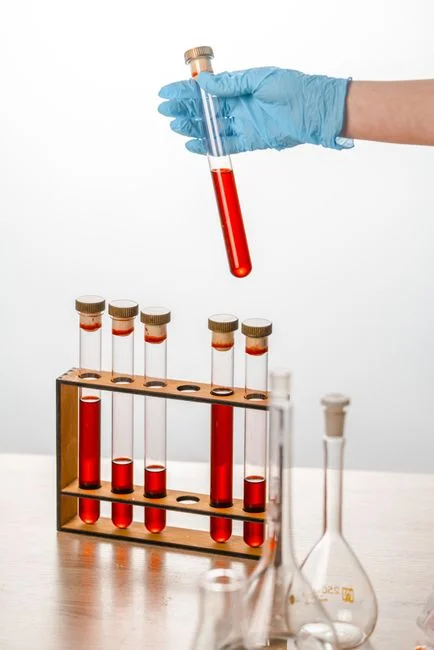
Most failed pretreatment retrofits in mining start with skipped sampling. Before any equipment is selected, the operator needs a defensible 5–7 day baseline that captures diurnal swings from batch mill operations, leach-pad irrigation cycles, and storm-driven runoff. The minimum analytical panel is non-negotiable: total suspended solids, total dissolved solids, pH, ORP, sulfate, total metals (Al, As, Cd, total Cr, Cu, Fe, Mn, Ni, Pb, Zn), hardness, oil & grease, and cyanide where gold or silver recovery is in the circuit. Sampling must be 24-hour composite or flow-weighted — a grab sample from a single shift misrepresents the load and will produce an undersized train.
For a broader refresher on the unit operations that follow characterization, the general wastewater treatment steps walkthrough covers the vocabulary used in the next section.
| Parameter | Typical Mining-Wastewater Range | Why It Matters |
|---|---|---|
| pH | 2.0–5.0 (acid mine drainage) | Controls metal solubility; must be raised before precipitation |
| TSS | Several hundred to several thousand mg/L | Drives clarifier sizing and sludge volume |
| Iron (Fe) | Tens to hundreds of mg/L | Removed by pH/oxidation precipitation |
| Manganese (Mn) | Tens to hundreds of mg/L | Requires higher pH (≥9) and oxidation to precipitate |
| Arsenic (As) | Trace to several mg/L | Often the binding local-limit parameter; needs coagulation or ion exchange |
| Sulfate (SO₄) | Hundreds to thousands of mg/L | Coal-mine water; drives any RO/desalination step |
| Hardness (Ca, Mg) | Variable; can be high in limestone-hosted districts | Consumes lime/NaOH in pH correction |
The Pretreatment Train: Stage-by-Stage Process Flow
With influent characterized, the train is sized and sequenced. Each stage has a defined removal target, and skipping one creates a downstream bottleneck.
Stage 1 — Equalization and flow splitting. A lined equalization basin (HRT 8–24 h conceptually) buffers batch dumps from the mill and dampens shock loads so downstream chemistry stays stable. Without EQ, lime consumption and metal slip both spike during mill discharge cycles.
Stage 2 — pH correction and oxidation. Lime or NaOH raises pH to roughly 8.5–9.5 so dissolved iron and manganese precipitate as hydroxides. Aeration or hydrogen peroxide oxidizes Fe²⁺ to Fe³⁺, which settles much faster. A PLC-controlled lime/caustic dosing skid tied to a pH/ORP probe keeps the setpoint on target despite feed swings.
Stage 3 — Coagulation/flocculation plus DAF or lamella clarification. Polymer and coagulant build the floc, and a DAF system for metals-laden wastewater or a lamella clarifier for mine water settling removes the bulk of the metal-hydroxide floc and suspended solids. DAF/lamella units typically achieve 90–98% TSS removal in well-conditioned metal-precipitation service, and the choice between them is covered in the DAF vs. clarifier comparison for mining wastewater. For a process-flow view, the DAF process-flow walkthrough shows the SAT, recycle loop, and skimmer in detail.
Stage 4 — Heavy-metal polishing. Sulfide precipitation (the biogenic-sulfide approach documented in the Heliyon 2024 review of mine wastewater technologies) drives residual dissolved metals down to ppb levels. Ion exchange resins target trace dissolved metals that slip past hydroxide precipitation when arsenic, cadmium, or nickel local limits are tight.
Stage 5 — Multimedia filtration or MBR polishing. A multi-media filter as a polishing step brings TSS below 10 mg/L, suitable for POTW discharge and most reuse loops. When the receiving POTW has strict nitrogen or organic limits (from blended camp sewage), a MBR polishing for reuse-quality effluent system replaces or follows the multimedia filter.
Stage 6 — Sludge dewatering. A filter press for metal-hydroxide sludge drops the cake to 25–35% solids, sharply reducing hauling cost and improving disposal stability.
Stage 7 — Disinfection. Rare in pure mining streams, but standard when mine water is blended with camp sewage before the POTW tie-in. UV or chlorination handles fecal-coliform limits.
| Stage | Unit Process | Primary Target | Typical Removal / Effluent |
|---|---|---|---|
| 1 | Equalization basin | Flow & load dampening | HRT 8–24 h |
| 2 | pH correction + oxidation | Fe, Mn, Al as hydroxides | pH 8.5–9.5; Fe to <5 mg/L |
| 3 | Coag/floc + DAF or lamella | TSS, bulk metals | 90–98% TSS removal |
| 4 | Sulfide precipitation / ion exchange | Dissolved trace metals | As, Cd, Ni to ppb range |
| 5 | Multimedia filter or MBR | Final TSS, organics | TSS <10 mg/L |
| 6 | Filter press | Sludge volume reduction | Cake 25–35% solids |
| 7 | Disinfection | Fecal coliform (if blended) | Per POTW ordinance |
Hit the Local Limits: Typical 2026 Effluent Targets and How to Verify
Effluent targets for industrial discharges to a municipal sewer generally cluster in these typical municipal local-limit ranges: TSS 30 mg/L daily max, total metals 1–5 mg/L for the common cations (Cd, total Cr, Cu, Ni, Pb, Zn), arsenic often capped below 0.5 mg/L, pH 6–9, and oil & grease 100 mg/L. The Mary Helen-area receiving POTW may impose tighter numbers based on its own biological kinetics and biosolids-quality criteria, so the operator must request the POTW's current local-limits letter before any design is finalized.
Verification runs through the POTW's pretreatment program. Install an automatic sampler at the discharge manhole, run a Discharge Monitoring Report (DMR) on the schedule the POTW specifies (typically monthly for conventional parameters and quarterly for priority pollutants), and report any slug or upset within 24 hours. The enforcement chain runs from Notice of Violation through consent order, administrative fines, and ultimately termination of discharge permission if noncompliance persists (per EPA's description of the National Pretreatment Program, Dec 2024). A refinery pretreatment parallel is described for petroleum operations in the refinery pretreatment parallel guide.
Build It On-Site or Haul It Out? A 2026 Cost & Logistics Trade-Off
Two paths exist once the local limits are in hand. Path one is hauling: avoid CAPEX, pay a per-gallon transport-and-disposal cost on the order of $0.05–$0.30 per gallon (order-of-magnitude estimate; the operator's actual Mary Helen-area rate depends on hauler distance and disposal-site tipping fees). Path two is on-site skid or containerized pretreatment: higher CAPEX, lower OPEX, and the option to recycle water for dust control, process reuse, or camp supply (Fluence, 2024 documents reuse for landscaping, irrigation, dust control, and even drinking water under the most stringent reuse standards).
Remote Mary Helen-area mines with no nearby POTW are effectively forced to either build full on-site treatment (often including desalination for saline coal-mine water, per Fluence 2024) or pursue zero-liquid-discharge (ZLD) with evaporation ponds or mechanical crystallizers. Connecting a remote mine to a central plant via pipeline is expensive, time-consuming, and requires negotiation of complex right-of-way issues, so mining operations typically require decentralized treatment of water and wastewater (Fluence, 2024). For camp sewage alongside process water, containerized biological packages such as the integrated packaged sewage train or an MBR-integrated package plant keep the biological side compact.
| Option | CAPEX Tendency | OPEX Tendency | Best-Fit Site Profile |
|---|---|---|---|
| On-site pretreatment to POTW | Moderate (skid trains, EQ basin) | Low to moderate (chemicals, sludge hauling, power) | Site within sewer distance of a willing POTW; moderate flows; metals within local-limit reach |
| Off-site hauling | Minimal (tanks, loadout) | High and scales with flow ($/gal) | Low-flow, intermittent discharges; sites with no POTW access and no permit certainty |
| On-site ZLD / full reuse | High (RO, evaporator/crystallizer) | Moderate to high (energy, membrane replacement) | Remote sites, zero-discharge requirements, high-salinity coal-mine water, water-stressed regions |
Frequently Asked Questions
Do all mining sites need an NPDES permit even if they discharge to a sewer?
Yes. Any effluent generated at a U.S. mine requires a National Pollutant Discharge Elimination System (NPDES) permit covering water and wastewater treatment scenarios (Fluence, 2024). On top of the permit, applicable EPA Categorical Standards such as 40 CFR Part 421 for metal mining may set source-specific pollutant limits, and the receiving POTW layers its own local limits on top of those (per the EPA Summary of Categorical Standards, 40 CFR 403 Attachment 3-1, Dec 2024).
What is the difference between Local Limits and Categorical Standards?
Categorical Standards are federal source-category limits set by EPA under 40 CFR (for example, 40 CFR Part 421 for metal mining). Local Limits are site-specific numbers set by the receiving POTW, tailored to its own biological treatment capacity, sludge quality, and receiving-stream assimilative capacity. Local limits are usually the binding number because they account for what the downstream plant can actually tolerate.
Which pollutant is hardest to remove in Mary Helen-style mine water?
Arsenic and manganese are the usual binding parameters. Arsenic often requires coagulation with ferric chloride or ion exchange to reach sub-mg/L or ppb local limits. Manganese needs both a higher pH (≥9) and strong oxidation before it will precipitate reliably, so it tends to slip past an under-conditioned hydroxide stage.
Can mining wastewater be reused for dust control or process water?
Yes, with the right treatment train. Treated mining wastewater can be reused for landscaping, irrigation, dust control, and even drinking water under the most stringent reuse programs, reducing wastewater-disposal expenses and protecting local freshwater sources (Fluence, 2024). Reuse typically requires multimedia filtration or MBR polishing plus disinfection to meet the end-use quality target.
How often does a mine have to self-monitor?
Self-monitoring frequency is set by the POTW's pretreatment permit. Most conventional parameters (TSS, pH, oil & grease, flow) are reported on a monthly basis through the Discharge Monitoring Report. Priority pollutants and metals are typically reported quarterly, and any slug or upset must be reported to the POTW within 24 hours. Failure to report triggers the enforcement chain, which can run from Notice of Violation to termination of discharge permission (per EPA's National Pretreatment Program, Dec 2024).