Why Pretreatment Compliance Matters for Chemical Plants Near Saint Petersburg
Under 40 CFR 403.3(j), a chemical plant discharging process wastewater to a publicly owned treatment works (POTW) is classified as an industrial user (IU), and any plant sending more than 25,000 gallons per day of process flow to the sewer is a significant industrial user (SIU) (EPA, 2024). Once classified as a SIU, a facility must hold a wastewater discharge permit, submit self-monitoring reports, and accept unannounced POTW inspections. Failure to comply with these requirements constitutes a permit-actionable event. Pass-through (a discharge that exits the POTW into U.S. waters in concentrations that cause or worsen an NPDES violation, per 40 CFR 403.3(p)) and interference (a discharge that disrupts POTW operations or sludge handling, per 40 CFR 403.3(k)) are the primary enforcement hooks used by a control authority. A single BOD excursion that pushes the POTW over its NPDES permit limit is recorded as a pass-through violation, with potential EPA enforcement follow-up.
Hollywood, Florida's pretreatment ordinance serves as a useful proxy for the regulations applied by Pinellas County and Saint Petersburg. Under Hollywood ordinance §57.08, a control authority may revoke a wastewater discharge permit for falsified self-monitoring reports, failure to meet effluent limitations, refusal of timely POTW access, or tampering with monitoring equipment (Hollywood, FL §57.08, 2012). Financial exposure begins well before revocation, as municipal surcharge structures typically run 1.5–3× the base sewer rate once BOD exceeds 450 mg/L or TSS exceeds 650 mg/L. For a chemical plant with 50,000 gpd of process discharge, the difference between operating at 400 mg/L BOD and 600 mg/L BOD is the difference between paying the base rate and paying a doubled sewer bill every month.
The Regulatory Stack: Federal, State, and Pinellas County Requirements
Three layers of authority control what a chemical plant can discharge to the Saint Petersburg collection system, with each tier capable of tightening or loosening enforceable limits. The federal layer consists of 40 CFR Part 403—the General Pretreatment Regulations—plus any categorical standard in 40 CFR Parts 405–471 that applies to the plant's SIC code (e.g., 40 CFR Parts 414, 415, 417, or 419) (EPA, 2024). The state layer is the Florida Department of Environmental Protection (FDEP), which delegates pretreatment implementation to the local POTW while retaining backstop enforcement and rule-making authority under Florida Administrative Code 62-625.
The local layer is the Pinellas County Industrial Pretreatment Program, which can impose limits more stringent than federal categorical standards if the receiving POTW's sludge quality, hydraulic capacity, or downstream water quality require it (pinellas.gov, 2025). The control authority also maintains discretion to set site-specific limits when the IU's intake water or process chemistry warrants it (pinellas.gov, 2025). Permit mechanics under a typical Florida POTW ordinance require a new discharger to file a wastewater discharge permit application at least 30 days before commencing discharge. Permits are valid for up to 3 years, and reapplication must be submitted at least 90 days before expiration, including site plans, plumbing details, raw-materials disclosure, and a monitoring location (Hollywood, FL §57.06, 2012). The director issues a determination within 60 days of receiving a complete application.
Pinellas County Local Limits Chemical Plants Must Hit at the Sewer Connection
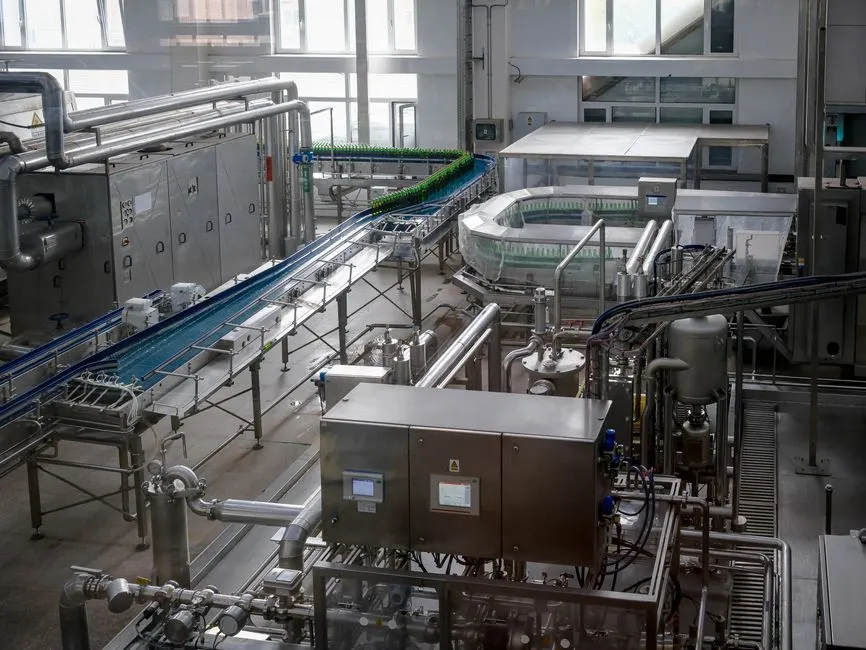
Pinellas County establishes specific thresholds that dictate equipment and chemistry decisions for industrial discharges. The Pinellas County schedule is structured as a surcharge limit (the threshold at which extra fees begin) and a maximum limit (a hard prohibition) for the same parameter (pinellas.gov, 2025). The control authority may also impose more stringent site-specific limits on top of these when the POTW's capacity or the IU's intake water warrants it (pinellas.gov, 2025).
| Parameter | Surcharge Limit | Maximum Limit | Notes |
|---|---|---|---|
| BOD (Biochemical Oxygen Demand) | 450 mg/L | 5,000 mg/L | Exceedance of 450 mg/L triggers 1.5–3× surcharge; 5,000 mg/L is a hard prohibition. |
| TSS (Total Suspended Solids) | 650 mg/L | 5,000 mg/L | Same surcharge/maximum structure as BOD. |
| pH | 5.0–11.0 SU | 5.0–11.0 SU | Continuous; outside-range discharge is immediately actionable. |
| Temperature | ≤ 150°F (65.5°C) | ≤ 150°F (65.5°C) | Exceedance risks pass-through and biological upset at the POTW. |
Beyond these headline parameters, categorical standards under 40 CFR Parts 414, 415, and similar subparts typically add case-by-case limits for heavy metals, cyanide, total phenols, and volatile organics. The control authority may also require oil and grease monitoring for chemical plants handling hydrocarbons or solvents, or ammonia-nitrogen testing where the receiving treatment plant's nitrification capacity is constrained. Pinellas's local limits can be adjusted downward to credit intake-water pollutants already present in the source water, provided the IU applies for that credit under Pinellas County Code Section 126-329 (pinellas.gov, 2025).
Pretreatment Equipment Train That Reliably Hits These Limits
A typical Tampa Bay chemical plant requires a specific equipment train to remain within Pinellas surcharge thresholds. Each step serves a defined removal or control role, with sizing based on standard design ranges.
- Screening. A GX rotary mechanical bar screen ahead of any tank protects pumps, mixers, and downstream piping from rags, plastics, and fibrous debris. Open-channel rotary drum or bar units are standard for chemical plant headworks.
- Equalization. A flow equalization tank with 8–24 hours of hydraulic retention time (HRT) dampens batch discharge pulses, pH swings, and thermal spikes. Mixed, aerated EQ tanks are common in plants where multiple batch reactors operate on different shift schedules.
- pH and chemistry adjustment. A PLC-controlled chemical dosing skid injects acid, caustic, coagulant, and flocculant in response to inline pH and streaming-current signals. Closed-loop control is necessary to keep pH within the 5.0–11.0 SU window on a continuous basis.
- Primary clarification. A dissolved air flotation system removes oil and grease, emulsified hydrocarbons, and suspended solids. The DAF platform covers 4–300 m³/h across 13 standard models. Typical DAF performance at design loading is 90–95% TSS removal and 85–95% FOG removal (HydropureWater field data, 2026).
- Polishing. A lamella clarifier can be used either upstream of the DAF as a primary settler or downstream as a polishing step. Lamella surface loading typically runs 20–40 m/h with roughly 30% lower chemical consumption than a conventional clarifier.
- Sludge dewatering. A plate and frame filter press reduces sludge volume to 25–35% wet cake before disposal, with filtration areas ranging from 1 m² to 500 m².
| Unit Operation | Primary Removal / Control Target | Typical Performance / Sizing Basis |
|---|---|---|
| Rotary bar screen | Rags, plastics, fibrous debris | Headworks protection; opening size selected per downstream pump tolerance |
| Equalization tank | Flow, pH, and temperature buffering | 8–24 h HRT; mixed/aerated |
| Chemical dosing skid | pH, coagulation, flocculation | PLC-controlled, inline pH and streaming-current feedback |
| DAF | Oil & grease, emulsified hydrocarbons, TSS | 4–300 m³/h; 90–95% TSS, 85–95% FOG (HydropureWater field data, 2026) |
| Lamella clarifier | TSS, BOD (particulate fraction), polishing | 20–40 m/h surface loading; ~30% lower chemical use vs. conventional |
| Plate and frame filter press | Sludge volume reduction | 1–500 m² filter area; 25–35% wet cake |
For a related engineering comparison, see the DAF vs clarifier decision guide for chemical wastewater, and for an analogous compliance playbook, the NGL and refinery pretreatment compliance playbook outlines an equipment train for refinery wastewater. Plants in the inorganic chemicals segment should also reference the inorganic chemicals pretreatment compliance guide for parallel regulatory and equipment guidance.
Self-Monitoring, Sampling, and Recordkeeping the POTW Expects

Self-monitoring accuracy depends on proper documentation, correct sampling points, and rigorous chain-of-custody procedures. The permit specifies the monitoring location at the IU's connection to the collection system, which is the only point recognized for compliance. Sampling methods vary based on discharge character: 8-hour flow-proportional composites are standard for batch chemical processes, while grab samples are acceptable for parameters that degrade quickly, such as pH, temperature, residual chlorine, and sulfide.
| Parameter | Recommended Monitoring Frequency | Notes |
|---|---|---|
| Flow | Continuous (inline magnetic or Doppler meter) | Totalized daily; recorded on the DMR. |
| pH | Continuous (inline probe) | 5.0–11.0 SU window; out-of-range trips the alarm. |
| Temperature | Continuous or daily grab | ≤ 150°F (65.5°C) per Pinellas schedule. |
| TSS | Daily composite | 650 mg/L surcharge / 5,000 mg/L maximum. |
| BOD | Weekly composite (5-day BOD) | 450 mg/L surcharge / 5,000 mg/L maximum. |
| Oil & Grease | Weekly grab | Required for plants with hydrocarbon or solvent handling. |
| Heavy metals, cyanide, phenols | Monthly or quarterly composite, per permit | Triggered by SIC code and categorical applicability. |
Reporting follows a monthly self-monitoring report (DMR) cycle, and noncompliance notifications must be sent to the POTW control authority within 24 hours of any limit exceedance. Records must be retained on-site for at least 3 years, including chain-of-custody forms for every sample and calibration logs for every online analyzer. Falsified, missing, or uncalibrated reports are permit-revocable offenses under the Hollywood ordinance §57.08 framework applied by Pinellas (Hollywood, FL §57.08, 2012).
Frequently Asked Questions
What is the difference between the Pinellas surcharge limit and the maximum limit for BOD and TSS?
The surcharge limit (450 mg/L BOD, 650 mg/L TSS) is the concentration at which municipal sewer rates begin to scale upward, typically 1.5–3× the base rate, while the maximum limit (5,000 mg/L for both) is a hard prohibition. Any discharge above the maximum is a permit violation, regardless of duration (pinellas.gov, 2025). Plants should design equipment to operate below the surcharge line.
How far in advance must a chemical
Frequently Asked Questions
What are the local wastewater discharge limits for chemical plants in Pinellas County?
Discharge limits are governed by the Pinellas County Sewer Use Ordinance and individual Industrial User (IU) permits. While specific limits vary based on the industrial category, facilities must generally comply with local limits for heavy metals, pH (typically 5.0 to 11.0), and prohibited materials that could cause pass-through or interference at the county’s Advanced Wastewater Treatment (AWT) plants.
For chemical facilities, the county enforces categorical pretreatment standards established by the EPA under 40 CFR Parts 405-471. Facilities must ensure their effluent concentrations do not exceed the specific mass-based or concentration-based limits outlined in their site-specific permits, which are designed to protect the integrity of the biological treatment processes at the South Cross Bayou or North County Water Reclamation Facilities.
How do I apply for a wastewater discharge permit in Saint Petersburg, FL?
Industrial users must submit a formal Industrial Wastewater Discharge Permit application to the Pinellas County Public Works Department or the City of Saint Petersburg Water Resources Department, depending on the facility's jurisdiction. The application requires a comprehensive disclosure of processes, chemical inventories, water usage rates, and a detailed schematic of the facility’s pretreatment system.
Once the application is submitted, regulatory staff conduct a technical review to determine if the facility qualifies as a Significant Industrial User (SIU). If approved, the applicant is issued a permit containing specific monitoring requirements, reporting schedules, and discharge limitations that must be renewed periodically to reflect any changes in operational throughput or federal regulatory updates.
What equipment do chemical plants need to meet BOD and TSS limits before sewer discharge?
To reduce Biochemical Oxygen Demand (BOD) and Total Suspended Solids (TSS), chemical plants typically employ a combination of physical and biological pretreatment technologies. Primary treatment often involves equalization tanks to normalize flow, followed by dissolved air flotation (DAF) units or clarifiers to remove suspended solids through coagulation and flocculation.
For high-strength BOD waste, facilities may implement on-site biological treatment, such as Moving Bed Biofilm Reactors (MBBR) or Membrane Bioreactors (MBR). These systems utilize microbial populations to degrade organic matter before the effluent is discharged into the municipal sewer system, ensuring compliance with the stringent 2026 pretreatment targets.
How often does a chemical plant have to self-monitor its wastewater discharge?
The frequency of self-monitoring is dictated by the facility’s permit, which is categorized based on the volume and nature of the discharge. Most Significant Industrial Users are required to perform self-monitoring at least twice per year, though facilities with high-variability processes or those nearing permit limits may be required to conduct monthly or quarterly sampling.
All laboratory analyses must be performed by a Florida Department of Health-certified laboratory using EPA-approved methods found in 40 CFR Part 136. Results must be submitted to the local control authority via a Periodic Compliance Report, which must be signed by an authorized representative of the facility and include a certification statement regarding the accuracy of the data.
What happens if a chemical plant exceeds its pretreatment permit limits in Florida?
Exceeding permit limits triggers an immediate investigation by local pretreatment coordinators. Under the Clean Water Act and Florida Administrative Code, the facility is required to provide written notification of the violation within 24 hours of becoming aware of the non-compliance and must initiate additional sampling to determine the cause and duration of the excursion.
Persistent or significant non-compliance can result in formal enforcement actions, including the issuance of a Notice of Violation (NOV), administrative fines, or the requirement to implement a Compliance Schedule to upgrade pretreatment infrastructure. In extreme cases, the city or county may suspend the discharge permit, effectively requiring the facility to cease operations or haul all wastewater off-site at a significantly higher cost.