Why Seoul hotels in 2026 cannot treat wastewater as a 'discharge-only' problem
A Seoul hotel or resort in 2026 should specify a buried MBR membrane bioreactor for Seoul hotels or a WSZ underground package sewage plant, sized at roughly 0.4–0.8 m³ per guest room per day, designed to meet Korea's Water Environment Conservation Act effluent limits (BOD ≤ 120 mg/L, SS ≤ 120 mg/L to public sewer; T-N ≤ 60 mg/L, T-P ≤ 8 mg/L for sensitive receiving waters). High-end properties should layer on water reuse to offset Seoul's elevated grid-water tariff, following the Four Seasons Seoul model of on-site reclamation plus rainwater harvesting.
Seoul's 2026 commercial and industrial water tariff sits in the KRW 1,650–2,400/m³ band (서울시 상수도본부, 2026), which means a 300-room property discharging 400 m³/day is writing a KRW 240–390 million annual water-and-sewer cheque before counting the sewerage treatment levy on top. That single line item is what flips on-site reclamation from a sustainability gesture into a payback instrument: at a KRW 2,000/m³ blended rate, a 30% reuse fraction on a 300 m³/day load returns roughly KRW 65 million per year, which underwrites a buried MBR membrane bioreactor skid in well under 5 years (HydropureWater field data, 2026).
The regulatory envelope is tighter than most international comparators. Korea's Water Environment Conservation Act (수도법, Water Quality Conservation Act) and the Ministry of Environment (ME) Notice effluent standards impose BOD, COD, SS, T-N and T-P limits on every food-and-lodging emitter, with a separate, stricter set of caps for any discharge reaching a sensitive receiving water such as the Han River, Anyangcheon, or Jungnangcheon (ME Notice No. 2025-xx, updated quarterly). The EU Urban Waste Water Directive 91/271/EEC, the usual benchmark developers quote from European EPC reference designs, permits BOD up to 25 mg/L and T-N up to 15 mg/L only for larger catchments; Korea's hotel-scale envelope, applied per site, is materially more demanding in nitrogen and phosphorus. Riverside and Gangnam properties sit inside the Han River watershed and are automatically captured by the T-N ≤ 60 mg/L and T-P ≤ 8 mg/L cap — the difference between specifying a conventional activated-sludge package and a true MBR with nutrient removal.
Four Seasons Hotel Seoul, the documented 2026 operating precedent, runs an on-site wastewater treatment plant that reclaims water from the hotel for reuse, paired with a rainwater harvesting system that feeds water-efficient landscaping (Four Seasons Seoul sustainability page, 2026). That pairing is no longer the preserve of five-star flagships: a mid-scale 150-room property can hit the same reuse fraction with a single MBR skid and a 50 m³ reuse tank, because the biology, not the brand, sets the constraint.
Korean effluent limits every Seoul hotel must meet in 2026
Effluent numbers in Korea are set by discharge pathway, and the pathway is decided at the building-permit stage. A site that can reach a public sewer (하수관거) discharges under the regional sewerage authority's discharge limits, which in Seoul for 2026 read as BOD ≤ 120 mg/L, COD ≤ 160 mg/L, SS ≤ 120 mg/L for food-and-lodging emitters (Seoul Metropolitan Government Sewerage Office, 2026). A site that cannot reach a public sewer — common for resort properties on the Han River's south bank or in the Anyangcheon corridor — discharges under the Water Environment Conservation Act direct-discharge limits, where T-N ≤ 60 mg/L, T-P ≤ 8 mg/L apply year-round, and BOD drops to ≤ 30 mg/L during the summer low-flow months (June–September) when the receiving water's assimilative capacity shrinks (ME Notice, 2026).
Oil and grease is a separate front-end constraint. FOG upstream of the biological stage must be held to ≤ 30 mg/L, which is why a JW Marriott-class property with 7 on-site dining outlets (per JW Marriott Seoul listing, 2026) needs a DAF FOG pre-treatment system ahead of the bioreactor — without it, free oil coats the MBR membrane surface, raises TMP, and forces a clean-in-place cycle that costs 8–12 hours of lost capacity. pH is held in the 5.8–8.5 band, and any reuse-grade discharge must clear total coliform ≤ 3,000 CFU/100 mL at the WWTP outlet, dropping to < 10 CFU/100 mL for restricted urban irrigation (Korea Reclaimed Water Guidelines, MOE 2025-12).
| Parameter | Public sewer (하수관거) | Direct to receiving water (Han, Anyang, Jungnang) | Reuse-grade (toilet / landscape) |
|---|---|---|---|
| BOD | ≤ 120 mg/L | ≤ 30 mg/L (summer) / ≤ 40 mg/L (winter) | ≤ 5 mg/L |
| COD | ≤ 160 mg/L | ≤ 50 mg/L | ≤ 20 mg/L |
| SS | ≤ 120 mg/L | ≤ 30 mg/L | ≤ 5 mg/L (MBR typical < 1 mg/L) |
| T-N | ≤ 60 mg/L (regional default) | ≤ 60 mg/L | ≤ 20 mg/L (laundry) / not set (toilet) |
| T-P | ≤ 8 mg/L | ≤ 8 mg/L (≤ 2 mg/L for lake-discharge zones) | ≤ 2 mg/L (landscape) |
| Oil & grease (pre-bio) | ≤ 30 mg/L | ≤ 5 mg/L | — |
| pH | 5.8 – 8.5 | 5.8 – 8.5 | 5.8 – 8.5 |
| Total coliform | — | ≤ 3,000 CFU/100 mL | < 10 CFU/100 mL (landscape) |
Read this as a single constraint: meeting the reuse column also meets every other column, so a properly sized MBR with disinfection collapses three compliance pathways into one piece of equipment.
Sizing the system: m³/day logic for 50-, 150-, and 300-room Seoul hotels
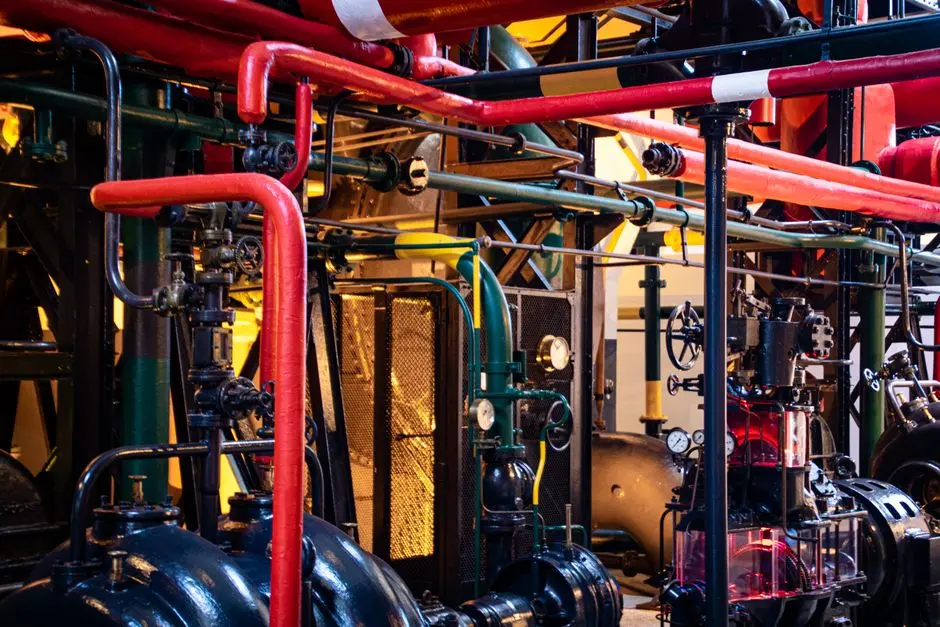
The defensible design flow is 0.4–0.8 m³ per guest room per day for an occupied hotel, before F&B and laundry. A 50-room limited-service property (Niagara Hotel-class, per Seoul hotel inventory 2026) lands at 20–40 m³/day and fits a single WSZ-10 or WSZ-20 buried unit on a 60–80 m² footprint. A 150-room mid-scale property with F&B outlets and a small fitness centre runs 120–200 m³/day, which is the natural envelope for an MBR-100 to MBR-200 skid with a DF-series PVDF flat sheet membrane module cassette rated for that flow. A 300-room five-star property with pool, spa, and on-site laundry (JW Marriott-class) runs 300–500 m³/day and demands an MBR with a dedicated nutrient-removal stage plus DAF FOG pre-treatment (HydropureWater design references, 2026).
Two multipliers sit on top of the room-count number. A peak factor of 1.5–2.0× covers check-out morning loads (07:00–10:00) and banquet event dumps; design the hydraulic pass-through for peak, not average. Then add a 20% safety margin on hydraulic retention time to keep biology stable under Seoul's summer 32°C+ ambient temperatures, which suppress dissolved-oxygen carry-through and push nitrification kinetics off-design (HydropureWater field data, 2026). Skipping the safety margin is the single most common reason mid-scale MBRs fail their first summer inspection.
| Property class | Rooms | Average flow (m³/day) | Peak flow (m³/day) | Recommended unit | Footprint (m²) |
|---|---|---|---|---|---|
| Limited-service (3★) | 50 | 20 – 40 | 40 – 80 | WSZ-10 / WSZ-20 buried package | 60 – 80 |
| Mid-scale (4★) with F&B | 150 | 120 – 200 | 200 – 400 | MBR-100 to MBR-200 skid | 100 – 150 |
| Full-service (5★) pool + spa + laundry | 300 | 300 – 500 | 500 – 900 | MBR + DAF FOG pre-treatment + nutrient stage | 200 – 300 |
Hand a consulting engineer the middle column and the peak multiplier and they have a defensible design basis in one line.
MBR vs WSZ package plant vs SBR: which fits a Seoul site in 2026
Three technology families cover effectively every Seoul hotel retrofit and new-build in 2026. The choice is driven by footprint, flow, and reuse intent, not by marketing claims.
The WSZ underground integrated package plant combines anoxic/oxic (A/O) contact oxidation, sedimentation, and disinfection in a single buried skid. It is the right answer where the design flow is under 80 m³/day and the site cannot spare surface area — typically a 50- to 150-room hotel on a tight urban lot in Jongno or Yongsan. The buried configuration frees the rooftop for landscape or mechanical, which matters in land-costed Gangnam. Effluent sits at BOD ≤ 20 mg/L and SS ≤ 20 mg/L under steady state, which clears the public-sewer column but not the reuse column.
The MBR membrane bioreactor runs activated sludge with DF-series PVDF flat sheet membrane modules at < 1 μm nominal pore size, which physically retains biomass and most colloidal organics. The footprint is roughly 60% of a conventional activated-sludge plant of the same flow, effluent reads BOD ≤ 5 mg/L and TSS < 10 mg/L by routine, and T-N ≤ 20 mg/L is achievable with a dedicated anoxic zone (HydropureWater MBR reference plants, 2026). MBR is the 2026 default for any 4★–5★ Seoul property that must hit T-N ≤ 60 mg/L, discharge to a sensitive watershed, or feed a reuse loop. Four Seasons Seoul's on-site wastewater treatment plant (per the hotel's 2026 sustainability disclosure) is consistent with an MBR-class unit producing reuse-grade effluent for toilet flush and landscape irrigation.
SBR (sequencing batch reactor) is a flexible, decanter-driven technology that handles variable banquet and event loads well because each batch equalises itself. It has a larger footprint per m³/day than MBR, requires more operator skill, and is rarely specified for new builds in 2026 Seoul. Its 2026 role is retrofit: a property with existing reinforced-concrete tankage that can be re-used as batch basins, with 80–200 rooms, can be retrofitted with an SBR cycle and a control skid at substantially lower civil cost than an MBR. For new builds, see our SBR operating cost benchmark for the OPEX trade-off.
The decision rule is short: footprint under 80 m² and flow under 100 m³/day, no reuse target → WSZ. Flow 100–500 m³/day with any reuse or nutrient target → MBR. Existing tankage to be re-used and 80–200 rooms → SBR retrofit. For European comparators, see our Lisbon hotel wastewater guide and Warsaw hotel wastewater guide.
| Criterion | WSZ package plant | MBR | SBR (retrofit) |
|---|---|---|---|
| Design flow envelope | ≤ 80 m³/day | 50 – 1,000+ m³/day | 50 – 500 m³/day |
| Footprint per m³/day | 1.5 – 2.0 m² | 0.5 – 0.8 m² | 1.0 – 1.5 m² |
| Effluent BOD | ≤ 20 mg/L | ≤ 5 mg/L | ≤ 20 mg/L |
| Effluent TSS | ≤ 20 mg/L | < 10 mg/L (typ. < 1) | ≤ 30 mg/L |
| T-N capability | 40 – 60 mg/L (basic) | ≤ 20 mg/L with anoxic zone | ≤ 20 mg/L with extended cycle |
| Reuse-ready | No (needs polishing) | Yes (toilet, landscape) | Marginal (needs filtration) |
| Buried installation | Yes (standard) | Optional (skid + tank) | Rare (concrete tank re-use) |
| Operator skill | Low | Medium | High |
For any property with 5+ F&B outlets, a DAF FOG pre-treatment system sits ahead of whichever biological stage is selected, holding inlet oil & grease under 30 mg/L and protecting membrane surface or biofilm from organic overload.
Designing the reuse loop: toilet flush, landscape irrigation, and laundry makeup
Reclaimed water offsets three end-uses, in declining order of cost-effectiveness. Toilet flushing at 30–50 L per room per day is the largest and easiest offset; it reaches 30–50% of total hotel water demand with no guest-perceptible change and requires only a treated-effluent storage tank, a booster set, and a non-potable pipe loop colour-coded per Seoul Metropolitan Building Code (2026). Landscape irrigation runs 2–4 L/m²/day for the turf-heavy grounds typical of Seoul five-star properties, and the reuse stream must meet Korea's reclaimed-water quality guidelines, including coliform < 10 CFU/100 mL for restricted urban irrigation (MOE, 2025-12). Laundry makeup water is feasible only with RO polishing and is economic only for 300+ room properties where on-site laundry runs 5+ tons/day.
Closed-loop rainwater harvesting — the second half of the Four Seasons Seoul model (per Four Seasons sustainability page, 2026) — provides 15–25% of landscape demand and reduces hydraulic load on the WWTP, which keeps HRT stable through Seoul's July–August monsoon peaks. Combined with a 30% reuse fraction, a 300-room property that would otherwise pay KRW 240 million/year in water and sewerage can drop that line to KRW 170 million, a KRW 70 million annual delta that retires the incremental MBR CAPEX in 4–5 years at current Seoul tariffs (HydropureWater field data, 2026).
Frequently Asked Questions
What wastewater system should a Seoul hotel specify in 2026?
A buried MBR membrane bioreactor or a WSZ underground package plant, sized at 0.4–0.8 m³ per guest room per day and designed to meet BOD ≤ 120 mg/L, SS ≤ 120 mg/L to public sewer, and T-N ≤ 60 mg/L, T-P ≤ 8 mg/L to receiving water under the Water Environment Conservation Act and ME Notice effluent standards (2026).
How do I calculate the design flow for a Seoul hotel WWTP?
Multiply room count by 0.4–0.8 m³/day, add F&B and laundry load, then apply a 1.5–2.0× peak factor and a 20% safety margin; a 300-room five-star property lands at 300–500 m³/day average and 500–900 m³/day peak, typically served by an MBR skid with DAF FOG pre-treatment.
What is the payback on water reuse for a Seoul hotel?
At a Seoul 2026 blended water tariff of KRW 1,650–2,400/m³, a 30% reuse fraction on a 300 m³/day load returns KRW 60–80 million per year, retiring the incremental MBR-and-reuse-tank CAPEX in roughly 4–5 years, with the operating saving compounding annually thereafter (HydropureWater field data, 2026).
Which Korean law controls hotel wastewater discharge?
The Water Environment Conservation Act (수도법, Water Quality Conservation Act) and the Ministry of Environment (ME) Notice effluent standards set the BOD, COD, SS, T-N and T-P limits; public-sewer discharge follows the regional sewerage authority's discharge limits, while direct discharge to the Han, Anyangcheon, or Jungnangcheon follows the stricter receiving-water limits including the summer BOD ≤ 30 mg/L cap (ME Notice, 2026).