Why Bucharest Hotels Are a Special Wastewater Case in 2026
Bucharest's hotel stock skews heavily upscale: 4- and 5-star properties account for over 70% of total room capacity, and approximately 47% of those rooms operate under international chain brands (INS, 2018; Amfiteatru Economic, 2019). That mix dictates how seriously a chief engineer must take on-site wastewater treatment — chain operators and upper-segment properties are audited against corporate sustainability scorecards, and two local anchor properties (Ana Hotels in Bucharest and Vega in Mamaia) already hold EU Ecolabel or TÜV Rheinland certification, setting the bar that neighbouring projects are benchmarked against.
Three project profiles recur in 2026 specifications. A city-centre 4- or 5-star with full Apa Nova sewer access usually needs only polishing or reuse-grade tertiary treatment to meet NTPA 002 and corporate water targets. A peri-urban resort or boutique outside the Bucharest-Ilfov agglomeration network falls under EU UWWTD 91/271/EEC agglomeration thresholds and NTPA 011/2002 framework rules, which require on-site biological treatment sized for the design flow. A historic-building retrofit is the hardest case — limited mechanical room depth pushes designers toward submerged MBR membrane bioreactor for hotels footprints or split-process skids. NTPA 001 governs direct discharge to natural receivers; NTPA 002 governs discharge to the municipal sewer; both are enforced by Apa Nova and the Bucharest-Ilfov Water Authority under Water Law 107/1996.
Reuse is no longer optional in this segment. Almost 60% of surveyed Romanian hotels already report treating wastewater for safe reuse or controlled evacuation (Amfiteatru Economic, 2019), and EU Regulation 2020/741 water-reuse classes A–D now give designers a citable quality target for toilet flushing, irrigation, and laundry. For a comparable EU-market benchmark, the Lisbon hotel wastewater guide walks through a similar regulatory chain.
Romanian NTPA 001 and NTPA 002 Discharge Limits Hotels Must Hit
NTPA 001 ceilings for municipal discharges to surface water are the binding numbers for any hotel outside the sewer network: BOD5 ≤ 25 mg/L, COD ≤ 125 mg/L, TSS ≤ 35 mg/L, total nitrogen ≤ 15 mg/L, total phosphorus ≤ 2 mg/L in urban catchments, and fecal coliforms below the regulated threshold of typically 10,000 CFU/100 mL for Class II receivers (per HG 188/2002 transposing EU UWWTD 91/271/EEC). NTPA 002 ceilings for sewer discharge are typically more lenient on organics (BOD5 ~300 mg/L, COD ~500 mg/L at the discharge point) but stricter on pH (6.5–8.5), sulfides, total hydrocarbons, and heavy metals — values Apa Nova Bucharest applies through its industrial-discharge acceptance protocol. Permit revocation risk sits under Water Law 107/1996, with NTPA 011/2002 setting the authorisation framework.
Hotels carry two load streams that domestic-only regulations do not capture well: kitchen fats, oils, and grease (FOG) and laundry lint. FOG at 50 mg/L or higher will blind PVDF membranes inside an MBR within weeks; lint will clog coarse screens and aerators. A pre-treatment train of grease traps plus a DAF pre-treatment for hotel FOG streams ahead of the biological stage is the standard defence, sized for event-peak flows. Romania is also tightening along the 2020–2026 trajectory: EU Regulation 2020/741 defines reclaimed-water quality classes A (highest, unrestricted irrigation) through D (lowest, restricted use), and Bucharest authorities are aligning local permits with these classes for any new reuse line.
| Parameter | NTPA 001 (surface water) | NTPA 002 (sewer) | EU 2020/741 Class B (toilet flush / irrigation) |
|---|---|---|---|
| BOD5 | ≤ 25 mg/L | ≤ 300 mg/L | ≤ 10 mg/L |
| COD | ≤ 125 mg/L | ≤ 500 mg/L | ≤ 50 mg/L |
| TSS | ≤ 35 mg/L | ≤ 350 mg/L | ≤ 10 mg/L |
| Total nitrogen | ≤ 15 mg/L | ≤ 60 mg/L | ≤ 15 mg/L |
| Total phosphorus | ≤ 2 mg/L (urban) | ≤ 10 mg/L | ≤ 2 mg/L |
| Fecal coliforms | ≤ 10,000 CFU/100 mL | — | ≤ 100 CFU/100 mL |
| pH | 6.5–8.5 | 6.5–8.5 | — |
MBR vs. SBR vs. WSZ Package Plant: Which Fits Your Hotel
For a 4- or 5-star Bucharest property targeting reuse or EU Ecolabel, the submerged MBR membrane bioreactor for hotels is the default choice. PVDF hollow-fibre or flat-sheet membranes at a nominal pore size below 1 μm deliver BOD5 typically under 5 mg/L and TSS under 1 mg/L without a separate clarifier or tertiary sand filter, cutting the plant footprint by roughly 60% versus conventional activated sludge. The CAPEX premium of 20–35% over a comparable SBR is offset by smaller tankage, lower sludge yield (0.3–0.5 kg MLSS/kg BOD per day against ~0.7–1.0 for SBR), and effluent that can be pushed directly to ClO2 disinfection for hotel reclaimed water for EU 2020/741 Class B reuse. Membrane replacement every 7–10 years is the largest lifecycle cost line; expect EUR 12,000–28,000 for a 50 m³/day module set, depending on membrane chemistry.
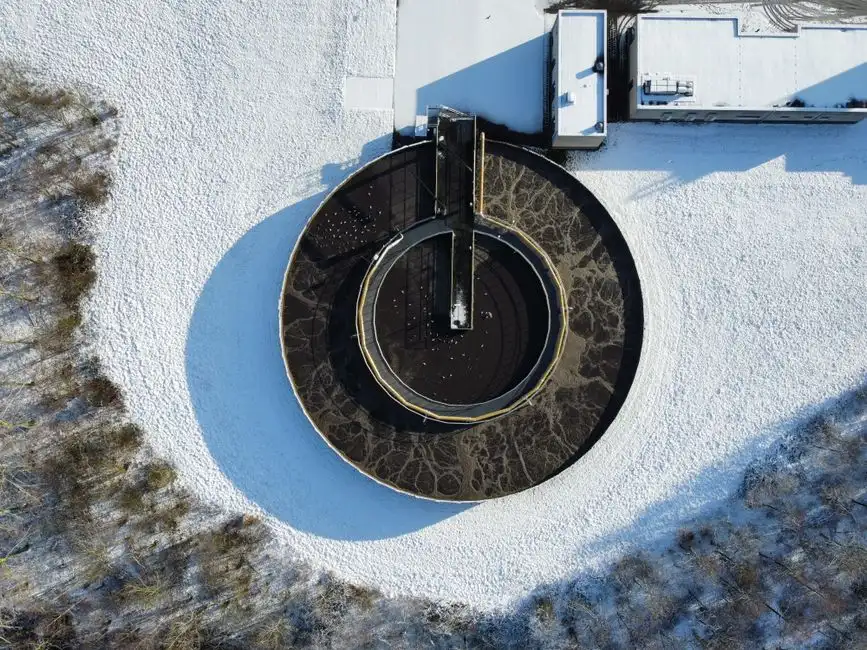
An SBR (sequencing batch reactor) cycles fill–react–settle–decant in a single tank, with no separate clarifier but two to three times the tankage footprint of an MBR. It tolerates hydraulic surges well and suits mid-sized resorts with stable occupancy and no reuse ambition — effluent quality lands in the BOD5 10–20 mg/L / TSS 10–20 mg/L band, good enough for sewer discharge under NTPA 002 but typically not for reuse without polishing. The full side-by-side is in the MBR vs SBR engineering comparison linked at the end of this section.
A buried WSZ A/O package plant for boutique hotels integrates anoxic/aerobic contact oxidation, sedimentation, and disinfection into a single buried unit, fully automated, capacity range typically 1–80 m³/h, with the lowest installed CAPEX in the field. It is the right call for a 3-star or boutique property under 80 m³/day, especially where landscaping must be preserved above the tank. Ana Hotels in Bucharest, an EU Ecolabel holder, operates its plant on a comparable high-standard discharge basis and is the standard local reference designers cite.
For event-peak or commercial-kitchen loads, a DAF pre-treatment for hotel FOG streams with micro-bubble skimming in the 4–300 m³/h range is the standard pre-treatment adjunct. The deeper trade-off analysis between these three options is laid out in the dedicated MBR vs SBR engineering comparison.
| Criterion | MBR | SBR | WSZ buried A/O package |
|---|---|---|---|
| Effluent BOD5 | ≤ 5 mg/L | 10–20 mg/L | 15–30 mg/L |
| Effluent TSS | ≤ 1 mg/L | 10–20 mg/L | 15–35 mg/L |
| Reuse-ready (EU 2020/741 Class B) | Yes (direct) | With UF/UV polish | No (typically) |
| Footprint vs. CAS | ~40% | ~70% | ~50% |
| Operator skill required | Medium (membrane care) | Medium | Low (automated) |
| Best fit | 4–5★ city, reuse, EU Ecolabel | Mid-sized resort, stable load | ≤ 80 m³/day, 3★ / boutique |
Sizing a Bucharest Hotel Treatment Plant: The Real Numbers
Use 200–300 L per guest-night for full-service hotels and 150–200 L for limited-service properties, plus 50 L per staff shift. A peaking factor of 1.3–1.5× covers meal-service, conference, and event surges; size the equalisation tank for at least 4–6 hours of average flow to buffer morning and evening peaks. Per-guest-night pollutant load basis for sizing the biological stage: BOD5 ~40–60 g, COD ~80–120 g, TSS ~30–50 g, FOG ~10–20 g from kitchen operations (HydropureWater field data, 2026).
Worked example for a 120-room Bucharest 4-star at 75% occupancy with 60 staff: average daily flow = 90 rooms × 250 L + 60 × 50 L = 22,500 L + 3,000 L = 25.5 m³/day design average, peaking near 38 m³/day at a 1.5× factor. A 200-room 5-star at 80% occupancy with 120 staff lands closer to 56 m³/day average, ~84 m³/day peak — still inside a packaged MBR envelope and below the 200 m³/day threshold above which civil-built activated sludge starts to win on unit cost. For a regional comparison, the Warsaw hotel wastewater treatment guide uses an equivalent per-guest-night approach.
Reclaimed-water sizing changes the equation. If 30–50% of effluent is reused for toilet flushing (typically 30–40 L/person/day), landscape irrigation, or laundry, the MBR must hit EU 2020/741 Class B (BOD5 ≤ 10 mg/L, TSS ≤ 10 mg/L, fecal coliforms ≤ 100 CFU/100 mL). That single upgrade usually pays for itself inside 24–36 months in any 4- or 5-star Bucharest operation (HydropureWater CAPEX modelling, 2026).
2026 CAPEX and OPEX Benchmarks for Bucharest Hotel Projects
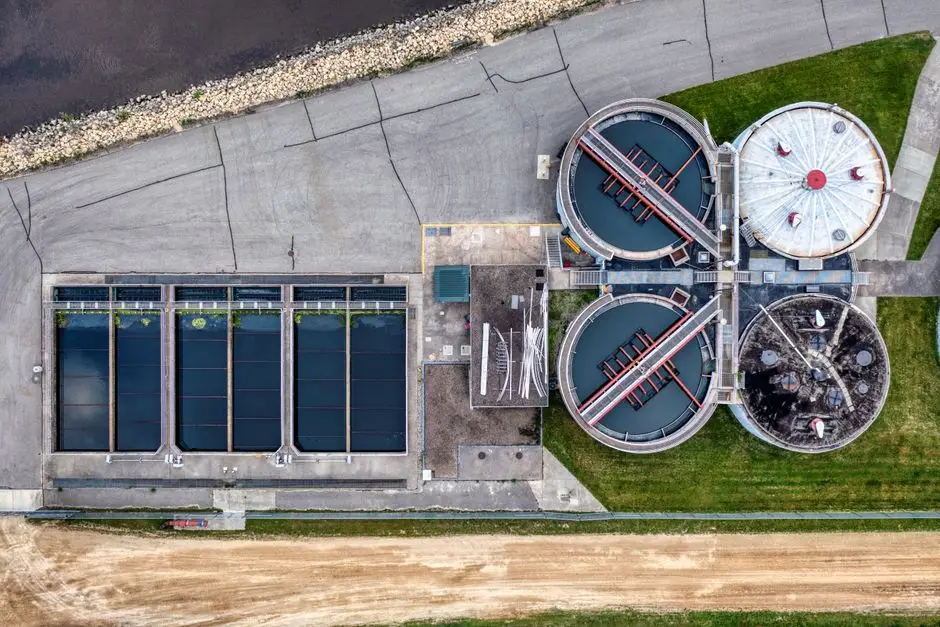
For a WSZ buried package handling up to 80 m³/day, installed CAPEX in Bucharest for 2026 sits in the EUR 25,000–60,000 band, with OPEX dominated by electricity at roughly EUR 0.25–0.40/m³ and periodic sludge haul-off at EUR 80–150 per cubic metre of wet cake. An MBR in the 30–200 m³/day range runs EUR 80,000–250,000 depending on reuse scope; membrane replacement every 7–10 years is the dominant lifecycle line. SBR systems fall between, with 2–3× larger tankage than MBR. Add 15–25% for Bucharest-specific civil works, NTPA 011 authorisations, and Apa Nova coordination fees.
ROI math for reuse is straightforward: at Bucharest potable water tariffs of roughly EUR 1.20–1.80/m³, recycling 30–50% of effluent offsets EUR 8,000–22,000 of annual water cost for a 100-room property. EU Ecolabel properties also see measurable RevPAR uplift in corporate and MICE segments; payback on the MBR premium versus a sewer-only connection typically lands in the 18–36 month range, not years (HydropureWater field data, 2026). Sludge handling is a recurring line item — a small plate-and-frame filter press dewatering the waste activated sludge to 22–28% dry solids cuts haul-off volume by roughly 75%.
| System class | Capacity | Installed CAPEX (Bucharest 2026) | OPEX (EUR/m³) | Key OPEX line |
|---|---|---|---|---|
| WSZ buried A/O | ≤ 80 m³/day | EUR 25,000–60,000 | 0.25–0.40 | Sludge haul-off |
| SBR package | 30–200 m³/day | EUR 60,000–180,000 | 0.30–0.50 | Tankage + blower energy |
| MBR package | 30–200 m³/day | EUR 80,000–250,000 | 0.40–0.70 | Membrane replacement (yr 7–10) |
Frequently Asked Questions
What are the NTPA 001 discharge limits a Bucharest hotel must meet for surface-water discharge?
NTPA 001 caps BOD5 at 25 mg/L, COD at 125 mg/L, TSS at 35 mg/L, total nitrogen at 15 mg/L, and total phosphorus at 2 mg/L in urban catchments, with fecal coliforms under 10,000 CFU/100 mL (per HG 188/2002 / EU UWWTD 91/271/EEC). Any standalone treatment train for a peri-urban Bucharest hotel should be designed against these numbers and verified under NTPA 011/2002 authorisation. A packaged MBR clears all five parameters with margin and leaves headroom for EU 2020/741 reuse classes.
How do I size an MBR for a 120-room Bucharest 4-star hotel?
Start at 250 L per guest-night × 75% occupancy × 120 rooms = 22.5 m³/day, plus 60 staff × 50 L = 3.0 m³/day, total 25.5 m³/day design average. Apply a 1.3–1.5× peaking factor to land at 33–38 m³/day design peak. A packaged MBR in the 30–50 m³/day range with submerged PVDF membranes will cover this profile and target EU 2020/741 Class B reuse for toilet flushing. For a 200-room 5-star at 80% occupancy the same math yields ~84 m³/day peak.
Which reclaimed-water quality class applies to hotel toilet flushing in Romania in 2026?
EU Regulation 2020/741 Class B (BOD5 ≤ 10 mg/L, TSS ≤ 10 mg/L, fecal coliforms ≤ 100 CFU/100 mL) covers toilet flushing and landscape irrigation at hotels. An MBR followed by ClO2 disinfection typically meets Class B without additional ultrafiltration; Class A (unrestricted irrigation) requires a UF polish or RO step. Romania's 2020–2026 alignment with 2020/741 means new reuse lines are most often specified to Class B as a defensible baseline.
What is a defensible 2026 CAPEX range for a packaged MBR at a 4–5 star Bucharest hotel?
For 30–200 m³/day, installed CAPEX in Bucharest for 2026 sits in the EUR 80,000–250,000 band, with the spread driven by reuse scope, civil works, and membrane module count. Add 15–25% for NTPA 011 permits and Apa Nova coordination. Membrane replacement every 7–10 years at EUR 12,000–28,000 for a 50 m³/day module set is the largest lifecycle line. A useful cross-check is the hotel wastewater plant cost benchmarks for comparable tourism-market data.
Does the Ana Hotels EU Ecolabel in Bucharest require on-site wastewater reuse?
EU Ecolabel for tourist accommodation (Commission Decision 2017/175) does not mandate reuse outright, but it awards points for measurable water-consumption reduction and wastewater management, which reuse targets directly. Ana Hotels in Bucharest holds the EU Ecolabel and is the standard local reference for a high-discharge-standard plant design. Designers targeting the label should specify an MBR with EU 2020/741 Class B reuse and document the potable-water offset in the audit file.