What Is a Package Wastewater Treatment Plant?
A package wastewater treatment plant is a prefabricated, skid-mounted system designed for quick installation and minimal civil work, making it an ideal solution for industrial and municipal wastewater management. These compact units typically employ advanced biological processes, such as the A/O (anoxic/aerobic) or MBR (membrane bioreactor) technologies, to achieve high-efficiency contaminant removal. Their pre-engineered nature makes them particularly well-suited for locations with space constraints or urgent deployment needs, a common scenario in bustling industrial clusters across cities like Vijayawada and Visakhapatnam in Andhra Pradesh. The typical process flow involves influent entering the system, followed by screening to remove larger solids, then aeration for biological breakdown of organic matter, sedimentation to separate solids, and finally, disinfection for effluent suitable for discharge or reuse. For specific applications like hospital or pharmaceutical wastewater, additional disinfection stages, such as ozone or chlorine dioxide treatment, are incorporated to meet stringent microbial limits.
Why Andhra Pradesh Needs Compact Wastewater Solutions
Andhra Pradesh's rapid industrialization, particularly in corridors like Visakhapatnam, Tirupati, and Kakinada, has led to a significant increase in wastewater generation from sectors such as pharmaceuticals, textiles, and food processing. This surge in industrial activity is met with increasingly stringent environmental regulations enforced by the Telangana State Water Board (TSWB) and the Central Pollution Control Board (CPCB). These bodies mandate strict discharge norms, typically requiring BOD levels below 30 mg/L, COD below 250 mg/L, and Total Suspended Solids (TSS) below 100 mg/L. Simultaneously, rapid urbanization in cities like Vijayawada and Guntur necessitates decentralized sewage treatment solutions that minimize land footprint. Compact, pre-engineered package wastewater treatment plants address these challenges directly by offering a solution that significantly reduces construction time—often by up to 60% compared to conventional, site-built plants. This allows for a faster path to compliance and operational readiness, crucial for businesses and municipalities in Andhra Pradesh.
Key Technologies in Package STP Systems
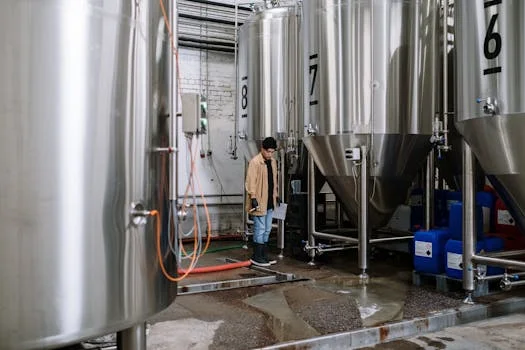
The effectiveness of a package wastewater treatment plant hinges on the chosen core treatment technology, tailored to the specific characteristics of the influent. HydropureWater's WSZ series, for instance, utilizes the A/O (Anoxic/Aerobic) process, a robust biological treatment method. This system excels in domestic sewage and low-to-medium strength industrial effluent, achieving 85–90% BOD removal. For applications demanding superior effluent quality and significant space savings, the MBR (Membrane Bioreactor) technology is used. MBR systems integrate activated sludge treatment with advanced PVDF membrane filtration, yielding effluent with quality below 1 µm and requiring up to 60% less space than conventional systems, making them ideal for high-density urban or industrial water reuse projects. In scenarios with high concentrations of fats, oils, and grease (FOG) and suspended solids, common in food processing and textile industries, DAF (Dissolved Air Flotation) units prove highly effective, offering over 90% removal efficiency. For specific industrial sectors like hospitals or pharmaceuticals, where microbial contamination is a critical concern, an additional disinfection stage using ozone or chlorine dioxide (ClO₂) is essential to meet stringent standards.
| Technology | Primary Application | Typical BOD Removal Efficiency | Key Features | Relevant HydropureWater Product |
|---|---|---|---|---|
| A/O (Anoxic/Aerobic) | Domestic Sewage, Low-to-Medium Strength Industrial Effluent | 85–90% | Cost-effective, robust biological treatment | WSZ Series (e.g., compact underground package wastewater treatment plant with A/O process) |
| MBR (Membrane Bioreactor) | High-Density Urban Areas, Industrial Reuse, Strict Effluent Standards | 95–99% | Compact footprint (40-60% less space), high-quality effluent (<1 µm), ideal for water reuse | high-efficiency MBR package plant for reuse-quality effluent |
| DAF (Dissolved Air Flotation) | Industrial Wastewater with High FOG, Suspended Solids (Food Processing, Textiles) | 90%+ | Efficient removal of buoyant solids and oils | DAF machine |
| Disinfection (Ozone/ClO₂) | Hospital, Pharmaceutical Effluent, Pathogen Reduction | Achieves <10 MPN/100mL E. coli | Essential for meeting microbial discharge limits | Chlorine Dioxide Generator |
Technical Specifications Comparison
Understanding technical specifications is crucial for selecting a system that meets capacity and site requirements. The WSZ series offers a flow range of 1–80 m³/h, with underground units allowing for landscaping above the installation. MBR systems cater to larger capacities, ranging from 10 to 2,000 m³/day. A significant advantage of these pre-engineered systems is their compact footprint; MBR units require 40–60% less space compared to conventional plants. Automation is a key feature, with most systems offering fully automatic PLC control and remote monitoring. A/O systems consistently achieve 85–92% BOD removal, while MBR technology can reach 95–99% BOD removal, with effluent turbidity typically below 10 NTU. Installation flexibility includes underground, above-ground, or trailer-mounted configurations for mobile applications.
| Parameter | WSZ Series (A/O) | MBR Systems | DAF Systems |
|---|---|---|---|
| Typical Flow Range | 1–80 m³/h | 10–2,000 m³/day | Variable, often integrated with other systems |
| Footprint | Moderate (underground option saves surface space) | 40–60% smaller than conventional | Compact, often skid-mounted |
| Automation Level | Fully Automatic PLC Control, Optional Remote Monitoring | Fully Automatic PLC Control, Optional Remote Monitoring | Automated controls standard |
| BOD Removal Efficiency | 85–92% | 95–99% | N/A (primarily for solids/FOG removal) |
| Turbidity (MBR Effluent) | N/A | <10 NTU | N/A |
| Installation Options | Underground, Above-ground | Above-ground, Skid-mounted | Skid-mounted |
Cost Analysis for Package Plants in Andhra Pradesh
Understanding cost implications is critical for procurement decisions. For package wastewater treatment plants in Andhra Pradesh, a common benchmark for MBR systems in Visakhapatnam starts around ₹2.5 lakhs for a 10 m³/h capacity unit. The estimated cost for package plants ranges from ₹25,000 to ₹75,000 per m³/h capacity, with A/O systems at the lower end and MBR systems at the higher end. A 1 MLD (million liters per day) plant, equivalent to approximately 41.67 m³/h, would cost roughly ₹1.05–1.5 crore for an A/O system and ₹1.8–3 crore for an MBR system. Operational expenditure (OPEX) must also be considered, with MBR systems incurring higher OPEX around ₹8–15/m³, and A/O systems more economical at ₹4–8/m³.
| Capacity Range | Estimated CAPEX per m³/h | Estimated OPEX per m³ (A/O) | Estimated OPEX per m³ (MBR) |
|---|---|---|---|
| 10 m³/h | ₹25,000 - ₹75,000 | ₹4 - ₹8 | ₹8 - ₹15 |
| 1 MLD (41.67 m³/h) | ₹1.05 - ₹3 crore (Total Project Cost) | (Calculated based on m³/h rate) | (Calculated based on m³/h rate) |
Top Suppliers and Regional Support in Andhra Pradesh
Reliable suppliers and robust regional support are crucial. Key local and regionally serving suppliers in Andhra Pradesh include Vikas Pump (Visakhapatnam), Aquamax Systems, and Trity Environ, which operates from Hyderabad and serves the AP market. HydropureWater ensures direct support across South India through an established partner network, aiming for a rapid 72-hour response time for critical issues. Prospective buyers should prioritize suppliers who demonstrate strong after-sales service, ensure consistent spare parts availability, and offer remote diagnostic capabilities.
Frequently Asked Questions
- How much does it cost to install a sewage treatment plant in Andhra Pradesh? The base cost for a package sewage treatment plant in Andhra Pradesh typically ranges from ₹2.5 to ₹7.5 lakhs per 10 m³/h capacity.
- What is the cost of 1 MLD water treatment? A 1 MLD package wastewater treatment plant can cost between ₹1.05 crore to ₹3 crore.
- Which technology is best for industrial wastewater in Visakhapatnam? For industrial wastewater in Visakhapatnam, MBR technology is excellent for water reuse applications, DAF is highly effective for wastewater with high FOG content, and A/O is suitable for general industrial sewage treatment.
- Can package plants meet CPCB discharge norms? Yes, properly designed and operated package plants are capable of meeting CPCB discharge norms.
- Are underground STPs suitable for flood-prone areas? Underground STPs can be suitable but require robust waterproofing measures and the installation of sump pumps.