MBR wastewater treatment systems are an advanced alternative to conventional methods, integrating biological treatment with membrane filtration to produce superior effluent quality, often suitable for reuse. Compared to traditional activated sludge, MBR typically offers a 60% smaller footprint and near-reuse-quality effluent (<1 μm filtration), while MBBR provides a more compact solution than conventional systems with moderate maintenance requirements and lower initial costs than MBR, but generally produces a lower effluent quality than MBR.
Understanding MBR Wastewater Treatment Systems: Core Technology & Benefits
Membrane Bioreactor (MBR) technology represents a significant evolution in biological wastewater treatment by combining the conventional activated sludge process with advanced membrane filtration. Unlike traditional systems that rely on gravity-driven secondary clarifiers to separate treated water from biomass, an integrated MBR wastewater treatment system uses semi-permeable membranes to perform this separation physically. This integration allows for a much higher concentration of microorganisms within the bioreactor, leading to more efficient organic matter breakdown and a vastly more compact system design.
The core components of an MBR system include the bioreactor tank, where biological degradation occurs, and the membrane modules. Most modern industrial applications utilize submerged membranes, such as high-efficiency MBR flat sheet membrane modules made from Polyvinylidene Fluoride (PVDF). These membranes typically feature a pore size of approximately 0.1 μm, effectively creating a physical barrier against suspended solids, bacteria, and most pathogens. To prevent the accumulation of solids on the membrane surface—a process known as fouling—an integrated aeration system provides continuous "scouring" via air bubbles, which maintain the membrane's permeability and extend the cleaning intervals.
The primary benefits of MBR technology are rooted in its ability to produce near-reuse-quality effluent (<1 μm filtration) consistently. Because the membrane serves as an absolute barrier, the effluent quality is independent of the settling characteristics of the sludge, a common failure point in older technologies. MBR systems offer a footprint reduction of up to 60% compared to conventional systems. This makes them the preferred choice for facility owners facing strict discharge permits or those operating in urban and industrial environments where land is at a premium. The technology has evolved from a niche solution for high-strength industrial waste into a mainstream standard for decentralized municipal treatment and water reclamation projects globally.
MBR vs. Conventional Activated Sludge (CAS): Performance & Footprint Analysis
MBR systems achieve a 60% footprint reduction compared to conventional activated sludge by operating at significantly higher Mixed Liquor Suspended Solids (MLSS) concentrations and eliminating the need for secondary clarifiers. In a Conventional Activated Sludge (CAS) process, wastewater enters an aeration tank where bacteria digest organic matter. The resulting "mixed liquor" then flows into a secondary clarifier, where gravity allows the sludge to settle at the bottom while clear water overflows the top. This reliance on gravity is the Achilles' heel of CAS; if the sludge does not settle well—a phenomenon known as "sludge bulking"—the effluent quality degrades immediately, leading to permit violations.
In contrast, MBR technology replaces the clarifier with a physical membrane barrier. This allows the system to maintain MLSS levels between 8,000 and 15,000 mg/L, whereas CAS is typically limited to 3,000–5,000 mg/L to ensure proper settling. By maintaining a higher biomass concentration, the bioreactor volume can be reduced by 50% or more. MBR delivers "higher wastewater quality" and "near-reuse-quality effluent (<1 μm filtration)," effectively eliminating 99.9% of suspended solids and pathogens. While CAS is well-established, robust, and reliable, it cannot match the MBR's ability to produce water suitable for direct industrial reuse or high-end irrigation without additional tertiary treatment steps like sand filtration and UV disinfection.
Operational complexity is a key differentiator. CAS is relatively simple to operate but requires constant monitoring of the Sludge Volume Index (SVI) to prevent solids carryover. MBR systems require more sophisticated controls and specific maintenance protocols, such as automated backwashing and periodic chemical cleaning (CIP). However, modern high-efficiency MBR flat sheet membrane modules have significantly narrowed the energy gap. For instance, HydropureWater's flat sheet MBR modules have 10–20× lower energy consumption than external cross-flow systems, making them highly competitive in terms of long-term OPEX. Additionally, MBRs typically operate at a higher Sludge Retention Time (SRT), resulting in less sludge production and a more stabilized byproduct compared to CAS.
| Parameter | Conventional Activated Sludge (CAS) | Membrane Bioreactor (MBR) |
|---|---|---|
| Effluent Turbidity | 5.0 – 20.0 NTU | < 0.2 NTU |
| Effluent TSS | 10 – 30 mg/L | < 1 mg/L |
| Footprint Requirement | 100% (Baseline) | 30% – 40% of CAS |
| MLSS Concentration | 3,000 – 5,000 mg/L | 8,000 – 15,000 mg/L |
| Sludge Production | High (0.6 - 1.0 kg TSS/kg COD) | Low (0.3 - 0.5 kg TSS/kg COD) |
| Bacterial/Virus Removal | 1 - 2 log reduction | 4 - 6 log reduction |
MBR vs. Moving Bed Biofilm Reactor (MBBR): Cost & Effluent Quality Trade-offs
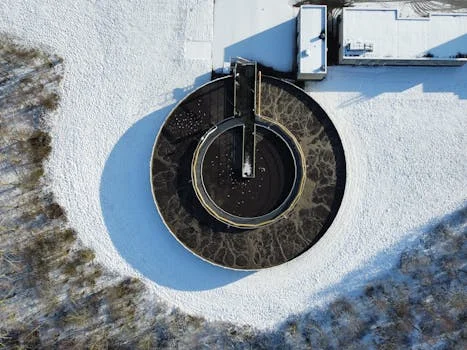
While MBBR offers lower capital and operational costs for bulk organic removal, MBR is the superior technology for applications requiring near-reuse-quality effluent and physical pathogen removal. The Moving Bed Biofilm Reactor (MBBR) utilizes thousands of small plastic biofilm carriers that circulate within an aerated tank. These carriers provide a large surface area for biological growth, making the system more compact than CAS. However, like CAS, MBBR still requires a downstream separation process—typically a clarifier or a dissolved air flotation (DAF) unit—to remove the "sloughed off" biomass from the treated water.
The primary trade-off between these two technologies lies in effluent quality versus maintenance. MBR provides "higher wastewater quality" by physically straining out all particles larger than the membrane pore size. MBBR excels in BOD/COD and ammonia removal but, because it relies on secondary separation, the effluent typically contains higher Total Suspended Solids (TSS). In terms of footprint, both are compact, but MBR remains the most space-efficient because it completely eliminates the clarifier footprint. For a compact package sewage treatment plant, MBBR is often chosen when the goal is to meet standard discharge limits with minimal operator intervention, whereas MBR is selected when the water must be recycled back into a cooling tower or industrial process.
From a financial perspective, MBBR has "lower capital and operational costs, moderate maintenance" compared to MBR. MBR has a higher CAPEX due to the cost of the membranes themselves and the sophisticated PLC-controlled pumping systems required. The OPEX for MBR is also higher due to the energy required for membrane scouring aeration and the cost of cleaning chemicals. However, when evaluating the MBR system costs and ROI analysis, one must consider the value of the reclaimed water. In regions where water is expensive or scarce, the ability of an MBR to produce high-quality permeate can offset its higher operational costs within 3 to 5 years (HydropureWater field data, 2025).
| Feature | MBBR (Moving Bed Biofilm Reactor) | MBR (Membrane Bioreactor) |
|---|---|---|
| Separation Method | Secondary Clarifier / DAF | Membrane Filtration (0.1 μm) |
| Effluent Quality | Moderate (TSS 10-20 mg/L) | Excellent (TSS < 1 mg/L) |
| Maintenance Level | Low to Moderate | Moderate to High |
| CAPEX | Lower | Higher |
| Reuse Potential | Requires Tertiary Treatment | Direct Reuse Possible |
| Process Stability | High (Biofilm is resilient) | Very High (Physical barrier) |
MBR vs. Wastewater Lagoons: Capacity, Simplicity, and Environmental Impact
Wastewater lagoons require approximately 10 to 50 times more land area than an MBR system to achieve comparable organic loading reduction. Lagoons are one of the oldest forms of wastewater treatment, relying on gravity, long hydraulic retention times (often 20–60 days), and natural biological processes. While they are "simple to run" and have "minimal operator license requirements," they are increasingly unable to meet modern environmental regulations, particularly regarding nutrient removal (Nitrogen and Phosphorus) and ammonia limits.
The environmental footprint of a lagoon is its biggest drawback. They are "space-hungry" and "require a lot of land," which makes them unsuitable for industrial sites or growing municipalities. lagoons are susceptible to seasonal temperature changes; biological activity slows significantly in winter, leading to inconsistent effluent quality. MBR systems, being contained and highly controlled, maintain consistent performance year-round. Odor and vector concerns (such as mosquitoes) are common with lagoons, whereas MBR systems are enclosed, minimizing odors and environmental impact on the surrounding community.
While lagoons have "low operating cost" and "can have high up-front costs due to excavation," they have "limited scalability." If a facility needs to increase its capacity, a lagoon typically requires digging a new pond. An MBR system is modular; capacity can often be doubled simply by adding more high-efficiency MBR flat sheet membrane modules into existing tanks. For modern industrial applications, the shift from lagoons to MBR is often driven by the need for regulatory compliance and the desire to reclaim valuable land for production facilities.
| Parameter | Wastewater Lagoons | MBR Systems |
|---|---|---|
| Land Requirement | Extremely High | Minimal |
| Retention Time | 20 – 60 Days | 4 – 10 Hours |
| Nutrient Removal | Poor / Inconsistent | Excellent / Controlled |
| Scalability | Very Limited | Highly Modular |
| Odor Control | Difficult | Excellent (Contained) |
Choosing the Right Wastewater Treatment System: A Decision Framework
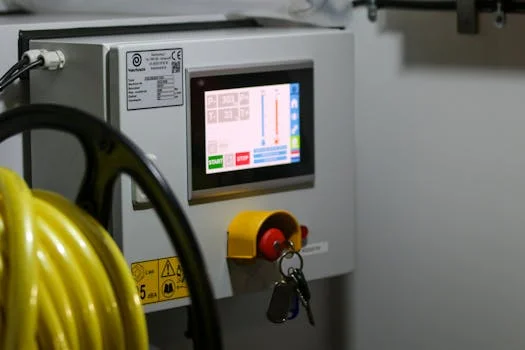
Selecting a wastewater treatment technology requires balancing capital expenditure (CAPEX) against long-term operational efficiency (OPEX) and regulatory compliance risks. The decision is rarely based on a single factor but rather a combination of effluent requirements, site constraints, and available technical expertise. For instance, a facility in a remote area with vast land and lenient discharge limits may find a lagoon or CAS system perfectly adequate. However, a modern pharmaceutical or food processing plant with strict sustainability goals will almost always benefit from an MBR.
Scenario-Based Recommendations:
- For High Effluent Quality & Water Reuse: MBR is the optimal choice. It is the only technology that provides a physical barrier to pathogens and solids, making the water suitable for cooling towers, boiler feed (with RO), or irrigation.
- For Extreme Space Constraints: MBR is superior. Its ability to operate at high MLSS concentrations allows for the smallest possible tank volumes.
- For Robust Bulk Removal on a Budget: MBBR is often the best fit. It handles fluctuating loads well and requires less maintenance than MBR while being more compact than CAS.
- For Simple Operation with Low-Skill Labor: Lagoons or a compact package sewage treatment plant (WSZ series) are preferable, as they do not require complex membrane cleaning protocols.
Before making a final selection, engineers should conduct a detailed feasibility study and pilot testing. Factors such as the specific wastewater chemistry (e.g., presence of fats, oils, and grease which can foul membranes) must be analyzed. Consulting with experts on the MBR system maintenance guide and long-term ROI is essential to ensure the technology matches the operational capacity of the facility.
Frequently Asked Questions
What are the main advantages of MBR over conventional systems?
The primary advantages include a 60% smaller footprint, significantly higher effluent quality (TSS < 1 mg/L), reduced sludge production, and the ability to reuse treated water directly for industrial processes.
How does MBR compare to MBBR in terms of cost?
MBR typically has higher CAPEX and OPEX due to membrane costs and aeration requirements for scouring. However, MBBR requires a separate clarifier and cannot achieve the same effluent clarity without expensive tertiary filtration.
What is the lifespan of MBR membranes?
With proper maintenance and following a strict MBR system maintenance guide, high-quality PVDF flat sheet membranes typically last 5 to 8 years. Cleaning frequency depends on the influent characteristics but usually involves a weekly backwash and semi-annual chemical deep clean.
Can MBR systems handle fluctuating industrial loads?
Yes. Because MBR systems maintain a high biomass concentration (MLSS), they have a high buffering capacity against organic shocks. However, they require proper equalization tanks to manage hydraulic surges.
Related Equipment
The following HydropureWater products are engineered for the wastewater challenges discussed above:
- integrated MBR wastewater treatment system — view specifications, capacity range, and technical data
- high-efficiency MBR flat sheet membrane modules — view specifications, capacity range, and technical data
- compact package sewage treatment plant — view specifications, capacity range, and technical data
Need a customized solution? Request a free quote with your specific flow rate and pollutant parameters.