What IFAS Means for Aquaculture Wastewater
IFAS (Integrated Fixed-film Activated Sludge) treats aquaculture wastewater by combining suspended activated sludge with biofilm grown on free-floating carriers in a single aerated tank, achieving 98.17% NH4-N removal and 88.17% TN removal at C/N = 4 in a 2026 IPFAS pilot. Compared with MBBR, IFAS effluent TN reached 1.52 mg/L vs 5.17 mg/L, with 30% carrier fill and DO 2.5–3.5 mg/L — making it well suited to recirculating aquaculture systems and shrimp-farm discharge with variable ammonia loading. The technology matters to aquaculture operators because total ammonia nitrogen (TAN) at 1–2 mg/L causes acute mortality in shrimp and tilapia, and chronic sub-lethal exposure at 0.1–0.5 mg/L suppresses growth across most cultured species.
The defining feature of IFAS is the coexistence of two biomass populations in one reactor: conventional floc-based activated sludge (AS) and attached biofilm on polyethylene or polypropylene carriers. Maza-Márquez et al. (2023) reported superior nitrogen and phosphorus performance in A2O-IFAS configurations under reduced SRT, lower MLSS, and diminished C/N ratios — three conditions that defeat conventional AS but match aquaculture effluent almost exactly. For an engineer evaluating a secondary vs tertiary treatment comparison on a fish-farm retrofit, this dual-mechanism architecture is the key differentiator: nitrifiers occupy the protected biofilm niche while heterotrophs and PAOs work the suspended flocs, allowing each population to dominate the function it performs best even when the influent swings between feed events and clean-water flushes.
How IFAS Works in an Aquaculture Treatment Train
A typical aquaculture IFAS train runs: rotary bar screen → DAF or lamella clarifier for solids and grease → IFAS aeration basin with carriers → secondary clarifier → optional MBR or disinfection. The IPFAS pilot configuration used a 50 L aerobic bioreactor coupled with a 20 L secondary clarifier, packed with Yulong bio-carriers (12 mm diameter × 25 mm length) at 30% volumetric fill, with continuous aeration holding DO at 2.5–3.5 mg/L. For solids handling upstream, a DAF system is the standard first stage on shrimp and RAS effluent, and a GX series rotary bar screen with openings below 6 mm protects the IFAS basin from debris and scum — a problem observed in the Hazen Greensboro pilot where bypass from influent screens caused floatables buildup in the first IFAS cell.
The dominant removal mechanism in IPFAS is SNDPR (simultaneous nitrification, denitrification, and phosphorus removal), driven by a tripartite niche across sludge, biofilm, and plant roots. The biofilm on carrier surfaces develops steep oxygen gradients due to diffusion limitation: the outer layer stays aerobic and supports nitrifiers (the amoA gene signal in IPFAS localized to AS), while the inner anoxic core supports denitrifiers (narG/nirS localized to biofilm). This gradient is what lets one IFAS tank absorb a feed-driven TAN pulse that would wash out a single-stage AS system. Effluent dissolved organic matter analysis in the IPFAS study showed that biofilms used extracellular polymeric substances (EPS) as a carbon source for denitrification under low-carbon conditions, reducing effluent organic matter load — a direct response to aquaculture's chronic C/N shortage. Dissolved oxygen in the suspended phase should sit at 3–4 mg/L in full-scale installations (per the Hazen Greensboro demonstration) to keep the biofilm fully aerobic and prevent partial nitrification that would let NO2-N accumulate to toxic levels in downstream RAS loops.
IFAS vs MBBR vs MBR for Aquaculture: Head-to-Head Comparison
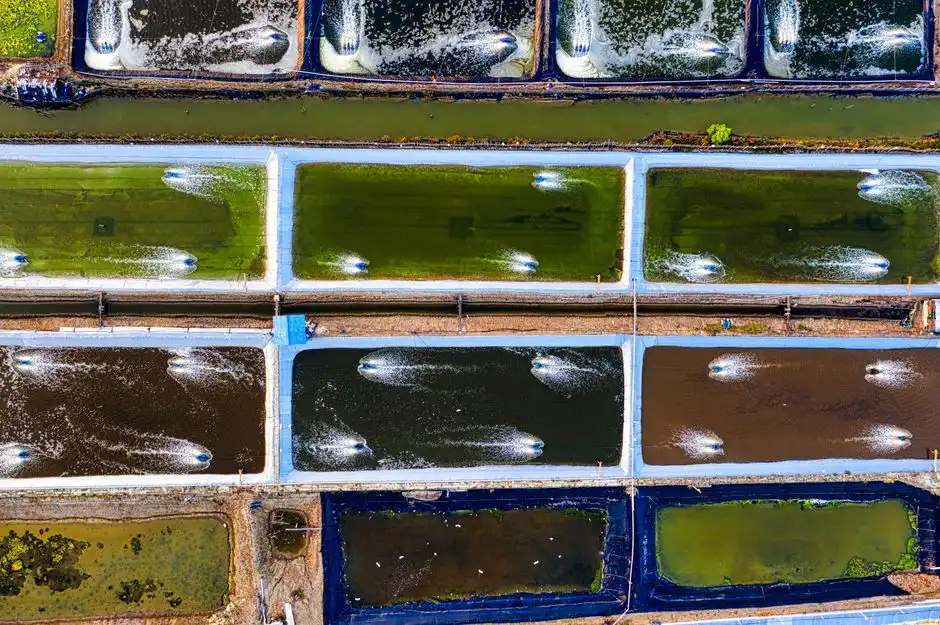
Yu et al. (2023) measured IFAS effluent TN at 1.52 mg/L versus 5.17 mg/L for MBBR under matched conditions — a 70% performance gap that matters when the discharge target is below 5 mg/L TN. The IPFAS pilot added phosphorus removal to that advantage, reaching 83.64% TP removal at C/N = 4 through combined AS-biofilm-plant synergy, which neither pure MBBR nor conventional MBR can match without chemical precipitation. For aquaculture operations with discharge limits tightening under China GB, EU Nitrates Directive (91/676/EEC), or US EPA CAFO rules, the IFAS footprint advantage is equally important: the Hazen demonstration achieved full nitrification in approximately 50% of the aerobic volume a conventional AS system would need for the same load.
| Parameter | IFAS (IPFAS pilot) | MBBR (Yu et al. 2023) | MBR |
|---|---|---|---|
| Effluent TN (mg/L) | 1.52 | 5.17 | < 5 (with chemical P removal) |
| NH4-N removal | 98.17% | 85–95% (typical) | > 95% (temperature dependent) |
| TP removal | 83.64% (biological, no chemicals) | 10–30% (biological only) | 30–60% (biological only) |
| Aerobic volume vs conventional AS | ~50% | ~60–70% | ~40% |
| Attached biomass | 5–15 g TSS/m² | 3–8 g TSS/m² | N/A (membrane retention) |
| Sludge handling | MLSS control + effluent screens | No sludge return; biofilm slough | Membrane cleaning; high WAS |
| Shock-load buffer (TAN pulse) | High (biofilm + sludge) | Medium (biofilm only) | Low (kinetic-limited AS) |
| Aquaculture RAS reuse suitability | High (low residual N, low TSS) | Medium (higher residual TN) | High (clarity, low TSS) |
For an aquaculture operator choosing between these three, the decision rule is straightforward: pick IFAS when variable TAN loading and tight TN limits dominate the design, pick MBBR when simplicity and no sludge return matter more than residual nitrogen, and pick MBR when final effluent clarity for RAS reuse justifies membrane scouring energy. A HydropureWater MBR system suits high-end RAS polishing but does not solve the phosphorus problem biologically, and it carries the highest energy penalty per cubic meter treated. IFAS hits the middle ground most shrimp and RAS operations actually need: a single basin that handles TAN, NO2-N, and a meaningful fraction of TP without the membrane replacement cost of MBR or the limited N removal of MBBR.
Key Design Parameters for IFAS in Aquaculture Applications
The 2026 IPFAS pilot established the most aquaculture-relevant design dataset to date: 30% volumetric carrier fill with 12 mm × 25 mm Yulong bio-carriers, DO at 2.5–3.5 mg/L, and optimum performance at C/N = 4 with influent NH4-N of 30 mg/L, achieving TOC 91.80%, NH4-N 98.17%, TN 88.17%, and TP 83.64%. The Hazen Greensboro full-scale demonstration used AnoxKaldnes K3 media at 35% fill fraction in a 3.5-mgd basin and confirmed that suspended-phase aerobic SRT can drop to 3.6 days while the attached biomass carries nitrification down to 15°C — directly relevant to outdoor aquaculture in temperate and subtropical climates. The fixed-film biomass in the Hazen pilot represented up to 50% of total system biomass, and attached growth of 5–15 g TSS/m² was maintained consistently across three cells under different loadings.
| Parameter | IPFAS pilot (aquaculture-tuned) | Hazen full-scale (municipal IFAS) | Aquaculture design recommendation |
|---|---|---|---|
| Carrier fill (vol %) | 30% | 35% | 30–40% (higher for TAN shock buffer) |
| Carrier geometry | 12 mm × 25 mm PE/PP cylinder | AnoxKaldnes K3 | Smooth PE/PP, protected area 500–800 m²/m³ |
| DO (mg/L) | 2.5–3.5 | 3–4 | 3.0–3.5 (suspended phase) |
| Aerobic SRT (suspended, days) | Not reported directly | 3.6 (winter), ~5.5 (summer) | 5–8 (warm season), 4–6 (cool season) |
| MLSS (mg/L) | Not reported directly | 2,000–4,000 | 3,000–5,000 (suspended) |
| Attached biomass | Not reported directly | 5–15 g TSS/m² | Target ≥ 8 g TSS/m² |
| HRT (h) | Varied in study | 6–8 (typical municipal) | 4–8 (pilot confirm required for aquaculture) |
| Optimum C/N | 4 | 6–10 (municipal) | 3–5; supplement carbon if C/N < 2 |
For influent with C/N below 2 — common in lined shrimp ponds with no external carbon — the IPFAS data suggests three options: (1) external carbon dosing with methanol or acetate to lift C/N toward 4, (2) integration of emergent plant roots in the IFAS basin so root exudates supplement the heterotrophic carbon budget, or (3) accept lower denitrification and add a downstream denitrifying filter. Aquaculture-specific HRT data is still limited; pilot confirmation at the actual influent temperature and TAN profile is the only reliable basis for final design sizing.
Carrier Selection and Aeration for Aquaculture IFAS
Carrier geometry for aquaculture IFAS should follow the IPFAS pilot specification of 12 mm × 25 mm cylindrical PE/PP with high protected surface area, but aquaculture adds two constraints not present in municipal design: smooth exterior surfaces resist slime buildup from high-protein, high-fat water, and salt content (in brackish or marine shrimp systems) reduces oxygen transfer efficiency by 10–20% compared to freshwater. Free-floating media requires effluent screens with openings less than 6 mm to prevent media loss — a learning from the Hazen Greensboro pilot where headloss across cylindrical screens became a significant problem during foaming events, reducing air supply to the basins. The Greensboro operations team responded with a vertical bar screen with ¼-inch openings mounted near the water surface, paired with a spray nozzle that allowed slanted positioning toward the flow direction.
Aeration demand for IFAS is higher than for conventional AS because suspended-phase DO must reach 3–4 mg/L to keep the biofilm fully aerobic, and the mixing energy that suspends the carriers simultaneously sloughs excess biomass to maintain a thin, active biofilm. In seawater aquaculture, derate blower selection by 15–20% to compensate for the oxygen transfer efficiency loss, and oversize diffusers to handle the higher air flow rate. Foam control is routine: defoamant sprays and surface wasting through a foam trap are standard, and the same vertical bar screen that retains media can pass foam to waste if angled correctly. Operators dealing with chronic foaming should review foam control in IFAS systems for the full troubleshooting sequence, including antifoam dosing rates and surface wasting valve sizing.
Integration with Existing RAS and Discharge Compliance
IFAS effluent polishing enables higher RAS reuse rates and lower make-up water — the 1.52 mg/L TN result from the Yu et al. (2023) comparison is well below the threshold most salmon, tilapia, and shrimp RAS operations set for safe water reuse (typically < 5 mg/L TAN-equivalent). For greenfield or retrofit installations, the IFAS basin slots in after DAF and before final disinfection, replacing or upgrading an existing biofilter tower. Sludge production in IFAS is lower than in conventional AS (the IPFAS study notes reduced WAS as one of the operational advantages), which reduces downstream dewatering load; a plate-and-frame filter press sized for the IFAS waste sludge line will typically handle 20–30% lower cake volume than an equivalent conventional AS plant.
For discharge compliance, the 88.17% TN removal from the IPFAS pilot is sufficient to meet most aquaculture ammonia-nitrogen limits, but operators should verify against their specific regulatory regime. Discharge to surface water in jurisdictions following the EU Nitrates Directive or US EPA CAFO nutrient criteria typically requires additional phosphorus polishing (chemical precipitation or a constructed wetland) beyond the 83.64% TP that IFAS achieves biologically. Operators planning projects in the Middle East should review the ammonia-nitrogen discharge compliance framework for current 2026 limit values, as Saudi Arabia and neighboring jurisdictions have tightened aquaculture-specific effluent thresholds in the last 12 months.
Frequently Asked Questions
What carrier fill fraction should I specify for an aquaculture IFAS basin?
Specify 30–40% volumetric fill with 12 mm × 25 mm PE/PP cylindrical carriers, matching the IPFAS pilot (30%) for low-shock loading or increasing toward 40% for operations with feed-driven TAN spikes above 60 mg/L. The Hazen full-scale municipal demonstration ran at 35% with AnoxKaldnes K3 media, confirming that the upper end of this range is operationally stable.
How does IFAS compare to MBBR for ammonia removal in a recirculating aquaculture system?
IFAS achieved 1.52 mg/L effluent TN versus 5.17 mg/L for MBBR in the Yu et al. (2023) matched comparison, and IFAS reached 98.17% NH4-N removal at C/N = 4 in the 2026 IPFAS pilot. The hybrid biofilm-plus-sludge architecture of IFAS handles the variable, low-C/N waste profile of RAS effluent more effectively than MBBR's biofilm-only configuration.
Can IFAS be retrofitted into an existing RAS without expanding the building footprint?
Yes. The Hazen Greensboro demonstration achieved full nitrification in approximately 50% of the aerobic volume a conventional AS system would require, so IFAS typically fits inside an existing basin envelope with carrier addition and aeration upgrades rather than new tankage. For an existing trickling filter or moving bed basin, IFAS retrofit is feasible but requires effluent screen installation, mixer or aeration upgrades, and MLSS control retrofit.
What influent C/N ratio is the practical lower limit for biological nitrogen removal in IFAS?
The IPFAS pilot confirmed optimum performance at C/N = 4 (88.17% TN removal) with the system still functional at C/N = 2. Below C/N = 2, denitrification becomes carbon-limited and TN removal drops sharply; the IPFAS study recommends carbon supplementation (methanol, acetate, or glycerol) or integration of plant roots to raise effective C/N toward 3–4 before the IFAS basin.