Why Fort Worth Fabricated Metals Shops Are Getting New NOV Letters in 2026
40 CFR 503 biosolids ceiling rules are pushing publicly owned treatment works (POTWs) nationwide to tighten local limits on zinc and copper in 2026, and Fort Worth Water Utilities is no exception. A pretreatment train that hit 2.61 mg/L Zn in 2020 may be required by the local sewer use ordinance to hit ~1.0 mg/L Zn in 2026 (per Wisconsin POTW local-limit letters, 2025-08, a trend now reaching Texas). For a fabricated metals shop in the Dallas–Fort Worth metroplex, that means a Notice of Violation (NOV) can arrive even when the chemistry setpoints have not changed — the local ceiling simply moved.
EPA Region 6 retains independent categorical enforcement over 40 CFR Part 433 (Metal Finishing) and 40 CFR Part 413 (Metal Products and Machinery) even when a delegated POTW is the day-to-day regulator. The conservative design move is to satisfy the federal ceiling first, then layer any tighter local limit on top. Fort Worth shops with hard-chrome, conversion coating, or captive plating are routed into Part 433, which carries the stricter Cr(VI) 0.31 mg/L daily max and total cyanide 1.20 mg/L daily max. A shop that only cuts, forms, welds, and assembles without plating is typically routed into Part 413 — a less stringent subcategory that the City of Fort Worth Water Utilities Industrial Pretreatment Program still tracks but with different numeric ceilings. The local enforcement layer is the City of Fort Worth Water Utilities Industrial Pretreatment Program, which sets surcharge thresholds, slug-control plan requirements under 40 CFR 403.8(b), and the Significant Industrial User (SIU) reporting cadence.
The Three-Layer Regulatory Stack a Fort Worth SIU Must Satisfy
A Fort Worth fabricator sits inside three nested regulatory rings, and the design basis has to satisfy all three.
Layer 1 — Federal categorical standard. 40 CFR Part 433 (Metal Finishing) governs shops that perform any of the six core operations: electroplating, electroless plating, anodizing, coating, chemical etching and milling, or printed circuit board manufacturing. 40 CFR Part 413 (Metal Products and Machinery) governs shops that only cut, form, weld, and assemble without plating. The Standard Industrial Classification (SIC) code the City of Fort Worth assigns during permitting determines which subcategory applies, and a job shop that sits between subcategories should declare the higher-risk subcategory in its permit application to avoid violations during sampling events.
Layer 2 — State oversight through TCEQ. The Texas Pollutant Discharge Elimination System (TPDES) framework, administered by the Texas Commission on Environmental Quality (TCEQ), retains oversight of all municipal and industrial discharges within Texas, including delegation to Fort Worth Water Utilities as the control authority for industrial pretreatment. TCEQ also reviews the Trinity River discharge limits that the City of Fort Worth's two wastewater treatment plants must meet, and those limits flow back into the local sewer use ordinance as local ceilings on industrial users.
Layer 3 — Local ordinance. The City of Fort Worth Code of Ordinances (sewer use and industrial discharge provisions) sets local ceilings, surcharge thresholds, slug-control plan requirements under 40 CFR 403.8(b), and the SIU reporting cadence. The local enforcement framework runs through Fort Worth Water Utilities — see the Fort Worth wastewater discharge limits and permits guide for the program contact and current application packet. The conservative design rule: meet the federal daily max and monthly average first, then layer any tighter local ceiling on top.
Pollutant Envelope at a Typical Fort Worth Fabricated Metals Plant
Combined plant influent at a fabricated metals shop falls in well-characterized ranges that the engineer sizes against, not a single assumed number. Total suspended solids run 50–500 mg/L; total oil and grease 100–1,000 mg/L; free oil 50–500 mg/L; dissolved Cu, Ni, and Zn each 1–50 mg/L; hexavalent chromium 0.1–10 mg/L where chromating or hard-chrome is in scope; total cyanide 0.1–5 mg/L where cyanide-bearing plating or heat-treat baths exist; and pH swings from 2 to 12 across a normal week.
Three source streams drive that envelope. Process rinse water (drag-out, pickle rinses, alkaline cleaners, plating rinses) is the steady-state load. Cutting and machining fluids (emulsified oils, tramp oil, grinding fines) arrive in a defined shift pattern. Batch dumps of spent pickle acid and dumped coolants arrive as slug loads and can swing pH by 10 units in minutes, which is why equalization (EQ) volume and pump curves must be sized from the high end of the range, not the average. Flow scales with the operation: a small job shop doing mostly forming and welding may discharge 5–20 m³/day; an integrated fab with paint, plating, and machining can exceed 200 m³/day. The variation across a normal week is 3–5×, so the EQ basin and downstream chemistry must be designed for peak 4-hour flow, not 24-hour average.
40 CFR Part 433 — The Table Every Fort Worth SIU Is Engineered To
40 CFR Part 433 establishes categorical pretreatment standards for the Metal Finishing point source category, and the design basis for any Fort Worth fabricated metals plant is the table below. The "daily maximum" is the ceiling for any single grab or composite sample; the "monthly average" is the arithmetic mean of all valid daily measurements in a calendar month. Significant non-compliance (SNC) under 40 CFR 403 Appendix A is triggered by excursion of either limit, which is why a train that only meets the daily max routinely fails the monthly average on metals that slug-load at the end of shift.
| Pollutant | Daily Max (mg/L) | Monthly Average (mg/L) |
|---|---|---|
| Cadmium (Cd) | 0.69 | 0.26 |
| Total Chromium (Cr) | 2.77 | 1.71 |
| Hexavalent Chromium (Cr(VI)) | 0.31 | 0.20 |
| Copper (Cu) | 3.38 | 2.07 |
| Lead (Pb) | 0.69 | 0.43 |
| Nickel (Ni) | 3.98 | 2.38 |
| Silver (Ag) | 0.43 | 0.24 |
| Zinc (Zn) | 2.61 | 1.48 |
| Total Cyanide (CN) | 1.20 | 0.65 |
Hexavalent chromium is regulated separately from total chromium and drives the most equipment differentiation in the train: 0.31 mg/L daily max and 0.20 mg/L monthly average are the numbers that dictate whether the facility needs a dedicated reduction stage. The federal pH window at point of discharge is 5.0–10.0 under 40 CFR 403; the City of Fort Worth local ordinance typically narrows this to 6.0–9.0.
The 7-Stage Pretreatment Train for a Fort Worth Fabricated Metals Plant
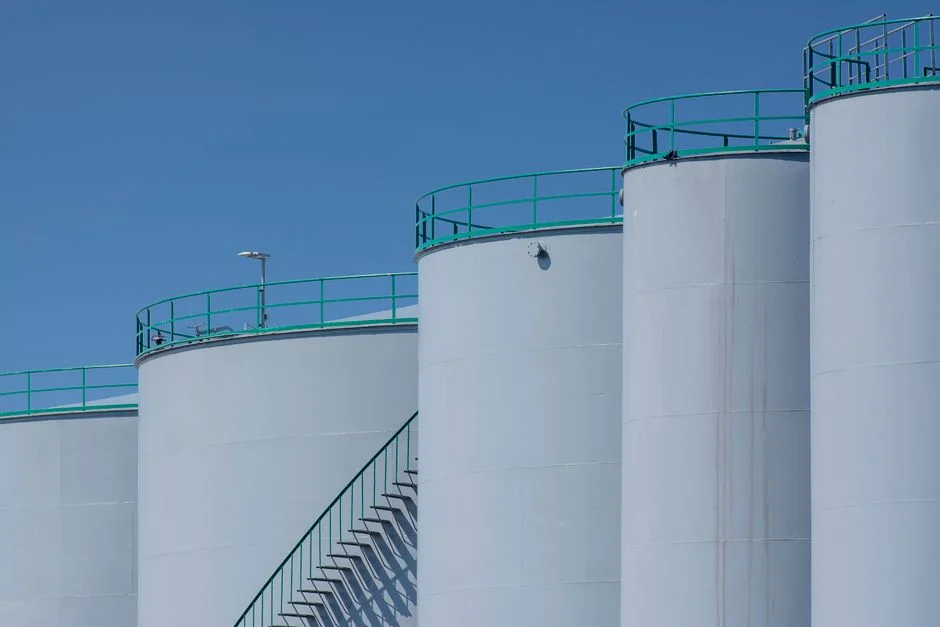
The seven-stage sequence below is the defensible process basis for a Fort Worth fabricator. Skipping or reordering a stage pushes the next unit operation outside its design envelope and produces a discharge that fails sampling.
- Stage 1 — Bar screen + O/W separation. A rotary mechanical bar screen for headworks protection removes debris and tramp metal; a coalescing plate oil/water separator recovers free oil for recycler pickup.
- Stage 2 — Equalization basin. Concrete or coated-steel tank, top-entry mixer, level instrumentation; ≥24 h retention to absorb slug loads and stabilize feed to the chemical stage.
- Stage 3 — pH adjustment and metals precipitation. A PLC-controlled chemical dosing skid with in-reactor pH probe paces acid/caustic addition; pH 8.5–9.5 for Zn, Ni, Cd, Cu, Pb hydroxide precipitation; sulfide addition defensible for tighter residuals.
- Stage 4 — Hexavalent chromium reduction (if applicable). Two-stage reactor — FeSO₄ or Na₂S₂O₅ at pH 2.0–2.5, then re-precipitate at pH 8.5–9.5; ion exchange defensible for chrome rinse waters; design to <0.20 mg/L Cr(VI) monthly average.
- Stage 5 — Clarification. A DAF system sized to 4–6 m/h hydraulic loading for high-FOG streams or a lamella clarifier at 20–40 m/h surface loading for dense metal hydroxide floc.
- Stage 6 — Final pH trim and flow logging. Carbon-steel skid with pH probe, TSS probe, and magnetic flow meter; pH 6.0–9.0; SMR-ready data logging.
- Stage 7 — Sludge dewatering. A plate and frame filter press for F006 sludge dewatering to 25–35% dry solids; TCLP verification; uniform hazardous waste manifest if the combined cake carries F006 under 40 CFR 261.31.
| Stage | Unit Operation | Key Parameter / Setpoint | Pollutant Targeted |
|---|---|---|---|
| 1 | Bar screen + O/W separator | 6–12 mm aperture; free oil skimmed | Debris, free oil >50 mg/L |
| 2 | Equalization basin | ≥24 h retention; top-entry mixer | Slug loads, pH 2–12 swings |
| 3 | pH adjust + hydroxide precipitation | pH 8.5–9.5; flow-paced dosing | Zn, Cu, Ni, Cd, Pb |
| 4 | Cr(VI) reduction (if applicable) | pH 2.0–2.5, then re-precipitate 8.5–9.5 | Cr(VI) to <0.20 mg/L |
| 5 | DAF or lamella clarifier | 4–6 m/h (DAF) or 20–40 m/h (lamella) | TSS, FOG, metal hydroxide floc |
| 6 | Final pH trim + flow logging | pH 6.0–9.0; mag meter totalizing | pH compliance, SMR data |
| 7 | Plate and frame filter press | 25–35% dry solids; TCLP check | F006 sludge volume reduction |
For cyanide-bearing plating (Cu or Zn strike tanks), add alkaline chlorination at pH ≥10.5 to destroy total cyanide before the clarifier. If the combined cake from DAF float, clarifier underflow, and filter backwash fails TCLP for any listed metal, the sludge carries the F006 hazardous waste code under 40 CFR 261.31 and ships on a uniform hazardous waste manifest.
DAF vs Lamella Clarifier — Choosing the Right Stage 5 for Fort Worth
The choice between a dissolved air flotation unit and a lamella clarifier depends primarily on the density and nature of the suspended solids. A DAF system is generally preferred if the waste stream contains high concentrations of oils, greases, or light, buoyant metal hydroxide flocs that do not settle readily. Tramp oil from machining coolants, stamping lubricants, and parts-washing baths floats readily and fouls a settling clarifier, so a shop with light FOG loading should default to DAF.
A lamella clarifier is typically used for heavy metal precipitation where the floc is dense and settles quickly. Because lamella plates provide a large effective settling area in a compact footprint, they are often the standard choice for metal finishing facilities in Fort Worth with limited floor space and high-density sludge production. A small job shop with mixed load (light FOG plus metal precipitation) can run a DAF with a coagulant polymer dose and still meet 2.61 mg/L Zn daily max. An integrated fab with high solids and tight floor space typically runs a lamella as the primary and uses a DAF only for the segregated oily waste stream.
| Parameter | DAF System | Lamella Clarifier |
|---|---|---|
| Hydraulic / surface loading | 4–6 m/h | 20–40 m/h |
| Best-fit influent | High FOG (100–1,000 mg/L O&G) | Dense metal hydroxide floc, low FOG |
| Footprint | Larger rectangular tank | Compact inclined-plate footprint |
| Polymer demand | Higher (coagulant + flocculant) | Lower |
| Float / sludge handling | Surface float skimmed to filter press | Underflow pumped to filter press |
| Typical shop profile | Job shop with parts washing + light plating | Integrated fab with hard-chrome or conversion coating |
For a deeper side-by-side on unit-operation selection for fabricated metals trains, the DAF vs clarifier decision guide for fabricated metals wastewater walks through cost-of-ownership and hydraulic trade-offs in more detail.
The Four Engineering Errors Driving 2026 SNC Letters in Texas
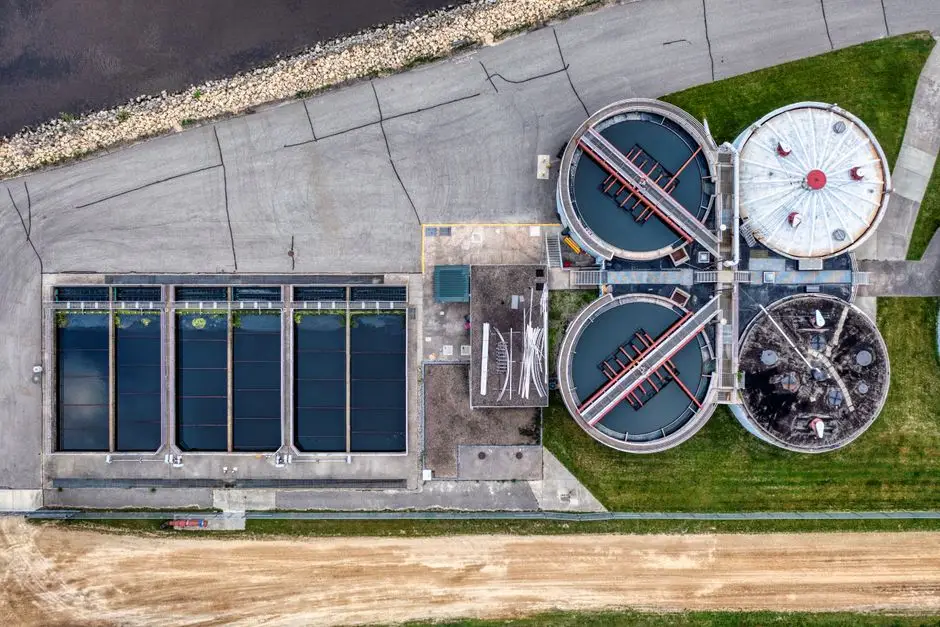
Four engineering errors account for most of the significant non-compliance (SNC) letters handed out to Texas fabricators in 2026.
Error 1 — sizing the clarifier and DAF to the 24-hour average flow. The correct basis is peak 4-hour flow or peak shift flow, whichever is higher. A 24-hour average underdesigns the system because slug loads arrive in concentrated windows.
Error 2 — sizing the EQ basin to one shift's average rather than peak production. The EQ must absorb a full production shift's wastewater plus a first-flush storm allowance, which is a separate volume. A basin sized to the daily average routinely overflows on the first batch dump of spent pickle acid.
Error 3 — pacing chemical dosing on a timer instead of a flow signal on the EQ discharge pump. Influent metal concentration varies 3–5× across a normal week, so trim must come from an in-reactor pH probe, not a clock. Timer-paced dosing overdoses on dilute streams and underdoses on slugs.
Error 4 — designing only to the daily maximum and ignoring the monthly average. SNC is triggered by either excursion, and metals that slug-load at end of shift routinely fail the monthly average even when the daily max looks clean. The Zn/Cu tightening driven by 40 CFR 503 biosolids ceiling rules makes these errors more expensive to discover late, not less.
Reporting, Slug Control, and the Fort Worth Paperwork Stack
The equipment alone does not keep a discharger in good standing. A Fort Worth SIU submits monthly self-monitoring reports (SMRs) to Fort Worth Water Utilities covering flow, pH, oil & grease, TSS, and total metals (Cd, total Cr, Cu, Pb, Ni, Ag, Zn), plus Cr(VI) and CN where applicable. An annual third-party chain-of-custody sampling event is required at a named sample point, with method, preservation, and lab documented.
A slug control plan is required under 40 CFR 403.8(b) and covers batch dumps of spent pickle acid, alkaline cleaners, and plating baths; that plan ties directly into EQ sizing and pH/ORP control loops. The chemical inventory is reconciled monthly to the City's reporting trigger of 55 gallons non-hazardous or 5 gallons hazardous product per month. A written O&M manual with stage setpoints, calibration logs for in-line pH and flow meters, a trained sampler designation, and TCLP verification of the dewatered cake completes the file.
| Requirement | Cadence / Threshold | Reference |
|---|---|---|
| Monthly SMR (flow, pH, O&G, TSS, metals) | Monthly to Fort Worth Water Utilities | 40 CFR 403; local permit |
| Third-party chain-of-custody sampling | Annual | Local permit |
| pH window at discharge | 5.0–10.0 federal (40 CFR 403); 6.0–9.0 local ordinance | 40 CFR 403; Fort Worth Code |
| Slug control plan | Required; covers batch dumps | 40 CFR 403.8(b) |
| Chemical inventory reporting | 55 gal non-haz / 5 gal haz per month | Fort Worth Water Utilities |
| Sludge disposal | TCLP verification; F006 manifest if characteristic | 40 CFR 261.31, 261.24 |
Surcharges, Notices of Violation, and permit revocation are all on the table when the file is incomplete. The defensible 2026 program is paperwork-heavy on purpose: a written O&M manual with stage setpoints, a written sampling plan naming the sample point and lab, calibration logs for pH and flow meters, a trained sampler, and a chemical inventory reconciled monthly to the City's reporting threshold. For lifecycle cost benchmarking on the train, the online Cr(VI) analyzer buyer's guide covers closed-loop trim chemistry economics; for due diligence on a Texas ETP acquisition, the Texas ETP due diligence checklist walks through permit and compliance file review.
Frequently Asked Questions
What federal categorical standard applies to a Fort Worth fabricated metals shop with a captive plating line?
A Fort Worth fabricator with any of the six core operations (electroplating, electroless plating, anodizing, coating, chemical etching/milling, or PCB manufacturing) falls under 40 CFR Part 433 (Metal Finishing). Daily maximums include 2.61 mg/L Zn, 3.38 mg/L Cu, 3.98 mg/L Ni, and 0.31 mg/L Cr(VI) where hard-chrome or conversion coating is in scope. A shop that only cuts, forms, welds, and assembles without plating is typically routed to 40 CFR Part 413 (Metal Products and Machinery), which carries different numeric ceilings. The SIC code the City of Fort Worth assigns during permitting determines the subcategory, and a job shop that sits between subcategories should declare the higher-risk category in its permit application.
Why are Fort Worth local limits on zinc and copper tightening in 2026?
Both metals pass through secondary treatment at the POTW and concentrate in the biosolids stream, where they bump up against 40 CFR 503 ceiling concentration rules for land application. A train that hit 2.61 mg/L Zn in 2020 may be required by the City of Fort Worth sewer use ordinance to hit ~1.0 mg/L Zn in 2026. The conservative design move is to satisfy the federal ceiling first, then layer any tighter local limit on top, because EPA Region 6 retains independent enforcement over the categorical standards even when the delegated POTW is the day-to-day regulator.
When does sludge from a Fort Worth fabricated metals plant carry the F006 hazardous waste code?
Sludge from electroplating operations carries F006 under 40 CFR 261.31 when the combined cake from DAF float, clarifier underflow, and filter backwash fails TCLP for any listed metal. The cake must then be shipped on a uniform hazardous waste manifest. A forming-and-assembly shop with no plating can typically verify non-hazardous status by TCLP on the actual cake, but the test must be run on representative samples, not assumed.
How long must the equalization basin hold wastewater before chemical treatment?
≥24 hours of retention is the standard design basis for a Fort Worth fabricated metals plant, sized to absorb a full production shift's wastewater plus a first-flush storm allowance. The basin must be concrete or coated steel, fitted with a top-entry mixer, and instrumented with level and flow signals that pace downstream chemical dosing. Sizing the EQ to one shift's average rather than peak production underdesigns slug absorption and is the second most common cause of 2026 SNC letters in Texas.
What is the defensible 2026 compliance file for a Fort Worth SIU?
A written O&M manual with stage-by-stage setpoints, a written sampling plan naming the sample point, method, preservation, and lab, monthly SMRs covering flow, pH, O&G, TSS, and total metals, an annual third-party chain-of-custody sampling event, calibration logs for in-line pH and flow meters, a trained sampler designation, a slug control plan under 40 CFR 403.8(b), and a chemical inventory reconciled monthly to the City's 55-gallon non-hazardous / 5-gallon hazardous reporting trigger. Surcharges, NOVs, and permit revocation are all on the table when the file is incomplete.