Why Vietnam Wastewater Compliance Is Now a Samsung SDI Board Issue
On 8 January 2026, UN Human Rights Council Special Procedures issued Joint Allegation Letters to Samsung Electronics and the governments of South Korea and Vietnam alleging "irresponsible chemicals management" and untreated wastewater discharges at Samsung's Bac Ninh operations (S3). With Samsung having become Vietnam's largest foreign investor by 2022, employing roughly 100,000 people, any new or newly acquired Samsung SDI battery plant is now a high-visibility asset, and any compliance lapse becomes a board-level liability within hours of disclosure (S3).
A second structural risk is the South Korea vs. Vietnam transparency gap. Samsung affiliates are legally required to report 400+ pollutant and hazardous substances under the Korean Pollutant Release and Transfer Register (PRTR). Vietnam has no mandatory PRTR regime, and a May 2024 whistleblower statement alleged the company exploited that gap to obscure emissions data (S3). An acquirer inheriting a Vietnam plant inherits that disclosure asymmetry.
Set against those risks, Samsung SDI's own corporate benchmarks now define the design target. The company has set a water reuse target of 80% by 2050, achieved 31% in 2023 (up from 26% the prior year), and credited a new 2,000 m³/day effluent recovery line at the Ulsan worksite with a 39 percentage-point year-on-year reuse improvement (S5). A Vietnam acquisition must be designed to converge on those numbers, not to set a new local baseline.
Vietnam Discharge Standards Governing a Battery Plant (QCVN 40, QCVN 14, and Related Decrees)
QCVN 40:2011/BTNMT is the controlling national industrial wastewater standard. For facilities discharging to a source used for domestic water supply downstream, Column B applies, with the most common limits being BOD₅ ≤ 50 mg/L, COD ≤ 150 mg/L, TSS ≤ 100 mg/L, total nitrogen ≤ 40 mg/L, total phosphorus ≤ 6 mg/L, and pH 5.5–9.0 (HydropureWater regulatory review, 2026).
QCVN 14:2008/BTNMT sits on top of QCVN 40 and sets battery- and accumulator-sector-specific ceilings for heavy metals that are not adequately controlled by the general standard. Typical parameters include lead (Pb) ≤ 0.1 mg/L, cadmium (Cd) ≤ 0.05 mg/L, nickel (Ni) ≤ 0.1 mg/L, zinc (Zn) ≤ 1.0 mg/L, and pH 6.0–9.0. Where on-site cathode active material synthesis produces nickel-bearing wastewater, QCVN 13:2015-MT for nickel-bearing effluents may also apply, with Ni ≤ 0.1 mg/L.
Permitting is two-tier. The Law on Environmental Protection 2020 (Law 72/2020/QH14) requires an Environmental Impact Assessment (EIA) for battery projects, an environmental permit issued by the provincial Department of Natural Resources and Environment (DoNRE) for standard plants, and escalation to MONRE for facilities above national-threshold capacity or those handling chemicals listed in Decree 08/2022/ND-CP on chemical management. Decree 08/2022 also defines the chemical inventory, safety data sheet, and PRTR-style reporting obligations that bind any acquirer of an existing plant. For a comparative view of how Vietnam's framework maps against other Southeast Asian regimes, see the Indonesia industrial effluent limits benchmark.
| Standard | Scope | Key Parameters & Limits |
|---|---|---|
| QCVN 40:2011/BTNMT (Column B) | Industrial wastewater — discharge to source with domestic intake | COD ≤ 150 mg/L; BOD₅ ≤ 50 mg/L; TSS ≤ 100 mg/L; TN ≤ 40 mg/L; TP ≤ 6 mg/L; pH 5.5–9.0 |
| QCVN 14:2008/BTNMT | Battery and accumulator manufacturing | Pb ≤ 0.1 mg/L; Cd ≤ 0.05 mg/L; Ni ≤ 0.1 mg/L; Zn ≤ 1.0 mg/L; pH 6.0–9.0 |
| QCVN 13:2015-MT | Nickel-bearing effluents (cathode synthesis) | Ni ≤ 0.1 mg/L; sulfate limits apply |
| Decree 08/2022/ND-CP | Chemical management & PRTR-style reporting | Chemical inventory; SDS; reportable substance list; transport and storage controls |
| Law 72/2020/QH14 | Environmental Protection Law | EIA; environmental permit; provincial vs. MONRE escalation |
Samsung SDI Battery Wastewater Characterization: What Comes Off the Line
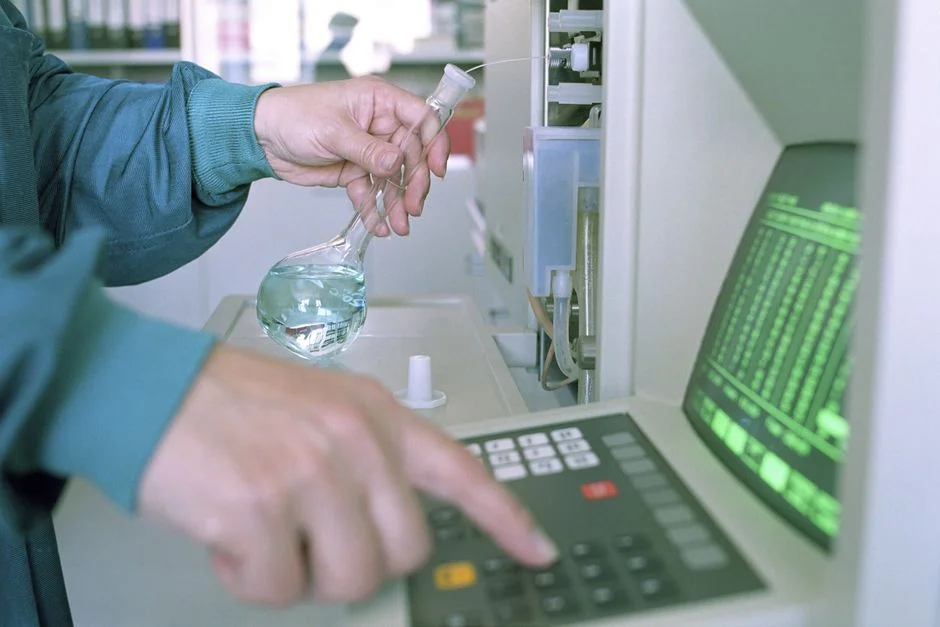
Electrode coating is the single largest wastewater source. The N-Methyl-2-pyrrolidone (NMP) solvent used as a coating carrier drives influent COD into the 5,000–30,000 mg/L range on coating-line dumps, and NMP is both toxic to downstream biology and only partially biodegradable, which is why it must be segregated at source (HydropureWater battery-sector field data, 2026). On the electrolyte side, the lithium hexafluorophosphate salt (LiPF6) hydrolyzes in any contact with moisture to release fluoride ion (F⁻), HF, and PF5; Vietnam limits F⁻ at 10 mg/L under QCVN 40, so fluoride removal is a non-negotiable unit operation.
Cathode active material synthesis introduces a heavy-metal stream. Precursor co-precipitation uses NiSO4, CoSO4, MnSO4, and LiOH; the resulting rinsewater carries Ni, Co, Mn at tens of mg/L each, and the high pH from residual LiOH must be neutralized before metals precipitation (typically at pH 9.5–10.5 for Ni/Co) to meet QCVN 14 limits. On the anode side, graphite dust, PVDF binder, and carbon black produce a colloidal, hard-to-settle suspended solids load that fouls primary clarifiers and pushes designers toward dissolved air flotation (DAF).
Formation, aging, and end-of-line testing generate dilute electrolyte and trace HF at low flow but high variability. These streams are usually below 5% of total plant flow but can spike HF concentration to hundreds of mg/L during batch dumps, which is why they require dedicated equalized collection, not commingling with general industrial wastewater.
| Source Stream | Key Pollutants | Typical Influent Range | Discharge Driver |
|---|---|---|---|
| Electrode coating | NMP, COD, suspended coating solids | COD 5,000–30,000 mg/L | QCVN 40 COD/BOD limits; NMP toxicity to biomass |
| Electrolyte salt handling | F⁻, Li⁺, PF5 hydrolysis | F⁻ 50–500 mg/L post-hydrolysis | QCVN 40 F⁻ ≤ 10 mg/L |
| Cathode synthesis | Ni²⁺, Co²⁺, Mn²⁺, SO4²⁻, LiOH | Ni/Co/Mn 10–100 mg/L each | QCVN 14 Ni/Cd; QCVN 13 nickel |
| Anode slurry & coating | Graphite dust, PVDF, carbon black | TSS 500–3,000 mg/L | QCVN 40 TSS ≤ 100 mg/L |
| Formation & aging | Dilute LiPF6, trace HF, Li⁺ | F⁻ intermittent spikes to several hundred mg/L | QCVN 40 F⁻ & pH |
ETP Process Train for a Vietnam Battery Plant
Stage 1 is equalization and pH adjustment with PLC-controlled chemical dosing. The NMP-bearing coating waste and the heavy-metal-bearing cathode rinsewater are kept segregated; the former is routed to DAF, the latter to metals precipitation. Equalization tanks sized for 8–12 hours of hydraulic retention dampen the formation-stage HF spikes before they reach downstream biology.
Stage 2 is coagulation-flocculation followed by DAF for NMP and oil removal. DAF is preferred over primary clarification for battery lines because the colloidal graphite/PVDF/carbon-black fraction has a low settling velocity and tends to form a scum layer that DAF can skim cleanly. Hydraulic surface loading is typically 5–10 m/h, with air-to-solids ratios of 0.03–0.06.
Stage 3 is biological treatment. An anoxic-oxic (A/O) or membrane bioreactor (MBR) train reduces residual COD from the NMP fraction (after high-strength NMP has been handled by recovery or pre-oxidation) and strips ammonia. The MBR system for battery wastewater delivers sub-1 μm filtrate quality, which protects downstream RO membranes and typically cuts the biological-stage footprint by ~60% versus conventional activated sludge at the same load.
Stage 4 is fluoride polishing. Calcium chloride or lime dosing raises Ca²⁺ above the stoichiometric requirement (molar Ca:F ratio ≥ 1.5) and produces a CaF2 sludge that is dewatered separately. Stage 5 is an RO system for water reuse, sized to deliver the conductivity and TDS reductions needed for process rinsewater make-up. Sludge from DAF, biological, and fluoride stages is conditioned and dewatered with a filter press for battery sludge, targeting ≥ 65% solids in the cake to support the UL Zero Waste to Landfill Platinum standard that Samsung SDI already holds at nine worksites (S5). PLC-controlled chemical dosing closes the loop on reagent optimization across all five stages.
| Stage | Unit Operation | Target Pollutant | Typical Removal / Output |
|---|---|---|---|
| 1 | Equalization + pH adjustment | Flow & pH variability | HRT 8–12 h; pH 6.5–8.5 to biology |
| 2 | Coagulation / DAF | NMP emulsion, oil, colloidal TSS | TSS ≤ 30 mg/L; oil & grease ≤ 5 mg/L |
| 3 | A/O or MBR | Residual COD, ammonia | COD ≤ 80 mg/L; NH3-N ≤ 5 mg/L |
| 4 | Ca²⁺ coagulation / sedimentation | Fluoride | F⁻ ≤ 10 mg/L (QCVN 40) |
| 5 | RO (or MBR-RO hybrid) | TDS, heavy metals for reuse | Recovery 65–75%; conductivity < 50 µS/cm |
| Sludge | Plate-and-frame filter press | Cake solids | ≥ 65% DS; supports Zero Waste to Landfill |
M&A Due-Diligence Checklist: Avoiding a Bac Ninh Repeat

The 2010–2013 Bac Ninh finding that a Samsung factory operated "without a proper toxic wastewater treatment system" is the cautionary precedent every acquirer should price into the deal (S3). Treat due diligence as a 30-day engineering audit, not a paperwork check.
Run five parallel workstreams. (1) Permit and compliance audit: pull the EIA approval, environmental permit, all historical non-compliance notices, and any MONRE/DoNRE correspondence. (2) Sampling across all three shifts for 30 days at each of the five effluent streams in the table above, with an independent lab, to validate the design basis against the seller's data. (3) Asset condition: age, nameplate capacity vs. current load, filter and membrane replacement history, and a 12-month discharge monitoring data review. (4) PRTR gap analysis: flag any chemical that is reportable in South Korea under the 400+ substance list but is not in Vietnam, since that gap is now a known reputational risk vector (S3). (5) ESG alignment: compare the plant's current reuse rate against Samsung SDI's 80%-by-2050 target and the 39 percentage-point Ulsan benchmark — if the gap is wider than 10 points, quantify the capex to close it (S5). For parallel playbooks, see the Hyundai factory M&A wastewater due diligence framework and the GM Texas plant acquisition compliance guide.
| Workstream | Key Question | Red Flag |
|---|---|---|
| Permit & compliance | EIA + environmental permit current? Any open notices? | Lapsed permit; unresolved MONRE/DoNRE finding |
| Sampling (30 days, all shifts) | Does seller's design basis match independent lab data? | > 20% deviation in COD, F⁻, Ni, or NH3-N |
| Asset condition | Are membranes/filters within service life? Capacity vs. load? | Units > 5 years old with no replacement log; operating > 90% nameplate |
| PRTR gap | Which Korean-reportable substances are not Vietnam-reportable? | Use of NMP, LiPF6, HF, Ni, Co without PRTR-equivalent disclosure |
| ESG alignment | Reuse rate vs. 80%-by-2050 and 39pp Ulsan benchmark? | Current reuse < 20%; no reuse line in capex plan |
Frequently Asked Questions
Which Vietnamese national standard controls discharge from a Samsung SDI battery plant?
QCVN 40:2011/BTNMT is the controlling national industrial wastewater standard, applied at Column B when discharge enters a water source with domestic intake downstream, and QCVN 14:2008/BTNMT overlays the battery-sector heavy-metal limits (Pb, Cd, Ni, Zn). Where on-site cathode synthesis generates nickel-bearing streams, QCVN 13:2015-MT also applies.
What is Samsung SDI's corporate water reuse target and how does a Vietnam plant fit?
Samsung SDI has set a water reuse target of 80% by 2050, achieved 31% in 2023 against an initial 26% target, and credited a 2,000 m³/day effluent recovery line at Ulsan with a 39 percentage-point year-on-year reuse improvement (S5). A Vietnam acquisition is expected to converge on that benchmark, supported by an RO-based reuse train and MBR pretreatment.
Why is fluoride removal mandatory for a Vietnam battery plant?
The electrolyte salt LiPF6 hydrolyzes on contact with water to release fluoride ion and HF, and influent F⁻ routinely exceeds 50–500 mg/L post-hydrolysis in formation and aging streams. QCVN 40:2011/BTNMT caps F⁻ at 10 mg/L in discharged wastewater, so calcium-based precipitation followed by an RO polish is the standard design.
What is the primary M&A risk when acquiring a Vietnam battery plant?
The principal risk is inheriting a legacy compliance gap analogous to the 2010–2013 Bac Ninh finding of operation "without a proper toxic wastewater treatment system" (S3). The 30-day, multi-shift independent sampling and the PRTR gap analysis are the two workstreams most likely to surface that liability before close.