Why Distillery Wastewater Is Unusually Hard to Treat
Distillery spent wash consistently ranks among the highest-strength industrial effluents: low pH (3.5–5.0), discharge temperature of 70–90 °C, dark brown colour, ash content of 2–5%, and biochemical oxygen demand often in the 40,000–100,000 mg/L range (per FAO AGRIS review of distillery bioremediation). The colour is a treatment signal driven by melanoidins, high-molecular-weight Maillard reaction products that resist conventional aerobic digestion and persist through standard activated sludge plants.
The recalcitrant fraction includes melanoidins, phenolics, residual sugars, glycerol, and dark-coloured caramel byproducts from the cooker. A conventional suspended-growth ASP running on melanoidin-rich feed tends to suffer from three failure modes: foaming, poor colour removal, and sludge with poor settleability. The standard design route for distilleries is anaerobic digestion first (UASB or biogas reactor handling 80–90% of the COD load), with a smaller aerobic polishing stage downstream. IFAS is the right candidate for that polishing slot because biofilm carriers host slower-growing organisms that suspended sludge alone cannot retain.
How IFAS Works: Suspended Sludge Plus Biofilm Carriers
IFAS (Integrated Fixed-Film Activated Sludge) is a hybrid aerobic process in which free-floating or fixed biofilm carrier media — textile curtains, sponge cubes, or honeycomb blocks — are deployed inside the same aeration tank as conventional suspended-growth activated sludge. Two biomass populations operate in parallel: the suspended MLSS handles bulk BOD uptake, while the attached biofilm retains slower-growing, more resilient nitrifiers and colour-decolourising consortia that would otherwise wash out of the clarifier.
The carrier configuration determines system performance. ELIQUO HYDROK's Biotextil Cleartec — a 100% polypropylene textile with a large specific surface area — is positioned 40–60 cm above fine-bubble diffusers, parallel to the flow direction (per the ELIQUO HYDROK IFAS design note). Diffuser-driven vertical flow keeps the curtains in constant motion; this "shedding" mechanism sloughs excess biofilm before it can clog the textile, preventing the thick-layer fouling that kills fixed-film systems. The low-profile diffuser and curtain combination also improves oxygen transfer efficiency relative to coarse-bubble layouts.
A practical consequence is better settleability. IFAS systems on industrial feed commonly hold SVI in the 42–130 mL/g range, which is better than overloaded ASP on the same wastewater, where SVI frequently climbs past 200 (per Singh et al., 2015, as cited in the 2022 SBR-IFAS comparative study). For distillery operators already fighting activated sludge foam control in distillery plants, that stability is a meaningful design advantage.
IFAS Design Parameters for Distillery Spent Wash
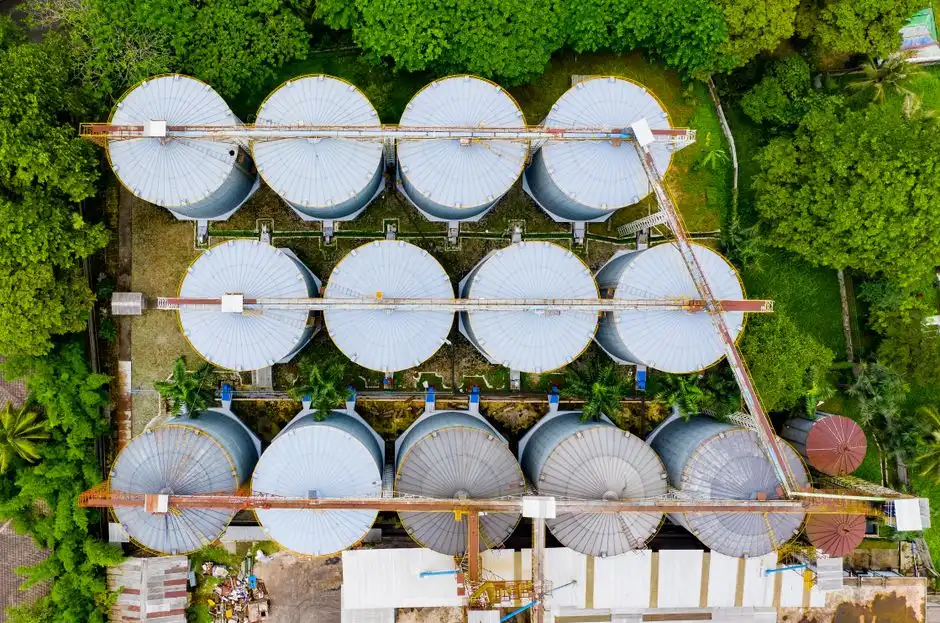
The design envelope below is anchored in the 2022 SBR-IFAS comparative study on pre-treated CETP effluent (Water Conservation and Management, WCM 2022), which delivered 75.51% COD removal at 10-hour HRT with 2,846 mg/L MLSS and 1,433 mg/L MLVSS. The CETP feed (COD 720–1,240 mg/L) is weaker than raw distillery spent wash, but it is the cleanest published SBR-IFAS dataset; the envelope extrapolates to post-anaerobic distillery effluent, which typically lands in the same COD window after the UASB stage.
| Parameter | Design Range for Distillery IFAS | Reference / Source |
|---|---|---|
| HRT (aeration zone) | 8–10 h (9 h aeration + 1 h settle in SBR mode) | SBR-IFAS study, WCM 2022 |
| MLSS | 2,500–2,900 mg/L | WCM 2022: 2,846 mg/L observed |
| MLVSS | 1,400–1,500 mg/L (≈50–55% of MLSS) | WCM 2022: 1,433 mg/L observed |
| F/M ratio | 0.1–0.3 kg BOD/kg MLSS·day | Extended-aeration reference: 78% COD at F/M 0.1, 4,000 mg/L MLSS |
| DO setpoint | 2.0–2.5 mg/L in aerobic zone | WCM 2022: 2.4 mg/L (SBR-IFAS) vs 2.6 mg/L (SBR) |
| SRT | 15–25 days | Industrial IFAS practice; biofilm extends effective SRT |
| Media fill | 20–40% of aeration tank volume | Textile/sponge IFAS typical; ELIQUO curtain array layout |
| pH (aeration basin) | 6.8–7.5 | Neutralisation required upstream for nitrifier protection |
| Temperature | 25–35 °C mesophilic window | IFAS tolerates warm post-anaerobic feed |
| SVI design target | 80–150 mL/g; 42–130 typical in operation | Singh et al., 2015 (cited in WCM 2022) |
The critical pre-IFAS step is pH and temperature conditioning: lift pH from 3.5–5.0 to 6.8–7.5 with NaOH or lime dosing, and cool the post-anaerobic stream to the 25–35 °C mesophilic window before it enters the aeration basin. A dissolved air flotation system for distillery primary treatment is the standard upstream stage to strip oils, suspended solids, and a portion of the COD before IFAS, protecting the carriers from grease fouling.
Where IFAS Fits in a Full Distillery Treatment Train
IFAS functions as the aerobic secondary stage within a multi-stage treatment train. The conventional distillery treatment train runs: raw spent wash → pre-treatment (screening, cooling, pH adjustment) → primary clarification (typically DAF) → anaerobic digestion (UASB, CSTR, or biogas reactor handling the bulk COD load) → IFAS aerobic polishing → tertiary (disinfection and/or reuse polishing). The anaerobic stage typically removes 75–90% of the influent COD and generates biogas; IFAS then polishes residual COD, drives partial nitrification, and addresses colour and melanoidin breakdown.
Upstream of IFAS, the dissolved air flotation system for distillery primary treatment strips suspended solids, oils, and a portion of the COD before the biological train — critical for keeping the biofilm carriers from fouling. Downstream of IFAS, distilleries targeting water reuse typically route the IFAS effluent through an industrial RO polishing for distillery water reuse, or for plants with simpler discharge requirements, through chlorine dioxide disinfection for treated distillery effluent before outfall. A complete one-line PFD: raw spent wash → cooling/pH correction → DAF → anaerobic (UASB/biogas) → IFAS → RO or ClO₂ → reuse or discharge.
IFAS vs SBR vs Conventional Activated Sludge
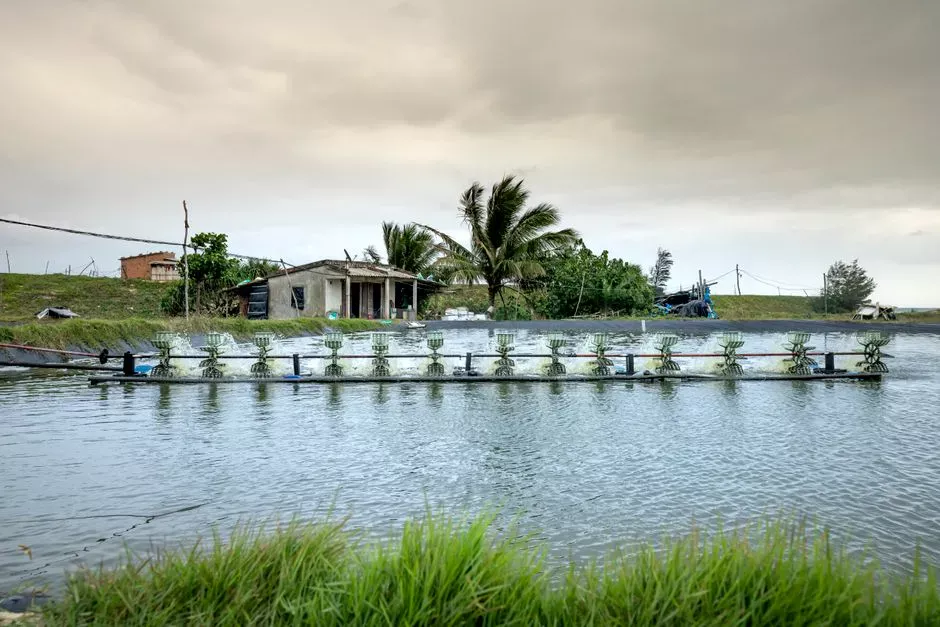
SBR-IFAS delivered 75.51% COD removal vs 68.69% for plain SBR on identical CETP feed at 10-hour HRT — a 6.8 percentage-point gain with no extra tank volume. For distillery applications, that delta matters because the post-anaerobic stream is variable in COD and temperature, and the biofilm population absorbs load swings the suspended-growth system cannot.
| Selection Criterion | Conventional ASP | SBR (suspended only) | SBR-IFAS / IFAS |
|---|---|---|---|
| HRT for 70–80% COD | 18–24 h | 10–12 h | 8–10 h |
| MLSS ceiling | 3,000–4,000 mg/L (clarifier-limited) | 2,500–2,800 mg/L | 2,800–3,500 mg/L (biofilm adds biomass) |
| Footprint (relative) | 1.0× baseline | 0.7–0.8× | 0.5–0.6× |
| COD removal (post-anaerobic feed) | 60–70% | 65–70% | 75–80% (WCM 2022: 75.51% at 10 h) |
| Load swing tolerance | Poor — washout risk | Moderate | Strong — biofilm buffer |
| Settleability (SVI) | 120–200 mL/g typical | 100–180 mL/g | 42–130 mL/g |
| Retrofit into existing tank | N/A | N/A | Yes — drop-in carriers |
| Higher COD benchmark | — | — | Honeycomb IFAS >90% COD at 8 h on post-anaerobic vegetable oil effluent (Tehrani et al., 2018) |
| CAPEX posture | Low (mature) | Low–moderate | Moderate (media + cage) |
The retrofit case is the strongest practical argument. IFAS carriers can be lowered into an existing SBR or oxidation-ditch aeration tank — no new concrete, no new clarifier, no new blower room in most cases. Where IFAS loses is on feeds with very high oil and grease (>200 mg/L) that have not passed through a properly sized DAF upstream, and at plants unwilling to commit to periodic media inspection. For distilleries also evaluating higher-effluent-quality options, an MBR membrane bioreactor as a downstream polish delivers sub-micron filtration at higher CAPEX/OPEX — IFAS is the lower-cost secondary workhorse, MBR or RO is the polish.
Frequently Asked Questions
What HRT does IFAS need for distillery wastewater?
Plan for 8–10 hours in the aerobic zone, with 9 hours of aeration followed by 1 hour of settle/decant in SBR-IFAS mode. This band delivered 75.51% COD removal in the 2022 SBR-IFAS study (WCM 2022) on pre-treated mixed industrial feed and is the conservative working point for post-anaerobic distillery effluent.
Can IFAS be retrofitted into an existing SBR?
Yes. Carrier curtains, sponge cubes, or honeycomb blocks are installed in the existing aeration zone — typically inside a removable cage assembly above the diffusers — without adding new tanks or new clarifiers. For an existing oxidation ditch or SBR basin, the retrofit is a media drop-in plus a baffle check; blower capacity is usually sufficient once DO setpoint is verified.
What MLSS should I target?
Design for 2,500–2,900 mg/L in the aeration zone, with MLVSS around 1,400–1,500 mg/L. The SBR-IFAS reactor in the WCM 2022 study operated at 2,846 mg/L MLSS with 1,433 mg/L MLVSS, which is a defensible midpoint for distillery polishing duty after the anaerobic stage.
Does IFAS remove melanoidin colour?
Partially. The biofilm layer carries colour-degrading consortia that suspended sludge cannot retain, and IFAS typically cuts colour further than a plain SBR on the same feed. For full decolourisation to discharge or reuse limits, plan a tertiary stage — ozone, Fenton oxidation, or RO — downstream of IFAS.
How does IFAS compare to MBR for distilleries?
IFAS is the lower-cost secondary workhorse: ~75–8