Why Angolan Textile Mills Need a Dedicated Treatment Train in 2026
Angola's textile sector is rebuilding around three vertically integrated cotton-to-fabric assets — Textang II, África Têxtil in Benguela, and the former SATEC factory in Dondo, transferred to the Angola Sovereign Wealth Fund in September 2025 — supported by more than 500 micro-factories and over 95 SMEs (per Kohan Textile Journal 2025-2026 reporting on the 2023 government sector meeting). With the government targeting roughly 30,000 hectares of cotton cultivation by 2027, new dyeing and finishing capacity is on the drawing board, and each of those lines will produce a difficult waste stream: high-color, high-COD, and high-salinity reactive-dye effluent.
A typical Angolan reactive-dyehouse influent carries COD of 800–2,500 mg/L, BOD of 200–800 mg/L, color of 500–2,000 Pt-Co units, and TDS often between 5,000 and 35,000 mg/L from Glauber salt (sodium sulfate) and sodium chloride used as exhaust agents. Standard municipal treatment is not designed for that load. The regulator is not designed to ignore it either: a first-time Decree 51/04 violation carries a fine of $50,000–$100,000, and a repeat offense can reach the $500,000 ceiling plus a 30-day shutdown (per hydropurewater.com 2026 engineering guide). For an integrated mill running reactive dyeing, an oil or mining template will not pass an INEA audit; the treatment train has to be specified for reactive-dye chemistry, salt load, and Angola's grid reality.
Angola's Regulatory Framework for Textile Effluent (Decree 51/04 and INEA)
Decree 51/04 is the legal basis for environmental licensing, discharge permits, and effluent quality in Angola, with INEA (Instituto Nacional de Estatística Ambiental — in practice the National Environmental Management Agency) acting as the enforcement body. Any new dyehouse line, whether in Viana, Benguela, or Lobito, needs an Environmental Impact Assessment (EIA) baseline before a two-year discharge permit will be issued; renewal fees run $5,000–$20,000 depending on the industrial classification and the volume of discharge (hydropurewater.com 2026).
Monitoring cadence is set by impact class. High-impact sectors — which includes textile wet processing because of the salt and color load — are typically required to submit weekly composite samples, while general manufacturing reports monthly. All samples must be analyzed by INEA-certified labs (SGS Luanda and Intertek Lobito are the recognized providers); results from non-certified labs can be invalidated, which means a technically compliant plant can still be penalized on a paperwork defect. The same Decree 51/04 framework offers a 95% water-recovery tax incentive in water-stressed regions such as Namibe — relevant for any dyehouse considering zero liquid discharge (ZLD) as a long-term hedge against the $50K–$500K fine ceiling.
The 2026 Treatment Train for Reactive-Dye Wastewater
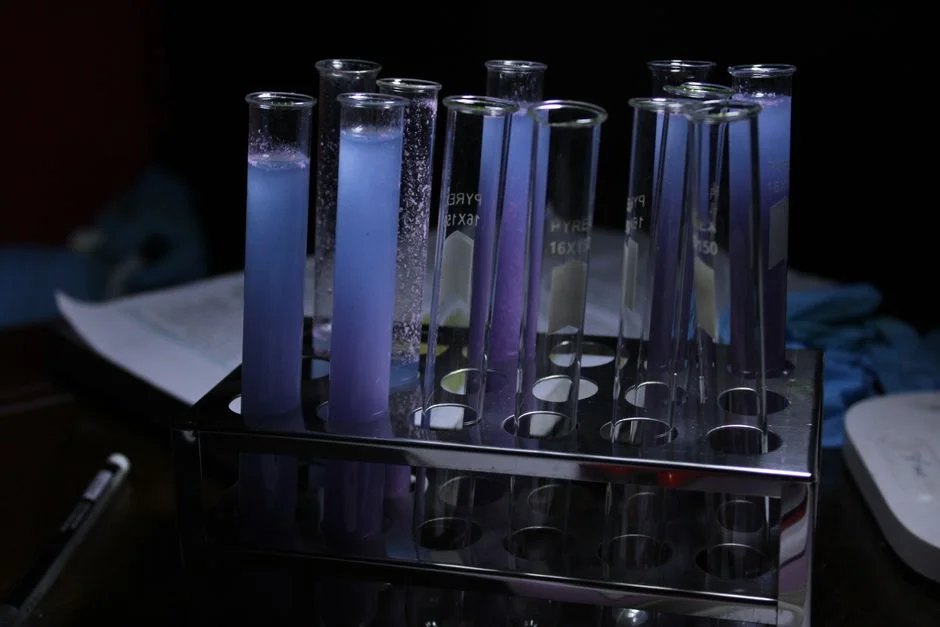
A defensible 2026 train for an Angolan reactive-dyehouse runs screening → equalization → chemical conditioning → DAF → biological/MBR → polishing/disinfection → sludge dewatering. Each stage is anchored to a verifiable operating parameter an engineer can drop into a P&ID or a vendor RFQ.
Step 1 — Screening. A GX series rotary mechanical bar screen at 3–6 mm aperture protects downstream pumps from lint, fiber, and packaging debris. This is the cheapest insurance on the train; a single rag in a DAF recycle pump can idle a line for hours.
Step 2 — Equalization. An 8–24 h HRT basin dampens the pH 9–12 peaks that reactive dye baths dump in batch discharges. Concrete or packaged steel tanks are both acceptable; in Viana and Benguela, packaged tanks shorten civil works and reduce site risk during the 8–12-week sea-freight window.
Step 3 — Chemical conditioning. pH correction to 6.5–7.5 with sulfuric acid, coagulant dosing (PAC 50–200 mg/L or FeCl₃ 30–150 mg/L) and anionic flocculant (1–5 mg/L). A PLC-controlled automatic chemical dosing skid ties the dose to inline pH and streaming-current probes so the train does not depend on an operator who is on a salt-water nap.
Step 4 — DAF. A dissolved air flotation (DAF) system at 4–25 m³/h per m² hydraulic loading is the workhorse for reactive-dye effluent. Designed for 90–95% TSS removal and 70–85% color removal on reactive dyes, it cuts the load on the biological stage and stabilizes downstream biology against the salt shocks that would otherwise kill a conventional activated-sludge plant.
Step 5 — Biological / MBR. Anoxic/aerobic (A/O) followed by a submerged PVDF integrated MBR membrane bioreactor polishes residual COD and color. A salt-tolerant biomass is required anywhere intake TDS runs above ~10,000 mg/L (Benguela, Lobito, Soyo); MBR typically delivers COD <100 mg/L and TSS <10 mg/L, with near-reuse quality in the permeate.
Step 6 — Polishing / disinfection. A chlorine dioxide generator produces ClO₂ on demand for color-stable, low-residual disinfection — important in hot Angolan ambient temperatures where chlorine residual decays fast and where textile effluent's high nitrogen content would otherwise form chloramines.
Step 7 — Sludge dewatering. A plate and frame filter press brings chemical and biological sludge to 25–35% dry solids, reducing haulage to the Benguela or Luanda disposal sites. For coastal mills, specify 316L stainless on all wetted parts; standard 304L will pit inside two salt-air seasons.
| Stage | Equipment | Design Parameter | Typical Removal / Output |
|---|---|---|---|
| Screening | Rotary bar screen (GX series) | 3–6 mm aperture | Removes lint, fiber, debris |
| Equalization | EQ basin | 8–24 h HRT | pH 9–12 → stable 7–9 |
| Chemical conditioning | Auto dosing skid | pH 6.5–7.5; PAC 50–200 mg/L | Sets up DAF floc |
| DAF | DAF | 4–25 m³/h per m² | 90–95% TSS; 70–85% color |
| Biological / MBR | A/O + PVDF MBR | Salt-tolerant biomass | COD <100 mg/L; TSS <10 mg/L |
| Disinfection | ClO₂ generator | On-site generation | Color-stable residual |
| Sludge dewatering | Plate & frame press | 25–35% DS cake | Reduces haulage mass |
DAF vs MBR: Choosing the Right Core for an Angolan Dyehouse
The procurement choice is rarely "DAF or MBR" in the abstract — it is "DAF-only polish before municipal sewer, or full MBR before discharge or reuse." The first option suits a mill with a pretreatment agreement (a conexão com a rede municipal) and where the receiving POTW has hydraulic and biological capacity to absorb the residual COD. The second suits a coastal mill near Benguela or Lobito that wants to reuse permeate for washing or cooling and recover up to 40% of freshwater cost, as the Lobito refinery benchmark demonstrated (per hydropurewater.com 2026).
MBR is roughly 60% smaller in footprint than a conventional A/O + clarifier train — useful in congested industrial zones like Viana — but it needs 24/7 power. Angola's grid is unreliable outside Luanda and the established industrial estates, so budget roughly $50,000 for an automated diesel backup to prevent membrane fouling during outages. The chemical logistics side is just as real: specialized flocculants have a 4–6 week import lead time into Luanda or Lobito, so a 60-day on-site stock is the practical minimum. For a deeper look at biological-stage risk, the MBR troubleshooting guide walks through salt inhibition and bulking in detail.
| Criterion | DAF-only train | DAF + MBR train |
|---|---|---|
| TSS removal | 90–95% | >99% (MBR effluent <10 mg/L) |
| Color removal (reactive dyes) | 70–85% | >95% combined |
| COD in effluent | 200–400 mg/L typical | <100 mg/L; <50 mg/L achievable |
| Footprint | Larger (clarifier needed) | ~60% smaller |
| Operator skill | Lower | Higher; membrane care required |
| Power dependency | Moderate | 24/7; +$50K backup recommended |
| Best fit | Municipal sewer discharge | Reuse, water-stressed sites, Lobito/Benguela coast |
CAPEX, OPEX, and ROI for a 100–200 m³/h Angolan Textile Plant
For a 100–200 m³/h Angolan dyehouse, the published CAPEX bands are $250,000–$1,000,000 for a DAF system and $500,000–$2,000,000 for an MBR, with installation adding 10–15% (hydropurewater.com 2026). A 200 m³/h DAF train for a Viana or Benguela mill typically lands near $800,000 installed; an MBR polish that achieves near-reuse quality runs $1.0M–$1.5M at the same flow. Add $50,000–$150,000/year for membrane replacement on the MBR side, amortized over a 5-year membrane life.
OPEX is dominated by energy and chemicals. The average Angolan industrial tariff is $0.12/kWh, but remote or generator-backed sites can see effective rates of $0.35/kWh. Imported flocculants run up to $4,000/ton, while lime for pH adjustment is $200–$300/ton. Total OPEX for a 200 m³/h DAF train typically lands near $0.50/m³ all-in, with the full $0.30–$2.00/m³ range covering DAF-only through full MBR+RO reuse trains.
The ROI math is direct. A Lobito MBR installation benchmarked at $1,000,000 CAPEX reached payback in 3.2 years by saving $300,000/year in avoided INEA penalties and a 40% reduction in freshwater intake for cooling. The same logic applies to a Benguela or Viana dyehouse: a single avoided $50K–$100K Decree 51/04 first-offense fine covers a meaningful slice of the system. Viana has the most stable baseline grid of the three sites, which slightly favors MBR adoption; Namibe is the strongest candidate for ZLD because the water-recovery tax incentive is in force there.
| Cost line | DAF-only (100–200 m³/h) | DAF + MBR (100–200 m³/h) |
|---|---|---|
| Equipment CAPEX | $250,000–$1,000,000 | $500,000–$2,000,000 |
| Installation (10–15%) | $25,000–$150,000 | $50,000–$300,000 |
| Annual membrane replacement | N/A | $50,000–$150,000 |
| OPEX (all-in) | ~$0.30–$0.60/m³ | ~$0.80–$2.00/m³ |
| Energy driver | Recycle pump, 0.05–0.10 kWh/m³ | Aeration + permeate, 0.4–0.8 kWh/m³ |
| Payback benchmark | 2–4 years (fines avoided) | 3.2 years (Lobito case) |
Implementation Timeline: 12–24 Months from Order to Commissioning
Realistic Gantt for a Viana or Benguela dyehouse:
- Months 0–2: 7-day composite sampling campaign (pH, COD, BOD, TSS, color, TDS, sulfates, chlorides), EIA baseline, and INEA permit pre-application. Use SGS Luanda or Intertek Lobito for the legal chain of custody.
- Months 2–5: Process design (mass balance, P&ID, hydraulic profile), vendor selection, and INEA permit submission. Lock in the DAF and MBR sizing with a 15% design margin for future line expansion.
- Months 5–10: Equipment fabrication and Factory Acceptance Test (FAT) at the vendor's facility in China. Document every I/O point and alarm; this is the cheapest time to find a wiring error.
- Months 10–14: Sea freight to Luanda or Lobito (8–12 weeks including customs clearance), civil works, and tank erection. Coordinate with the Lobito Corridor logistics for the Benguela site to reduce inland haulage cost.
- Months 14–18: Installation, commissioning, and operator training. Run on clean water first, then with effluent; ramp MLSS and aeration over 2–3 weeks to seed salt-tolerant biomass gradually.
- Months 18–24: Performance test, INEA compliance certification, and water-reuse / ZLD optimization. Submit the first renewal package 60 days before the two-year permit expires.
Frequently Asked Questions
What influent parameters should an Angolan reactive-dyehouse expect?
Reactive-dye effluent in a typical Angola dyehouse runs COD 800–2,500 mg/L, BOD 200–800 mg/L, color 500–2,000 Pt-Co, and TDS 5,000–35,000 mg/L from Glauber salt and sodium chloride exhaustion chemistry. Always validate with a 7-day composite sample analyzed at SGS Luanda or Intertek Lobito before sizing equipment.
What are the real INEA fine risks for a textile mill under Decree 51/04?
First-offense fines run $50,000–$100,000 and repeat offenses can hit the $500,000 ceiling plus a 30-day facility shutdown (per hydropurewater.com 2026 engineering guide). For a 200 m³/h dyehouse, a single violation can wipe out a year of OPEX savings, which is why a properly sized DAF or MBR polish pays back faster than the fine risk implies.
Is DAF or MBR the better choice for a Benguela coastal dyehouse?
For Benguela and Lobito — where intake TDS is high and the Lobito Corridor supports water reuse — the DAF + MBR combination is the stronger choice because it achieves COD <100 mg/L and TSS <10 mg/L, suitable for washing and cooling-tower make-up. For an inland Viana mill with a municipal sewer agreement and a tight CAPEX ceiling, a DAF-only polish to sewer is defensible and lower risk. Reference the high-salinity wastewater cost benchmark for the OPEX delta between the two options.
How long does the full treatment-train project take from order to commissioning?
Plan 14–18 months for delivery and installation, and 18–24 months to performance-test and certify with INEA. Sea-freight plus customs clearance from Asia to Luanda or Lobito is the longest single-item dependency at 8–12 weeks, so it should be booked in parallel with civil works rather than sequentially.
Related Equipment
- Dissolved air flotation (DAF) system — specifications, capacity range, and technical data
- integrated MBR membrane bioreactor — specifications, capacity range, and technical data
- PLC-controlled automatic chemical dosing skid — specifications, capacity range, and technical data
- GX series rotary mechanical bar screen — specifications, capacity range, and technical data
- plate and frame filter press — specifications, capacity range, and technical data
- Chlorine dioxide generator — specifications, capacity range, and technical data